
科研技术服务

Search documents
广东一条街道,GDP突破千亿
2 1 Shi Ji Jing Ji Bao Dao· 2026-02-05 15:15
Core Insights - Foshan's Guicheng street has become the first street in Guangdong to surpass a GDP of 100 billion, joining the ranks of China's "trillion GDP" towns and streets, expanding Guangdong's representation to four such entities [1][2] Group 1: Economic Performance - Guicheng's GDP reached 1001.33 billion, marking a significant milestone for a street within a prefecture-level city [1] - The third industry contributes nearly 70% to Guicheng's economic output, with a composition of 69.8% for the tertiary sector, 30.0% for the secondary sector, and 0.2% for the primary sector [2] - Guicheng's economic growth is driven by a robust production service sector, including finance, IT services, and business services [2][3] Group 2: Headquarters Economy - Guicheng is focusing on developing a headquarters economy, with over 500 headquarters established, contributing to GDP and attracting high-end talent [3] - In 2023, Guicheng initiated the creation of a headquarters economy cluster, with 19 projects completed and 9 new corporate headquarters operational [3] Group 3: Regional Advantages - Guicheng leverages its geographical advantages, integrating into regional networks and capitalizing on the synergy between Guangzhou and Foshan [4] - The town's strategic location allows it to access high-end resources, including capital, talent, and technology, enhancing its market reach [4] Group 4: Future Development Strategies - The focus for Guicheng and other towns is on enhancing quality of life through improved public services, education, and environmental sustainability [6][7] - The "Hundred Counties, Thousand Towns, and Ten Thousand Villages High-Quality Development Project" aims to promote urban-rural integration and innovation [6] Group 5: Potential Future Trillion GDP Towns - Other towns such as Zhumiao, Daliang, and Dalang are identified as potential candidates for becoming the next trillion GDP towns, with significant economic foundations and growth potential [8][9] - The emphasis is on leveraging traditional industries while fostering new growth points to sustain future development [9]
广东一条街道,GDP突破千亿
21世纪经济报道· 2026-02-05 15:01
Core Viewpoint - The article highlights the economic achievement of the Guicheng Street in Foshan, which has surpassed a GDP of 100.1 billion yuan, making it the first street in a prefecture-level city in Guangdong to reach this milestone, thus joining the ranks of China's billion-yuan towns and streets [1][4]. Economic Achievement - Guicheng Street's GDP reached 1001.33 billion yuan in early 2026, marking a significant economic milestone for the region [1]. - It is the fourth addition to Guangdong's billion-yuan towns, following Shishan, Beijiao, and Chang'an [1][4]. Unique Characteristics - Unlike other billion-yuan towns, Guicheng is a street within a prefecture-level city, indicating a higher level of urbanization [1][4]. - The service industry is the primary driver of Guicheng's economy, contributing nearly 70% to its economic output, with a sector distribution of 69.8% for tertiary, 30.0% for secondary, and 0.2% for primary industries [4]. Headquarters Economy - Guicheng has strategically developed a "headquarters economy," with over 500 headquarters of various enterprises established in the area, enhancing its economic and competitive capabilities [5]. - In 2023, Guicheng initiated the creation of a headquarters economy cluster, with numerous projects completed, further solidifying its economic foundation [5]. Comparison with Other Towns - Other billion-yuan towns like Shishan, Beijiao, and Chang'an have distinct characteristics and paths to success, often leveraging their industrial strengths and geographical advantages [6]. - Guicheng's location allows it to integrate resources effectively, benefiting from the synergy between Guangzhou and Foshan [6]. Future Development - The article emphasizes that GDP is just one measure of a town's development; factors such as industrial competitiveness, infrastructure, public services, and environmental quality are also crucial [8]. - Guicheng aims to enhance its residents' quality of life by focusing on education, healthcare, and recreational facilities, which are essential for sustainable urban development [10]. Potential Future Billion-Yuan Towns - The article identifies potential candidates for becoming the next billion-yuan towns, including Zhumiao, Daliang, and Nancheng, each with unique advantages and growth potential [13][14]. - The success of these towns will depend on their ability to innovate and adapt their traditional industries to meet new economic challenges [14].

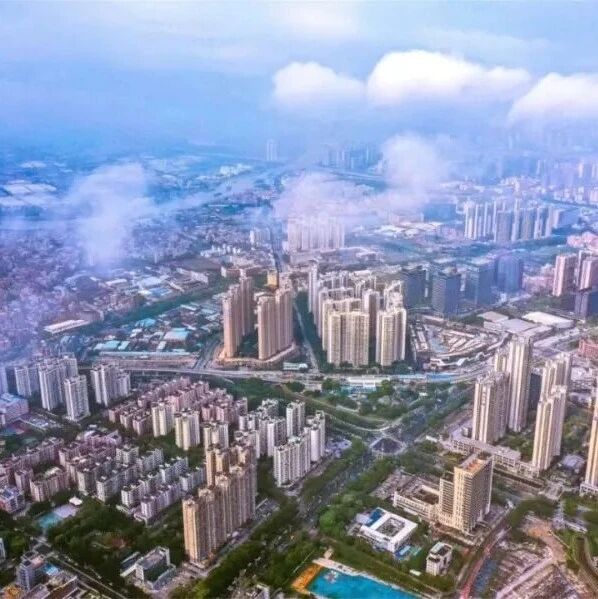
GDP突破千亿,“超级街道”在广东诞生
2 1 Shi Ji Jing Ji Bao Dao· 2026-02-05 12:53
Core Insights - Foshan's Guicheng street has become the first street in Guangdong to surpass a GDP of 100 billion, joining the ranks of China's "trillion GDP" towns and streets, expanding Guangdong's representation to four such entities [1][2] Group 1: Economic Performance - Guicheng's GDP reached 1001.33 billion, marking a significant milestone for a street within a prefecture-level city [1] - The third industry contributes nearly 70% to Guicheng's economic output, with a breakdown of 69.8% for the tertiary sector, 30.0% for the secondary sector, and 0.2% for the primary sector [2] - Guicheng's growth is driven by a robust production service industry, with major companies like SF Express and KPMG establishing headquarters in the area [3] Group 2: Headquarters Economy - Guicheng has developed a "headquarters economy," with over 500 headquarters of various enterprises contributing to its GDP and enhancing its competitive edge [3] - In 2023, Guicheng initiated the establishment of a headquarters economy cluster, completing 19 projects and successfully launching 9 enterprise headquarters [3] Group 3: Regional Advantages - Guicheng leverages its geographical advantages, integrating into regional networks and utilizing the synergy between Guangzhou and Foshan to attract resources [4] - The town's strategic location allows it to access high-end resources such as capital, talent, and technology, enhancing its market reach [4] Group 4: Future Development - The development of Guicheng is not solely focused on GDP; it also emphasizes improving residents' quality of life through education, healthcare, and public services [7] - The "Hundred Counties, Thousand Towns, and Ten Thousand Villages High-Quality Development Project" aims to enhance urban-rural integration and promote sustainable growth [6] Group 5: Potential Future Trillion GDP Towns - Other towns such as Zhumiao, Daliang, and Nanhai's Dali Town are identified as potential candidates for becoming the next trillion GDP towns, with significant economic foundations and growth potential [8][9] - The focus for these towns will be on innovation and adapting to their unique historical and resource contexts to foster new growth drivers [9]
2025年安徽省产业结构持续向新向优
Sou Hu Cai Jing· 2026-02-02 08:44
Group 1: Economic Growth and Structure - The core viewpoint indicates that by 2025, Anhui Province's industrial structure will continue to improve, with advanced manufacturing as the main engine for economic growth, leading to a significant rise in modern service industries [1] - Advanced manufacturing sectors such as automotive, electronic information, and electrical equipment are showing strong performance, with automotive industry growth at 19.5%, electronic information at 42.2%, and electrical equipment at 4.2%, reflecting a systemic leap in emerging industries [1] Group 2: Integration of Manufacturing and Services - The new emerging service industries closely related to advanced manufacturing are experiencing robust growth, with sales revenue increasing by 8.1% year-on-year, contributing 47.7% to the overall provincial growth, highlighting the synergy between manufacturing and services [2] - Specific sectors such as scientific and technical services, leasing and business services, and software information technology services have seen sales growth of 13.2%, 6.8%, and 4.2% respectively, providing strong support for the upgrading of advanced manufacturing [2] Group 3: Innovation and Digital Economy - Innovation-driven development is identified as a core engine for high-quality economic growth, with sales revenue from knowledge-intensive industries increasing by 12.3%, indicating enhanced application of technological achievements [3] - The core digital economy sectors have seen a sales revenue growth of 7.6%, with digital product services and manufacturing growing by 36.4% and 16% respectively, showcasing a positive trend in the integration of digital and traditional industries [3] - The Anhui Provincial Taxation Bureau emphasizes its role in supporting innovation-driven strategies and optimizing tax services to empower industrial collaboration [3]
2025年我国科技成果转化力度持续提升
Zhong Guo Jing Ying Bao· 2026-01-30 07:00
Core Insights - The National Taxation Administration of China analyzed the conversion of scientific and technological achievements using tax big data, revealing significant growth in related sectors in 2025 [1] Group 1: Industry Performance - The sales revenue of the scientific and technological service industry in China increased by 20.4% year-on-year in 2025 [1] - Sales revenue from knowledge-intensive and patent-intensive industries grew by 10.7% year-on-year, indicating a stronger application of technological achievements [1] - The total transaction amount of technology contracts nationwide rose by 19.1% year-on-year, as reported by stamp duty declarations [1]
我国科技创新与产业创新融合发展加快
Xin Lang Cai Jing· 2026-01-27 22:08
Group 1: Strategic Emerging Industries - In 2025, China's high-tech industry sales revenue is expected to grow by 13.9% year-on-year, with high-tech manufacturing and high-tech services increasing by 10.1% and 16.6% respectively [1] - Key sectors such as lithium-ion battery manufacturing, service robots manufacturing, industrial robots manufacturing, and biopharmaceutical manufacturing are projected to see significant sales revenue growth of 25.1%, 60.7%, 17.4%, and 7.7% respectively [1] Group 2: Technology Transformation - The sales revenue of China's scientific and technological service industry is anticipated to increase by 20.4% year-on-year, indicating a stronger application of technological achievements [1] - The sales revenue of knowledge-intensive industries, particularly those focused on intellectual property (patents), is expected to grow by 10.7% [1] - The national technology contract transaction amount is projected to rise by 19.1% in 2025, reflecting active innovation elements [1] Group 3: Digital Economy Integration - In 2025, the sales revenue of the core digital economy industries is expected to grow by 9.4%, with digital product manufacturing and digital technology application industries increasing by 9.4% and 13.8% respectively [2] - The amount spent by enterprises on digital technology is projected to increase by 9.6%, with manufacturing sector spending on digital technology rising by 10.4% [2] Group 4: Traditional Industry Upgrading - Traditional industries are accelerating their transformation, with automation being a key focus area [2] - The procurement of automation equipment in traditional sectors such as petrochemicals, steelmaking, and ironmaking is expected to grow by 17.3%, 11.7%, and 12.7% respectively [2]
税收数据显示 2025年高技术产业销售收入同比增长13.9%
Zhong Guo Zheng Quan Bao· 2026-01-27 21:00
Group 1 - The core viewpoint of the news is that by 2025, China's strategic emerging industries will experience significant growth, with a focus on the integration of technological innovation and industrial development, leading to a robust performance in high-tech sectors [1][2] - In 2025, sales revenue in China's high-tech industries is projected to grow by 13.9% year-on-year, with high-tech manufacturing and high-tech services increasing by 10.1% and 16.6% respectively [1] - Key sectors such as lithium-ion battery manufacturing, service robots, industrial robots, and biopharmaceuticals are expected to see remarkable sales growth, with increases of 25.1%, 60.7%, 17.4%, and 7.7% respectively [1] Group 2 - The sales revenue of China's scientific and technological service industry is anticipated to rise by 20.4% year-on-year in 2025, indicating a stronger application of technological achievements [1] - The sales revenue of knowledge-intensive industries, particularly those focused on intellectual property, is expected to grow by 10.7% year-on-year, reflecting an increase in the conversion of scientific achievements [1] - The total transaction amount of technology contracts nationwide is projected to increase by 19.1% year-on-year in 2025, showcasing the active aggregation of innovative elements [1] Group 3 - The digital economy's core industries are expected to see a sales revenue increase of 9.4% year-on-year in 2025, with related digital product manufacturing and digital technology application industries growing by 9.4% and 13.8% respectively [2] - The amount spent by enterprises on digital technology is projected to grow by 9.6% year-on-year, with manufacturing sector spending increasing by 10.4%, indicating a significant upgrade in industrial digitalization [2] - Traditional industries are accelerating their transformation, with notable increases in the procurement of automation equipment in sectors like petrochemicals, steelmaking, and ironmaking, with growth rates of 17.3%, 11.7%, and 12.7% respectively [2] Group 4 - The tax data reflects a strong performance in high-tech industries and improved efficiency in the conversion of scientific achievements, indicating solid progress in China's technological self-reliance and the cultivation of new productive forces [2] - Under precise policy support, the accelerated aggregation of innovative elements is driving the upgrade of industrial structures towards higher-end development, providing strong and sustainable internal momentum for high-quality growth [2]
国家税务总局税收大数据发布 2025年我国科技创新与产业创新融合加快
Zheng Quan Ri Bao· 2026-01-27 16:25
Group 1 - The core viewpoint of the news is that by 2025, the integration of technological innovation and industrial innovation in China is accelerating, showcasing significant growth in strategic emerging industries and enhanced technology transfer [1][2][3] Group 2 - Strategic emerging industries are becoming a new engine for economic growth, with high-tech industry sales expected to increase by 13.9% year-on-year in 2025, driven by sectors like lithium-ion battery manufacturing, service robots, industrial robots, and biopharmaceuticals, which are projected to grow by 25.1%, 60.7%, 17.4%, and 7.7% respectively [1] - The sales revenue of the scientific and technological service industry is anticipated to grow by 20.4% year-on-year in 2025, indicating a stronger emphasis on the application of scientific achievements [2] - The digital economy's core industries are expected to see a sales revenue increase of 9.4% year-on-year in 2025, reflecting rapid development in digital industrialization [2] - Traditional industries are accelerating their transformation and upgrading, with significant increases in the procurement of automation equipment in sectors like petrochemicals and steel production, with year-on-year growth rates of 17.3%, 11.7%, and 12.7% respectively [2] Group 3 - The acceleration of the integration of technological and industrial innovation is expected to enhance total factor productivity, promote high-quality economic development, optimize industrial structure, and foster a virtuous cycle of employment and investment [3] - The data reflects solid achievements in China's self-reliance in technology and the cultivation of new productive forces, supported by precise policy empowerment [3]
税收数据显示2025年我国科技创新与产业创新融合发展加快
Zhong Guo Xin Wen Wang· 2026-01-27 09:32
Group 1 - The core viewpoint of the articles highlights the accelerated integration of technological innovation and industrial innovation in China by 2025, showcasing significant growth in strategic emerging industries and improved efficiency in technology transfer [1][2] Group 2 - Strategic emerging industries are experiencing robust growth, with high-tech industry sales revenue projected to increase by 13.9% year-on-year in 2025. Specifically, high-tech manufacturing and high-tech services are expected to grow by 10.1% and 16.6%, respectively. Notable sectors include lithium-ion battery manufacturing, service robots, industrial robots, and biopharmaceuticals, with sales revenue growth rates of 25.1%, 60.7%, 17.4%, and 7.7% respectively [1] - The conversion of scientific and technological achievements is continuously improving, with sales revenue in the scientific research and technical service industry expected to rise by 20.4% year-on-year in 2025. Knowledge-intensive industries are also projected to see a 10.7% increase in sales revenue, indicating a stronger application of technological achievements. The national technology contract transaction amount is expected to grow by 19.1% [1] - The integration of digital technology with the real economy is deepening, with core digital economy industries projected to see a 9.4% increase in sales revenue in 2025. Related sectors such as digital product manufacturing and digital technology application are expected to grow by 9.4% and 13.8%, respectively. Additionally, enterprise procurement of digital technology is anticipated to rise by 9.6%, with manufacturing sector procurement increasing by 10.4% [2] - Traditional industries are accelerating their transformation and upgrading, particularly in automation. The procurement of automation equipment in traditional sectors such as petrochemicals, steelmaking, and ironmaking is expected to increase by 17.3%, 11.7%, and 12.7% year-on-year, respectively [2] - The data reflects solid achievements in China's technological self-reliance and the cultivation of new productive forces, indicating a strong and sustainable internal momentum for high-quality development [2]
税收数据显示:2025年我国科技创新与产业创新融合发展加快
Yang Shi Xin Wen· 2026-01-27 03:30
Group 1 - The core viewpoint of the articles highlights the accelerated integration of technological innovation and industrial innovation in China by 2025, showcasing significant growth in strategic emerging industries and advancements in technology transfer [1][2] Group 2 - Strategic emerging industries are experiencing robust growth, with high-tech industry sales revenue projected to increase by 13.9% year-on-year in 2025. High-tech manufacturing and high-tech service sectors are expected to grow by 10.1% and 16.6% respectively [1] - Key sectors such as lithium battery manufacturing, service robots, industrial robots, and biopharmaceuticals are showing remarkable sales growth, with increases of 25.1%, 60.7%, 17.4%, and 7.7% respectively [1] Group 3 - The conversion of scientific and technological achievements is gaining momentum, with sales revenue in the scientific research and technical service industry expected to rise by 20.4% year-on-year in 2025. Knowledge-intensive industries are projected to see a 10.7% increase in sales revenue [1] - The national technology contract transaction amount is anticipated to grow by 19.1%, indicating a stronger application of technological achievements [1] Group 4 - The integration of digital technology with the real economy is deepening, with core digital economy industries expected to see a sales revenue increase of 9.4% in 2025. Digital product manufacturing and digital technology application sectors are projected to grow by 9.4% and 13.8% respectively [2] - Enterprises are increasing their procurement of digital technology, with a year-on-year growth of 9.6%, and manufacturing sector procurement expected to rise by 10.4% [2] Group 5 - Traditional industries are accelerating their transformation and upgrading, particularly in automation, with significant increases in procurement of automation equipment in sectors like petrochemicals, steelmaking, and ironmaking, showing growth rates of 17.3%, 11.7%, and 12.7% respectively [2]