
数字技术与实体经济融合

Search documents
把握消费趋势,持续扩大内需
2 1 Shi Ji Jing Ji Bao Dao· 2026-02-27 22:35
Core Insights - The central political bureau meeting emphasized the need for a more proactive macro policy to enhance demand, optimize supply, and stimulate consumption growth, especially in light of the strong consumer trends observed during the recent Spring Festival [1][4] Group 1: Consumption Trends - The Spring Festival consumption scene has diversified, indicating a trend of consumption upgrading in China, with a shift from material to service consumption, particularly in 2026 where service consumption is expected to be a core growth driver [2][5] - Significant increases in consumer spending were noted, with New Year's Eve dinner reservations doubling, and box office revenues for Spring Festival films exceeding 5.6 billion yuan, reflecting strong cultural consumption demand [2][3] - The travel and hospitality sectors saw substantial growth, with data showing a 105% year-on-year increase in New Year's Eve dinner bookings and a nearly 40% rise in traffic for popular dining lists [1][2] Group 2: Market Dynamics - The dual focus on both lower-tier and cross-border markets has enhanced connectivity between domestic and international consumption, with a notable surge in spending in county-level economies driven by a large return home during the holiday [3][5] - Cross-border consumption has also seen significant growth, with spending in regions like Malaysia and Maldives increasing by 131% and 186% respectively, while inbound tourism has surged, indicating a new trend of international visitors celebrating the Spring Festival in China [3][4] Group 3: Technological Impact - The integration of digital technology has played a crucial role in energizing consumption, with innovations such as digital red envelopes and AI-driven services enhancing consumer experiences and engagement [4][5] - The demand for smart and green consumption is on the rise, reflecting a deep integration of consumption with technology and sustainable practices, which is vital for stimulating new growth in domestic demand [4][5] Group 4: Policy and Supply Side - The extended nine-day Spring Festival holiday and supportive policies like duty-free shopping and consumption incentives have created favorable conditions for consumption expansion, boosting consumer confidence [4][5] - Continuous innovation on the supply side has effectively matched changing consumer demands, creating a virtuous cycle where demand drives supply and vice versa, particularly in the cultural and tourism sectors [5]
21评论丨把握消费趋势,持续扩大内需
Xin Lang Cai Jing· 2026-02-27 22:32
Core Viewpoint - The article emphasizes the robust growth of consumer spending during the Spring Festival, driven by favorable policies, supply-side innovations, and the evolving market dynamics, indicating a long-term positive trend in China's economy [6]. Group 1: Consumer Trends - The Spring Festival consumption scene has diversified, reflecting a trend of consumption upgrading from material goods to services, with service consumption becoming a core growth driver in 2026 [3]. - Significant increases in spending were noted, such as a 105% year-on-year growth in New Year's Eve dinner reservations and a record-breaking box office of over 5.6 billion yuan during the Spring Festival [2][3]. - The demand for high-quality dining and cultural experiences has surged, showcasing a strong cultural consumption appetite and innovative supply [3]. Group 2: Market Dynamics - The dual focus on both lower-tier and cross-border markets has enhanced the connectivity of domestic and international consumption, expanding the overall market space for domestic demand [4]. - A large-scale return home during the holiday has invigorated the county economy, with explosive growth in county-level dining, retail, and tourism consumption [4]. - Cross-border consumption has also seen significant growth, with spending in regions like Malaysia and Maldives increasing by 131% and 186% respectively, driven by travel trends [4]. Group 3: Technological Empowerment - The vibrant Spring Festival consumption is supported by digital technology, which is fostering new growth drivers for expanding domestic demand and enhancing consumer experiences [5]. - Innovations such as digital red envelopes and AI-driven services have made holiday interactions more engaging and convenient, reflecting a deep integration of technology with consumer behavior [5]. - The rise of green and smart consumption trends indicates a strong alignment between consumption patterns and technological advancements, showcasing the potential for further market expansion [5]. Group 4: Policy and Supply-Side Innovations - The nine-day Spring Festival holiday created favorable conditions for consumption expansion, supported by policies like 240-hour visa-free transit and optimized duty-free shopping [7]. - Continuous supply-side innovations have effectively matched changing consumer demands, leading to a virtuous cycle of demand driving supply and vice versa [7]. - The demographic shift in consumer decision-making, with younger generations (post-95s and post-00s) becoming the main consumers, highlights the potential of the evolving age structure in the market [7].


税收大数据显示:2025年我国科技创新与产业创新融合发展加快
Xin Lang Cai Jing· 2026-02-23 16:33
Group 1 - The core viewpoint of the articles highlights the accelerated integration of technology and industry in China, with significant growth in strategic emerging industries and improved efficiency in technology transfer by 2025 [1][2] Group 2 - Strategic emerging industries are experiencing robust growth, with high-tech industry sales revenue expected to increase by 13.9% year-on-year in 2025, driven by high-tech manufacturing and services growing by 10.1% and 16.6% respectively [1] - Notable sectors such as lithium battery manufacturing, service robots, industrial robots, and biopharmaceuticals are showing impressive sales growth, with increases of 25.1%, 60.7%, 17.4%, and 7.7% respectively [1] - The conversion of scientific and technological achievements is being enhanced, with sales revenue from research and technical services projected to rise by 20.4% year-on-year, and revenue from patent-intensive industries increasing by 10.7% [1] - The digital economy's core industries are expected to see a sales revenue growth of 9.4% in 2025, with digital product manufacturing and digital technology application sectors growing by 9.4% and 13.8% respectively [2] - Traditional industries are accelerating their transformation, particularly in automation, with significant increases in procurement of automation equipment in sectors like petrochemicals, steelmaking, and ironmaking, showing growth rates of 17.3%, 11.7%, and 12.7% respectively [2] - The data reflects a solid achievement in China's technological self-reliance and the cultivation of new productive forces, indicating a strong and sustainable internal momentum for high-quality development [2]
2025年终特刊·跃迁
Chang Jiang Shang Bao· 2026-02-09 01:58
Group 1 - In 2025, China's GDP is projected to exceed 140 trillion yuan, marking a significant milestone in economic development and indicating a systemic transition in growth logic, structural dynamics, and value coordinates [1] - The concept of "Duxing" (笃行) is highlighted as a core strength driving China's economic resilience and high-quality development, rooted in new productive forces [1] - Key advancements in hard technology are expected, with companies like Cambrian achieving profitability in AI chips, Blue Arrow Aerospace completing critical launches, and Huawei establishing a self-controlled technology ecosystem [1] Group 2 - The integration of digital technology with the real economy is entering a deeper phase, with Alibaba leveraging AI in retail and logistics, Industrial Fulian transforming manufacturing processes, and Heng Rui Pharmaceutical focusing on innovative drug development [2] - The domestic capital market is shifting towards value investment, with patient capital flowing into hard technology, green industries, and specialized enterprises, while the global market sees Chinese exports in new energy vehicles and lithium batteries leading due to technological and quality advantages [3] - The year 2025 is positioned as a pivotal moment for China's economic trajectory, setting a solid foundation for the 14th Five-Year Plan's conclusion and the 15th Five-Year Plan's commencement [3]
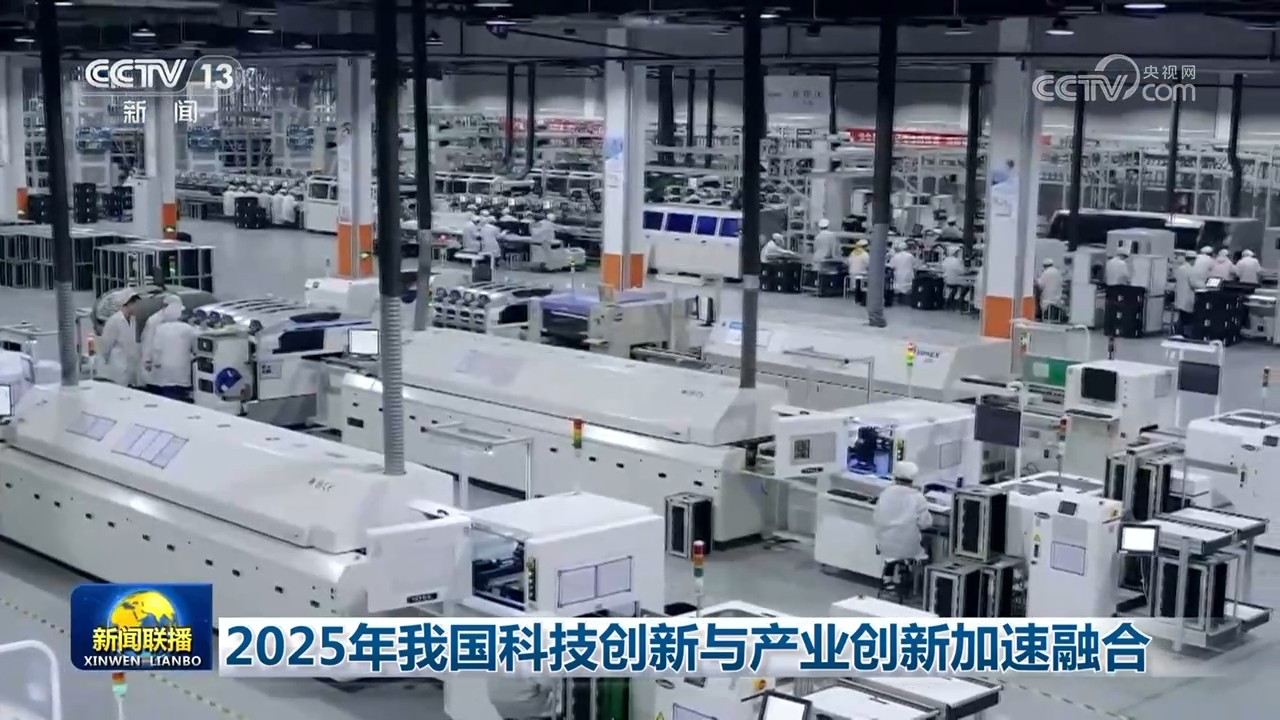
2025年我国科技创新与产业创新加速融合
Yang Shi Wang· 2026-02-08 12:21
Core Insights - The core viewpoint of the articles highlights the accelerated integration of technological and industrial innovation in China, with significant growth in high-tech industries and digital economy sectors by 2025. Group 1: High-Tech Industry Growth - In 2025, sales revenue in high-tech industries is expected to grow by 13.9% year-on-year [1] - Key sectors such as lithium-ion batteries, integrated circuits, and biopharmaceutical manufacturing are projected to see sales revenue increases of 25.1%, 19.2%, and 7.7% respectively [1] - The "Artificial Intelligence +" initiative is rapidly being implemented, with sales revenue in the consumer robotics manufacturing sector increasing by over 60% year-on-year [1] Group 2: Technology Transfer and Services - The transaction amount of technology contracts and sales revenue in the scientific research and technical service industry are both expected to maintain around 20% growth in 2025 [3] Group 3: Digital Economy Integration - The sales revenue of core industries in the digital economy is projected to grow by 9.4% year-on-year in 2025 [5] - The digital technology application sector is expected to see a year-on-year growth of 13.8%, indicating rapid development in digital industrialization [5] - The amount spent by enterprises on digital technology is anticipated to increase by 9.6% year-on-year, with the manufacturing sector showing a faster digitalization process, reflected in a 10.4% increase in procurement of digital technologies [5]
税收数据显示:2025年高技术产业销售收入同比增长13.9%
Zhong Guo Zheng Quan Bao· 2026-01-28 00:03
Group 1 - The core viewpoint of the articles highlights the accelerated integration of technological innovation and industrial innovation in China by 2025, with significant growth in strategic emerging industries and enhanced conversion of scientific achievements [1][2] Group 2 - In terms of strategic emerging industries, sales revenue in high-tech industries is projected to grow by 13.9% year-on-year in 2025, with high-tech manufacturing and high-tech services increasing by 10.1% and 16.6% respectively [1] - Key sectors such as lithium-ion battery manufacturing, service robots, industrial robots, and biopharmaceuticals are expected to see remarkable sales revenue growth of 25.1%, 60.7%, 17.4%, and 7.7% year-on-year respectively [1] Group 3 - The sales revenue of the scientific and technological service industry is anticipated to increase by 20.4% year-on-year in 2025, indicating a stronger application of scientific achievements [1] - The sales revenue of knowledge-intensive industries, particularly those focused on intellectual property (patents), is projected to grow by 10.7% year-on-year [1] - The national technology contract transaction amount is expected to rise by 19.1% year-on-year, reflecting active innovation elements [1] Group 4 - The core industries of the digital economy are expected to see a sales revenue increase of 9.4% year-on-year in 2025, with digital product manufacturing and digital technology application industries growing by 9.4% and 13.8% respectively [2] - The amount spent by enterprises on digital technology is projected to increase by 9.6% year-on-year, with manufacturing sector spending rising by 10.4% [2] Group 5 - Traditional industries are accelerating their transformation and upgrading, with automation being a key focus area; spending on automation equipment in sectors like petrochemicals, steelmaking, and ironmaking is expected to grow by 17.3%, 11.7%, and 12.7% year-on-year respectively [2] - The data reflects significant achievements in China's technological self-reliance and the cultivation of new productive forces, contributing to high-quality development [2]
2025年我国科技创新与产业创新融合加快
Zheng Quan Ri Bao· 2026-01-27 23:08
Group 1 - The core viewpoint of the news is that by 2025, China's integration of technological innovation and industrial innovation is accelerating, showcasing significant growth in strategic emerging industries and enhanced technology transfer [1][2][3] Group 2 - Strategic emerging industries are becoming a new engine for economic growth, with high-tech industry sales expected to increase by 13.9% year-on-year, driven by sectors like lithium battery manufacturing, service robots, industrial robots, and biopharmaceuticals, which are projected to grow by 25.1%, 60.7%, 17.4%, and 7.7% respectively [1] - The sales revenue of the scientific and technological service industry is anticipated to rise by 20.4% year-on-year, indicating a stronger emphasis on the application of scientific achievements [2] - The digital economy's core industries are expected to see a sales revenue increase of 9.4%, with manufacturing and application of digital technologies growing by 9.4% and 13.8% respectively, reflecting rapid development in digital industrialization [2] - Traditional industries are accelerating their transformation, particularly in automation, with significant increases in procurement of automation equipment in sectors like petrochemicals, steelmaking, and ironmaking, which are expected to grow by 17.3%, 11.7%, and 12.7% respectively [2] Group 3 - The acceleration of the integration of technological and industrial innovation is expected to enhance total factor productivity, promote high-quality economic development, optimize industrial structure, and boost employment and investment, contributing to a virtuous cycle of economic growth [3] - The data reflects solid achievements in China's self-reliance in technology and the cultivation of new productive forces, supported by precise policy measures that facilitate the gathering of innovative elements [3]
我国科技创新与产业创新融合发展加快
Xin Lang Cai Jing· 2026-01-27 22:08
Group 1: Strategic Emerging Industries - In 2025, China's high-tech industry sales revenue is expected to grow by 13.9% year-on-year, with high-tech manufacturing and high-tech services increasing by 10.1% and 16.6% respectively [1] - Key sectors such as lithium-ion battery manufacturing, service robots manufacturing, industrial robots manufacturing, and biopharmaceutical manufacturing are projected to see significant sales revenue growth of 25.1%, 60.7%, 17.4%, and 7.7% respectively [1] Group 2: Technology Transformation - The sales revenue of China's scientific and technological service industry is anticipated to increase by 20.4% year-on-year, indicating a stronger application of technological achievements [1] - The sales revenue of knowledge-intensive industries, particularly those focused on intellectual property (patents), is expected to grow by 10.7% [1] - The national technology contract transaction amount is projected to rise by 19.1% in 2025, reflecting active innovation elements [1] Group 3: Digital Economy Integration - In 2025, the sales revenue of the core digital economy industries is expected to grow by 9.4%, with digital product manufacturing and digital technology application industries increasing by 9.4% and 13.8% respectively [2] - The amount spent by enterprises on digital technology is projected to increase by 9.6%, with manufacturing sector spending on digital technology rising by 10.4% [2] Group 4: Traditional Industry Upgrading - Traditional industries are accelerating their transformation, with automation being a key focus area [2] - The procurement of automation equipment in traditional sectors such as petrochemicals, steelmaking, and ironmaking is expected to grow by 17.3%, 11.7%, and 12.7% respectively [2]
税收数据显示 2025年高技术产业销售收入同比增长13.9%
Zhong Guo Zheng Quan Bao· 2026-01-27 21:00
Group 1 - The core viewpoint of the news is that by 2025, China's strategic emerging industries will experience significant growth, with a focus on the integration of technological innovation and industrial development, leading to a robust performance in high-tech sectors [1][2] - In 2025, sales revenue in China's high-tech industries is projected to grow by 13.9% year-on-year, with high-tech manufacturing and high-tech services increasing by 10.1% and 16.6% respectively [1] - Key sectors such as lithium-ion battery manufacturing, service robots, industrial robots, and biopharmaceuticals are expected to see remarkable sales growth, with increases of 25.1%, 60.7%, 17.4%, and 7.7% respectively [1] Group 2 - The sales revenue of China's scientific and technological service industry is anticipated to rise by 20.4% year-on-year in 2025, indicating a stronger application of technological achievements [1] - The sales revenue of knowledge-intensive industries, particularly those focused on intellectual property, is expected to grow by 10.7% year-on-year, reflecting an increase in the conversion of scientific achievements [1] - The total transaction amount of technology contracts nationwide is projected to increase by 19.1% year-on-year in 2025, showcasing the active aggregation of innovative elements [1] Group 3 - The digital economy's core industries are expected to see a sales revenue increase of 9.4% year-on-year in 2025, with related digital product manufacturing and digital technology application industries growing by 9.4% and 13.8% respectively [2] - The amount spent by enterprises on digital technology is projected to grow by 9.6% year-on-year, with manufacturing sector spending increasing by 10.4%, indicating a significant upgrade in industrial digitalization [2] - Traditional industries are accelerating their transformation, with notable increases in the procurement of automation equipment in sectors like petrochemicals, steelmaking, and ironmaking, with growth rates of 17.3%, 11.7%, and 12.7% respectively [2] Group 4 - The tax data reflects a strong performance in high-tech industries and improved efficiency in the conversion of scientific achievements, indicating solid progress in China's technological self-reliance and the cultivation of new productive forces [2] - Under precise policy support, the accelerated aggregation of innovative elements is driving the upgrade of industrial structures towards higher-end development, providing strong and sustainable internal momentum for high-quality growth [2]
2025年高技术产业销售收入同比增长13.9%
Zhong Guo Zheng Quan Bao· 2026-01-27 20:57
Group 1 - The core viewpoint of the article highlights the accelerated integration of technological innovation and industrial innovation in China by 2025, with significant growth in strategic emerging industries and enhanced conversion of scientific achievements [1][3] Group 2 - In terms of strategic emerging industries, sales revenue in high-tech industries is projected to grow by 13.9% year-on-year in 2025, with high-tech manufacturing and high-tech services increasing by 10.1% and 16.6% respectively [1] - Key sectors such as lithium-ion battery manufacturing, service robots, industrial robots, and biopharmaceuticals are expected to see remarkable sales revenue growth of 25.1%, 60.7%, 17.4%, and 7.7% respectively [1] Group 3 - The conversion of scientific achievements is reflected in a 20.4% year-on-year increase in sales revenue for the scientific research and technical services industry, and a 10.7% increase for knowledge-intensive industries [2] - The national technology contract transaction amount is projected to grow by 19.1% year-on-year, indicating an increase in the application of scientific achievements [2] Group 4 - The integration of digital technology with the real economy is highlighted by a 9.4% year-on-year growth in sales revenue for core digital economy industries, with related digital product manufacturing and digital technology application growing by 9.4% and 13.8% respectively [2] - The amount spent by enterprises on digital technology is expected to increase by 9.6%, with manufacturing sector spending rising by 10.4% [2] Group 5 - Traditional industries are accelerating their transformation and upgrading, with automation being a key focus, particularly in sectors like petrochemicals, steelmaking, and ironmaking, which are seeing increases in automation equipment purchases of 17.3%, 11.7%, and 12.7% respectively [2] Group 6 - The data reflects solid achievements in China's technological self-reliance and the cultivation of new productive forces, driven by precise policy support and accelerated gathering of innovative elements [3] - This progress not only promotes the upgrading of industrial structure towards high-end development but also strengthens the technological innovation support for the 14th Five-Year Plan, injecting strong and sustainable internal momentum for high-quality development [3]