先投后股

Search documents
上海宝山晒“十四五”转型答卷,勾勒“一核两翼”未来蓝图
Guo Ji Jin Rong Bao· 2025-10-23 11:37
Core Insights - The article discusses the achievements and future plans of Baoshan District in Shanghai during the "14th Five-Year Plan" period, emphasizing its role as a model for modernization and transformation in the context of Shanghai's development strategy [1][3]. Economic Development - Baoshan's GDP surpassed 210 billion yuan, with an annual growth rate of over 5.7% in retail sales [3][5]. - The district's industrial output reached 260 billion yuan, and fixed asset investment exceeded 240 billion yuan over four years, with industrial investment accounting for 20% [3][5]. - The average annual growth rate of revenue from the service industry was 6.1%, with service sector value added exceeding 70% of the economy [3][5]. Innovation and Technology - R&D investment intensity reached 4.69%, with a 20.3% annual growth in high-tech enterprises [3][4]. - Baoshan established 36 innovation and entrepreneurship incubation platforms and collaborated with major universities to create technology parks, resulting in nearly 300 technology achievements being commercialized [4][5]. Industrial Transformation - The district is focusing on six key industries, including high-end materials and robotics, aiming to create billion-yuan industrial clusters [5][6]. - By mid-2025, Baoshan aims to handle 51% of the national cruise ship arrivals and 70% of passenger traffic, with the launch of the domestically produced cruise ship "Aida·Modu" [5][6]. Urban Development - Baoshan is undergoing significant urban renewal, with projects like the Wu Song Innovation City and the integration of high-speed rail and urban development [7][8]. - The district is enhancing its cultural and recreational offerings, including the establishment of the first cruise-themed cultural complex in the city [7][9]. Social Welfare - Baoshan has been recognized as a national civilized city, improving public services and living conditions through urban digital transformation and community development projects [8][9]. - The district is committed to enhancing the quality of life for residents by focusing on beauty, convenience, culture, and safety [8][9]. Future Vision - By 2030, Baoshan aims to become a leading area for innovation and a vibrant, open, and livable international urban center, contributing to the Yangtze River Delta integration and serving as a strategic space for Shanghai's development [10].

习近平:着力整治地方招商引资乱象
母基金研究中心· 2025-09-17 01:37
Core Viewpoint - The articles emphasize the need to rectify local investment attraction irregularities and establish a unified national market, highlighting the importance of transparency and standardized practices in investment attraction [2][3][4]. Summary by Sections Local Investment Attraction - The focus is on addressing irregularities in local investment attraction, including the need for a national behavior checklist that specifies encouraged and prohibited actions [3][4]. - There is a call for stricter enforcement of regulations to prevent local governments from offering illegal tax, land, and electricity incentives, which contribute to unhealthy competition [3][4]. Market System and Competition - The current market system in China is described as underdeveloped, with issues such as distorted market mechanisms and disrupted competition still prevalent [2][3]. - The articles highlight the need for a correct performance view among local governments, discouraging short-termism and local protectionism [3][4]. Regulatory Framework - The implementation of the Fair Competition Review Regulation (Order No. 783) aims to standardize local investment practices and prevent preferential treatment without legal basis [4][5]. - The introduction of the "Guiding Opinions on Promoting the High-Quality Development of Government Investment Funds" emphasizes that government investment funds should not be established solely for investment attraction purposes [5][6]. Investment Fund Trends - The shift from tax and subsidy-based investment attraction to a "fund investment" model is noted, with local governments increasingly establishing specialized investment funds [4][5]. - The articles discuss the rise of "merger and acquisition investment" as a new strategy for local governments to attract investment, focusing on acquiring listed companies in line with local industrial needs [9]. Innovative Support Mechanisms - The "pre-investment and post-equity" model is introduced as a new fiscal support mechanism, allowing government funds to support R&D and later convert to equity based on pre-agreed conditions [10]. - This model aims to enhance the efficiency of fiscal fund usage and provide tailored support for startups, reflecting a shift towards more sustainable and patient capital [10].

西安都市圈:纵深推进产业一体化
Jing Ji Ri Bao· 2025-08-27 22:18
Core Viewpoint - The Xi'an metropolitan area is celebrating its third anniversary as a national-level urban agglomeration, significantly contributing to the economic growth of Shaanxi Province, with a projected GDP share of 46.9% in 2024 [1] Infrastructure Development - Transportation integration is fundamental for the development of the Xi'an metropolitan area, with a focus on a comprehensive transportation network that includes air, rail, road, and urban transit systems [2] - The metropolitan area has established a one-hour commuting network, with a total of 11 subway lines covering 403 kilometers, achieving a daily passenger intensity of 12,200 passengers per kilometer in 2024 [2] - The total length of highways in the area is 13,474 kilometers, including 605 kilometers of expressways, forming a "two-ring and twelve-radiation" highway network [2] International Connectivity - As of July 2023, Xi'an Xianyang International Airport operates 49 international passenger routes and 13 international cargo routes, connecting to 42 major cities across 23 countries [3] - The railway network spans 601 kilometers, with high-speed rail reaching 374 kilometers upon completion of ongoing projects, enhancing connectivity to 29 provincial capitals and municipalities [3] Innovation and Technology - The Qin Chuang Yuan model in the Xi'an metropolitan area promotes collaborative development, exemplified by the establishment of the Copper Light Optoelectronics Company, which has achieved significant technological breakthroughs [4] - The Maxwell Medical Technology Company utilizes 3D printing and AI to address industry challenges in customized organ production, establishing a full-chain innovation path from research to industrialization [5] Public Services and Healthcare - The establishment of new hospitals in the region has improved access to healthcare services, with specialized medical alliances enhancing service capabilities across multiple cities [7] - Collaborative efforts in environmental governance have led to the signing of a framework agreement for air pollution control among the cities in the metropolitan area, promoting coordinated efforts in pollution management [8] Employment and Social Security - The metropolitan area has implemented a unified management system for urban employee pension insurance, facilitating employment information sharing and job fairs to enhance labor mobility [9] - Cross-regional cooperation in work injury recognition and education initiatives is being advanced, fostering a more integrated social security system [10]
“反内卷”背景下,各地招商引资有了新打法
母基金研究中心· 2025-08-05 09:15
Core Viewpoint - The article discusses the transformation of investment attraction strategies in China, emphasizing the shift from traditional tax incentives and subsidies to more regulated and innovative approaches such as government investment funds and merger acquisitions [1][2][6]. Group 1: Regulatory Changes - The implementation of the Fair Competition Review Regulations (Order 783) prohibits preferential tax treatments and selective financial rewards for specific operators without legal basis or government approval [1]. - The Central Committee's decision to further deepen reforms emphasizes the need to standardize local investment attraction regulations and prohibits illegal policy incentives [1][5]. - Many regions have begun to dissolve their investment promotion offices, replacing them with platform companies aimed at industrial development and economic growth [1][2]. Group 2: Emergence of New Investment Models - The traditional "tax incentive" and "reward-subsidy" models are being replaced by a "fund investment" model, where government investment funds are increasingly linked to investment and attraction efforts [2]. - The State Council issued guidelines to promote high-quality development of government investment funds, explicitly stating that these funds should not be established solely for investment attraction purposes [2][5]. - The "first investment, then equity" model is gaining traction, allowing fiscal funds to support R&D and later convert to equity based on pre-agreed conditions, enhancing the efficiency of fiscal fund usage [4][6]. Group 3: Investment Trends and Data - In Q2 2025, the total capital contribution from Limited Partners (LPs) reached 4270.2 million RMB, with state-owned capital contributing 2317.2 million RMB, accounting for 54.26% of the total [3]. - Government-guided funds accounted for 714.6 million RMB, representing 16.73% of the total contributions [3]. - The focus of investment attraction is shifting from external project recruitment to nurturing local industries, reflecting a more sustainable and localized approach to economic development [7]. Group 4: Mergers and Acquisitions as a New Strategy - The rise of "merger investment" is noted as a new strategy for state-owned enterprises to acquire listed companies, particularly in local specialty industries [8]. - This approach is seen as a way to discover new opportunities while ensuring more certainty in investment attraction [8]. - The emphasis on standardizing and increasing transparency in local investment attraction efforts is expected to continue [8].

依托“认股权” 天津在全国率先探索支持科技成果转化创新模式
Zheng Quan Ri Bao Wang· 2025-07-16 03:54
Group 1 - The Tianjin Binhai High-tech Zone has introduced a management approach for technology achievement transformation, pioneering the "pre-research and post-equity" and "pre-investment and post-equity" models to support innovation projects [1] - The management approach features three highlights: first, it establishes a "pre-research and post-equity" system to bridge the gap in the technology innovation chain, allowing fiscal funds to support research teams and tech enterprises, converting project support funds into equity [1][2] - The approach aims to inject early-stage capital, providing up to 5 million yuan for individual tech projects and up to 50 million yuan for major innovation projects, addressing funding needs in seed and angel investment stages [2] Group 2 - The management approach innovates the operation of fiscal funds, transitioning from traditional subsidies to a circular innovation capital model, with a three-tier review mechanism ensuring quality project selection [2] - Tianjin OTC will collaborate with the Binhai High-tech Zone to promote policies and support the signing, registration, and custody of "equity subscription" agreements, enhancing the service for high-quality development of research projects and tech enterprises [3] - The OTC will explore additional service scenarios, such as "financial institutions + equity subscription" and "park services + equity subscription," to build a comprehensive service system for equity registration and valuation [3]
招商引资新打法:“先投后股”
母基金研究中心· 2025-07-03 08:53
Core Viewpoint - The "Invest First, Equity Later" model is becoming a significant method for promoting the transformation of scientific and technological achievements and attracting investment, addressing the limitations of traditional financing methods in matching the needs of early-stage technology projects [1][2]. Group 1: Fiscal Support for Technology Transformation - In 2023, national fiscal science and technology expenditure reached nearly 1.2 trillion yuan, with local fiscal technology expenditure accounting for over 66% [2]. - Traditional subsidy models face challenges such as information asymmetry, low fund utilization efficiency, and insufficient motivation for transformation [2][3]. - Various forms of fiscal subsidy mechanisms have been established to stimulate R&D investment and the vitality of technology transformation [3]. Group 2: Types of Subsidy Funds - Subsidy funds include pre-subsidy, post-subsidy, and reward subsidies, differing in timing, basis, and purpose [4]. Group 3: Limitations of Subsidy Funds - Pre-subsidy funds lack flexibility in usage, often requiring strict adherence to predetermined plans, which may not adapt to market changes [8]. - The "scattergun" approach in subsidy distribution leads to insufficient targeting and precision in funding allocation [9][10]. - Current subsidy policies favor larger enterprises, leaving small and medium-sized enterprises with limited support [11]. - Subsidy funds often lack long-term support and empowerment for projects [14]. Group 4: Fund Investment - Fund investment enhances market-oriented operations and provides more precise support for high-potential projects, especially benefiting small technology enterprises [15]. - Fund investment offers flexibility in fund allocation, professional project selection, and additional support services [16]. Group 5: Limitations of Fund Investment - Local fiscal conditions significantly impact the support capacity of fund investments, with a notable decline in local government fund budgets [17]. - The lack of comprehensive due diligence and liability exemption clauses reduces the enthusiasm of all parties involved [18]. - Low participation from social capital complicates the establishment of early-stage funds [20]. - Performance evaluation and fund duration constraints limit long-term support for early-stage projects [21]. Group 6: "Invest First, Equity Later" Model - This model focuses on "technology-rich, capital-poor" startups, providing phased support for transforming research achievements into productive forces [22]. - The model allows for a sustainable cycle of fiscal fund usage, enhancing efficiency and management oversight throughout the enterprise lifecycle [22][23]. Group 7: Implementation of the Model - The operational process of the model is divided into project initiation, implementation, and equity management stages, creating a closed-loop management system [26]. - The project initiation phase is primarily managed by technology departments, while investment entities handle fund disbursement and project evaluation [27][32]. Group 8: Recommendations for Promoting the Model - Utilize existing subsidy funds as pilot funding sources to alleviate fiscal pressure [36][37]. - Clearly define responsibilities between technology departments and market-oriented investment institutions to enhance operational efficiency [38][39]. - Establish a mechanism for rolling support from exit profits to improve fund utilization efficiency [40][41]. - Implement due diligence and audit supervision systems to stimulate participation from all stakeholders [44].

“先投后股” 、革新奖补……财政资金真金白银助力科技成果从实验室到生产线突围
Mei Ri Jing Ji Xin Wen· 2025-06-12 07:28
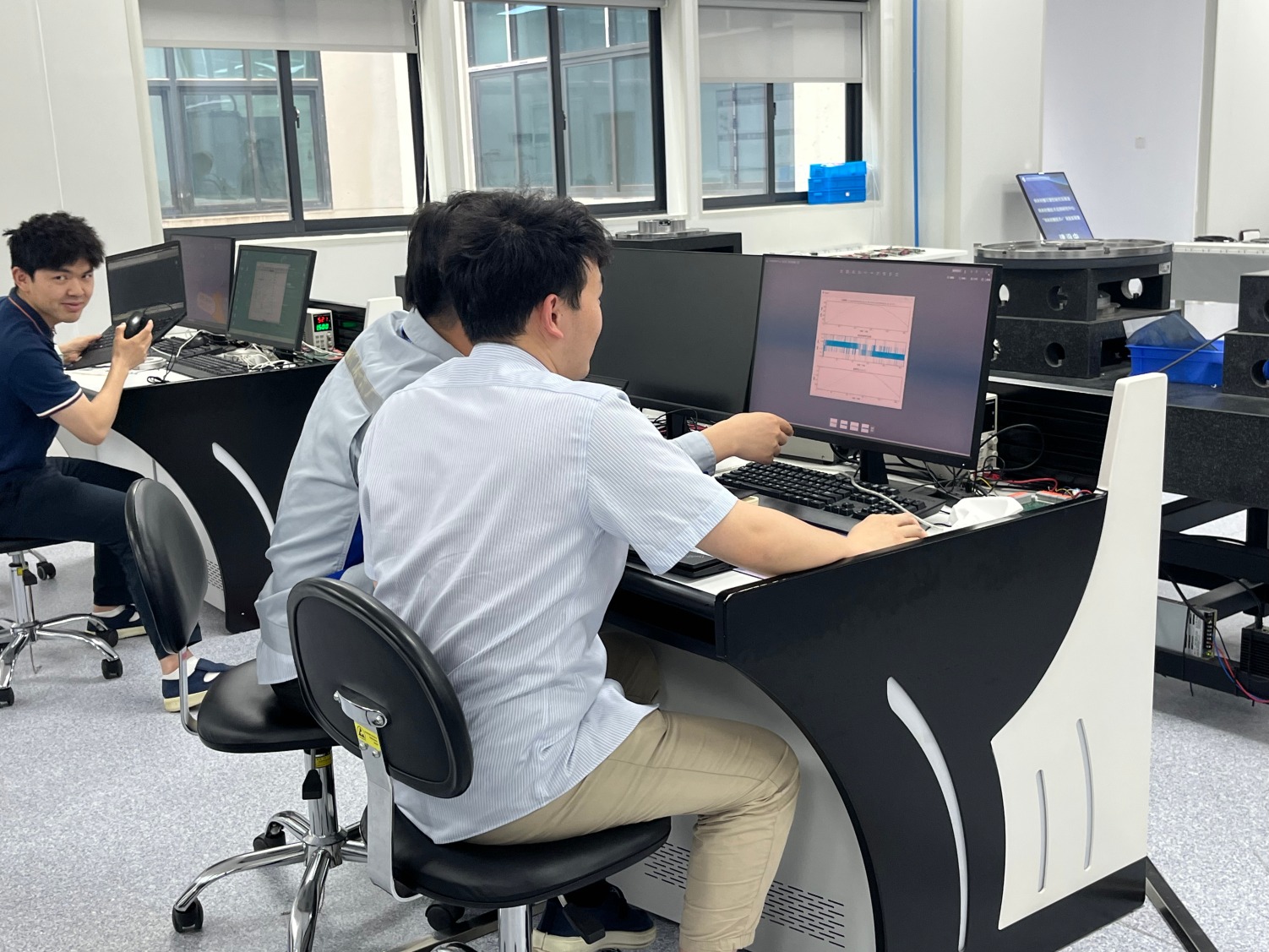
Core Viewpoint - The article highlights the significant increase in financial support for technological innovation in China, showcasing successful case studies of companies benefiting from government funding and innovative financial models like "first investment, then equity" to overcome funding challenges in research and development [1][3][4]. Group 1: Financial Support and Innovation - In 2024, a company in Shandong received 5 million yuan in "first investment, then equity" support, leading to a 100% increase in sales revenue, reaching 48.04 million yuan [4]. - The Shandong provincial government has invested 3.4 billion yuan in 2024 to support over 1,000 high-growth small and medium-sized enterprises, aiming to enhance their innovation capabilities [4]. - Since 2020, Shandong has invested 4.77 billion yuan in over 300 projects, leveraging social capital by more than three times through various investment methods [4]. Group 2: Technological Breakthroughs - Chongqing's Jin Feng Laboratory developed a leading multi-immune fluorescence scanning system with a startup fund of 7 million yuan, achieving a 90% improvement in detection efficiency [1][12]. - The laboratory has produced several innovative technologies, including a smart tissue sampling and analysis system, significantly reducing analysis time by 70% and improving accuracy by 50% [12][13]. - The company, Guoce Shizha Technology, has received 39.92 million yuan in government funding over two years, enabling the development of high-precision measurement sensors [5][8]. Group 3: Policy Innovations - Chongqing has shifted from providing subsidies to project-specific funding, with major projects receiving between 10 million to 30 million yuan, ensuring funds are used effectively [9]. - The city has implemented a project-based funding model, requiring companies to sign task agreements that outline research content, fund usage, and performance goals [9]. - The Jin Feng Laboratory's funding is shared between municipal and district finances, with a total investment of 1 billion yuan planned during the 14th Five-Year Plan period [13].