半导体产业升级

Search documents
玄戒O1亮相发布会!半导体材料ETF(562590)获资金逆势加仓
Sou Hu Cai Jing· 2025-05-23 03:41
Group 1 - The semiconductor materials ETF (562590) has shown a slight increase of 0.01% as of May 23, 2025, with notable gains in constituent stocks such as Jinhaitong (up 3.26%) and Jingsheng (up 2.13%) [1] - Over the past year, the semiconductor materials ETF has accumulated a significant increase of 25.33% [1] - Recent trading activity indicates a liquidity turnover of 2.6% with a transaction volume of 8.33 million yuan [1] Group 2 - Xiaomi has launched its self-developed Xuanjie O1 SoC, utilizing a 3nm process with a clock speed of 3.9GHz, positioning it among the top tier in the industry and potentially increasing the market share of domestic SoCs in the high-end segment [2] - The self-developed chips by Xiaomi are not limited to smartphones but also extend to tablets, smartwatches, and vehicles, enhancing the synergy within the "human-vehicle-home" ecosystem and improving overall product competitiveness [2] - The semiconductor materials ETF and its associated funds closely track the CSI Semiconductor Materials and Equipment Index, which has a significant focus on semiconductor equipment (55.8%) and materials (21.3%), targeting critical areas in chip manufacturing and addressing the domestic demand for semiconductor upgrades [2]


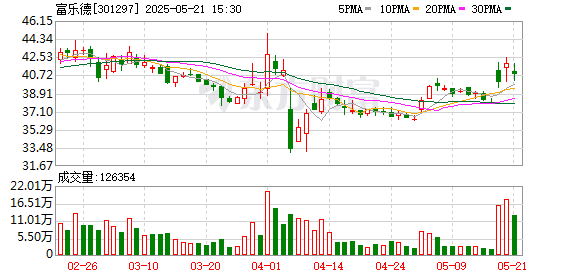
301297,拟重大重组
Zhong Guo Ji Jin Bao· 2025-05-21 15:44
Core Viewpoint - Fulede plans to acquire 100% equity of Fulehua for a transaction price of 6.55 billion yuan, which is expected to significantly enhance the company's total assets, net assets, operating income, and net profit, thereby improving its sustainable development and profitability capabilities [2][4]. Group 1: Transaction Details - The total transaction price is 6.55 billion yuan, with 6.19 billion yuan paid through share issuance at a price of 16.30 yuan per share, and 360 million yuan through convertible bonds with the same initial conversion price [4]. - The shareholding structure will change post-transaction, with Shanghai Shenhe expected to control 58.69% or 56.94% of the voting rights, maintaining its status as the controlling shareholder [5]. Group 2: Business and Industry Impact - Fulede is a provider of precision cleaning services in the semiconductor sector and has been upgrading its production capabilities, including a joint venture for vacuum valves and a prior acquisition for ALN heaters [7]. - The acquisition of Fulehua, which specializes in the R&D, design, production, and sales of copper ceramic substrates for power semiconductors, will enhance Fulede's position in the semiconductor industry and support domestic product replacement and technological upgrades [7]. Group 3: Financial Performance - In Q1 2025, Fulede reported operating revenue of 214 million yuan, a year-on-year increase of 33.09%, and a net profit attributable to shareholders of 28.9 million yuan, up 18.92% year-on-year [8].
马来西亚半导体的“冰与火之歌”
Guan Cha Zhe Wang· 2025-05-14 07:15
Group 1 - Malaysia's Prime Minister Anwar has engaged in talks with AMD, indicating a strategic partnership that aims to enhance the country's semiconductor industry ecosystem [1][3] - Malaysia is currently the sixth largest semiconductor exporter globally, accounting for 23% of U.S. chip production and holding approximately 13% of the global semiconductor packaging and assembly market [3][5] - The semiconductor sector contributes 40% of Malaysia's total manufacturing exports and represents a quarter of the country's GDP, with exports exceeding $120 billion in 2023 [3][5] Group 2 - Major companies like Intel, Infineon, and Micron have increased investments in Malaysia, solidifying its position in the global semiconductor packaging industry [5][8] - The "Flexible New Economy Zone" initiative aims to enhance collaboration with Singapore to leverage capital and advanced technology, moving Malaysia towards higher-value chip design [8][9] - Malaysia's semiconductor industry faces challenges in attracting higher-tier industries, despite having a mature technology sector compared to neighboring countries [9][10] Group 3 - Malaysia's reliance on foreign labor is significant, with expatriates making up about 25% of the total population, as local workers are reluctant to accept low-paying jobs in the semiconductor sector [12][10] - The U.S. export controls have made Malaysia a critical "chip transit point," with significant imports of GPUs, indicating its growing role in the semiconductor supply chain [13][14] - Recent U.S. tariffs on Malaysian goods could impact the competitiveness of Malaysian exports, potentially leading to reduced orders and market fluctuations [16][14] Group 4 - Malaysia aims to transition from a "chip packaging factory" to a "smart manufacturing hub," facing challenges such as insufficient R&D investment and a shortage of high-end talent [16][17] - The country seeks to avoid being trapped in low-end manufacturing while establishing competitive advantages in high-end sectors [16][17] - Malaysia's semiconductor industry is encouraged to learn from China's experience in building a regional innovation ecosystem [17]


心智观察所:马来西亚半导体的“冰与火之歌”
Guan Cha Zhe Wang· 2025-05-14 07:07
Core Insights - Malaysia's Prime Minister Anwar has engaged in discussions with AMD, indicating a strategic partnership that aims to enhance the country's semiconductor industry ecosystem [1][3] - The country is focusing on leveraging its existing advantages in the global semiconductor supply chain while also aiming for upgrades in higher value-added processes [1][3] Industry Position - Malaysia has become the sixth largest semiconductor exporter globally, accounting for 23% of U.S. chip production [3] - The country holds approximately 13% of the global semiconductor packaging and assembly market, with a significant 40% share in automotive-grade chip packaging [3] - In 2023, Malaysia's semiconductor exports exceeded $120 billion, making it the largest source of chip assembly imports for the U.S. [3] - The semiconductor sector contributes 40% of Malaysia's total manufacturing exports and represents a quarter of the nation's GDP [3] Foreign Investment and Ecosystem - Major companies like Intel, Infineon, and Micron have increased investments in Malaysia, solidifying its position in the global backend packaging industry [5] - Industrial parks in Penang and Kulim host nearly 50 semiconductor factories, creating a mature OSAT (Outsourced Semiconductor Assembly and Test) ecosystem [5] - The presence of top logistics companies in Malaysia has grown in the past two years, driven by geopolitical uncertainties and the country's robust infrastructure and lower labor costs [5] Strategic Initiatives - The "Flexible New Economy Zone" initiative, set to accelerate in 2025, aims to combine Singapore's capital and advanced technology with Malaysia's land and infrastructure for mutual growth [5][8] - This initiative is part of Malaysia's national semiconductor strategy proposed in May 2024, focusing on attracting foreign investment and talent to elevate its position in the semiconductor value chain [8] - Malaysia seeks to transition from downstream packaging and testing to upstream chip design, aiming to capture a higher value in the semiconductor industry within ASEAN [8]