
原油投资

Search documents
关键时刻!最新研判来了
中国基金报· 2025-11-23 11:44
Group 1 - The recent global market turmoil is attributed to multiple factors, including the Federal Reserve's mixed signals on interest rate cuts, concerns over AI sector sustainability, and geopolitical tensions affecting supply chains [4][5][6]. - A-shares and H-shares are viewed as having long-term strategic opportunities despite recent adjustments, with expectations for policy support and foreign capital inflow remaining intact [8][9]. - The outlook for A-shares and H-shares is positive, with analysts suggesting that the current market environment presents a window for investment [8][9][10]. Group 2 - Gold is expected to remain a strong asset in the medium to long term, supported by global monetary expansion and increasing central bank purchases [11][12][13]. - Analysts predict that the global stock market will continue to trend upwards, driven by liquidity and risk appetite, although caution is advised regarding inflation and geopolitical risks [14][15][16]. - The oil market is anticipated to experience a range-bound trading pattern, influenced by geopolitical factors and supply-demand dynamics [17][18][19]. Group 3 - A-shares are considered to have superior investment value, with a focus on high-growth sectors such as technology and advanced manufacturing, while also incorporating defensive strategies [20][21]. - The investment landscape for 2026 is expected to favor A-shares, H-shares, gold, and short-term U.S. Treasuries, as global liquidity conditions remain favorable [21][22]. - Attention should be paid to liquidity and geopolitical risks, particularly in light of potential economic data releases and the Federal Reserve's policy decisions [23][24][25].


冷艺婕:11.17黄金日内反弹继续空 原油震荡下行
Sou Hu Cai Jing· 2025-11-18 01:09
Group 1 - The article emphasizes the importance of avoiding deception and adhering to facts in trading strategies [1] - The current market conditions indicate a bearish trend for gold, with a focus on the price range of 4230-4250 for short positions, while anticipating a drop to 3887 [3][6] - The oil market is showing weakness, with signals of reduced bullish momentum and a potential short-term rebound [4][7] Group 2 - The analysis suggests that the gold market is undergoing a correction phase, with the recent highs not indicating a strong upward trend [3] - The recommended trading strategy for gold includes maintaining short positions with specific target prices set between 3880 and 3600 [6] - For oil, the suggested short position is between 60.5 and 61.0, with a target range of 58.5 to 57.5 [7]
山海:黄金接近疯狂,下一波上涨目标只有4500!
Sou Hu Cai Jing· 2025-10-17 02:27
Group 1 - The core viewpoint is that the gold market is experiencing a significant upward trend, with prices reaching as high as 4380, surpassing previous expectations of 4300 [4][5] - Following the breakout above 4000, the potential for gold prices to reach 4200 and 4500 is emphasized, with the current focus on whether the upward momentum can continue towards 4500 [4][5] - The silver market is also showing a bullish trend, with expectations for prices to reach 55, having already approached 54.5 [6] Group 2 - The article highlights the importance of maintaining a cautious trading strategy, suggesting to wait for pullbacks to key support levels before entering long positions [5][6] - In the domestic market, gold prices have surged to around 1000, with a recommendation to remain on the sidelines and avoid chasing prices due to potential selling pressure [5] - The outlook for crude oil is bearish, with prices retreating to around 57, and a suggestion to maintain a neutral position until clearer trends emerge [6][7]

郑氏点银:黄金日线有所小加速迹象,今晚回踩4005上继续看涨
Sou Hu Cai Jing· 2025-10-08 12:57
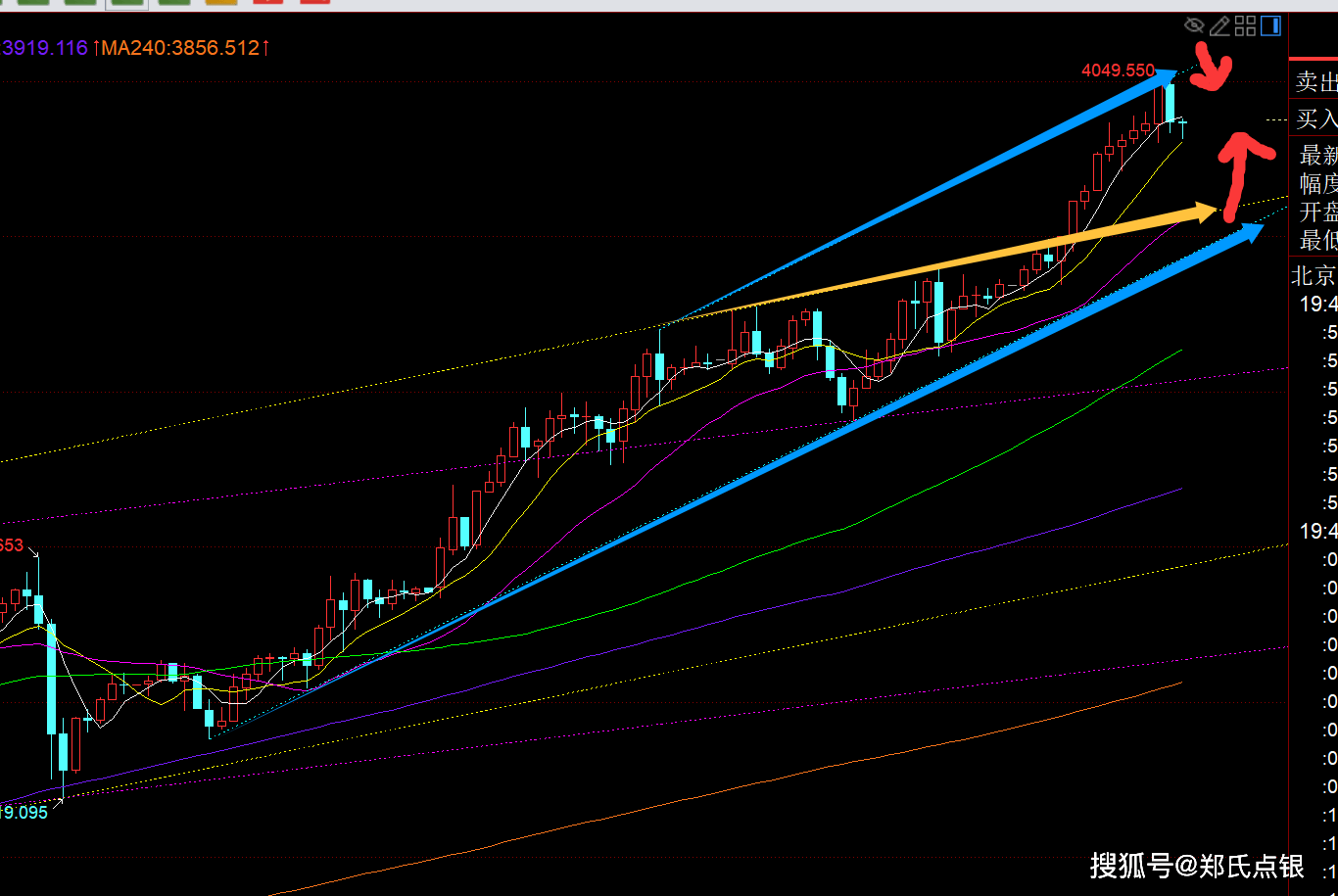
Group 1: Gold Market Analysis - The gold market showed signs of acceleration with a strong closing the previous day, and the price surpassed the 4000 mark, reaching a high of 4050 [1][2] - The trend remains strong, but caution is advised for potential profit-taking after the holiday, with a need to confirm support levels before further bullish actions [2][4] - The hourly analysis indicates a strong upward movement, with the first sign of a pullback not sufficient to indicate a reversal, and support levels are identified at 4030 and 4000 [4] Group 2: Silver Market Analysis - The silver market was weaker compared to gold, but it showed a recovery influenced by gold's performance, remaining within a defined trading channel [5] - Key resistance and support levels for silver are identified at 49.15 (upper), 48.2 (middle), and 47.65 (lower) [5] Group 3: Oil Market Analysis - The oil market experienced a rebound after filling a gap from earlier in the week, with a critical resistance level identified at around 63 [7]
郑氏点银:黄金再刷历史新高,今晚3800先稳住还有高点
Sou Hu Cai Jing· 2025-09-29 12:31
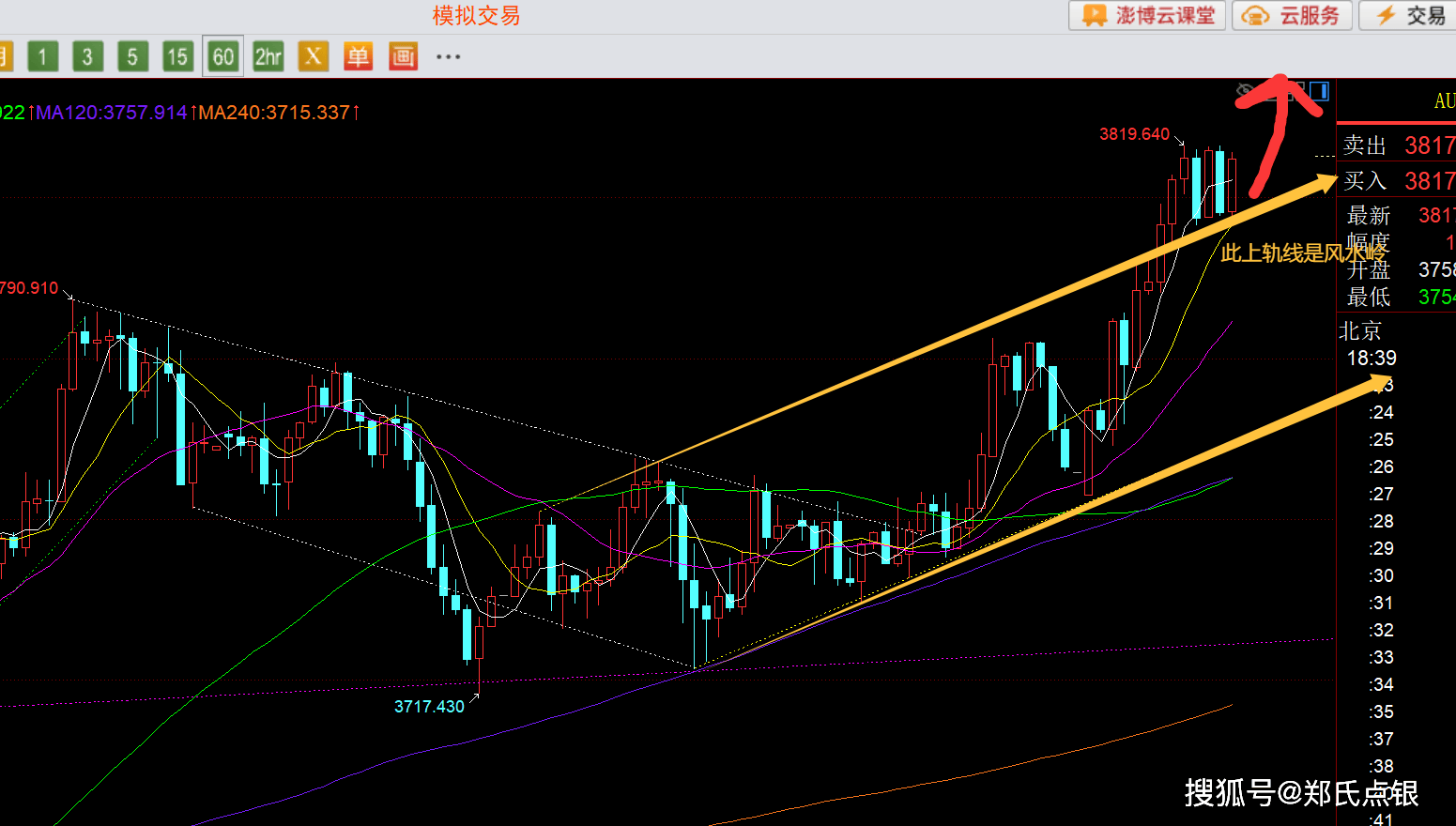
Group 1: Gold Market Analysis - The gold market has shown strong bullish momentum, with a potential target of 4384 USD if the current trend continues, based on historical price levels [2] - Recent trading activity indicates a significant upward movement, with a target of 3826 USD being achievable in the near term, as the market remains above key support levels [1][2] - The daily and hourly charts suggest that gold is maintaining a strong position above the 5-day moving average, indicating continued bullish sentiment [2][4] Group 2: Silver Market Analysis - Silver has also experienced a strong upward trend, breaking through the 46 USD mark and aiming for higher resistance levels, with a target of 48 USD [1][5] - The market remains above the 10-day moving average, suggesting a sustained bullish outlook for silver [5] Group 3: Oil Market Analysis - The oil market is currently in a consolidation phase, with prices fluctuating between 61 and 66 USD, indicating a lack of a clear trend [7] - The focus remains on gold and silver trading opportunities, as the oil market does not present a strong directional bias at this time [7]
国泰君安期货原油周度报告-20250831
Guo Tai Jun An Qi Huo· 2025-08-31 07:47
Report Industry Investment Rating No relevant content provided. Core Viewpoints of the Report - This week's view on crude oil is to hold long positions and positive spreads with a light position [5][6]. - In the short - term, it is advisable to wait and see. There may still be opportunities for a repair rebound in September. Brent and WTI may challenge $70 - 75 per barrel, and SC may challenge 520 - 560 yuan per barrel. In the medium - to - long - term, the downward pressure on oil prices is relatively large. By the end of this year and the beginning of next year, Brent and WTI may test $50 per barrel, and SC may test 420 yuan per barrel [6]. - The logic for the short - term view is that aside from geopolitical and trade - war uncertainties, there may be a small - scale rebound in September at the end of the peak season, mainly due to OPEC+'s less - than - expected production increase, a potential decline in U.S. shale oil production (to be verified), and relatively low inventory centers in the U.S. and Europe. However, the rebound space may be limited due to high inventories in Asia and the expectation of future inventory accumulation. The overseas macro - market risk appetite has stabilized. Attention should be paid to the risk of a decline in Russian oil exports due to potential sanctions, with a relatively low probability of short - term interruption. The medium - to - long - term bearish view is mainly based on the large long - term oversupply pressure caused by production increases from OPEC+, Brazil, Guyana, Norway, etc., and inventory accumulation is difficult to disprove [6]. - In terms of valuation, the short - term valuation is at a medium level, and there may still be a chance of a rebound in the second half of the third quarter, but the space is limited. For trading strategies, in the short - term, hold long positions with a light position; in the long - term, short at high prices and trend - short. For inter - period trading, focus on positive spreads (buy SC10, sell 11 and 12). For inter - variety trading, the EFS spread and SC - Dubai may reverse [6]. Summary by Relevant Catalogs 1. Macro - Pay attention to the Russia - U.S. negotiations and the development of the Russia - Ukraine situation [11]. - Overseas PPI has increased, and attention should be paid to inflation transmission [17]. - The RMB exchange rate continues to strengthen, and social financing has rebounded [22]. 2. Supply - Global crude oil supply shows obvious regional and oil - type differentiation. Light sweet oil (WTI/Brent) is under price pressure due to the weak economy in Europe and the U.S. and the uncertainty of the Fed's policy. Brent is rarely at a discount to Dubai (-$0.09 per barrel). Medium - sulfur crude oil (such as Russian Urals and Middle East Dubai) maintains a tight balance due to OPEC+'s compensatory production cuts and restricted exports from Iran and Venezuela. Heavy crude oil (Canadian AWB, Iraqi Basra Heavy) is supported by the residue chemical demand of Chinese refineries, but the resumption of U.S. imports from Venezuela has alleviated some of the tightness. Geographically, Middle East exports are stable, the discount of African light oil (such as Nigerian) has widened due to European demand shifting to the Americas, and Eastern Europe (Druzhba pipeline) faces a risk of supply interruption due to the Russia - Ukraine conflict [6]. - The production and export situations of various countries are as follows: Iraq's production is limited, with only 3.9 million barrels per day in July (target of 4.12 million barrels per day), which is bullish. The UAE's production exceeds 3 million barrels per day, and its export volume reached 3.31 million barrels per day in July (close to a historical high), which is bullish. It plans to maintain the Upper Zakum oil field (with a capacity of 1 million barrels per day) in October, with an expected production cut of 150,000 - 200,000 barrels per day. Saudi Arabia's shipping volume in September dropped to 1.43 million barrels per day (a five - month low), which is bearish. Saudi Aramco's exports to China decreased by 160,000 barrels per day in July due to a pricing strategy error. Guyana's new production, Golden Arrowhead, will increase to 200,000 barrels per day, but weak European demand has led to a $3 per barrel price drop (Liza is now at a $1.25 per barrel discount compared to North Sea Dated), which is bearish. Malaysia's shadow fleet is still active, with 52 sanctioned oil tankers conducting ship - to - ship transfers at the EOPL anchorage, mainly flowing to China, which is neutral. Russia's top three buyers are India, China, and Turkey. India imported 1.82 million barrels per day of Urals crude oil in the first half of the year, accounting for 90% of Russia's seaborne exports. Under EU sanctions, the FOB discount of Urals in the Baltic Sea has widened to $13 per barrel compared to North Sea Dated, which is neutral. India continues to import (with a loading volume of about 1.5 million barrels per day in August), and the CIF discount in India has narrowed to $2.80 per barrel (compared to North Sea Dated). Norway's medium - acid crude oil (such as Johan Sverdrup) prices have fallen due to weakened seasonal demand, which is bearish [7]. - The U.S. production reached 13.42 million barrels per day in July, and Canada's was 4.7 million barrels per day, with a total of 18.12 million barrels per day in North America, which is bullish. Kazakhstan's production has continuously exceeded the quota, and the supply of CPC Blend has increased, which is bearish. Chevron may resume imports from Venezuela, improving the heavy - oil supply in the U.S. Gulf. The U.S. Chevron resumed imports in August, alleviating the tightness of refineries in the Gulf of Mexico, which is bearish. China has a workaround for importing Iranian crude oil through the Malacca Linggi Port, with an estimated actual supply of 1.25 million barrels per day from January to May (not reflected in customs data), which is bullish. China's imports from Malaysia decreased by 400,000 barrels per day in July due to the doubled cost of re - exporting Iranian crude oil through Malaysia. Syria restarted its crude oil exports for the first time since 2011, selling "Syrian Heavy" crude oil (22 - 25.72°API, 4.2% sulfur) at a $10 per barrel discount compared to North Sea Dated, which is neutral. Nigeria's light - crude - oil discount has widened (European demand has shifted to U.S. WTI and Brazilian crude oil). In September 2025, it will increase production by 547,000 barrels per day, completely lifting the voluntary production cut of 2.2 million barrels per day since November 2023, and the UAE's quota will increase by 300,000 barrels per day. This may lead to a market surplus of 1.6 million barrels per day in the second half of the year, and a further surplus of 1 million barrels per day in 2026. The export volume in August was the same as that in Q1 because the compensatory production cut (2.2 million barrels per day) offset the production - increase plan, which is neutral [8]. - The U.S. shale oil drilling number and production have rebounded [58]. 3. Demand - The demand market shows regional and oil - product structural differences. Asia (especially China and India) remains the core of growth. China's apparent demand remains stable (16.6 million barrels per day), and independent refineries have shifted to fuel - oil processing due to exhausted quotas. India supplements Brazilian crude oil through long - term contracts, but Russian oil still has a cost advantage. Demand in Europe and the U.S. is differentiated: U.S. gasoline consumption has decreased by 4% year - on - year, but distillates (diesel/aviation kerosene) are supported by seasonal agricultural and industrial demand. The ARA diesel inventory in Europe has dropped to an 18 - month low (12.9 million barrels), reflecting a structural shortage under the closure of refining capacity. In the long term, the upgrade of Chinese refineries (such as residue chemical processing) will increase the demand for high - sulfur oil, while European low - carbon policies will suppress fossil - fuel consumption [6]. - The demand situations of various countries and regions are as follows: In China, the gasoline cracking spread has risen to a 16 - month high (the Singapore 92R crack spread is $12.08 per barrel) due to reduced exports (175,000 barrels per day in August compared to 300,000 barrels per day in July) and refinery maintenance. China receives Iranian crude oil through STS in Malaysia (with an actual import of about 1.25 million barrels per day, not reflected in customs data). In July, the apparent demand remained at a high level of 16.6 million barrels per day, with a 150,000 - barrel - per - day decrease in diesel demand offset by aviation kerosene and LPG. Independent refineries have shifted to processing diluted bitumen (150,000 barrels per day imported in July) and fuel oil (280,000 barrels per day) due to restricted Iranian crude - oil imports. The petrochemical demand in Asia is strong, with an implied consumption of 1 million barrels per day of chemical raw materials in the "other unreported" category. In India, it continues to import Russian Urals, with the arrival volume in August decreasing by 20% year - on - year as Russian oil has shifted to China (exports to China increased by 8% in July). It will resume purchasing Russian Urals crude oil in October due to an expanded discount of $3.05 per barrel (delivered at the west coast of India). It has signed a long - term contract with Brazil for the first time (6 million barrels from 2025 - 2026), but it cannot replace the cost advantage of Russian oil. In the U.S., refineries are operating at a high rate (the crude - oil inventory only increased by 2.1 million barrels in July), but gasoline demand has decreased by 4% year - on - year. The distillate inventory has increased by 9.8 million barrels, reflecting a strong diesel cracking spread (summer agricultural and industrial demand). In Europe, the ARA diesel inventory has dropped to an 18 - month low (12.9 million barrels) due to the closure of 4 million barrels per day of refining capacity. The demand for Russian CPC blended oil has slowed down before the maintenance season in Europe. In North America, the demand in July decreased by 4.1% year - on - year (to 8.916 million barrels per day) due to the popularization of hybrid vehicles improving energy efficiency. The fuel - oil inventory in the Gulf region has reached a 35 - year low (8.8 million barrels), but the gasoline inventory has increased. The North Sea Dated has dropped to $68.21 per barrel, and WTI has remained stable at $63.92 per barrel. Dubai has risen against the trend by $1.18 per barrel to $69.80 per barrel due to alternative demand from Iran. Affected by the weak European economy (Germany's contraction in Q2, the French government crisis) and geopolitical conflicts, the EFS spread with Dubai has dropped to -$0.09 per barrel on August 27, the first discount since April [9]. - The refinery operating rates in the U.S. and Europe are seasonally declining. The operating rate of China's major refineries is declining, while that of local refineries is rising [60]. 4. Inventory - U.S. commercial inventories are declining, and the inventory in the Cushing area is declining and significantly lower than the historical average [63]. - Refining margins are oscillating strongly. European diesel inventories are rebounding, and gasoline inventories are being depleted. Domestic refined - oil margins are recovering [68][70][71]. 5. Price, Spread, and Position - The North American basis has rebounded slightly. The month - spread has dropped to a low level. SC is stronger than the external market, and the month - spread has stabilized. The net long - position has declined [75][76][77][79].
贺博生:8.25黄金原油今日行情涨跌趋势分析及周一最新操作建议指导
Sou Hu Cai Jing· 2025-08-25 03:10
Market Overview - The current market sentiment shows a divergence in trading strategies, with inexperienced traders often focusing solely on market direction rather than position management, leading to significant losses [1] - The importance of understanding market trends and utilizing support and resistance levels for trading decisions is emphasized, suggesting that traders should be more responsible with their capital [1] Gold Market Analysis - As of August 25, gold prices are experiencing slight fluctuations, trading around $3362.21 per ounce, following a significant increase of 1% the previous Friday, which saw prices reach a two-week high of $3378.69 per ounce [2] - The recent remarks by Federal Reserve Chairman Jerome Powell have alleviated inflation concerns and sparked expectations for a rate cut in September, contributing to a decline in the dollar index by 0.96% to 97.66 points, enhancing gold's appeal [2] - Despite low physical demand in Asia, both Wall Street analysts and retail investors remain optimistic about gold's future, anticipating a continuation of the upward trend [2] Technical Analysis of Gold - The technical analysis indicates that gold has shifted from a downward trend to an upward trajectory, with a recent rebound surpassing the $3350 mark, suggesting a bullish outlook [3] - Current resistance levels are identified at $3385 and $3400, while support is found in the $3350-$3340 range, indicating potential trading strategies [3][5] Oil Market Analysis - Oil prices have stabilized after a nearly 3% increase last week, with Brent crude hovering around $68 per barrel and WTI above $63, influenced by supply concerns and geopolitical tensions, particularly between the U.S. and India [6] - The ongoing tensions regarding import tariffs on Indian oil imports from Russia are contributing to market uncertainty, although Indian refiners are expected to continue purchasing Russian crude [6] - The market outlook remains influenced by policy and geopolitical factors rather than pure supply-demand dynamics, with expectations of a Fed rate cut providing some support for oil prices [6] Technical Analysis of Oil - The technical analysis for oil indicates a potential upward movement, with recent price action showing a recovery after a brief decline, supported by moving averages [7] - Short-term resistance is noted at $65.0-$66.0, while support is identified at $62.5-$61.5, guiding trading strategies for the day [7]
贺博生:8.11黄金原油今日行情涨跌趋势分析及周一最新多空操作建议指导
Sou Hu Cai Jing· 2025-08-10 23:37
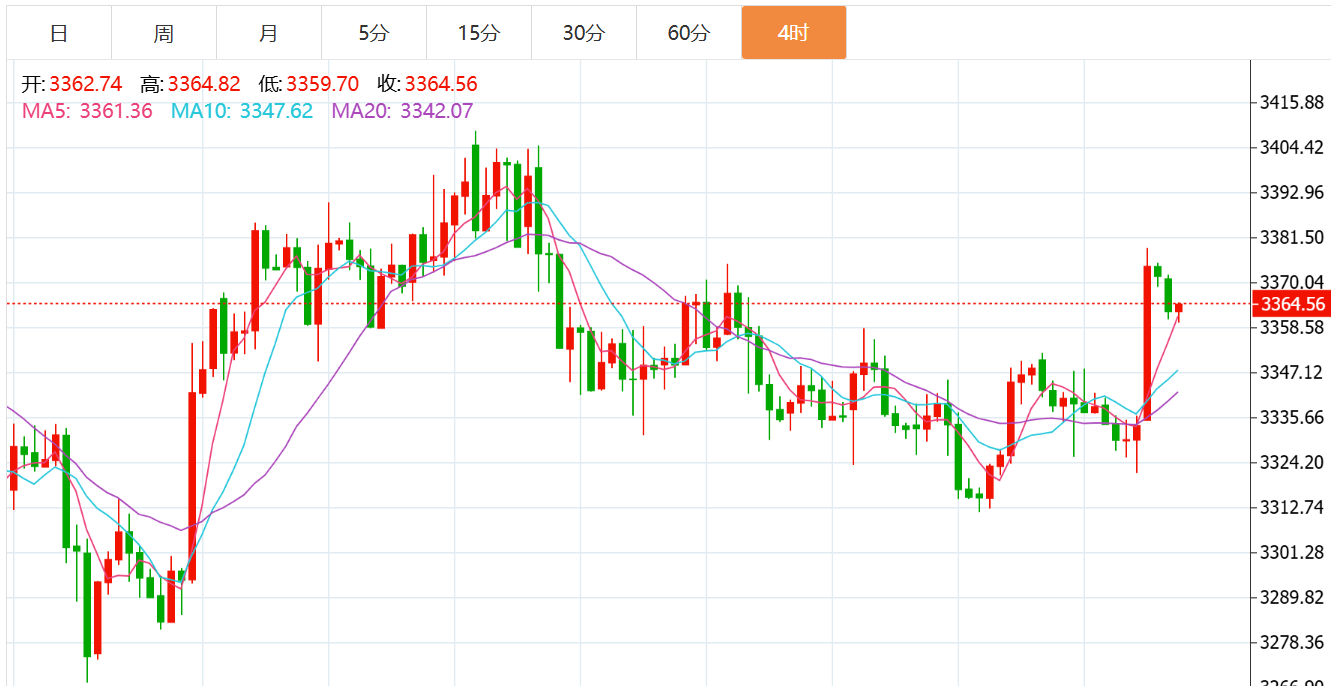
Group 1: Gold Market Analysis - The gold market experienced significant volatility, with prices testing the $3400 level multiple times, ultimately reaching a high of $3409, the highest since July 24 [2][3] - Analysts remain bullish on gold prices despite recent fluctuations, focusing on upcoming events such as the meeting between Trump and Putin, and speeches from Federal Reserve officials [2] - The support level at $3380 is crucial for maintaining bullish sentiment, while resistance is noted at $3410, with potential for a breakout if conditions are favorable [5] Group 2: Oil Market Analysis - The oil market has shown a notable downward trend, with Brent crude oil prices falling to $66.40 per barrel and WTI prices at $63.82, indicating a weekly decline of over 4% and 5% respectively [6] - Concerns over the impact of new U.S. tariffs on the global economy and shifting OPEC+ policies are contributing to the bearish sentiment in the oil market [6] - Technical indicators suggest a continued downtrend for oil prices, with MACD showing increasing bearish momentum and a recommendation for short positions on rebounds [7]
贺博生:7.27黄金下周行情走势预测建议,原油暴跌周一开盘多单在线解套
Sou Hu Cai Jing· 2025-07-26 23:46
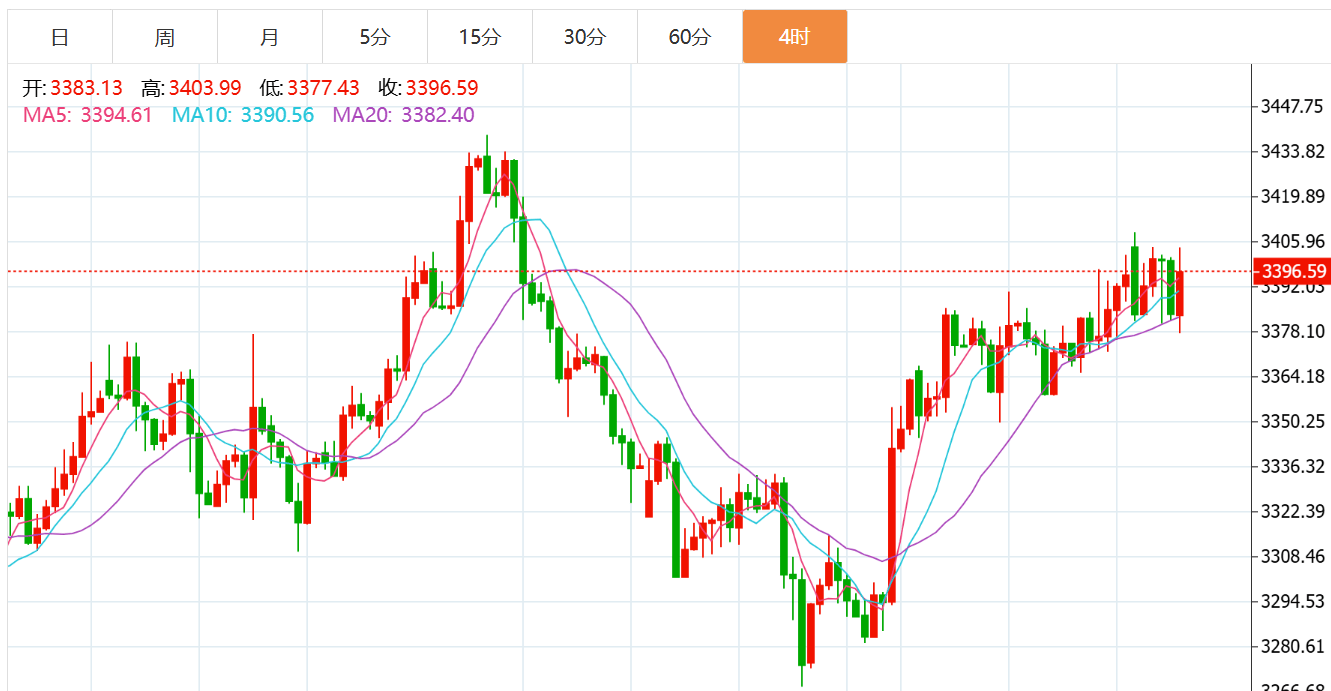
Group 1: Gold Market Analysis - Gold prices fell on Friday, influenced by a stronger US dollar and progress in US-EU trade negotiations, with spot gold down 0.9% to $3336.01 per ounce [2] - The upcoming week will focus on US-EU trade talks and the Federal Reserve's decision, with potential for gold prices to test the $3300 per ounce level if negotiations are optimistic [2] - Technical analysis indicates that gold is currently in a wide range of $3500-$3120, with a short-term focus on the $3247-$3438 range, suggesting a potential upward movement after a corrective phase [3][5] Group 2: Oil Market Analysis - International oil prices experienced a slight decline, with US crude trading around $65.04 per barrel, down approximately 0.3%, while Brent crude futures rose by 0.98% to $69.18 per barrel [6] - The recent price movements are attributed to unexpected declines in US crude inventories and geopolitical tensions, particularly in Gaza, which may affect supply dynamics [6] - Technical indicators suggest that while the medium-term trend for oil remains upward, there is a potential for high-level fluctuations, with short-term strategies focusing on selling during rebounds and buying on dips [7]
大越期货原油早报-20250721
Da Yue Qi Huo· 2025-07-21 03:07
1. Report Industry Investment Rating No relevant content provided. 2. Core View of the Report - The new round of EU sanctions on Russian crude oil triggered an increase in oil prices, but later it was reported that a six - month transition period was given, and short - term concerns eased, causing oil prices to decline. This week, it is reported that Iran will start nuclear negotiations with some European countries. As the Trump tariff restart date on August 1st approaches, the negotiation results with major economies are unclear, and there is a possibility of a tariff war restart. Oil prices face upward pressure, and speculative net - long funds vary in increase and decrease. There are differences in the outlook for the future. It is expected that oil prices will fluctuate in the short term, with short - term trading in the range of 509 - 518 and long - term waiting and seeing [3]. 3. Summary by Directory 3.1 Daily Prompt - **Fundamentals**: Iran has agreed to negotiate with the UK, France, and Germany on the Iranian nuclear program, possibly next week. The EU has reached an agreement on the 18th round of sanctions against Russia, including measures to further hit the Russian oil and energy industries, with a dynamic price cap on Russian crude oil set 15% lower than the average market price [3]. - **Basis**: On July 18th, the spot price of Oman crude oil was $70.97 per barrel, and that of Qatar Marine crude oil was $70.37 per barrel. The basis was 2.83 yuan per barrel, with the spot at par with the futures [3]. - **Inventory**: The US API crude oil inventory for the week ending July 11th increased by 839,000 barrels, contrary to the expected decrease of 1.637 million barrels. The EIA inventory for the same period decreased by 3.859 million barrels, more than the expected decrease of 552,000 barrels. The Cushing area inventory increased by 213,000 barrels in the week ending July 11th. As of July 18th, the Shanghai crude oil futures inventory remained unchanged at 4.517 million barrels [3]. - **Market**: The 20 - day moving average is downward, and the price is above the average [3]. - **Main Position**: As of July 15th, the main position of WTI crude oil was long, with a decrease in long positions; the main position of Brent crude oil was long, with an increase in long positions [3]. 3.2 Recent News - The UK Foreign Office on the 18th announced a reduction of the so - called "price cap" on Russian crude oil exports from $60 to $47.6 per barrel and sanctions on Russian intelligence agencies and personnel [5]. - On July 21st, Iran agreed to hold a new round of deputy - foreign - minister - level negotiations with representatives from the UK, France, and Germany of the Iran nuclear deal in Istanbul on Friday (the 25th) regarding the Iranian nuclear program [5]. - US single - family home starts in June dropped to an 11 - month low, but consumer confidence improved in July, and inflation expectations continued to decline. Lower inflation may help the Fed cut interest rates, which could boost economic growth and energy demand [5]. 3.3 Long - Short Concerns - **Positive Factors**: Escalation of the Russia - Ukraine conflict; the start of an increase in summer demand [6]. - **Negative Factors**: OPEC+ has increased production for three consecutive months; continued tensions in US trade relations with other economies; a cease - fire between Iran and Israel [6]. - **Market Driver**: Short - term geopolitical conflicts drive up prices, and in the medium - to - long - term, it awaits the peak summer demand season [6]. 3.4 Fundamental Data - **Futures Market**: The settlement price of Brent crude oil decreased by $0.24 (-0.35%), WTI crude oil decreased by $0.18 (-0.27%), SC crude oil increased by 9.90 (1.93%), and Oman crude oil increased by $0.90 (1.28%) [7]. - **Spot Market**: The price of UK Brent Dtd increased by $0.11 (0.15%), WTI decreased by $0.20 (-0.30%), Oman crude oil in the Pacific Rim increased by $1.23 (1.76%), Shengli crude oil in the Pacific Rim increased by $0.76 (1.13%), and Dubai crude oil in the Pacific Rim increased by $1.23 (1.77%) [9]. - **Inventory Data**: The API inventory for the week ending July 11th increased by 839,000 barrels, and the EIA inventory decreased by 3.859 million barrels [3][10][14]. 3.5 Position Data - **WTI Crude Oil**: As of July 15th, the net - long position was 162,427, a decrease of 46,947 from the previous period [16]. - **Brent Crude Oil**: As of July 15th, relevant position data shows a change in the long - position situation, with an increase in long positions [3][19].