
合规性

Search documents
他来了!加密货币交易所Gemini申请IPO:创始人传奇经历,曾以10美元单价囤积12万枚比特币
美股IPO· 2025-08-17 23:36
Core Viewpoint - Gemini's IPO submission to the SEC is seen as a significant event indicating the recovery of the cryptocurrency industry, following in the footsteps of Coinbase and Kraken [1][5]. Group 1: Company Overview - Gemini was founded in 2014 by billionaire twins Tyler and Cameron Winklevoss, who gained fame for their lawsuit against Facebook [3][22]. - The company has established itself as one of the first regulated cryptocurrency exchanges in the U.S., collaborating with regulatory bodies to create a clear compliance framework [22][25]. - As of 2021, Gemini's valuation reached $7.1 billion, with the twins holding at least 75% of the shares [23]. Group 2: Financial Performance - The financial disclosures reveal a significant revenue drop to $67.9 million in the first half of 2025, with a net loss widening to $282.5 million [5]. - Despite the financial challenges, analysts predict that Gemini could achieve profitability by 2026, driven by revenue diversification post-IPO [8]. Group 3: Market Sentiment and Risks - The market reaction to Gemini's IPO is polarized, with some analysts optimistic about its growth potential in a regulatory-friendly environment, while others caution against high valuation risks and increasing competition [5][6]. - The company faces multiple risks, including regulatory uncertainties, market volatility, and cybersecurity threats, which could impact its operations and profitability [6][10]. Group 4: Future Outlook - The success of Gemini's IPO will depend on macroeconomic conditions and the company's execution capabilities, particularly if the Federal Reserve continues to lower interest rates [8]. - The company aims to position itself as the "JPMorgan of crypto," focusing on institutional services and expanding into the NFT market and metaverse payments [8][10]. - The IPO is expected to have a ripple effect in the crypto ecosystem, potentially accelerating IPOs from stablecoin issuers and increasing competition among custodial giants [10][11].


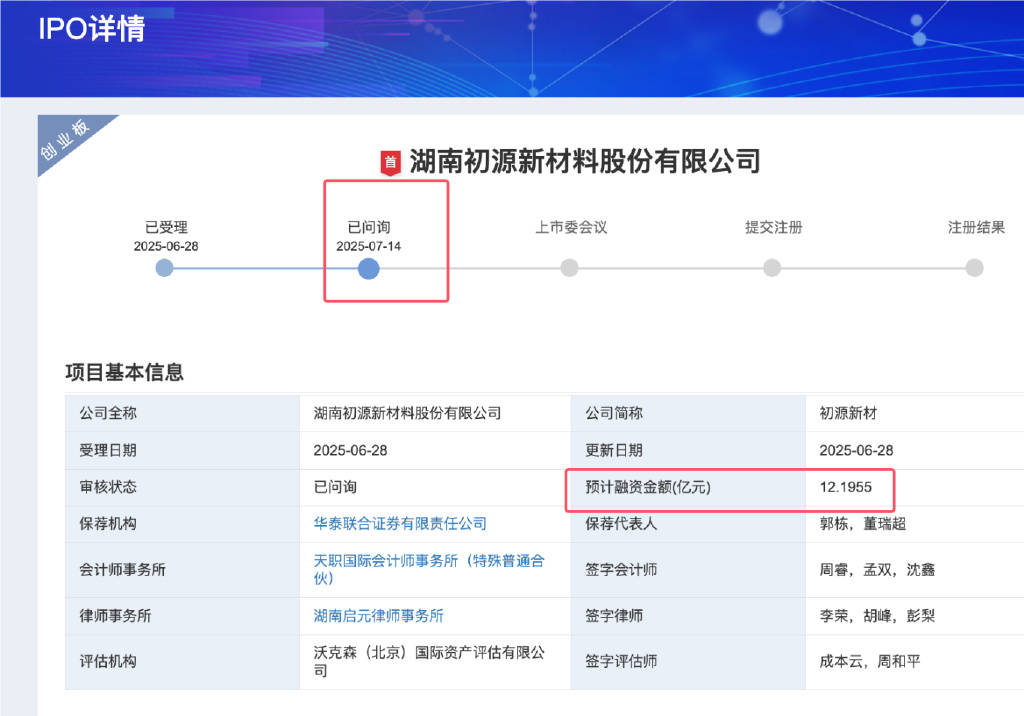
初源新材IPO:调查发现公司2021 年和关联方瑞钛新材电话和邮箱一致
Sou Hu Cai Jing· 2025-08-15 06:49
Group 1 - Hunan Chuyuan New Materials Co., Ltd. is preparing for an IPO on the ChiNext board, aiming to raise approximately 1.22 billion yuan [1] - The company faces scrutiny due to shared email systems with its key affiliate, Hunan Ruitai New Materials Technology Co., Ltd., raising concerns about independence and compliance [1][2] - The shared email system may lead to potential data security issues, particularly in the sensitive photoresist film industry, which is dominated by foreign and Taiwanese companies [2] Group 2 - Initial investigations revealed that both companies share the same phone number and email address, indicating a deeper integration than disclosed [2] - Ruitai New Materials previously provided Chuyuan New Materials with 28 patents and key executives, which raises questions about operational independence [2] - Chuyuan New Materials' financial growth is weak, with projected revenues increasing from 910 million yuan to 1.057 billion yuan from 2022 to 2024, and net profits hovering around 149 million to 150 million yuan [2] Group 3 - The company plans to add 45 million square meters of production capacity, which represents a 150% increase over existing capacity [2] - The reliance on government subsidies for 16.06% of profits in 2024 may weaken investor confidence if the email issue remains unresolved [2] - The company must provide evidence of the separation of email systems to appease regulatory bodies, or it risks delays or rejection of its IPO application [2]
评论 | 两个月内被约谈四次,汽车业需要好好“立规矩”了
Jing Ji Guan Cha Wang· 2025-08-11 10:27
Core Viewpoint - The dispute over the Li Auto i8 crash test has been resolved through a joint statement from Li Auto, Dongfeng Liuzhou Motor, and China Automotive Research Institute, following intervention from the Ministry of Industry and Information Technology (MIIT) [2] Group 1: Regulatory Intervention - The MIIT has conducted multiple discussions with automotive companies this year, indicating a pattern of regulatory intervention in the rapidly transforming and competitive automotive industry [2][3] - There have been at least five publicly reported meetings with automotive companies this year, addressing issues such as safety risks, marketing chaos, and supply chain crises [2] - The frequency of these meetings highlights the deep-seated contradictions within the automotive industry that need urgent resolution [3] Group 2: Industry Challenges - The Li Auto i8 crash test incident exemplifies a broader issue of compliance capability within the new energy vehicle sector, reflecting a lack of detailed regulations and sufficient constraints on smart network functions, unfair competition, and the credibility of third-party testing institutions [3] - The automotive industry has been characterized by a "cost-heavy, compliance-light" development logic, contributing to low profit margins and hindering global expansion [3] - The current state of the new energy vehicle industry reveals problems stemming from a lack of timely regulatory updates and low penalties for violations, leading to a rough development model [4] Group 3: Regulatory Measures - A systematic upgrade of regulatory measures has begun, with authorities implementing various strategies such as reviewing profit reports, establishing complaint platforms, and creating credit blacklists [4] - Legislative changes, including the revision of the Anti-Unfair Competition Law, have expanded the scope of regulation to include issues like "involution" competition and false advertising related to artificial intelligence [4] - The introduction of stringent inspection systems aims to shift the focus from post-event accountability to preemptive prevention [4] Group 4: Future Directions - The transformation of the new energy vehicle sector necessitates a new standard system and regulatory intensity to adapt to changes in product structure and industry dynamics [5] - The automotive industry is encouraged to learn from the regulatory practices of the European and American markets to align with the rapid development of the new energy vehicle sector [5] - The joint call from the three parties involved in the Li Auto i8 incident emphasizes the importance of self-discipline and the need to eliminate disparaging comparisons in competition [6]

印度央行行长:监管整合将提高合规性。
news flash· 2025-07-25 05:25
Core Viewpoint - The Governor of the Reserve Bank of India stated that regulatory consolidation will enhance compliance within the financial sector [1] Group 1 - Regulatory integration is expected to streamline compliance processes across various financial institutions [1] - The move aims to reduce the complexity of regulatory requirements, making it easier for companies to adhere to compliance standards [1] - Enhanced compliance is anticipated to foster greater trust and stability in the financial system [1]
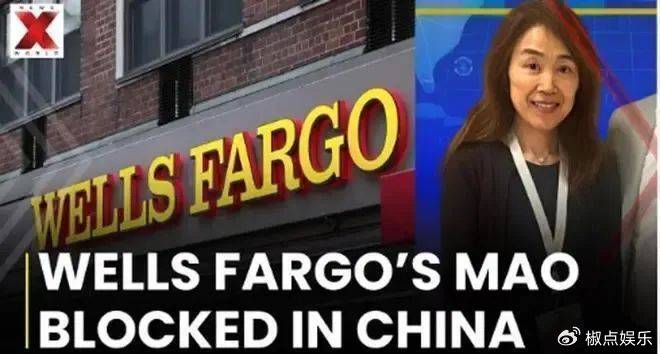
茅晨月被限制出境后,华尔街集体取消中国行程,都不来中国了?
Sou Hu Cai Jing· 2025-07-23 20:05
Core Viewpoint - The incident involving the restriction of outbound travel for Mao Chenyue, a managing director at Wells Fargo, highlights the increasing tensions in the US-China financial landscape and raises concerns about regulatory environments affecting multinational financial institutions [1][3]. Group 1: Incident Overview - Mao Chenyue was recently elected as the president of the International Factoring Association in June 2025, marking her as a key figure in global supply chain financing [3]. - Shortly after her return to China, she faced an outbound travel ban at Shanghai Pudong Airport, causing panic among major Wall Street firms like Goldman Sachs and JPMorgan Chase, which subsequently suspended travel to China and required daily financial reporting from employees [3][6]. Group 2: Regulatory Concerns - The incident reflects growing worries about the stringent regulatory environment in China, as even prominent figures like Mao Chenyue are not exempt from scrutiny, raising questions about the safety of operations for other multinational financial institutions [6][9]. - There are indications that some of Mao's actions may have crossed sensitive financial transfer boundaries, which are intolerable in the eyes of Chinese regulators [8]. Group 3: Broader Implications - The situation is seen as part of a larger geopolitical struggle, where financial elites become pawns in a silent "hostage game," with the real competition occurring at the national level [9]. - The event serves as a warning to the global financial market that no matter how innovative financial practices may be, they must adhere to legal boundaries, emphasizing the urgent need for multinational companies to operate within the laws of each country [9][11]. Group 4: Future Outlook - The future financial landscape is expected to prioritize transparency and compliance, with any attempts to exploit loopholes likely to incur significant penalties [11]. - As global economic integration accelerates, the importance of compliance will become increasingly critical for cross-border capital flows, necessitating strict adherence to legal regulations for sustained success [11][13].
保险中介公司融资成功的关键因素探讨
Sou Hu Cai Jing· 2025-06-10 06:43
Core Insights - The success of insurance intermediary financing hinges on the ability to clearly communicate business value, growth potential, and risk control to investors [1] Group 1: Differentiated Market Positioning - Focus on high-growth areas such as health insurance technology services, new energy vehicle insurance, and digital platforms for corporate group insurance [2] - Develop tailored services for specific customer segments, such as creating exclusive overseas employer liability insurance for cross-border e-commerce sellers [2] Group 2: Sustainable Profitability - Optimize revenue structure by reducing reliance on commission income and increasing the share of value-added services [2] - Demonstrate cost control capabilities through technology investments that lower marginal costs, such as using AI to replace 50% of customer service positions, reducing service costs by 40% [2] Group 3: Compliance as a Foundation - Maintain a complete national insurance intermediary license and avoid significant penalties [2] - Establish a customer fund account to strictly separate client funds from proprietary funds [2] Group 4: Technology Empowerment - Showcase the self-control rate of core systems, such as policy management systems and actuarial models [2] - Disclose the volume of data assets and their application scenarios, like developing an industry risk index based on data from over 100,000 corporate clients [2] Group 5: Capital Path Planning - Design valuation logic combining price-to-earnings (P/E) and price-to-sales (P/S) ratios, with early-stage projects using P/S ratios of 3-5 times and mature projects using P/E ratios of 15-20 times [2] - Carefully set performance commitments to avoid aggressive clauses, such as net profit compound growth rates exceeding 50% [2] Group 6: Team DNA - Founders should possess a dual background in insurance and technology to enhance investor confidence [2] - Implement a management stock ownership plan with a 3-year vesting period to align the interests of the core team [2] Group 7: Market Dynamics - The low approval rate for new insurance intermediary licenses from 2019 to 2025, with only 2 approved out of 210 applicants, highlights the importance of acquiring existing licenses [6] - The price range for regional insurance agency licenses is typically between 1.83 million to 3.5 million yuan, while national licenses can reach around 20 million yuan [6]
银行借力新消费“顶流”揽储
Zheng Quan Ri Bao Zhi Sheng· 2025-06-09 16:48
Core Viewpoint - The introduction of the Labubu toy by a national bank as a promotional tool for attracting new customers highlights a shift in banking marketing strategies towards emotional and social engagement with younger demographics [2][3]. Group 1: Marketing Strategy - A national bank in the northwest region has launched a promotional campaign offering a Labubu blind box for new customers who deposit 50,000 yuan for a 3-month term [2]. - The campaign has successfully attracted a significant number of new customers, indicating effective customer acquisition through the appeal of the Labubu toy [2][3]. - The strategy reflects a broader trend in banking where financial services are integrated with lifestyle elements to resonate with younger consumers [3]. Group 2: Emotional and Social Value - The use of Labubu as a marketing tool meets the emotional and social needs of specific consumer groups, particularly the Z generation, who value personalized and fun consumption symbols [3]. - This approach not only enhances customer acquisition efficiency but also encourages spontaneous sharing on social media, creating a "social currency" effect [3]. Group 3: Compliance and Risks - Industry experts caution that while the promotional strategy is effective in attracting new customers, it raises concerns about customer retention and compliance with regulatory standards [4][5]. - There are existing regulations that prohibit banks from using gifts or other improper means to attract deposits, which could lead to increased non-interest expenses and hidden liabilities [5]. - Long-term strategies should focus on enhancing customer loyalty and retention through quality products and services rather than relying on promotional gifts [5].