
和平宪法

Search documents
钟声:三问日本,撕开其所谓“和平国家”的假面
Ren Min Ri Bao· 2026-01-15 03:24
Group 1 - The core argument of the articles highlights the contradiction between Japan's self-portrayal as a "peaceful nation" and its actual military expansion and strategic shifts, raising concerns about its true intentions [1][4] - Japan's "Peace Constitution," which has historically restrained military expansion and promoted peaceful relations with neighboring countries, is increasingly viewed by right-wing factions as an obstacle to national normalization, leading to actions that undermine its original intent [2][3] - The Japanese government's inclination towards nuclear armament, including potential modifications to the "Three Non-Nuclear Principles," poses a significant threat to regional security and the global non-proliferation regime, as Japan has been a major producer and stockpiler of plutonium [3][4] Group 2 - Japan's recent actions, including interference in Taiwan issues and the promotion of "China threat" narratives, have exacerbated tensions with neighboring countries and raised alarms about its role in regional stability [3][4] - The historical context of Japan's militaristic past, particularly during World War II, is invoked to caution against its current trajectory towards militarization, which mirrors past strategies of deception and aggression [4] - The international community is urged to remain vigilant and recognize the underlying motives behind Japan's actions, as they may threaten both regional and global peace [4]
三问日本,撕开其所谓“和平国家”的假面(钟声)
Ren Min Ri Bao· 2026-01-14 23:58
Core Viewpoint - Japan's current strategic direction poses significant risks, as the government promotes military expansion while publicly advocating for peace, revealing a stark contrast between rhetoric and actions [1][4]. Group 1: Japan's Military Expansion - Prime Minister Suga Yoshihide's push to revise the "Security Three Documents" aims to strengthen Japan's independence and peace, yet this contradicts the country's self-portrayal as a "peaceful nation" [1]. - Japan's right-wing factions view the "Peace Constitution" as an obstacle to national normalization, leading to actions that undermine its original intent, such as the relaxation of military restrictions and increased defense spending [2]. - The government is moving towards a "new militarism," with policies that effectively nullify the principles of self-defense and implicitly accept the right to engage in warfare [2]. Group 2: Nuclear Policy and Regional Stability - Japan's government is showing signs of a nuclear ambition by considering modifications to its "Three Non-Nuclear Principles," which could destabilize regional security and challenge international non-proliferation norms [3]. - The country has a significant stockpile of plutonium, far exceeding its civilian energy needs, raising concerns about its nuclear intentions and potential impacts on global strategic stability [3]. - Japan's involvement in regional tensions, particularly regarding Taiwan and its relations with neighboring countries, exacerbates conflicts and undermines peace efforts in Asia [3]. Group 3: Historical Context and International Perception - Japan's historical militarism and aggressive foreign policy during World War II serve as a cautionary tale, as current actions echo past strategies of deception and military buildup under the guise of peace [4]. - The international community is urged to remain vigilant and recognize the true intentions behind Japan's "peaceful" facade, as the country navigates a dangerous path towards militarization [4].
国际论坛:高市早苗的错误言论必须撤回
Ren Min Ri Bao· 2026-01-08 00:24
Group 1 - The remarks made by Japanese Prime Minister Kishi Nobuo regarding Taiwan represent a serious violation of Japan's "Peace Constitution" and the Japan-China Peace and Friendship Treaty, indicating a blatant interference in China's internal affairs [2] - The 1972 Japan-China Joint Communiqué states that Taiwan is an inseparable part of China's territory, and Japan is expected to adhere to this commitment [2] - Kishi's statements are seen as a provocation that undermines the foundation of Japan-China friendship, which has been cultivated through various cultural and educational exchanges over the years [3][5] Group 2 - The Japan-China Friendship Association has been actively promoting mutual understanding and friendship between the two nations through cultural activities and educational programs [3] - The association has expressed strong opposition to actions by Japanese officials that could harm Japan-China relations, such as visits to the Yasukuni Shrine and plans to deploy offensive weapons [3] - The historical context of Japan's wartime actions against China is emphasized, with a commitment to ensuring that such conflicts do not recur, reflecting the association's core mission of "never again war" [4][5]

战败八十年,日本仍未算清历史账、安全账(国际论坛)
Ren Min Ri Bao· 2025-12-31 00:12
Core Viewpoint - Japan should not treat the tensions caused by Prime Minister Kishi's remarks as speculative capital but should take this opportunity to confront its historical responsibilities and reflect on its role in regional security [2][4]. Group 1: Historical Reflection - This year marks the 80th anniversary of the victory in the World Anti-Fascist War, prompting Japan to reassess its history of external aggression [2]. - The new Prime Minister Kishi Sema's comments on Taiwan have escalated tensions, leading to a strong protest from China, which indicates a significant deterioration in Japan-China relations [2][3]. - The lack of awareness among some Japanese citizens regarding the seriousness of the situation reflects a broader issue: Japan has never fully confronted its wartime responsibilities [2][3]. Group 2: Security and Military Posture - The term "security assurance" has become prevalent in Japanese society, but discussions have shifted towards identifying enemies and enhancing military capabilities rather than preventing the recurrence of war [3]. - Kishi's statements have increased the risk of Japan's involvement in the Taiwan issue, marking a potential shift towards military intervention, which China perceives as a direct threat [3]. - Japan's post-war commitment to a "peace constitution" is being undermined, as the government has not adequately explained its increasing military expenditures and the potential shift from a defensive to a more aggressive military posture [3][4]. Group 3: Media and Public Sentiment - Japanese media often frames external crises with a focus on China, reflecting a societal trend towards hardline stances during election periods [4]. - The fervor for a hardline approach raises questions about the underlying motivations and the need for Japan to reassess the heavy costs of war [4].
“坚决反对日本重蹈历史覆辙”
Ren Min Ri Bao· 2025-12-30 00:39
Core Viewpoint - Japan is accelerating its military expansion despite widespread opposition, with recent provocative statements from Prime Minister Fumio Kishida and plans to revise defense policies, raising concerns about regional stability and peace [1][2]. Group 1: Military Expansion and Policy Changes - Japan's government is moving to amend the "Three Principles on Defense Equipment Transfer" and is considering changes to its "Non-Nuclear Principles," which could lead to increased military capabilities and weapon exports [1][2]. - The defense budget for fiscal year 2026 has been approved at approximately 9.04 trillion yen (about 410 billion RMB), marking a historical high and indicating a shift towards militarization [2]. Group 2: Public Response and Opposition - Large protests have erupted in Japan, with citizens demanding the withdrawal of Kishida's controversial statements and opposing the government's efforts to relax weapon export restrictions [1][2]. - Activists and citizens express deep concern over the potential revival of militarism and the government's attempts to downplay Japan's historical role as a wartime aggressor, emphasizing the need for historical education and accountability [3].
视频丨日本民众集会反对日本扩军备武 呼吁正视历史
Yang Shi Xin Wen Ke Hu Duan· 2025-12-28 14:50
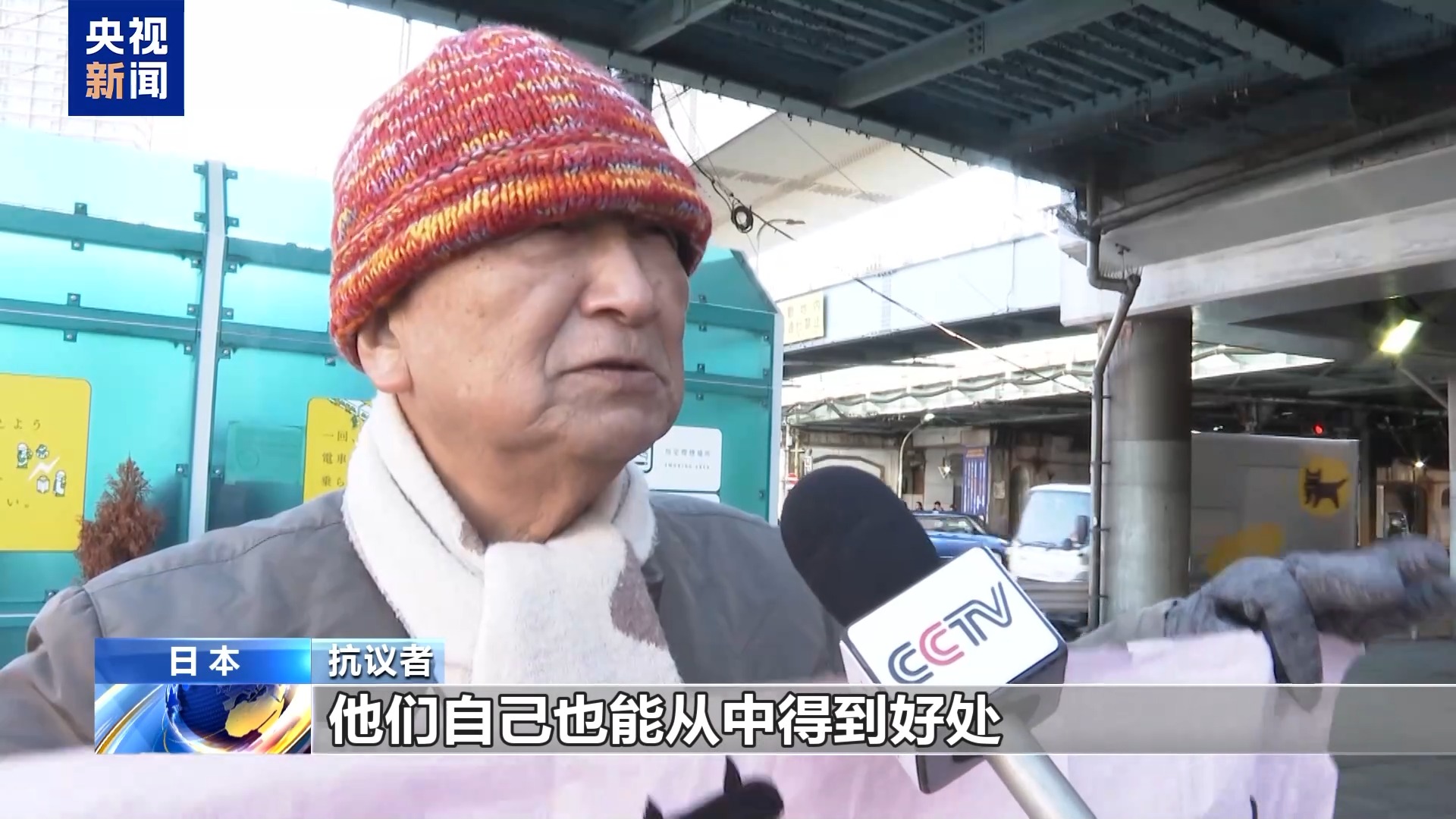
Core Viewpoint - Japanese citizens are protesting against the government's significant increase in defense spending, advocating for adherence to the "peace constitution" [2] Group 1: Public Sentiment - Protesters oppose the government's military expansion and assert that the ruling parties are misleading the public by claiming that military buildup will lead to peace [4] - There is a call for the preservation of Article 9 of the constitution, which prohibits Japan from waging war or deploying troops abroad [5] Group 2: Economic Concerns - The increase in defense spending is seen as diverting funds away from social welfare, with concerns that it represents preparations for war rather than peace [7] - Protesters express sadness over the government's rhetoric towards China, suggesting that it could lead to conflict, and emphasize the importance of maintaining friendly relations between the two nations [7]
日本民众说德国意大利都作出反省
Xin Lang Cai Jing· 2025-12-28 13:12
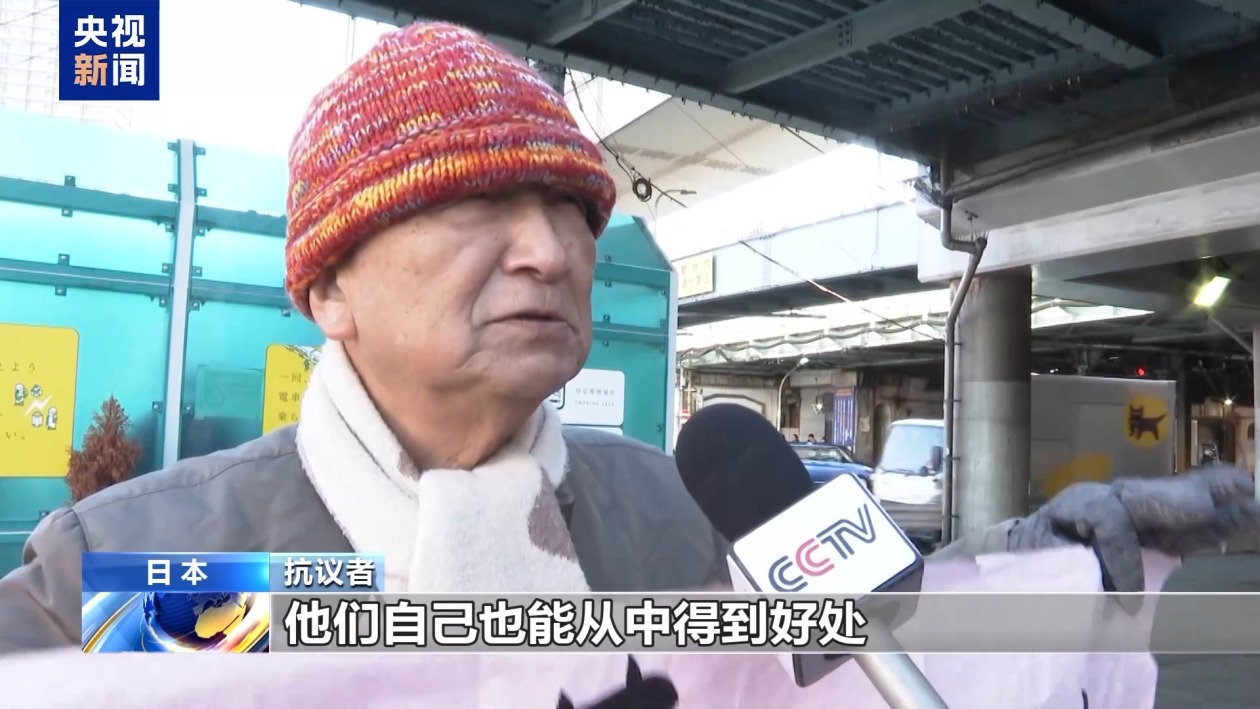
Core Viewpoint - Japanese citizens are protesting against the government's significant increase in defense spending and are calling for a recognition of historical mistakes, emphasizing the importance of adhering to the "peace constitution" [1] Group 1: Public Sentiment - Citizens held a protest in Tokyo on December 28, opposing the government's defense budget increase and advocating for the preservation of the peace constitution [1] - Protesters expressed their opposition to the government's militaristic rhetoric and the expansion of military capabilities, arguing that it contradicts the principles of peace [1] Group 2: Historical Context - Protesters referenced Germany and Italy, stating that these countries have reflected on their actions during World War II, implying that Japan should also acknowledge its past [1] - The presence of Article 9 in Japan's constitution, which prohibits war and the deployment of military forces abroad, was highlighted as a critical legal framework that should guide the nation's actions [1] Group 3: Economic Implications - The increase in defense spending is seen as diverting funds away from social welfare, which could negatively impact the quality of life for citizens [1] - There is a concern that the government's focus on military expansion is preparing for potential conflict rather than fostering peace [1]
日本民众集会反对日本扩军备武 呼吁正视历史
Xin Lang Cai Jing· 2025-12-28 12:13
Group 1 - The core viewpoint of the protests is against the Japanese government's significant increase in defense spending, with calls to uphold the "peace constitution" [1][3] - Protesters express opposition to the government's militarization and assert that the ruling parties are prioritizing military expansion for profit rather than peace [3] - The increase in defense spending is criticized for diverting funds from social welfare and being perceived as preparation for war, which contradicts Japan's constitutional commitment to peace [4] Group 2 - Protesters reference historical reflections from Germany and Italy post-World War II, emphasizing the importance of adhering to Article 9 of the Japanese constitution, which prohibits war [4] - There is a sentiment among protesters that the government's rhetoric against China is escalating tensions and could lead to conflict, which they find distressing [4]
马来西亚学者:日本政府妄言“拥核”无异于政治自杀
Xin Lang Cai Jing· 2025-12-27 13:33
Group 1 - The Japanese government under Prime Minister Sanae Takaichi is attempting to revise the "Three Security Documents," specifically aiming to modify the clause regarding "not introducing nuclear weapons," which has sparked strong criticism domestically and internationally [1][2] - The remarks made by Takaichi's government are seen as blurring the lines of Japan's pacifist constitution, potentially worsening relations with neighboring countries and threatening regional security [1][2] - There is a growing concern that Japan's actions may lead to an arms race in East Asia, as neighboring countries may feel compelled to respond militarily to Japan's perceived shift towards militarization [2][6] Group 2 - The Japanese government's push for nuclear capabilities reflects a strategic anxiety regarding the adequacy of the U.S. nuclear umbrella, as well as a desire to become a "normal country" free from post-World War II constraints [4][6] - The potential pursuit of nuclear weapons by Japan could lead to global sanctions and economic collapse, as Japan is a signatory of the Non-Proliferation Treaty [4][6] - Japan's recent policy changes, including easing weapon export restrictions, indicate a shift from being a "peacekeeper" to a "potential arms dealer," which could complicate geopolitical dynamics in the region [6]
“战败国”日本的三重背叛
Xin Lang Cai Jing· 2025-12-26 06:43
Core Viewpoint - Japan's recent policy shifts are seen as a "triple betrayal" of its post-World War II commitments, challenging the legal framework that defines its status as a defeated nation [1][2]. Legal Foundations - The post-war international order for Japan is based on legal documents such as the Cairo Declaration, Potsdam Declaration, and its own "Peace Constitution," which Japan has increasingly deviated from [2][3]. - The "Peace Constitution" prohibits Japan from maintaining military forces or engaging in war, reflecting the international community's intent to limit Japan's military capabilities post-war [2]. Territorial Claims - Japan's actions regarding territorial sovereignty, particularly in the Diaoyu Islands and the Okinotorishima, demonstrate a systematic challenge to the legal constraints established by the Potsdam Declaration [3][4]. - The "gray zone strategy" employed by Japan aims to redefine territorial boundaries and assert claims that contradict international law [3]. Military Policy Changes - Japan's military policy has shifted from a defensive posture to one that includes collective self-defense and offensive capabilities, undermining the principles of its "Peace Constitution" [4][10]. - The 2014 reinterpretation of the constitution to allow collective self-defense and the 2022 National Security Strategy signify a departure from Japan's post-war military restrictions [4][10]. Historical Responsibility - Japan's historical narrative has become increasingly ambiguous, undermining its post-war peace responsibilities, which include acknowledging its wartime actions and fostering regional cooperation [11][12]. - The trend of downplaying historical aggression and revising educational materials reflects a broader shift away from Japan's commitment to peace and reconciliation [13][16]. Regional Cooperation - Japan's reliance on exclusive security frameworks, such as the Quad, raises concerns about regional cooperation and the potential for increased tensions [14][16]. - The shift towards militarization and away from cooperative security mechanisms threatens the stability of the post-war order in East Asia [16]. Arms Export Policy - Japan's historical restrictions on arms exports are being eroded, with recent policy changes indicating a move towards a more aggressive military export stance [15][16]. - The potential for Japan to expand its military capabilities, including nuclear options, poses significant risks to regional security dynamics [10][15].