
国家标准

Search documents
“国家标准走基层”甘肃行 让国标扎根黄土
Zhong Guo Jing Ji Wang· 2025-09-29 06:56
Group 1 - Gansu Province is showcasing its achievements in climate change standards through the "National Standards Going to the Grassroots" initiative, highlighting how standards translate into tangible benefits for enterprises, such as reduced carbon emissions and increased revenues [1][15] - The ecological transformation in Gansu is evident, with improved vegetation due to effective implementation of national standards, reflecting a commitment to green development [2][15] - The Gansu Provincial Ecological Environment Science Design Institute emphasizes the importance of data quality in the carbon market, implementing mechanisms for regular data verification and management to ensure accurate carbon emissions reporting [4][15] Group 2 - Gansu's enterprises are adopting carbon emission standards as a driving force for green development, with many power plants facing financial losses due to outdated equipment, prompting a strict adherence to standards to mitigate losses [4][15] - The introduction of national standards, such as the "Carbon Emission Accounting and Reporting Requirements," serves as a foundation for companies like Lanzhou Jingshi Resource Environment Technology Co., which conducts carbon audits for local industries [5][15] - Traditional industries, such as Lanzhou Aluminum, are leveraging national standards to enhance their operations, resulting in significant reductions in carbon emissions and improved environmental conditions [6][7][9] Group 3 - The establishment of a modern industrial system in the non-ferrous metal sector is supported by national standards, with Lanzhou Aluminum investing 597 million yuan to implement carbon reduction and digital transformation projects [9][15] - Lanzhou Lishi Superalloy New Materials Co. has developed a digital energy and carbon management system, achieving a 10% reduction in carbon emissions through precise monitoring and optimization of energy consumption [11][15] Group 4 - Lanzhou Taiji Ion Technology Co. has made significant strides in the field of medical equipment by developing China's first carbon ion therapy system, breaking foreign monopolies and contributing to the localization of high-end medical devices [12][14] - The approval of a national standard for medical ion therapy systems is a strategic move for Gansu, aiming to secure a leading position in the industry and enhance the competitiveness of domestic products [14][15]


【图解】涉及房车、智能家居 多项国家标准发布
Zhong Guo Jing Ji Wang· 2025-09-25 10:11
Core Viewpoint - The recent release of multiple national standards by the State Administration for Market Regulation (National Standards Committee) significantly enhances product safety, convenience, and promotes high-quality development in industries such as smart home devices and recreational vehicles [2][9]. Group 1: Refrigeration Appliances - A new national standard for household and similar use refrigeration appliances (GB/T 8059—2025) has been approved, set to be implemented on June 1, 2026. This revision addresses consumer demands for meat and seafood preservation by introducing a "deep freeze compartment" definition and performance assessment requirements [3][4]. - The standard includes a new requirement for "smart grid signal response functionality," allowing refrigeration appliances to adjust their operation based on electricity grid signals, promoting energy conservation and environmental protection [4]. Group 2: Multifunctional Ceiling Appliances - The new national standard for multifunctional ceiling appliances (GB/T 26183-2025) will be implemented on March 1, 2026. It introduces specific product requirements and testing methods for use in kitchens, balconies, and bathrooms, ensuring safety and reliability in various environments [5]. Group 3: Smart Mattresses - The smart mattress standard (GB/T 46272—2025) will take effect on March 1, 2026. It specifies requirements for remote control, alerts, and voice interaction, enhancing user convenience and data management for health monitoring [6]. - The standard mandates comfort and health performance, including adaptive adjustment capabilities and strict noise limits, ensuring minimal disturbance during sleep [7]. Group 4: Recreational Vehicles - The recommended national standard for recreational vehicles (GB/T 46094-2025) outlines safety signs and information symbols, detailing technical requirements for their shape, color, size, and arrangement. This aims to enhance user awareness of safety practices while using these vehicles [8][9]. - The standard will be implemented on March 1, 2026, contributing to improved safety and convenience in the use of recreational vehicles, thereby supporting the industry's high-quality development [9]. Group 5: Individual Business Credit Evaluation - The national standard for individual business credit evaluation indicators establishes basic requirements and content for credit evaluation activities, addressing the challenges of financing for individual businesses [10]. - This standard supports the development of a unified national market and enhances the social credit system, providing a framework for flexible and prudent regulation to assist individual businesses [10].

629份推荐性国家标准+49项强制国家标准批准发布
仪器信息网· 2025-09-05 03:58
Core Viewpoint - The article discusses the release of multiple national standards by the State Administration for Market Regulation, covering various sectors including steel, ceramics, and chemical products, with a total of 49 mandatory standards and 622 recommended standards set to be implemented by 2025 and 2026 [2][6]. Group 1: Mandatory National Standards - A total of 49 mandatory national standards have been approved, including "Fall Protection Safety Nets" [2]. - The implementation date for several standards, such as "Chemical Composition Allowable Deviation for Steel and Alloys," is set for December 1, 2025 [6]. - Other standards include methods for determining chromium, vanadium, boron, and aluminum content in steel and alloys, all effective from March 1, 2026 [6]. Group 2: Recommended National Standards - 622 recommended national standards have been published, including "Packaging and Storage Graphic Symbols" [2]. - Specific testing methods for ceramic tiles and various chemical analyses are included in the recommended standards [6][7]. - The implementation dates for these standards vary, with many set for March 1, 2026 [7][8]. Group 3: Industry Impact - The new standards are expected to enhance product quality and safety across industries such as construction, manufacturing, and chemicals [2][6]. - The introduction of these standards may lead to increased compliance costs for companies but is anticipated to improve overall market competitiveness [2][6]. - The standards will also facilitate better quality control and assurance processes within the relevant industries [2][6].

新华财经|市场监管总局:“十四五”期间 国家标准总数已达到4.7万余项
Xin Hua Wang· 2025-08-22 12:56
Core Viewpoint - The article discusses the efforts of the State Administration for Market Regulation in China to enhance the standardization system to support high-quality development, focusing on faster, better, stronger, and more open standards. Group 1: Faster Standard Supply - The average development cycle for national standards has been reduced from 36 months to 16 months [1] - A series of important standards for electric vehicles and household appliances have been released to promote smarter and greener production and consumption [1] Group 2: Better Standard Quality - Over 57% of important technology project plans have formed standards [2] - More than 2,400 national standards have been published in key areas such as artificial intelligence and intelligent manufacturing [2] - The revised energy consumption limit standard for crude steel is expected to save over 10 million tons of standard coal annually [2] Group 3: Stronger Standard Effectiveness - More than 500 mandatory national standards related to safety production and consumer product safety have been introduced [2] - In the first half of the year, there was a 131% increase in newly established mandatory national standards and a 58% increase in newly published standards [2] - The formaldehyde release limit for man-made boards has been raised to E0 level, meeting the strictest global requirements [2] Group 4: More Open Standard Cooperation - During the 14th Five-Year Plan period, China has led the development of 1,079 international standards and adopted over 6,900 international standards [2] - Over 500 standards have achieved mutual recognition between China and other countries [2] - Chinese standards are being used in several international railway cooperation projects and agricultural standardization demonstration zones in Africa [2]
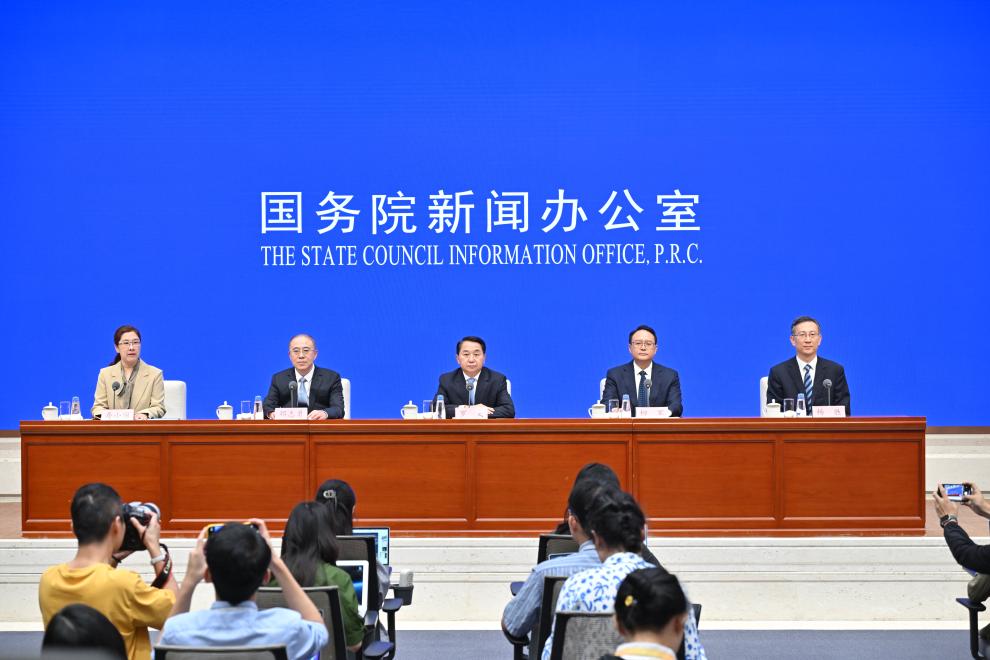
市场监管总局:“十四五”期间 国家标准总数已达到4.7万余项
Xin Hua Cai Jing· 2025-08-22 06:24
Core Points - The National Market Supervision Administration has released over 13,000 national standards during the 14th Five-Year Plan period, bringing the total number of national standards to over 47,000 [1][2][3] Group 1: Standard Supply - The average development cycle for national standards has been reduced from 36 months to 16 months [1] - New standards for key sectors such as new energy vehicles and home appliances have been implemented to enhance the intelligence and sustainability of production equipment and consumer goods [1] Group 2: Standard Quality - Over 57% of important technology project standards have been established [2] - More than 2,400 national standards have been released in key areas like artificial intelligence and smart manufacturing [2] - The revised energy consumption limit standard for crude steel is expected to save over 10 million tons of standard coal annually [2] Group 3: Standard Effectiveness - Over 500 mandatory national standards related to safety production and consumer product safety have been introduced [2] - There has been a significant increase in the establishment and publication of mandatory national standards, with 148 new projects and 106 new releases in the first half of the year, representing growth of 131% and 58% respectively [2] Group 4: Standard Cooperation - During the 14th Five-Year Plan period, China has led the development of 1,079 international standards and adopted over 6,900 international standards [3] - More than 500 standards have achieved mutual recognition between China and other countries, enhancing the global influence of Chinese standards [3]
住房城乡建设部就9项工程建设强制性国家规范、6项国家标准公开征求意见
news flash· 2025-07-11 03:45
Core Points - The Ministry of Housing and Urban-Rural Development is soliciting public opinions on 9 mandatory national standards for engineering construction and 6 national standards [1] Group 1: Mandatory National Standards - The 9 mandatory national standards include the "Special Food Engineering Project Specification (Draft for Comments)" and the "Prefabricated Fast-Moving Food Engineering Project Specification (Draft for Comments)" [1] - Other standards in this category include the "General Specification for Metal Structures in Water Conservancy and Hydropower Engineering (Draft for Comments)" [1] Group 2: National Standards - The 6 national standards open for public comment include the "Monitoring Standards for Reservoir Hydrology and Sediment (Draft for Comments)" and the "Standards for Engineering Rock Mass Testing Methods (Draft for Comments)" [1] - Additionally, the "Process Design Specification for Aluminum Electrolysis Plants (Partial Revision Draft for Comments)" is also included [1]
新一批国家标准发布 涵盖新能源汽车、农业机械等领域
news flash· 2025-06-12 03:11
Group 1 - The State Administration for Market Regulation (SAMR) has released a set of important national standards covering various sectors including transportation, agriculture, safety production, and high-tech industries [1] - In the transportation sector, new standards include classifications for public bus and electric vehicle stations, intermodal passenger transport services, energy consumption limits for new energy vehicles, braking technology requirements for passenger cars, and safety standards for motorcycles [1] - In agriculture, standards have been established for the construction of agricultural machinery recycling systems, national standards for plant and animal quarantine, and testing standards for fertilizers, fruits and vegetables, feed, and fibers [1] Group 2 - In safety production, mandatory national standards have been introduced for safety colors and signs, safety in offshore oil and gas extraction, and for standalone smoke fire detection and alarm devices [1] - In the high-tech sector, national standards have been published for semiconductor devices, electromagnetic compatibility, electronic assembly technology, rail transit, remote sensing satellites, and industrial glass [1]