
国际紧急经济权力法(IEEPA)

Search documents
特朗普回应美最高法院大法官关税质疑,还有“B计划”?
Di Yi Cai Jing· 2025-11-07 09:51
Core Viewpoint - The authority of President Trump to impose broad tariffs on trade partners under the International Emergency Economic Powers Act (IEEPA) is being challenged in the U.S. Supreme Court, raising significant legal and economic implications for U.S. trade policy [1][2]. Group 1: Supreme Court Proceedings - The Supreme Court held a three-hour oral argument regarding Trump's tariff authority, with most justices expressing skepticism about the government's legal basis for the tariffs [2][3]. - The court consists of six conservative justices and three liberal justices, with the liberal justices openly opposing Trump's emergency tariff powers [3]. - Chief Justice Roberts questioned the absence of the term "tariff" in the IEEPA and emphasized that taxation is traditionally a congressional power, suggesting a potential limitation on presidential authority [3]. Group 2: Economic Impact of Tariffs - U.S. consumers are expected to bear over 55% of the tariff costs, with American businesses absorbing 22% and foreign exporters taking on 18% [3]. - The average effective tariff rate faced by U.S. consumers is estimated at 17.9%, the highest since 1934, leading to a projected 1.3% increase in price levels and an average household loss of $1,800 [4]. - By the end of 2025, these tariffs could increase the unemployment rate by 0.3 percentage points, rising to 0.7 percentage points by the end of 2026 [4]. Group 3: Potential Outcomes and Alternatives - If the Supreme Court rules against the emergency tariffs, companies involved in the lawsuit may receive refunds, while others could face complex administrative processes for reimbursement [5]. - The court may not entirely negate the president's emergency powers but could impose stricter limitations on the scope of tariffs that can be enacted unilaterally [6]. - Trump has mentioned a "second plan," indicating that alternative legal avenues exist for imposing tariffs, although these may be less effective than the IEEPA [5][6].
美国最高法院听证会:特朗普大范围关税合法性面临质疑
Di Yi Cai Jing· 2025-11-06 00:25
Core Points - The U.S. Supreme Court held a hearing regarding the Trump administration's appeal on tariff rulings, which could generate trillions in revenue over the next decade [1] - The case tests the limits of presidential power in imposing tariffs and whether it infringes on Congress's authority [2][3] Tariff Authorization - The hearing lasted nearly two and a half hours, with government representatives arguing in favor of tariffs and opposing counsel representing businesses and states [2] - Trump is the first president to invoke the International Emergency Economic Powers Act (IEEPA) to impose tariffs, claiming it is necessary for national security [2] - The Constitution grants Congress the power to levy taxes and tariffs, raising questions about the legality of Trump's actions [2][3] Major Questions Doctrine - The Supreme Court has previously used the "major questions doctrine" to overturn significant policies, requiring clear legislative authorization for actions with substantial economic and political impact [3][4] - The lower court ruled against Trump, stating that the tariffs lacked legal basis under this doctrine [4] Implications of the Hearing - The outcome of the case could have significant consequences, including potential refunds to importers if the tariffs are deemed illegal [6] - Recent data indicates that tariffs imposed under IEEPA have generated approximately $89 billion in revenue from February 4 to September 23 [6] - Market predictions regarding the likelihood of the Supreme Court supporting Trump's tariffs have decreased significantly following the hearing [6]
又要创造历史?特朗普下月或亲赴美最高法院“督战”
第一财经· 2025-10-16 07:08
Core Viewpoint - The article discusses President Trump's potential visit to the Supreme Court for a significant case regarding tariffs, emphasizing the importance of tariffs for national defense and economic stability [3][4]. Group 1: Legal Context - The Supreme Court is set to hear arguments on November 5 regarding Trump's request to overturn lower court rulings that determined he lacked the authority to impose tariffs under the International Emergency Economic Powers Act (IEEPA) [3][6]. - Trump's administration argues that the IEEPA grants the president the power to regulate imports in response to "any unusual and extraordinary threat," while opponents claim the law does not explicitly mention tariffs [6][7]. - Trump's chief lawyer contends that the Supreme Court has previously dismissed similar arguments and that decisions regarding national emergencies should be made by the president and Congress [6][7]. Group 2: Ongoing Tariff Actions - Despite the legal challenges, Trump continues to announce new tariffs, including a 100% tariff on imported brand-name drugs and a 50% tariff on cabinets and related products [7][8]. - The administration has also proposed a 25% tariff on heavy trucks to protect American manufacturers [7][8]. - Legal experts note that the Trump administration is rapidly advancing its tariff agenda, indicating a shift towards a dual-track tariff strategy regardless of the Supreme Court's decision [8].

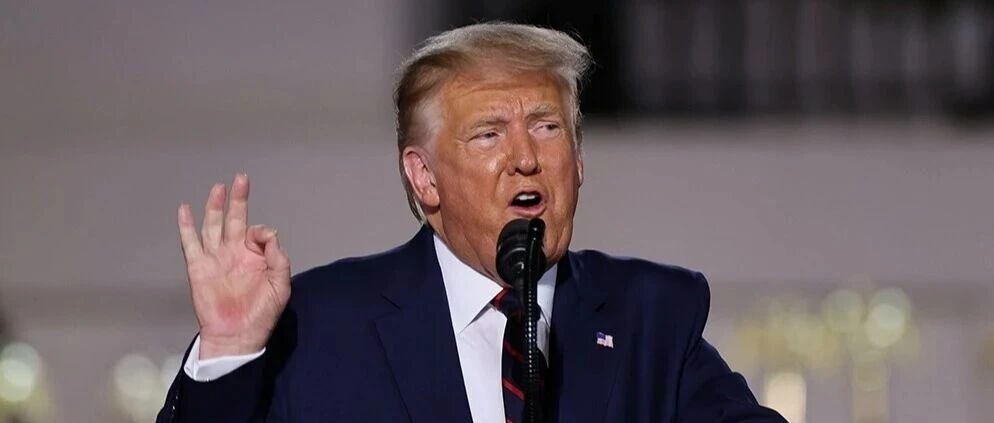
定了!美国最高法院将在11月开审,努力“迅速解决”特朗普关税案
Di Yi Cai Jing· 2025-09-10 07:33
Core Points - The U.S. Supreme Court is set to hear the "V.O.S. Selections v. Trump" case in the first week of November, indicating a swift resolution to the matter [1][3] - The case arises after the U.S. Court of Appeals ruled that most tariffs imposed by the Trump administration were illegal, leading the White House to request expedited review [1][4] - If the Supreme Court rules against the tariffs, the average effective tariff rate of 16.3% could be reduced by at least half, potentially resulting in the refund of hundreds of billions of dollars in tariffs [1][5] Legal Context - The Trump administration's tariffs are claimed to be authorized under the International Emergency Economic Powers Act (IEEPA), which does not explicitly grant the power to impose tariffs [4] - The U.S. Court of Appeals ruled 7-4 that the IEEPA does not authorize such broad tariffs, emphasizing that the Constitution grants Congress the power to set tariffs, not the President [4] Financial Implications - U.S. Treasury Secretary indicated that if the Supreme Court deems the tariffs illegal, the government may have to refund about half of the tariffs collected, which would be a significant financial burden [5] - As of August 12, the U.S. had collected $142 billion in tariff revenue for the fiscal year [5] Case Developments - The Court of Appeals upheld parts of the lower court's ruling but sent back the issue of a nationwide permanent injunction for further review, ensuring judicial authority is not overstepped [5] - The case reflects the ongoing tension between executive power and legislative authority regarding tariff imposition [4][5] Stakeholder Reactions - Legal representatives for companies affected by the tariffs are advocating for the protection of small businesses and adherence to the rule of law in light of what they describe as excessive tariff actions [6]

特朗普政府关税“B计划”曝光
第一财经· 2025-09-03 00:34
Core Viewpoint - The article discusses the potential legal and economic implications of the U.S. Supreme Court's decision regarding the Trump administration's tariffs, particularly the "reciprocal tariffs" and the use of the International Emergency Economic Powers Act (IEEPA) [3][4]. Summary by Sections Legal Context - The U.S. Court of Appeals ruled that most of the Trump administration's tariff measures are illegal, which undermines the administration's ability to use tariffs as a key economic policy tool [3][6]. - The ruling emphasized that the power to impose tariffs is constitutionally granted to Congress, not the President, and that the IEEPA does not authorize large-scale tariffs [6][10]. Alternative Tariff Measures - Treasury Secretary Becerra indicated that the government has backup plans, including the use of other domestic laws such as Section 301, Section 232, Section 122, and Section 338 [4][10]. - Section 338 allows the President to impose tariffs of up to 50% on imports from countries found to discriminate against U.S. trade, although it has not been formally used since the 1930s [6][7]. - Section 232 investigations have been initiated on various products, including steel, aluminum, and semiconductors, indicating a broader strategy for tariff imposition [9]. Market Reactions - The market response to the Appeals Court ruling was muted, with investors adopting a wait-and-see approach, indicating an expectation of ongoing legal disputes and policy shifts [11][12]. - The potential for an unfavorable Supreme Court ruling could significantly impact companies that have adjusted their supply chains and pricing strategies based on current tariffs [12]. International Implications - The article notes that the European Council President expressed frustration over the EU's passive stance in trade negotiations with the U.S., emphasizing the need for stronger trade partnerships globally [13][14]. - Even if the Supreme Court rules against the Trump administration's tariffs, it does not automatically invalidate international treaties, but it may affect the execution of current agreements and future negotiations [14].
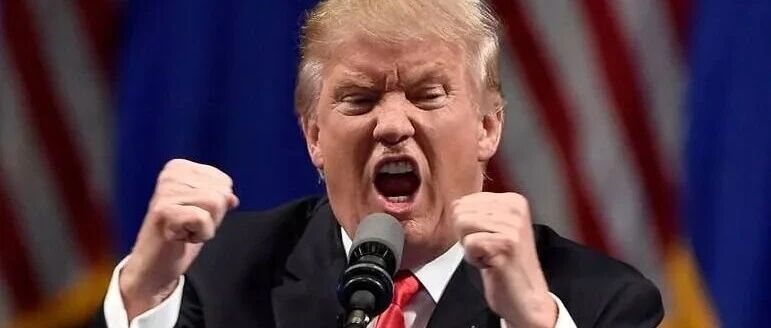
特朗普政府关税“B计划”曝光,转折点出现了吗?
Di Yi Cai Jing· 2025-09-02 11:32
Group 1 - The core viewpoint is that the U.S. government is exploring alternative tariff methods in response to potential legal challenges against Trump's "reciprocal tariffs" under the IEEPA [1][2][3] - U.S. Treasury Secretary Bessent believes the Supreme Court will support the use of IEEPA for imposing tariffs, but acknowledges that other legal frameworks exist, albeit with less efficiency and power [4][5] - The recent ruling by the U.S. Court of Appeals has weakened the Trump administration's ability to use tariffs as a key economic policy tool, allowing tariffs to remain in place until October 14 for potential Supreme Court appeal [1][3] Group 2 - Experts suggest that if the Trump administration loses the case, it can still utilize other domestic laws such as Sections 301, 232, 122, and 338 for imposing tariffs [2][5][7] - Section 232 investigations have already been initiated on 11 categories of products, including steel, aluminum, and semiconductors, indicating a broad scope for potential tariffs [6] - Section 122 allows for tariffs up to 15% to address balance of payments issues, but these tariffs are limited to 150 days unless extended by Congress [7] Group 3 - The international market response has been muted, with investors adopting a wait-and-see approach due to the uncertainty surrounding the legal and policy landscape of tariffs [8] - The potential adverse ruling from the Supreme Court could significantly impact companies that have adjusted their supply chains and pricing strategies based on current tariffs [8] - European leaders express frustration over the U.S. trade approach, emphasizing the need for stronger trade partnerships globally to enhance predictability and reduce strategic dependencies [9]
美国白宫:根据《美墨加协定》(USMCA),符合优惠关税待遇的商品,继续不受国际紧急经济权力法(IEEPA)下对加拿大征收关税的影响。
news flash· 2025-07-31 23:14
Core Point - The White House confirms that goods eligible for preferential tariff treatment under the USMCA will continue to be unaffected by tariffs imposed on Canada under the International Emergency Economic Powers Act (IEEPA) [1] Group 1 - The USMCA provides a framework for trade relations between the US, Mexico, and Canada, ensuring that certain goods maintain preferential tariff status [1] - The IEEPA allows the US government to impose tariffs during national emergencies, but this will not impact USMCA-compliant goods [1]
白宫经济顾问哈塞特表示,如果特朗普认为巴西的行动和政策构成国家安全威胁,他有权根据国际紧急经济权力法(IEEPA)征收关税。
news flash· 2025-07-13 13:32
Core Viewpoint - The White House economic advisor Hassett stated that President Trump has the authority to impose tariffs under the International Emergency Economic Powers Act (IEEPA) if he perceives Brazil's actions and policies as a national security threat [1] Group 1 - The potential for tariffs on Brazil is linked to national security concerns as articulated by the White House [1]