
国际话语权

Search documents
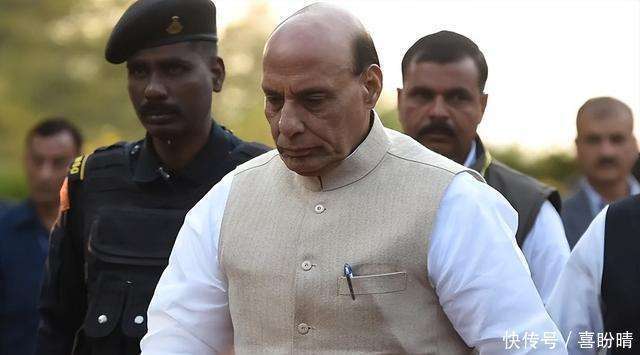
印度防长公开暗讽特朗普:美国的贸易战,无法阻止印度成世界强国
Sou Hu Cai Jing· 2025-08-25 03:41
Core Viewpoint - India's Defense Minister Singh publicly asserted that no force can stop India from becoming a global power, reflecting India's strong stance against external pressures, particularly from the recent economic measures taken by the Trump administration [1][6]. Group 1: Impact of Trump's Tariff Policy - The Trump administration's recent tariff policy, imposing up to 50% tariffs on Indian goods, has significantly impacted India's economy, making its products less competitive in the U.S. market and causing widespread discontent [2][4]. - India views the tariff as not only an economic setback but also a challenge to its national dignity, especially given its status as a major trade partner of the U.S. [4]. Group 2: India's Response and Countermeasures - India has expressed three main grievances regarding the tariff policy: the loss of competitiveness for its goods, the abrupt change in U.S. policy despite their special relationship, and the perceived double standards in U.S. trade negotiations with China [4][6]. - In response, India has taken several countermeasures, including strategic adjustments to strengthen ties with Russia, canceling a planned $3.6 billion arms purchase from the U.S., and deepening cooperation in the rare earth sector with Russia [9][11]. Group 3: Economic and Military Considerations - Singh emphasized India's large economy, projected to become the third-largest globally, and its rapid recovery post-COVID-19, positioning it as a key player in the global economy [6][15]. - Despite its military strength, India still relies on imports for high-tech weapons and faces challenges in achieving complete military independence [15]. Group 4: Future Outlook and Challenges - While Singh expresses confidence in India's rise, the country faces significant challenges, including a relatively single industrial structure and dependence on the U.S. market, which complicates its ability to respond to tariffs effectively [15]. - To enhance its international influence, India may need to adopt strategies similar to China's, focusing on multilateral cooperation and regional economic integration [15].

程曼丽:加快构建中国话语和中国叙事体系
Jing Ji Ri Bao· 2025-07-21 23:58
Group 1: Core Perspectives - The construction of a Chinese discourse and narrative system is essential for enhancing national cultural soft power and influence, as emphasized by Xi Jinping [1][2][4] - Cultural soft power is a crucial component of a country's comprehensive strength, impacting the realization of national goals and the rejuvenation of the Chinese nation [2][3] - The enhancement of international discourse power is a key task for improving cultural soft power and international influence [4][5] Group 2: International Context - The global landscape is changing, with emerging economies and developing countries gaining influence, leading to a shift in international power dynamics [5][6] - The economic share of the Global South is projected to exceed 40% by 2024, contributing 80% to global economic growth [5] - The rise of new technologies and the digital economy is reshaping global governance and discourse power, providing opportunities for developing countries to assert their influence [5][8] Group 3: Strategic Initiatives - China is actively promoting initiatives like the Belt and Road Initiative and the Global Development Initiative to foster a more equitable international order [6][7] - There is a need to adapt to changes in global communication ecology, leveraging new media and technology to enhance international communication capabilities [8][9] - The integration of advanced technologies such as artificial intelligence in media production is crucial for establishing a competitive edge in international discourse [9]
环球圆桌对话:科技创新正成为“中国故事”的精彩篇章
Huan Qiu Wang Zi Xun· 2025-07-14 23:02
Group 1 - The core viewpoint emphasizes that technological innovation is becoming a significant aspect of China's global narrative, showcasing its advancements and contributions to global technology cooperation [1][11] - The article discusses the importance of global South countries pursuing technological innovation as a means to achieve modernization and development, highlighting China's role as a leader in this effort [2][5] - It notes the challenges posed by unilateralism and protectionism, which hinder the free flow of innovative elements and create obstacles for global innovation development [2][4] Group 2 - The article outlines China's commitment to fostering international technological cooperation based on principles of openness, fairness, and mutual benefit, contrasting this with the politicalization of technology competition by certain countries [3][12] - It highlights China's extensive efforts in establishing partnerships and collaborative projects with over 80 countries along the Belt and Road Initiative, including the creation of joint laboratories [2][3] - The narrative emphasizes the need for a collaborative approach to overcome technological hegemony and promote equitable development among global South countries [3][5] Group 3 - The article details China's strategic planning in technology development, including long-term goals and policies that support innovation across various sectors [6][7] - It mentions the significant financial investments in research and development, with a total R&D expenditure of 36,130 billion yuan in 2024, marking an 8.3% increase from the previous year [7] - The focus on talent development is highlighted, with over 1 million STEM graduates returning to contribute to China's technological advancements [8][9] Group 4 - The article discusses the integration of technology with the real economy, emphasizing the importance of translating scientific achievements into practical applications [9] - It points out the dual role of government and market forces in driving innovation, with increasing emphasis on the private sector's contributions to technological advancements [9] - The narrative concludes with a recognition of the ongoing challenges in the global technology landscape, while expressing confidence in China's ability to achieve its goals in becoming a technological powerhouse [9]
向世界展现可信可爱可敬的中国形象
Jing Ji Ri Bao· 2025-06-03 22:28
Group 1 - The core viewpoint emphasizes the importance of showcasing a credible, lovable, and respectable image of China to the world, transitioning from an externally shaped image to one that is self-defined [1][2][4] - Cultural confidence is identified as the foundation of national identity, rooted in over 5,000 years of Chinese civilization, which provides the basis for China's influence and status in the world [2][3] - The article highlights the need to articulate China's unique civilization and values, showcasing its historical depth and cultural diversity to enhance global understanding [3][4] Group 2 - The article stresses the importance of China taking on a responsible global role, addressing global challenges while promoting peace, development, and fairness [4][5] - It discusses China's commitment to modernization and its role in providing new development opportunities for other countries, emphasizing mutual benefits and shared growth [5][6] - The need for reform in global governance systems is highlighted, with China advocating for multilateralism and cooperation to address international issues [6][8] Group 3 - The article calls for a restructuring of international communication strategies to better align with China's growing global influence and to effectively convey its narrative [6][7] - It emphasizes the importance of telling compelling stories about China, drawing from its rich cultural heritage and contemporary achievements to foster understanding [7][8] - The need for innovative communication methods is discussed, encouraging diverse participation and targeted messaging to enhance China's global image [8]