
城市全域数字化转型

Search documents
认定88家数据创新应用实验室,苏州入选城市全域数字化转型试点
Yang Zi Wan Bao Wang· 2025-12-12 15:00
Group 1: Digital Transformation Initiatives - Suzhou has been selected as a "comprehensive pilot city" for digital transformation, while Kunshan is recognized as a "special pilot county," aimed at empowering high-quality development and efficient governance [1] - Suzhou is advancing market-oriented reforms in data element allocation, launching 100 high-quality industry data sets, and recognizing 88 data innovation application laboratories [1] - The city is actively promoting the construction of an international data port and has initiated public data authorization operations [1] Group 2: Digital Infrastructure and Services - Suzhou is building an integrated digital infrastructure and has launched an AI public service platform, with 17 large models and 92 projects registered with national generative AI service and deep synthesis algorithm [1][2] - The city has implemented high-frequency digital services such as school enrollment and enterprise overseas expansion, optimizing the "Suzhou Dao" urban service portal [1] - A total of 31 projects in Suzhou have been recognized as provincial digital consumption innovation scenarios, maintaining the highest number in the province [1] Group 3: Urban Governance and Economy - The city is enhancing urban governance through a unified management system, focusing on safety engineering applications related to urban flooding and old buildings [2] - Suzhou's digital economy is projected to lead the province in both the scale and proportion of core industry value added in 2024, with 32 digital economy characteristic industrial parks recognized [2] - The city has initiated a new round of "smart transformation and digital networking" actions and is designated as a key area for the national digital economy innovation development pilot zone [2]
江苏推进“十五五”基础测绘规划编制
Zhong Guo Zi Ran Zi Yuan Bao· 2025-11-27 02:34
Core Insights - Jiangsu Province is advancing the "14th Five-Year" period basic surveying and mapping planning work to promote the transformation and upgrading of the surveying and geographic information industry [1][2] - The planning integrates demands for new productive forces, digital economy development, and urban digital transformation, enhancing its forward-looking nature [1] - A three-level collaborative working mechanism has been established, focusing on both provincial and local needs [1] Group 1 - The Jiangsu Natural Resources Department emphasizes a demand-driven approach to define tasks for new basic surveying and mapping [1] - The planning process includes extensive consultations and feedback from grassroots practices to align with national strategies and local development needs [1] - The provincial level focuses on foundational tasks such as maintaining the benchmark system and major geographic information platform construction [1] Group 2 - A comprehensive support system is being constructed from policy, funding, and technology perspectives to ensure the implementation of the planning [2] - The new basic surveying construction is incorporated into the "Jiangsu Province Basic Surveying Management Measures" to improve management mechanisms [2] - Innovative funding coordination models are being developed to support areas with weak data resources [2]
刘烈宏出席2025新型智慧城市发展创新大会并在山东开展调研
Xin Lang Cai Jing· 2025-11-14 14:43
Core Insights - The focus is on enhancing urban governance efficiency and creating a better digital life through practical and effective measures [1] - Emphasis on deepening the integration of industry and city to foster new urban development momentum [1] - The importance of digital upgrades in traditional infrastructure and community smart upgrades is highlighted [1] Group 1 - Liu Liehong, the head of the National Bureau of Statistics, emphasizes the need for practical effectiveness in urban governance [1] - The initiative aims to create a better digital life that is tangible and accessible to citizens [1] - The strategy includes strengthening the collaborative and efficient digital foundation of cities [1] Group 2 - The research team conducted visits to various companies, including Shandong Youbaote Intelligent Robot Co., Ltd. and Yantai Port Co., Ltd., to understand the development of digital industry clusters [1] - The focus is on the overall digital transformation of cities and the digital transformation of enterprises [1] - The initiative aims to stimulate the synergistic optimization and innovative integration of data elements in urban development [1]

五部门:扎实推进城市全域数字化转型
Ke Ji Ri Bao· 2025-11-03 03:35
Core Insights - The "Action Plan" aims to leverage data to empower urban economic and social development, promoting comprehensive digital transformation in cities [1][2] - By the end of 2027, significant progress is expected in data-driven urban development, with the goal of establishing over 50 fully digitally transformed cities [1][2] - The plan outlines six major actions to achieve its objectives, including enhancing smart governance, improving digital living standards, and fostering digital economy integration [1][2] Group 1: Smart Governance - The plan emphasizes the need for a unified management system to enhance collaborative capabilities in emergency response [2] - It encourages the use of advanced models for rapid assessment of extreme weather events to improve disaster prevention [2] - The application of drones and robots in public safety and emergency rescue is also promoted [2] Group 2: Digital Living - The initiative supports the integration of various public services through a unified platform to enhance accessibility [2] - It promotes the use of artificial intelligence in education across all levels and encourages general education for society [2] - The plan aims to create new digital living scenarios in tourism, sports, and consumption through data empowerment [2] Group 3: Digital Economy - The plan seeks to stimulate new growth by integrating data industries with low-altitude economy, autonomous driving, and embodied intelligence [2] - It supports the development of data industry clusters in suitable regions and city groups [2] - The exploration of financial products like data insurance and data trusts is encouraged to nurture digital industry clusters [2] Group 4: Implementation and Coordination - The National Data Bureau will collaborate with relevant departments to guide and promote the digital transformation of cities in an orderly manner [2] - Emphasis is placed on inter-departmental collaboration and effective execution of key tasks [2]
国家数据局局长刘烈宏赴重庆市开展调研
Zheng Quan Shi Bao Wang· 2025-09-30 13:21
Core Insights - The article discusses the recent visit of Liu Liehong, a member of the National Development and Reform Commission and head of the National Data Bureau, to Chongqing to investigate urban digital transformation and grassroots governance initiatives [1] Group 1: Urban Digital Transformation - Liu emphasized the importance of advancing urban digital transformation and the "One Table Pass" initiative to enhance data interoperability at the grassroots level [1] - The establishment of an efficient collaborative grassroots intelligent governance system is being achieved through the deepening of urban digital transformation efforts [1] Group 2: Governance Innovations - Chongqing is leading the way with its "1361" framework, which aims to create a precise and efficient new model of digital governance [1] - The city is making significant breakthroughs in service governance for mega and super-large cities, focusing on overcoming the "last mile" challenges in grassroots intelligent governance [1] Group 3: Future Directions - Liu called for continued efforts in urban digital transformation, emphasizing the need for orderly data sharing and the promotion of data reform to enhance the intelligence and precision of urban governance [1]
解码山东城市工作会|人工智能+城市文化,做活文脉赓续文章
Qi Lu Wan Bao· 2025-09-19 11:38
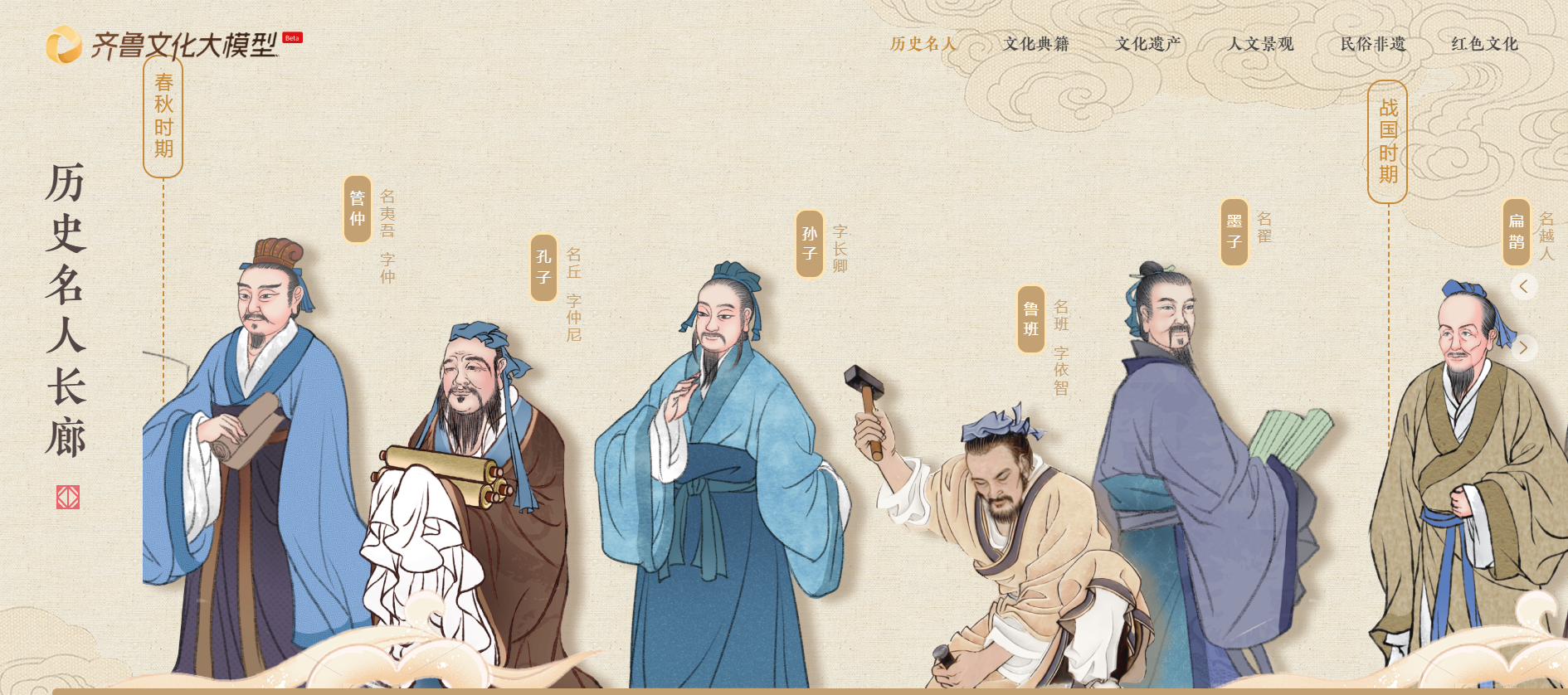
Core Insights - The provincial urban work conference emphasized the importance of smart city construction and enhancing urban governance systems [1][3] - Shandong Digital Culture Group, established under Dazhong Media Group, is a key player in the province's cultural digital infrastructure [3][5] - The focus is shifting from hardware expansion to nurturing cultural connotations, with various digital cultural projects being developed [5][9] Group 1: Smart City Development - The conference highlighted the need to strengthen digital empowerment to improve urban governance efficiency [1] - Dazhong Media Group is committed to leveraging its digital and technological advantages to support the comprehensive digital transformation of cities [5] Group 2: Cultural Digitalization Initiatives - The Qilu Cultural Model is a significant project aimed at cultural digitalization and data commercialization in Shandong [7] - The project includes various functionalities such as cultural gene decoding and historical figure dialogues, creating a new ecosystem for cultural experiences [7] Group 3: Cultural Heritage and Urban Renewal - The Shandong Digital Culture Group plans to activate dormant historical cultures and explore effective mechanisms for the integration of culture and technology [9] - The provincial housing and urban-rural development department is working on a historical cultural protection system to enhance urban value through cultural heritage [9]

“2025政企数智化转型十大关键词”发布
Zhong Guo Xin Wen Wang· 2025-09-16 21:28
Core Insights - The "2025 Digital Transformation Development Conference" highlighted ten key terms for digital transformation in enterprises, including AI+, intelligent applications, and data value realization [1][2] - The conference was organized by the China Communications Standards Association and supported by various industry associations, reflecting a collective focus on digital transformation strategies [1] Group 1: Key Terms for Digital Transformation - The ten key terms identified are: "14th Five-Year Plan" digitalization, architecture and process governance, enterprise-level AI+, data value realization, innovation ecology, AI application research and development, intelligent applications, government digital governance, comprehensive urban digital transformation, and digital maturity [1] - The emphasis on integrating technology with practical scenarios is seen as a main theme for the "14th Five-Year Plan" digital transformation [1] Group 2: Enterprise-Level AI+ - The implementation of "AI+" is viewed as a crucial step for industries to achieve revolutionary productivity leaps and explore new business models [2] - Enterprises are progressively realizing "AI+ scenarios" in areas such as intelligent Q&A, text generation, intelligent inspection, and code generation, marking a shift from basic applications to deeper integration of AI [2]
中共中央、国务院印发《关于推动城市高质量发展的意见》——到2035年,现代化人民城市基本建成
Zheng Quan Shi Bao Wang· 2025-08-28 23:26
Core Viewpoint - The central government of China has issued the "Opinions on Promoting High-Quality Urban Development," aiming to transform urban development methods and build modern, innovative, livable, beautiful, resilient, civilized, and smart cities by 2035 [1][2]. Group 1: Urban Development Goals - By 2030, significant progress in building modern cities is expected, with improvements in policy systems, quality of living, green transformation, safety foundations, cultural charm, and governance levels [2][3]. - The ultimate goal is to have modern cities fundamentally established by 2035 [2]. Group 2: Urban Development Strategies - The "Opinions" emphasize a shift in urban development philosophy to be more people-centered, efficient, and focused on unique characteristics [2][3]. - It advocates for the integration of urban clusters and the enhancement of the competitiveness of mega-cities while controlling their scale and promoting the capacity of smaller cities [3][4]. Group 3: Urban Renewal and Infrastructure - The aim of urban renewal is to revitalize underutilized resources to stimulate economic growth, with a focus on establishing a flexible growth management mechanism [4]. - The "Opinions" call for the construction of high-quality living spaces, improved infrastructure, and balanced public service systems [4][5]. Group 4: Digital Transformation and Technology - A push for comprehensive digital transformation of cities is highlighted, aiming to create a unified, data-integrated, and efficient urban digital foundation [5]. - The importance of technological innovation as a core driver of urban development is emphasized, alongside the need to address potential risks associated with artificial intelligence [6].
全域数字化转型试点实施方案印发 广州将建设城市生命体
Nan Fang Ri Bao Wang Luo Ban· 2025-08-25 07:59
Group 1 - The core viewpoint of the article is the implementation of the "Guangzhou Urban Digital Transformation Pilot Implementation Plan," which aims to establish a digital urban ecosystem by 2025 and achieve operational status by 2026 [1][2] - The plan outlines 25 key tasks across six major areas, including data market reform, digital economy development, digital governance enhancement, and ecological civilization [1][2] - The initiative is designed to provide a systematic deployment for the digital transformation of Guangzhou, focusing on the integration of digital economy, governance, culture, society, and ecological aspects [1] Group 2 - In terms of data market reform, Guangzhou aims to stimulate data utilization, explore innovative applications of data assets, and establish a comprehensive data asset management mechanism [1][2] - The plan emphasizes the construction of digital infrastructure, including the large-scale deployment of 5G, gigabit optical networks, and the development of a public computing power center for artificial intelligence [2] - The digital economy development strategy focuses on creating internationally competitive digital industry clusters, including the establishment of smart connected vehicle application demonstration zones and the promotion of integrated vehicle-road-cloud applications [2]
威海推进城市全域数字化转型,持续完善城市运行管理服务平台
Qi Lu Wan Bao Wang· 2025-07-30 03:46
Group 1: Core Insights - The article emphasizes the commitment of Weihai City to digital transformation in urban construction, focusing on creating a smart city that prioritizes the needs of its residents [1][4] - The establishment of a comprehensive urban operation management service platform is highlighted as a key initiative to enhance the quality of urban living [1][4] Group 2: Urban Infrastructure and Safety - The city is implementing a smart monitoring system for underground utility corridors, integrating 7,600 IoT monitoring points and 900 video surveillance units to improve emergency response efficiency by 60% [2] - A comprehensive flood management system is being developed, utilizing data from hydrology, meteorology, and real-time monitoring to enhance flood prevention and response [2] - The heating network covers 1.56 million square meters, serving 1.16 million users, with a centralized monitoring system to improve service quality and increase heating coverage to 98% [2] Group 3: Public Services and Emergency Response - The city is expanding public service offerings and improving accessibility through a mobile service system that integrates various community resources [3] - A proactive problem identification mechanism is being established to address common issues in urban living, transitioning from reactive to proactive service delivery [3] - The city is enhancing its emergency response capabilities by creating a specialized team for rapid deployment and response to urban challenges [3] Group 4: Future Developments - Weihai City plans to further develop its urban operation management platform, focusing on practical applications that benefit both the government and the public [4] - The city aims to improve data sharing and risk monitoring systems to address safety challenges in urban development [4] - The use of advanced technologies for non-site supervision and mobile enforcement is expected to enhance regulatory effectiveness in urban management [4]