
数据要素市场化配置

Search documents
首期“数据资产运营师”专题培训在京开班
Zhong Jin Zai Xian· 2026-02-06 08:49
Group 1 - The training program "Data Asset Operator" was launched on January 28, 2026, in collaboration with Shenzhen Guotou Rong Investment Co., Ltd. and People Data Management (Beijing) Co., Ltd. at the People's Daily New Media Building in Beijing [2] - The first session gathered 60 outstanding entrepreneurs from Beijing, Guangzhou, Shenzhen, and Guiyang to explore new pathways for data asset operation [2] - The digital economy is thriving, and the value of data as a new production factor is increasingly prominent, necessitating the cultivation of a large number of technically skilled and operationally proficient data talents [4] Group 2 - The training focuses on policy interpretation, professional skill enhancement, and value realization, helping participants understand data rights, circulation, and transaction processes [4] - This initiative creates a platform for deep communication across industry sectors, providing professional support for building a credible data space value system and nurturing core digital talents [6] - By fostering talent development, the program injects strong momentum into the market-oriented allocation reform of data factors and the high-quality development of the digital economy [6]

李丰:2026,关于赚钱、AI与竞争逻辑,我的展望和预判
3 6 Ke· 2026-01-29 01:31
Group 1 - The core viewpoint is that the technological explosion of recent years is just the prologue, with significant societal applications and industrial reshuffling beginning now, particularly in AI and hardware integration in China [1][2] - The second half of the AI technology cycle is expected to see China gaining an advantage, as historically, China tends to catch up and surpass the US in the latter stages of technological waves [1][2] - AI combined with hardware presents a strategic opportunity for China, leveraging its manufacturing supply chain advantages for industrial transformation and upgrades [1][2] Group 2 - The current AI boom is unprecedented, driven by significant capital influx and competition between the US and China in areas such as chips, computing power, models, and applications [5][21] - Historical patterns show that every AI breakthrough leads to a wave of applications when combined with structural changes in industries, which is evident in the current AI landscape [8][9] - The investment logic in the AI era is shifting from mere technological innovation to practical applications that generate revenue, indicating a transition from the initial hype to sustainable business models [25][28] Group 3 - China's AI opportunities are significant, particularly in the context of hardware capabilities and the integration of AI with traditional industries, as highlighted by government initiatives [35][39] - The evolution of AI applications in China is expected to follow a three-stage process, with the first stage focusing on large models, the second on general agents and embodied intelligent robots, and the third on practical, revenue-generating applications [27][28] - The development of AI hardware in China is seen as a strategic advantage, with the potential for new product forms that leverage existing supply chains and technological advancements [36][39] Group 4 - The international landscape is shifting, with the US potentially reducing its military presence globally, which may provide China with a strategic window to enhance its international influence [47][49] - The Chinese economy is undergoing structural adjustments, which could be positively impacted by a more favorable international environment, facilitating the transition to new economic drivers [51][52] - The long-term competition between the US and China will increasingly focus on data and energy, with the country that secures a competitive edge in these areas likely to emerge victorious [66]
李丰:2026,关于赚钱、AI与竞争逻辑,我的展望和预判
混沌学园· 2026-01-28 12:24
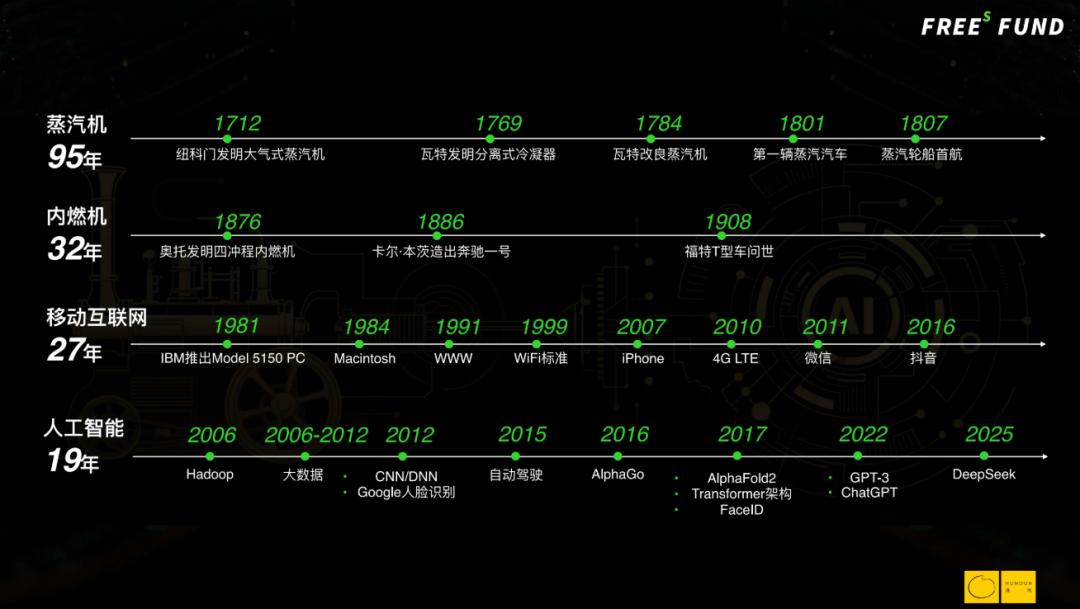
Group 1 - The core viewpoint is that the technological explosion of recent years is just the prologue, with true societal applications and industrial reshuffling beginning now, presenting new opportunities and dividends for the next 5 to 20 years [1][2] - The second half of the AI era will see China gaining advantages, particularly in the combination of AI and hardware, leveraging its manufacturing supply chain for industrial transformation and upgrades [1][2] - The ultimate competition in AI between China and the US will focus on data and energy, with the long-term advantage in these areas determining the outcome of great power competition [1][2] Group 2 - The discussion centers on whether AI represents a productivity revolution, with the importance of participation in AI depending on this belief [2][3] - Historical productivity revolutions have taken time to transition from technological emergence to significant societal impact, indicating that AI will also require a lengthy evolution [3][4] - The current AI wave is unprecedented due to the massive influx of capital, with a significant amount of liquidity in the market driving investment into AI technologies [12][23] Group 3 - The AI evolution has experienced four major waves, with significant breakthroughs leading to applications in facial recognition, autonomous driving, and AI in pharmaceuticals, particularly accelerated by the pandemic [8][10] - The current investment landscape is shifting towards applications that can generate revenue, moving from a focus on technology to practical implementations in various sectors [28][39] - The investment logic in the AI era emphasizes the need for substantial changes across front-end, mid-end, and back-end technologies to create successful companies [46][47] Group 4 - China's strategic opportunity lies in the integration of AI with strong industrial sectors, particularly through the "AI + manufacturing" initiative, which aims to leverage AI for various applications [57][60] - The development of AI applications in China is supported by advancements in hardware and supply chain efficiencies, allowing for competitive pricing and widespread adoption [60][62] - The future of AI applications will focus on vertical domain agents and AI-driven smart hardware, with a clear shift towards practical, revenue-generating solutions [51][39] Group 5 - The international relations landscape is shifting, potentially providing China with a strategic window to enhance its global influence and international business opportunities [74][76] - The RMB is expected to have appreciation potential but not significantly, as the structure of China's foreign trade is evolving towards higher value-added products [79][81] - Data governance is becoming a critical factor in the tech competition between China and the US, with the establishment of a national data bureau indicating a new phase in data management and utilization [90][92]

开展“每月一题”治理成效“回头看”
Xin Lang Cai Jing· 2026-01-24 07:16
Core Insights - Beijing aims to deepen reforms in governance and data management in the "14th Five-Year Plan" period, focusing on high-quality development of public services and data management [1] Group 1: Governance Reforms - The city will enhance the "immediate response to complaints" reform, improving mechanisms for response and knowledge base updates, and will implement a new complaint categorization system [2] - A monthly focus on 11 specific issues will be established for targeted governance, with a review of the effectiveness of these initiatives [2] Group 2: Digital Transformation - The city plans to explore artificial intelligence applications in public services, introducing interactive services such as smart consultations and "chat while processing" features [3] - The development of the "Beijing 12345" intelligent system will enhance citizen engagement and service delivery [2] Group 3: Data Management - Beijing will compile a development plan for a smart Beijing, focusing on market-oriented data reforms and the establishment of a comprehensive data element pilot zone [4] - The launch of the "Jing Tong" app will provide a unified entry point for services, enhancing smart service capabilities and expanding the application of urban codes [4] Group 4: Foreign Services - New measures will be introduced to facilitate the lives of foreign nationals in Beijing, including a "one-stop, multilingual, all-scenario" service platform [4] - Enhancements in foreign service capabilities at various government service points will be implemented to better serve international communities [4]
2026年北京将开展“每月一题”治理成效“回头看”
Xin Lang Cai Jing· 2026-01-23 21:56
Core Insights - Beijing is set to deepen reforms in governance and data management, focusing on high-quality development in the "14th Five-Year Plan" period [1] Group 1: Governance Reforms - The city will enhance the "接诉即办" (response to complaints) reform, improving response mechanisms and knowledge base updates [2] - A monthly focus on 11 specific issues will be implemented for targeted governance, with a review of the effectiveness of these initiatives [2] Group 2: Service Optimization - By 2026, Beijing aims to strengthen its governance service system, enhancing management of service venues and improving the efficiency of in-person services [3] - The city will explore AI applications in governance services, introducing interactive services like intelligent consultations [3] Group 3: Data Management - Beijing plans to compile a development plan for a "smart Beijing" and implement reforms for market-oriented data element allocation [4] - The city will launch the "京通" App to enhance unified access to services and improve smart service capabilities [4] Group 4: Foreign Services - The introduction of the "入京通" platform will facilitate services for foreign nationals, offering a one-stop, multilingual service experience [5] - Enhancements will be made to foreign service capabilities at various government service points, aiming to reach a broader international audience [5]
2026年江苏全省数据工作会议召开,明确今年十项重点任务
Yang Zi Wan Bao Wang· 2026-01-19 06:35
Core Insights - The 2026 provincial data work conference in Nanjing aims to leverage data elements to contribute to high-quality economic and social development during the "14th Five-Year Plan" period [1] Group 1: Achievements in 2025 - Significant breakthroughs were made in the construction of public data resource systems, with the province's registration volume ranking second nationally [2] - The implementation of the "Data Twenty Articles" and the introduction of the Jiangsu Provincial Data Regulations established a unified authorization and operation system for public data resources [2] - The province excelled in the "Data Elements ×" initiative, with 14 projects winning national awards and 7 projects selected as national pilot projects for trusted data space innovation, ranking first in the country [2] - A collaborative effort among 12 provincial departments to nurture and grow data enterprises attracted several well-known domestic and international data companies to Jiangsu [2] - The "Efficient Completion of One Matter" initiative processed a total of 40 million cases, while the "Su Service Office" registered over 153 million users, handling 110 million cases throughout the year [2] Group 2: Key Tasks for 2026 - High-quality planning for the construction of a digital Jiangsu and the development and utilization of data resources will be prioritized [3] - The completion of a three-year action plan for public data and the enhancement of operational efficiency for public data will be pursued [3] - The establishment of a unified data property registration system and the construction of a provincial data exchange will be accelerated [3] - The integration of data technology innovation with industrial innovation will be promoted, focusing on developing specialized data industry clusters [3] - The construction of a national digital economy innovation development pilot zone will be advanced, with an emphasis on monitoring and evaluation mechanisms [3] - The cultivation of 200 typical application scenarios for digital social development and the promotion of comprehensive digital transformation in cities will be initiated [3] - Data empowerment for artificial intelligence development will be strengthened through infrastructure upgrades and algorithm model innovations [3] - The construction of a digital government will be enhanced, focusing on high-level operations of the "Su Government Source" platform [3] - The efficiency of government services will be improved, with a focus on optimizing the "One Form Pass" system and enhancing the 12345 hotline service [3] - Data security measures will be reinforced, including the strengthening of safety systems and talent development [3]
数据交易所的发展定位及创新方向
Jin Rong Shi Bao· 2026-01-19 01:40
Core Insights - China's data technology development has entered a new phase of systematic layout and collaborative promotion, with efforts to cultivate various data circulation service institutions and accelerate the construction of an open, shared, and secure national integrated data market [1][5] Group 1: Data Market Development - The marketization and efficient utilization of data are core paths to activate the multiplier effect of the digital economy, with data exchanges playing a crucial role in connecting data supply and demand [2] - The National Data Bureau has categorized data circulation service institutions into three types, marking a new stage in the construction of the data factor market [2][3] - Data exchanges are essential components of the national integrated data market, and their future development should focus on "three deep integrations" to clarify their functional positioning and innovation direction [2][6] Group 2: Types of Data Circulation Service Institutions - Data circulation service institutions are evolving, with a need to include platform enterprises and data merchants in the research scope beyond just data exchanges [3] - Data exchanges are exploring the establishment of a full-chain service system for data circulation transactions, but their current role and transaction scale are still limited [3] - Industry data integration and utilization models are being accelerated by data circulation service platform enterprises, which focus on value co-creation through data sharing and exchange [4] Group 3: Role of Data Merchants - Data merchants, as key players in data production and operation, are actively gathering data resources and developing data governance and trading practices [5] - They are innovating in exploring new data circulation transaction models, such as high-quality data sets and data-as-a-service models [5] Group 4: Policy Recommendations for Data Exchanges - Data exchanges should deeply integrate with the development of the real economy, assisting enterprises in data utilization and assetization [7][8] - They should also support public data transactions by providing compliance review and valuation services [8][9] - The construction of data circulation infrastructure is crucial for enhancing the efficiency of data market operations [10][11] Group 5: Innovation and Regulation - Safety, regulation, and innovation are essential for the sustainable development of the data market, with data exchanges needing to establish norms and promote innovative practices [11][12] - A systematic policy framework is necessary to support the long-term development of data exchanges, focusing on capability building and ecosystem cultivation [13][14]
内蒙古织密流通网络让数据“活”起来
Xin Lang Cai Jing· 2026-01-13 19:51
Group 1 - The core viewpoint of the news is the successful issuance of the first "data asset entry fee loss insurance" in Inner Mongolia, which addresses the risks associated with data assetization for enterprises [1] - The insurance aims to alleviate the high costs and risks involved in the data asset entry process, encouraging more enterprises to participate in digital transformation [1] - The insurance covers key risk points in the data entry process, including data rights confirmation, cost aggregation, audit evaluation, and compliance review [1] Group 2 - The Inner Mongolia Data Trading Center is expanding its data trading network across the region and beyond, enhancing the service capabilities for data elements [2] - Notable projects include the first administrative unit data asset entry in the region and a successful data asset pledge financing of 3 million yuan for a technology company [2] - The center has onboarded over 1,000 data service providers and listed more than 800 data products, creating a comprehensive ecosystem for data element circulation [2] Group 3 - A multi-dimensional service system has been established to support data service providers throughout their lifecycle, including simplified registration processes and access to shared facilities [3] - The center has completed nearly 20 data asset entries and provided asset registration services to over 100 data service providers, gaining market recognition for its data rights confirmation [3] - The goal is to promote the full circulation of data elements and transform dormant data into development momentum, showcasing Inner Mongolia's role in the national data element market [3]
四川:改革为笔 绘就数字经济创新发展新蓝图
Zhong Guo Fa Zhan Wang· 2026-01-12 08:42
Core Viewpoint - The Sichuan Provincial Development and Reform Commission has officially released the "Sichuan National Digital Economy Innovation Development Pilot Zone Construction Plan," aiming to establish Sichuan as a leading province in digital economy innovation by addressing key challenges and implementing targeted reforms [3][4]. Group 1: Strategic Focus - The plan emphasizes a problem-oriented and goal-oriented approach, focusing on the bottlenecks and challenges hindering high-quality digital economic development [3][4]. - Sichuan aims to integrate the digital economy with the real economy through institutional and technological innovations, fostering new productive forces for high-quality economic growth [4][5]. - The province has established a comprehensive electronic information industry ecosystem, with a core industry value added exceeding 530 billion yuan in 2024, representing 16.7% of the revenue from large-scale digital economy enterprises [4]. Group 2: Key Objectives and Challenges - The plan outlines four core objectives: gathering new technologies and business models in the digital economy, promoting effective digital transformation, upgrading digital infrastructure, and improving the digital governance ecosystem [5][6]. - Key challenges identified include strengthening core competitiveness in digital industries, enhancing the dynamism of emerging industries, and improving the shared infrastructure for data [6]. Group 3: Multi-Dimensional Initiatives - The plan includes 17 key initiatives across five areas: cultivating digital industry clusters, advancing intelligent technology innovations, deepening digital transformation, optimizing data infrastructure, and enhancing digital governance policies [7]. - A digital transformation promotion network will be established, featuring application scenario laboratories and transformation centers to facilitate industry transitions [7][8]. - The province will leverage national strategies like "East Data West Computing" to enhance data infrastructure and promote the integration of clean energy with computing resources [8][9]. Group 4: Support Mechanisms - A comprehensive support system will be developed, focusing on policy support, financial backing, and innovative mechanisms to ensure the effective implementation of the pilot zone construction [10][11]. - Specific financial measures include annual funding of up to 30 million yuan for digital industry clusters and support for digital transformation centers [10]. - Six work promotion mechanisms will be established to enhance collaboration across departments and regions, ensuring effective reform implementation [11].
大数据观察·点读“十四五”|公共数据如何“跑起来”“用起来”
Ren Min Ri Bao· 2026-01-08 02:06
Core Insights - The article emphasizes the importance of public data in enhancing convenience for citizens and improving service efficiency in various sectors, including tourism, healthcare, and finance [3][4][5][6][10]. Group 1: Public Data Utilization - Fujian Province has opened over 45,000 public data directories and made more than 10 billion public data entries available, facilitating over 300 social application scenarios [3]. - The integration of public data into services has led to significant improvements in user experience, such as the "免证便捷入园" application allowing specific groups to enter tourist sites without physical documentation [4]. - The establishment of a public data pricing mechanism has enabled market-oriented allocation of data resources, enhancing the value derived from public data [3]. Group 2: Healthcare Improvements - The introduction of a medical inspection result recognition system has allowed patients to receive timely treatment without the need for overnight stays, with 171 types of tests now recognized across 654 hospitals [5]. - This system has streamlined the process for patients, reducing the need for multiple visits and associated costs [5]. Group 3: Financial Services Enhancement - The "金服云" platform has simplified the loan application process for specialized enterprises, reducing the required documentation and time from one month to just five working days [7]. - The platform has facilitated nearly 1.1 million financing transactions, amounting to over 15.7 trillion yuan, demonstrating its effectiveness in connecting businesses with financial institutions [9]. - The "微e贷" product has been developed to assist small and micro enterprises in obtaining loans quickly, utilizing public data for credit assessments [9]. Group 4: Urban Governance - Public data has been utilized to enhance urban water management, with a centralized system integrating data from various departments to improve response times during heavy rainfall [11][12]. - The establishment of a water management center has led to a 50% increase in emergency response efficiency and a 30% improvement in water retention capacity [13]. - Real-time data collection and analysis have enabled predictive modeling for better decision-making in urban flood management [12][13].