
大农业观

Search documents
从2026年中央一号文件看乡村全面振兴新机遇
Shang Hai Zheng Quan Bao· 2026-02-03 18:19
随着城乡居民收入水平提高和消费结构不断升级,民众的饮食需求已从"吃得饱"向"吃得好、吃得营养 健康"转变,这也对农业生产提出了更高要求。孔祥智认为,顺应这一消费趋势,应践行大农业观、大 食物观,向耕地草原森林海洋、向植物动物微生物要热量、要蛋白,全方位多途径开发食物资源,满足 人民群众多元化食物消费和营养健康需求。而在这一过程中,已有上市公司率先布局,资本市场仍有巨 大的发力空间和发展机遇。 张大伟 制图 ◎记者 李雁争 《中共中央 国务院关于锚定农业农村现代化 扎实推进乡村全面振兴的意见》(下称《意见》)2月3日 对外发布。这是党的十八大以来第14个指导"三农"工作的中央一号文件。 《意见》共六个部分,包括:提升农业综合生产能力和质量效益、实施常态化精准帮扶、积极促进农民 稳定增收、因地制宜推进宜居宜业和美乡村建设、强化体制机制创新、加强党对"三农"工作的全面领 导。 业内专家在接受上海证券报记者采访时表示,从《意见》来看,资本在提升农业综合生产能力、壮大县 域富民产业、完善农业社会化服务体系等方面大有可为。 提升农业综合生产能力和质量效益 《意见》明确,提升农业综合生产能力和质量效益。具体措施包括稳定发展 ...

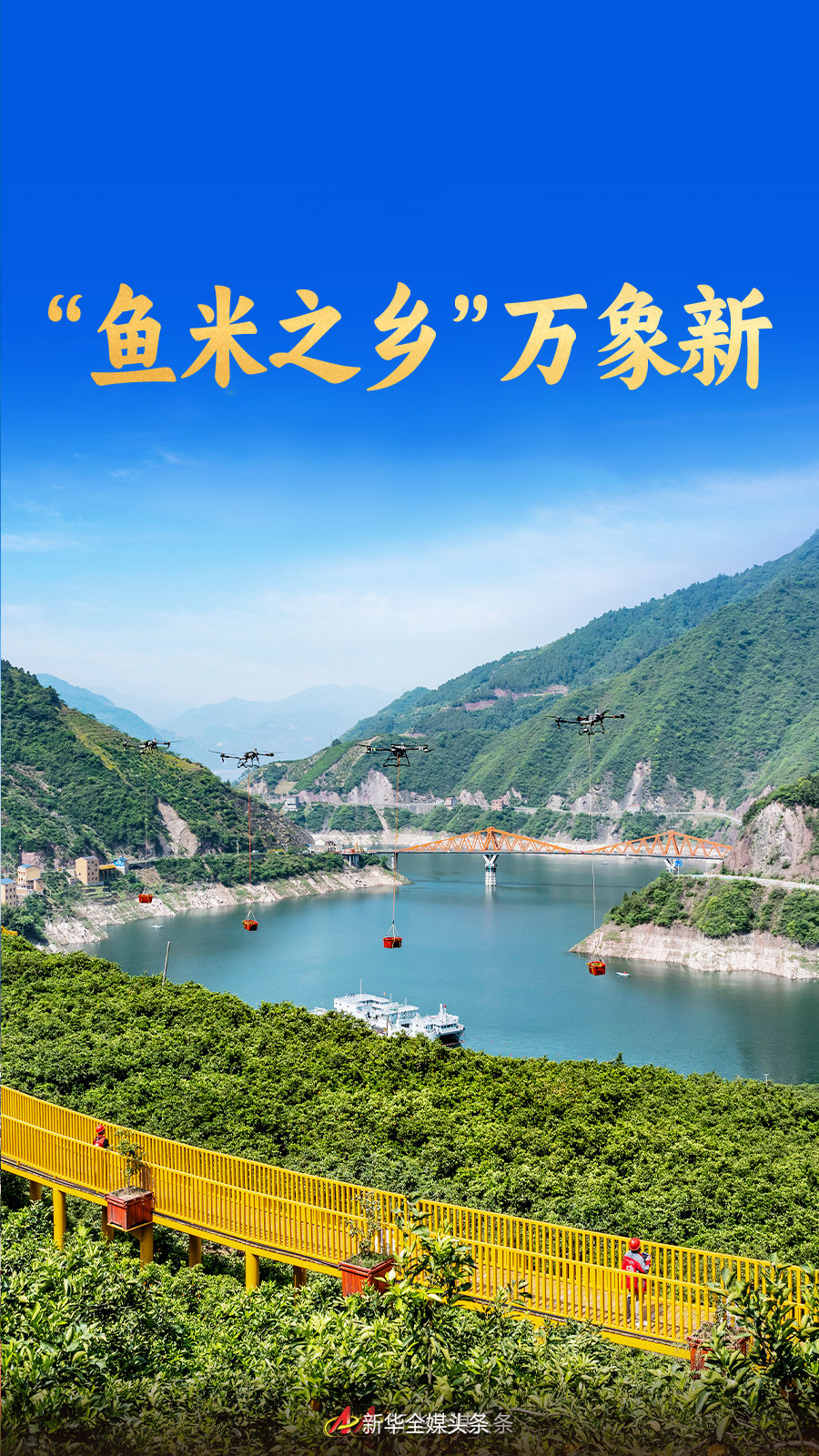
新华社聚焦湖北:“鱼米之乡”万象新
Xin Hua She· 2026-01-16 16:12
Core Viewpoint - The article emphasizes the modernization of agriculture in Hubei Province, focusing on enhancing food production, improving rural living conditions, and increasing farmers' income through technological advancements and infrastructure development [2][5][6]. Group 1: Agricultural Modernization - Hubei aims to transform agriculture into a modern industry, ensuring stable food production and improving rural environments [2]. - The province has implemented a "billion-jin" grain production capacity enhancement action, with a target of reaching a total grain output of 558.24 billion jin by 2025, maintaining over 500 billion jin for 13 consecutive years [6]. - The comprehensive mechanization rate for crop farming has reached 75.5%, with agricultural technology contributing 68% to productivity [6]. Group 2: Technological Integration - Farmers in Hubei are utilizing advanced technologies such as drones for precision farming, significantly reducing labor time and increasing yields by 100 jin per mu [3][5]. - The province has promoted over 58,600 units of various smart agricultural terminals, covering all aspects of farming from planting to storage [6]. - Smart farming equipment, including AI-driven weeding machines and automated greenhouses, is being deployed to enhance efficiency and crop quality [5]. Group 3: Aquaculture Development - Hubei is expanding its aquaculture sector, focusing on the large-scale farming of specialty aquatic products like crayfish and yellow eels, contributing to the region's reputation as a "land of fish and rice" [9][12]. - The province's freshwater aquaculture area exceeds 8 million mu, with a projected output of 5.4643 million tons of freshwater products in 2024, maintaining the top position in the country for 29 consecutive years [11]. Group 4: Brand and Market Expansion - Hubei has introduced brand policies to enhance the market presence of local products, with nine key brands generating a combined output value of 550 billion yuan [13]. - The province is focusing on the integration of various agricultural products, enhancing the value chain from production to processing, and promoting regional specialties [15]. Group 5: Rural Infrastructure and Quality of Life - Hubei is improving rural infrastructure, including the establishment of over 294,000 public charging stations and 24,000 village-level service points to enhance logistics and accessibility [16][21]. - The province has seen a significant increase in returnees starting businesses in agriculture and tourism, contributing to rural vitality and economic growth [23].
内蒙古科左后旗 以水兴产 激活“一池春水”
Xin Lang Cai Jing· 2026-01-16 14:57
Core Viewpoint - The article highlights the transformation of the Keshan Left Banner in Inner Mongolia, where innovative water management and aquaculture practices have turned challenges posed by extreme weather into opportunities for agricultural and economic development [1][2][3] Group 1: Water Management and Infrastructure - The Keshan Left Banner has faced extreme rainfall for four consecutive years since 2021, with annual precipitation reaching a maximum of 824.4 mm, leading to significant flooding issues for local farmers [2] - In response, the local government has invested 700 million yuan to enhance drainage systems, creating a modern water network that connects eight reservoirs and 115 lakes [2] - The focus has shifted from merely managing flood risks to utilizing water resources effectively, transforming water into an asset for agricultural productivity [2] Group 2: Aquaculture Development - The region has successfully integrated aquaculture with traditional agriculture, exemplified by the introduction of 370,000 shrimp into 200 acres of rice paddies, yielding 15,000 pounds of shrimp and 260,000 pounds of rice, with an average income increase of 1,300 yuan per acre [2] - Innovative practices have led to the successful cultivation of sea bass in previously barren saline-alkali waters, with 20,000 fish released in May 2025 growing from 3 cm to 30 cm [2] - Various local cooperatives have emerged, focusing on the cultivation of fish and crabs, with annual catches of 45,000 pounds of crabs and 120,000 pounds of fish, generating a net income of approximately 450,000 yuan [3] Group 3: Economic Impact and Community Benefits - The Keshan Left Banner has expanded its aquaculture area to 70,000 acres, achieving an annual output of 4.4 million pounds and a production value of 28 million yuan [3] - The region's initiatives have not only improved local livelihoods but also fostered community engagement, with average dividends of 500 yuan per person for cooperative members [3] - The first-ever Xiaolongxia and Yanjing Beer Food Festival in summer 2025 sold 3,000 pounds of shrimp in just 15 days, generating sales of 240,000 yuan, showcasing the potential for local product marketing [3]
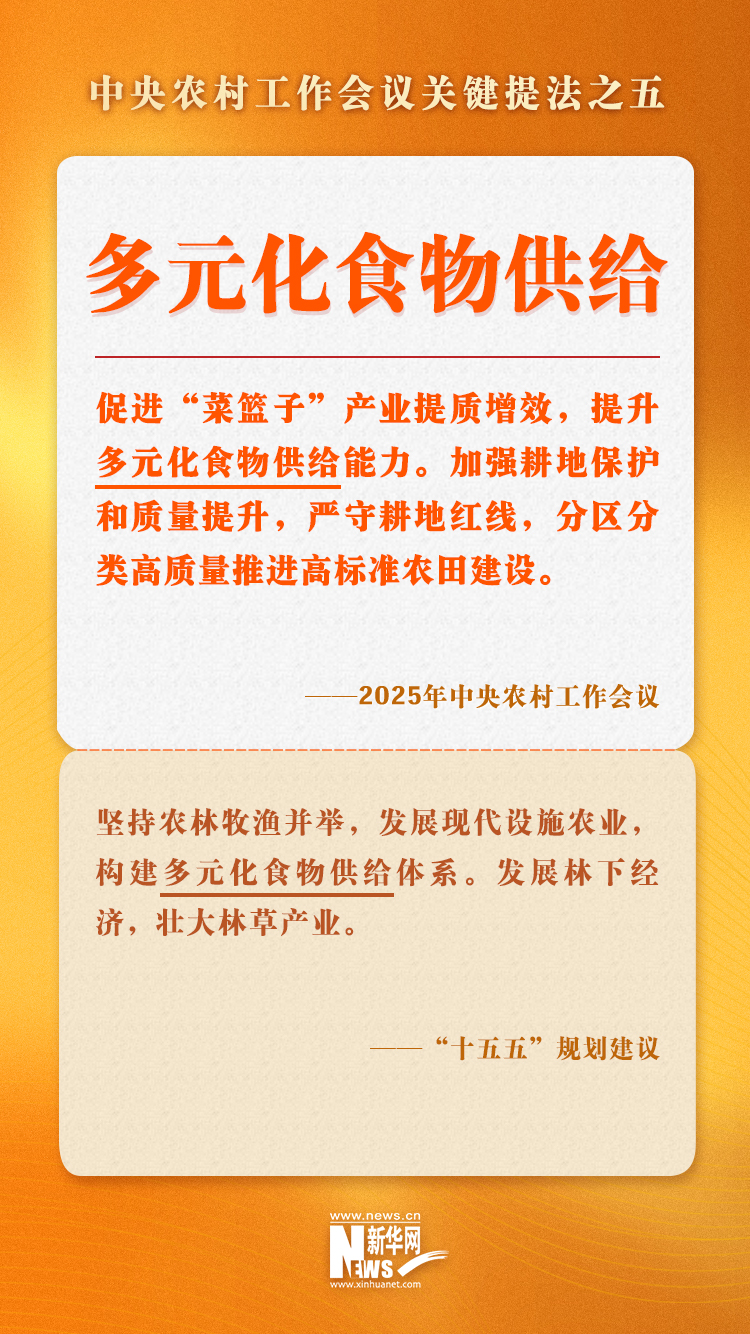
中央农村工作会议关键提法之五:多元化食物供给
Xin Hua Wang· 2026-01-06 02:09
Group 1 - The recent Central Rural Work Conference analyzed the current situation and challenges facing the "three rural issues" and outlined the work plan for 2026 [1] - Key proposals from the conference were summarized by Xinhua News to help the public understand the meeting's spirit [1] Group 2 - A diversified food supply system is to be constructed while protecting the ecological environment, expanding from arable land resources to overall land resources, and from traditional crops and livestock to a richer variety of biological resources [5] - Ensuring national food security is prioritized as the primary task in developing the agricultural industry, with continuous enhancement of comprehensive grain production capacity [5] - The development of modern facility agriculture, livestock, and aquaculture is emphasized, along with the construction of modern processing and logistics facilities to improve production diversity and efficiency [5]
用“新”鼓起果农腰包
Xin Lang Cai Jing· 2025-12-23 23:14
Core Viewpoint - The article emphasizes the commitment to promoting new varieties, technologies, and marketing models in the fruit industry to enhance farmers' income and strengthen the fruit and forestry industry in Liaoning Province [1] Group 1: Industry Development - The "14th Five-Year Plan" of Liaoning Province advocates for the implementation of a comprehensive agricultural and food perspective, accelerating the development of facility fruits and vegetables [1] - There is a focus on adopting new technologies such as water-saving irrigation, grass planting in orchards, and zinc fertilizer application to keep pace with modern agricultural practices [1] Group 2: Marketing and Brand Development - The article highlights the importance of deep processing of fruit products and the integration of online and offline marketing strategies to create new brands and open new markets [1] - The introduction of new business models, including cultural tourism and educational research, is aimed at enhancing the industry chain [1] Group 3: Training and Collaboration - Efforts are being made to organize cooperatives and demonstration households to participate in training programs for fruit industry managers and to connect with technological platforms for industry development [1]
韩俊发表署名文章
财联社· 2025-12-10 01:14
Core Viewpoint - The article emphasizes the importance of enhancing agricultural comprehensive production capacity and quality efficiency as a strategic task for building a strong agricultural nation, aligning with the spirit of the 20th Central Committee of the Communist Party of China [5][6][7]. Group 1: Enhancing Agricultural Production Capacity and Quality Efficiency - The "14th Five-Year Plan" period has seen significant achievements in agricultural modernization, with grain production capacity reaching 1.4 trillion jin in 2024 and per capita grain availability at 500 kg [6]. - Agricultural development quality has improved, with over 100 million acres of high-standard farmland built and a crop variety coverage rate exceeding 96% [6]. - The income growth of farmers has consistently outpaced GDP and urban residents' income growth, with the urban-rural income ratio narrowing to 2.34:1 [6]. Group 2: Key Measures for Improvement - Strengthening the supply guarantee for important agricultural products is crucial, with a focus on ensuring grain self-sufficiency and enhancing production capacity through various initiatives [10]. - A diversified food supply system is to be established, integrating agriculture, forestry, animal husbandry, and fishery to meet diverse consumer needs [11]. - Protecting and improving arable land quality is essential, with strict enforcement of land protection policies and initiatives to enhance soil quality and ecological conditions [12]. Group 3: Technological and Quality Enhancements - Advancing agricultural technology and equipment is fundamental, with a focus on innovation and collaboration among research institutions and enterprises to boost agricultural productivity [13]. - The quality and efficiency of agricultural development will be enhanced through the establishment of modern agricultural industrial systems and the promotion of green and high-quality agricultural products [14][15]. Group 4: Support and Policy Framework - The article outlines the need for a multi-faceted investment structure in agriculture, emphasizing fiscal support, financial incentives, and social participation [16]. - Comprehensive rural reforms are necessary to stabilize land contracts and support the development of modern agricultural operations while ensuring smallholder integration [17].

加速培育海洋渔业新质生产力(专家点评)
Ren Min Ri Bao· 2025-11-26 22:09
Core Insights - The development of marine fisheries is crucial for building a strong marine nation, ensuring food security, and promoting comprehensive rural revitalization [1] Industry Overview - In 2024, the marine fisheries value added is projected to reach 488 billion yuan, with marine product output expected to be 37.09 million tons, contributing 2.9 times the total of beef and lamb and 1.4 times their protein contribution [1] - The promotion of green aquaculture models such as "land-sea relay" and "north-south relay" is strengthening the foundation for building a "blue granary" [1] Development Strategies - To achieve high-quality development in marine fisheries, there is a need to accelerate the cultivation of new productive forces, focusing on smart and equipped technologies, and enhancing R&D applications across the entire industry chain to stabilize and expand the supply of marine aquaculture products [1] - The integration of fisheries with marine tourism, offshore wind power, and marine equipment is essential to enhance the value chain, particularly in areas like seafood processing and recreational fisheries [1] Future Outlook - During the "14th Five-Year Plan" period, the continuous growth of marine industries such as marine fisheries, marine equipment manufacturing, and modern shipping services is expected to further develop the marine economy [1]
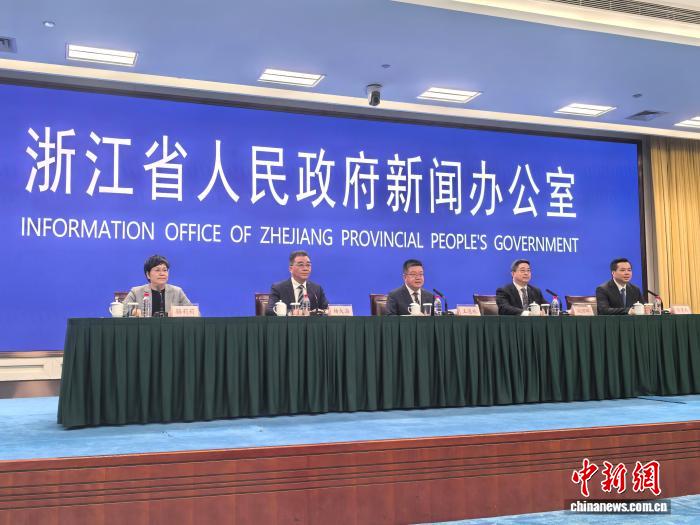
浙江粮食生产有望实现“十连增”
Zhong Guo Xin Wen Wang· 2025-11-26 12:29
Core Insights - Zhejiang Province is expected to achieve "ten consecutive increases" in grain production during the 14th Five-Year Plan period, with a projected total grain output of 13 billion jin (approximately 6.5 million tons) in 2024, an increase of 890 million jin compared to 2020 [3][4] Group 1: Grain Production - The total sown area for grain in Zhejiang is projected to reach 15.705 million mu (approximately 1.05 million hectares) in 2024, an increase of 804,000 mu from 2020 [3] - The province has focused on technological advancements in agriculture, particularly in conventional early indica rice and indica-japonica hybrid rice, leading to significant increases in grain yield [3][4] - Zhejiang has recognized 14 national super rice varieties, accounting for 27.4% of the national total, ranking first in the country [3] Group 2: Agricultural Innovation - Over the past five years, Zhejiang has implemented a modern seed industry enhancement project, resulting in the cultivation of 362 new agricultural varieties during the 14th Five-Year Plan period [3][4] - The establishment of the first provincial public laboratory for southern breeding and a provincial germplasm resource bank has enabled comprehensive coverage of the industry [3] - The province has developed alternative varieties to replace imported ones, such as the broccoli varieties "Tai Green 630" and "Zhejiang Green 161," effectively breaking the monopoly of foreign varieties [3] Group 3: Marine Fisheries Development - Zhejiang is investing 100 million yuan in building marine biological germplasm resource banks in both southern and northern Zhejiang, focusing on key species like large yellow croaker and South American white shrimp [4] - The marine fisheries sector is projected to generate a primary industry output value of 107.92 billion yuan in 2024, accounting for 25.9% of the total agricultural output value [4] - The total output value of the entire industrial chain of distant-water fisheries is expected to reach 55 billion yuan, making it the largest in the country [4]
引领食养新潮!2025年中国南药食养产业大会在广东肇庆举办
Nan Fang Nong Cun Bao· 2025-11-20 14:02
Core Points - The 2025 China Southern Medicine Food and Nourishment Industry Conference was successfully held in Zhaoqing, Guangdong, marking the first national-level conference focused on "Southern Medicine Food and Nourishment" in China [3][4] - The conference aligns with President Xi Jinping's directives on developing rural characteristic industries and emphasizes the importance of the Southern medicine industry in promoting rural revitalization [8][9] Industry Overview - Southern medicine, primarily found in tropical and subtropical regions, has over 4,000 documented species, with more than 100 cultivated on a large scale [12][14] - The Southern medicine industry in Guangdong has expanded beyond traditional cultivation to include deep processing, health product development, brand marketing, and wellness tourism, forming a modern industrial system [28][30] Economic Impact - Guangdong's Southern medicine planting area exceeds 4 million acres, with the first industry output value surpassing 18 billion yuan [32] - Zhaoqing's Southern medicine planting area is approximately 1.566 million acres, with a total output of 660,000 tons and a total output value exceeding 10 billion yuan [40][41] Development Initiatives - The conference featured the release of the "China Zhaoqing Cinnamon Industry Development White Paper" and the establishment of a regional public brand logo for "Zhaoqing Cinnamon" [20][27] - Guangdong aims to leverage this conference as a new starting point to focus on genetic innovation, integration of primary, secondary, and tertiary industries, and the establishment of standard systems [34][35] Market Expansion - The Southern medicine industry has developed a complete industrial system that includes planting, processing, research, application, and health services, with traditional Chinese medicine materials and health products leading the export efforts [38][39] - The conference included signing ceremonies to strengthen the connection between Zhaoqing's Southern medicine industry and the national market [40][46] Cultural Integration - The event featured a health culture night market, showcasing traditional Chinese medicine practices and offering local herbal dishes, emphasizing the concept of "food and medicine sharing the same source" [54][57] - The integration of media and industry during the conference effectively amplified the influence of the Southern medicine food and nourishment industry [58][63]

【人民日报】全方位夯实粮食安全根基
Ren Min Ri Bao· 2025-11-19 00:39
Core Insights - The "14th Five-Year Plan" emphasizes enhancing agricultural production capacity and quality efficiency, as well as strengthening the supply guarantee for important agricultural products like grain, which is crucial for food security over the next five years [1] Group 1: Agricultural Development Strategies - The focus is on broadening the approach to food security beyond limited arable land, promoting diverse food resource development to meet the nutritional and personalized needs of consumers [1] - Black龙江 is highlighted as a pioneer in implementing a comprehensive food strategy, while Fujian is developing its unique agricultural industries, such as Ningde big yellow fish and Gutian edible fungi [1] Group 2: Technological Advancements in Agriculture - The article stresses the importance of technological breakthroughs in achieving agricultural modernization, with a focus on developing new agricultural production capabilities [2] - Black龙江 has achieved a 100% coverage rate of high-quality seeds for major crops, introducing new varieties that address critical agricultural challenges [2] - Automation and precision farming are being implemented, exemplified by the 15,000-acre unmanned farm operated by Beidahuang Group, which utilizes smart machinery for efficient operations [2] Group 3: Agricultural Service Systems - The article discusses the transformation of agricultural services, with cooperatives providing comprehensive support from planting to harvesting, reducing the burden on farmers [3] - In 河南, 932 agricultural service centers have been established to meet farmers' needs, while 广东 is enhancing its agricultural machinery service capabilities [3] - The establishment of a new agricultural social service system is essential for boosting confidence and motivation among service providers and ensuring benefits for farmers [3]