
河蟹

Search documents
南北年货的相遇——看东北新发地的年味“混搭”
Xin Hua She· 2026-02-10 08:07
Core Viewpoint - The upcoming Spring Festival has led to a vibrant consumer market, particularly in the agricultural supply chain, with fresh produce being transported from southern regions to northeastern specialties, enhancing the festive atmosphere across the country [1] Group 1: Agricultural Supply Chain - The Northeast New Fa Di Agricultural Product Supply Chain Center in Panjin, Liaoning Province, serves as a hub for fresh fruits and vegetables shipped from the south and northeastern specialties being distributed nationwide [1] - Products such as Panjin's alkaline tomatoes, river crabs, rice, and blueberries and strawberries from Dandong Donggang are being shipped, with deliveries reaching southern tables within 24 hours [1] Group 2: Market Operations - A fruit and vegetable vendor, Zhang Yan, reported that preparations for the festival have begun, with daily stock and inventory levels ranging from 60,000 to 80,000 jin [1] - Fresh green beans from Mengding, Lincang City, Yunnan Province, are being directly loaded and transported to the market, ensuring high freshness [1] Group 3: Product Variety - The diverse range of southern and northern festival goods available at the Northeast New Fa Di Agricultural Product Supply Chain Center enriches the festive experience [1]
内蒙古科左后旗 以水兴产 激活“一池春水”
Xin Lang Cai Jing· 2026-01-16 14:57
Core Viewpoint - The article highlights the transformation of the Keshan Left Banner in Inner Mongolia, where innovative water management and aquaculture practices have turned challenges posed by extreme weather into opportunities for agricultural and economic development [1][2][3] Group 1: Water Management and Infrastructure - The Keshan Left Banner has faced extreme rainfall for four consecutive years since 2021, with annual precipitation reaching a maximum of 824.4 mm, leading to significant flooding issues for local farmers [2] - In response, the local government has invested 700 million yuan to enhance drainage systems, creating a modern water network that connects eight reservoirs and 115 lakes [2] - The focus has shifted from merely managing flood risks to utilizing water resources effectively, transforming water into an asset for agricultural productivity [2] Group 2: Aquaculture Development - The region has successfully integrated aquaculture with traditional agriculture, exemplified by the introduction of 370,000 shrimp into 200 acres of rice paddies, yielding 15,000 pounds of shrimp and 260,000 pounds of rice, with an average income increase of 1,300 yuan per acre [2] - Innovative practices have led to the successful cultivation of sea bass in previously barren saline-alkali waters, with 20,000 fish released in May 2025 growing from 3 cm to 30 cm [2] - Various local cooperatives have emerged, focusing on the cultivation of fish and crabs, with annual catches of 45,000 pounds of crabs and 120,000 pounds of fish, generating a net income of approximately 450,000 yuan [3] Group 3: Economic Impact and Community Benefits - The Keshan Left Banner has expanded its aquaculture area to 70,000 acres, achieving an annual output of 4.4 million pounds and a production value of 28 million yuan [3] - The region's initiatives have not only improved local livelihoods but also fostered community engagement, with average dividends of 500 yuan per person for cooperative members [3] - The first-ever Xiaolongxia and Yanjing Beer Food Festival in summer 2025 sold 3,000 pounds of shrimp in just 15 days, generating sales of 240,000 yuan, showcasing the potential for local product marketing [3]
奋进“十五五”开局起好步|以发展现代化大农业为主攻方向着力夯实粮食安全根基
Xin Lang Cai Jing· 2025-12-27 20:46
Core Viewpoint - The provincial economic work meeting emphasizes the importance of grasping current opportunities and making detailed plans for the upcoming year, aiming for a strong start to the "14th Five-Year Plan" [1] Group 1: Economic Development Strategies - The meeting outlines the main tasks for next year's economic work, focusing on solidifying food security, promoting technological, green, quality, and brand agriculture, and implementing a plan to increase grain production by ten million tons [2] - The province aims to enhance its role as a national grain security "ballast stone" by building a significant commodity grain production base and improving overall production capacity [2] Group 2: Agricultural Modernization - The province seeks to be a leader in agricultural modernization by promoting new technologies, equipment, and business models, and aims to achieve the "five modernizations" in agriculture [3] - Initiatives include developing smart agriculture, establishing a national AI application pilot base in agriculture, and creating a modern seed industry province [3] Group 3: Quality and Safety in Agriculture - The province plans to build a model for comprehensive green transformation in agriculture, ensuring food safety and expanding the market influence of high-quality agricultural products [3] - Efforts will be made to enhance the quality of agricultural products and expand the scale of customized agriculture [3] Group 4: Rural Development and Poverty Alleviation - The meeting emphasizes the need to prevent large-scale poverty and establish a robust monitoring and support system for at-risk populations [4] - Plans include improving rural living conditions, promoting high-quality agricultural processing, and enhancing rural governance [4] Group 5: Agricultural Innovation and Economic Growth - The province aims to stimulate agricultural and rural development by advancing land reform, enhancing collective economic strength, and establishing modern agricultural service centers [4]
兴化:向“新”而兴 化“绿”成金
Xin Hua Ri Bao· 2025-12-02 06:01
Group 1: Economic Development and Industrial Growth - The region's GDP surpassed 1 trillion yuan for the first time, marking its entry into the "trillion club" [1] - The establishment of a complete industrial chain in the metal new materials sector, with a projected industrial sales of 53.7 billion yuan and tax revenue of 1.89 billion yuan in 2024 [2] - The health food industry is being developed with a total investment of 2 billion yuan, aiming for an annual output of 42,000 tons and sales exceeding 800 million yuan [3][4] Group 2: Tourism and Cultural Development - Dongluo Village was recognized as the only village in Jiangsu to be named a "Best Tourism Village" by the UN, showcasing sustainable rural development [5] - The region is promoting a four-season tourism brand, attracting visitors through various cultural and culinary experiences [6] Group 3: Social Welfare and Community Development - The "Love Meal Subsidy" project has provided 2.0736 million yuan in subsidies to 2,923 underprivileged children, emphasizing the importance of social welfare [7] - The local economy is significantly supported by the ecological crab industry, producing nearly 70,000 tons annually and benefiting around 300,000 industry workers [7] Group 4: Future Development Goals - The city aims to become a model for industrial upgrading and green development, with plans to revitalize low-efficiency land and develop 30 characteristic industrial zones [2][4] - Emphasis on improving public health and social services, including the development of integrated health service centers [8]
《2025年度长三角河蟹产业发展白皮书》在沪发布
Zhong Guo Xin Wen Wang· 2025-11-16 05:57
Core Insights - The Yangtze River Delta region is projected to produce 523,825 tons of river crabs in 2024, accounting for approximately 58.57% of China's total river crab production, solidifying its status as a major hub for the river crab industry [1] - The focus of China's river crab industry has gradually shifted northeast from 2018 to 2024, driven by increased market demand, advancements in aquaculture technology, and improved farming environments in provinces like Liaoning, Heilongjiang, and Jilin [1] - The white paper introduces a brand value index system for river crabs, aiming to enhance local brand development in the Yangtze River Delta by scoring various indicators such as product quality and cultural tourism value [1] Industry Developments - Since the establishment of the Chinese mitten crab industry technology system in Shanghai in 2010, significant changes have occurred in the river crab industry landscape [2] - Despite high temperatures this year, the Shanghai river crab industry has leveraged technological innovations to optimize farming conditions, effectively mitigating the impact of heat, leading to the bulk market release of local river crabs [2]
太牛了!镇江 6 家企业出征 “水韵苏蟹” 大会,从 “最佳生态” 到 “十大品牌” 奖拿到手软
Yang Zi Wan Bao Wang· 2025-11-11 09:30
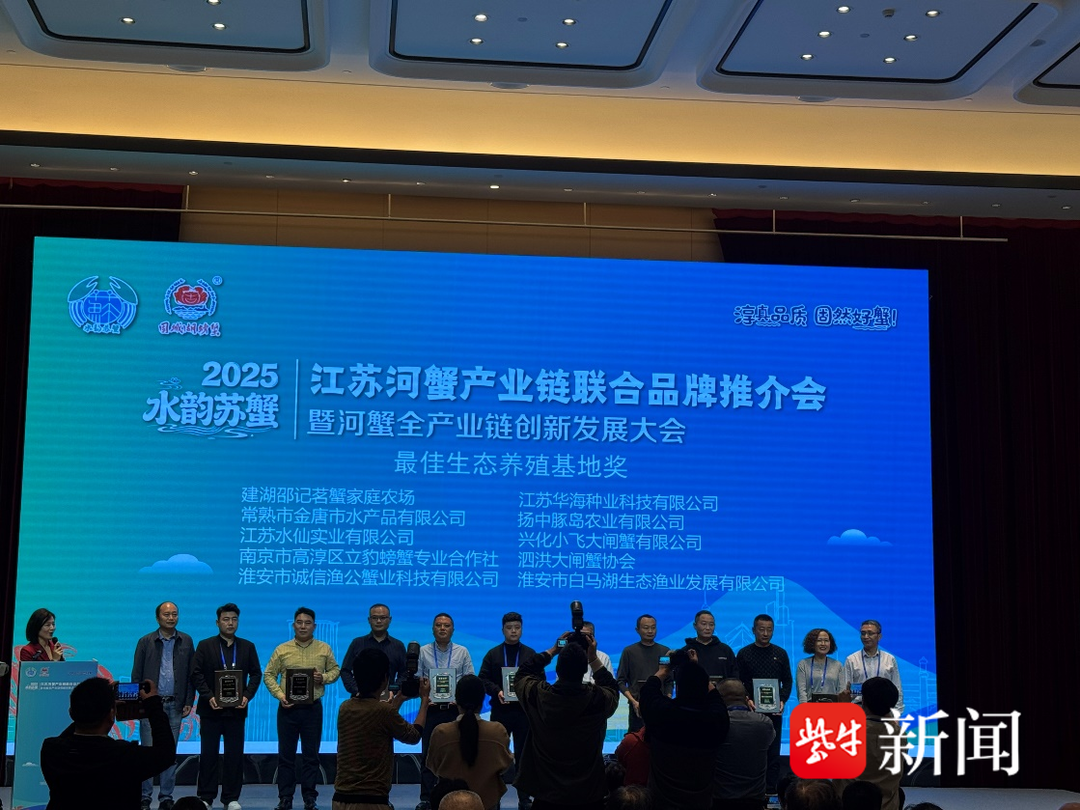
Core Viewpoint - The "Water Rhythm Su Crab" Jiangsu River Crab Industry Chain Joint Brand Promotion Conference and the River Crab Full Industry Chain Innovation Development Conference were held in Nanjing on November 6-7, 2023, highlighting the growth and innovation in the river crab industry in Jiangsu province [1]. Group 1: Event Overview - The conference aimed to promote the Jiangsu river crab industry and foster innovation within the full industry chain [1]. - The event showcased various river crab breeding units from Zhenjiang, which received multiple awards for their contributions to the industry [7]. Group 2: Awards and Recognition - Six river crab breeding units from Zhenjiang participated in the event, winning awards such as Gold Medal Network Promoter, Best Ecological Breeding Base, Top Ten Brands, Best Taste Award, and Quality Taste Award [7]. - Notable winners included: - Gold Medal Network Promoter: Zhenjiang Daqian Modern Agricultural Development Co., Ltd. and Danyang Jianyuan Agricultural Technology Co., Ltd. [7] - Best Ecological Breeding Base: Yangzhong Tun Island Agricultural Co., Ltd. [7] - Top Ten Brands: Yangzhong Tun Island Agricultural Co., Ltd. and Jiangsu Jiangxinyuan Ecological Agriculture Co., Ltd. [7] Group 3: Industry Insights - Zhenjiang has rich water resources and is a significant production base for high-quality agricultural products, including grains and aquatic products [7]. - The total aquaculture area in Zhenjiang is stable at 190,000 acres, with river crab farming covering 41,000 acres and a production volume of 5,000 tons [7]. - In recent years, the area dedicated to breeding high-quality aquatic products such as river crabs, prawns, and knife fish has exceeded 80%, establishing specialty aquatic products as a new hallmark of Zhenjiang agriculture [7].

江苏河蟹全产业链创新发展大会举办
Xin Hua Ri Bao· 2025-11-08 19:15
Core Insights - The "Water Rhythm Su Crab" Jiangsu River Crab Industry Chain Innovation Development Conference was held in Nanjing, focusing on key topics such as aquatic animal breeding improvement and green ecological farming [1] - The event gathered over 150 industry experts, representatives from fishery authorities, and leaders from river crab farming enterprises to discuss industry challenges and innovations [1] - The conference emphasized "innovation" and targeted three core directions: digitalization, technological advancement, and branding to address industry pain points and signal new upgrades [1] Industry Developments - The "Digital Construction Guide for the River Crab Industry" was released, proposing solutions for real-time monitoring of farming environments, full traceability of product quality, and efficient market circulation [1] - Three core technological achievements in ecological farming, deep processing technology, and tailwater purification were announced during the conference [1] - The "High-quality Development Report of the Gucheng Lake River Crab Industry" was also published, highlighting the industry's progress [1] Awards and Recognition - Suzhou Water Source Da Zha Crab Farming Co., Ltd. showcased a male crab weighing 551.5 grams and a female crab weighing 419.6 grams, winning the "Crab King Award" and "Crab Queen Award" respectively [1]
“定力”崇明生态之路迎来厚积薄发 海工产业之“蓝”、农业硅谷之“绿” 书写生态优势向发展优势转化故事
Jie Fang Ri Bao· 2025-11-07 01:37
Core Viewpoint - The completion of the tunnel for the Chongming Line (Metro Line 22) marks a significant milestone for Chongming's development during the 14th Five-Year Plan, symbolizing the island's commitment to ecological progress and sustainable development [1][2]. Group 1: Ecological Development Strategy - Chongming's development is firmly rooted in ecological principles, with a consensus among local officials and residents that all growth must be ecologically friendly [2]. - The island has shifted away from traditional, resource-intensive economic models, focusing instead on an "ecological island" development path that aligns with Shanghai's broader ecological strategy [2]. - Chongming's commitment to ecological preservation is evident in its rejection of short-term gains and adherence to strict ecological boundaries during the 14th Five-Year Plan [2][3]. Group 2: Investment in Ecological Projects - During the 14th Five-Year Plan, Chongming invested billions in wetland protection and water environment management, resulting in a stable population of over 12 species of waterbirds and more than 380 bird species overall [3]. - The island has developed two modern ecological industry clusters that align with its ecological identity, including a leading shipbuilding base on Changxing Island with annual output values surpassing 500 billion and 800 billion [3]. - Chongming is also advancing modern green agriculture, establishing various agricultural groups and projects that contribute to the development of a "Silicon Valley" for agriculture in the Yangtze River Delta [3]. Group 3: Achievements and Future Prospects - Chongming has achieved notable recognition, including the designation of the Shanghai Chongming Dongtan migratory bird habitat as a UNESCO World Heritage site and receiving international wetland city certification [4]. - The island is hosting high-profile sports events, enhancing its visibility and attractiveness as a destination [4]. - Future infrastructure developments, such as the Chongming Line and the Hu-Yu-Cheng high-speed rail, will strengthen connections between Chongming and Shanghai, facilitating resource flow and regional integration [5].
辽宁盘锦稻香蟹肥迎丰收
Zhong Guo Xin Wen Wang· 2025-10-24 01:12
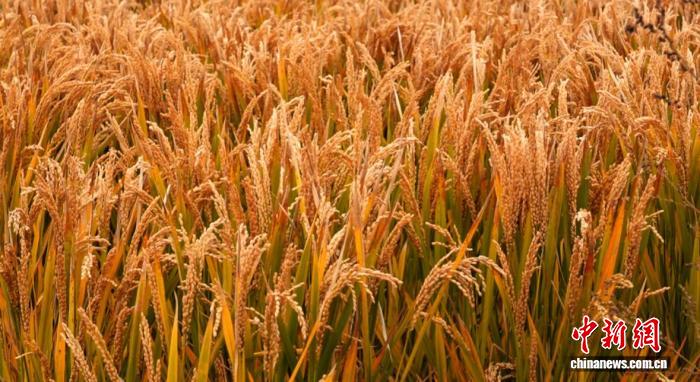
Core Insights - The article highlights the successful harvest season in Panjin, Liaoning, with increased rice yields and high-quality river crabs, showcasing the effectiveness of the integrated rice-crab farming model [1][4][5] Rice Production - Panjin's rice planting area remains stable at over 1.6 million mu, with a significant increase in yield expected this year compared to previous years [3] - The new rice from Panjin is being sold nationwide through e-commerce platforms, with one farm reporting sales of over 8 million jin within a week of launching a new product [3] Crab Farming - The river crab farming in rice paddies has led to a symbiotic relationship where crabs feed on pests and weeds, while their waste serves as organic fertilizer for the rice [3][4] - Farmers like Zhang Shuang report high-quality crab production, with yields of 30 jin per mu from an initial investment of 10 jin of juvenile crabs [4] Economic Impact - The dual harvest of rice and crabs has not only improved the economic benefits for farmers but also boosted confidence in promoting this farming model [5] - The integration of tourism with agriculture, such as the rice art in the Red Beach National Rice Park, has attracted visitors and enhanced brand value while generating additional income from rice sales [5]
(走进中国乡村)辽宁盘锦稻香蟹肥迎丰收
Zhong Guo Xin Wen Wang· 2025-10-22 09:07
Core Insights - The article highlights the successful harvest season in Panjin, Liaoning, focusing on the increased rice yield and the thriving river crab farming industry, which utilizes a unique ecological farming model [1][3][5] Group 1: Rice Production - The rice harvest in Panjin is expected to yield significantly higher per acre compared to previous years, with mechanized operations fully implemented [1][3] - The total rice planting area in Panjin remains stable at over 1.6 million acres, and the local rice has been recognized as a national geographical indication product [3][4] - The "Honghaitan No. 1" rice has been awarded as one of the first "Liaoning Quality Products," indicating its high quality and market acceptance [3][4] Group 2: River Crab Farming - Panjin is recognized as the birthplace of the rice-crab farming technique, which allows crabs to feed on pests and weeds in rice fields, enhancing both rice and crab quality [3][4] - Local crab farmers report high quality and yield this year, with some achieving a production of 30 pounds of crabs per acre after an initial investment of 10 pounds of juvenile crabs [4][5] - The "Panjin Model" of integrated rice and crab farming has created a sustainable and profitable farming approach, benefiting local farmers [4][5] Group 3: Economic Impact and Tourism - The dual harvest of rice and crabs has not only improved economic benefits for farmers but also boosted confidence in promoting this farming model [5] - The Red Beach National Rice Park attracted many tourists during the National Day and Mid-Autumn Festival, showcasing the economic potential of agritourism alongside agricultural production [5] - The integration of rice planting, technology demonstration, and nostalgic experiences at the "1955 State Farm" has enhanced both product sales and tourism experiences [5]