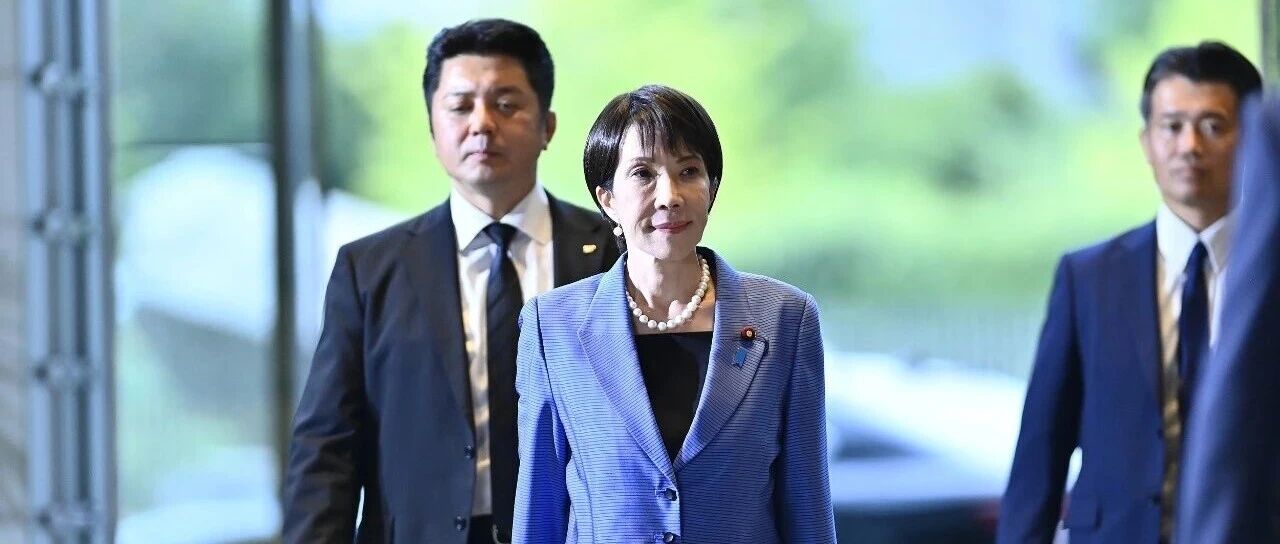
存亡危机事态

Search documents
日本军事评论家:高市早苗涉台谬论严重背离日本民众和平意愿
Xin Hua Wang· 2025-11-22 10:39
Group 1 - The core viewpoint of the articles highlights that Japanese Prime Minister Fumio Kishida's remarks regarding Taiwan violate important political documents between Japan and China and deviate from Japan's long-standing commitment to peace [1][3] - Military commentator Konomi Makoto emphasizes that Kishida's statements could be interpreted as a signal of war to China, particularly if "Taiwan's situation" is deemed a "survival crisis" allowing Japan's Self-Defense Forces to engage in collective self-defense [1] - There is a significant public protest in Japan against Kishida's comments, with hundreds gathering to demand retraction and clarification, indicating a disconnect between government policy and public sentiment [3] Group 2 - Konomi Makoto notes that many Japanese citizens and media have not fully grasped the seriousness of the situation, primarily due to the ambiguous nature of the term "survival crisis" [3] - The current government policy under Kishida is seen as lacking broad societal support, as the Japanese public generally values peace and would oppose any military action against China [3] - There is a noted lack of public understanding regarding the deployment of missiles by the Self-Defense Forces in Okinawa and the concept of security represented by "survival crisis," which is exacerbated by insufficient government communication and biased media reporting [3]

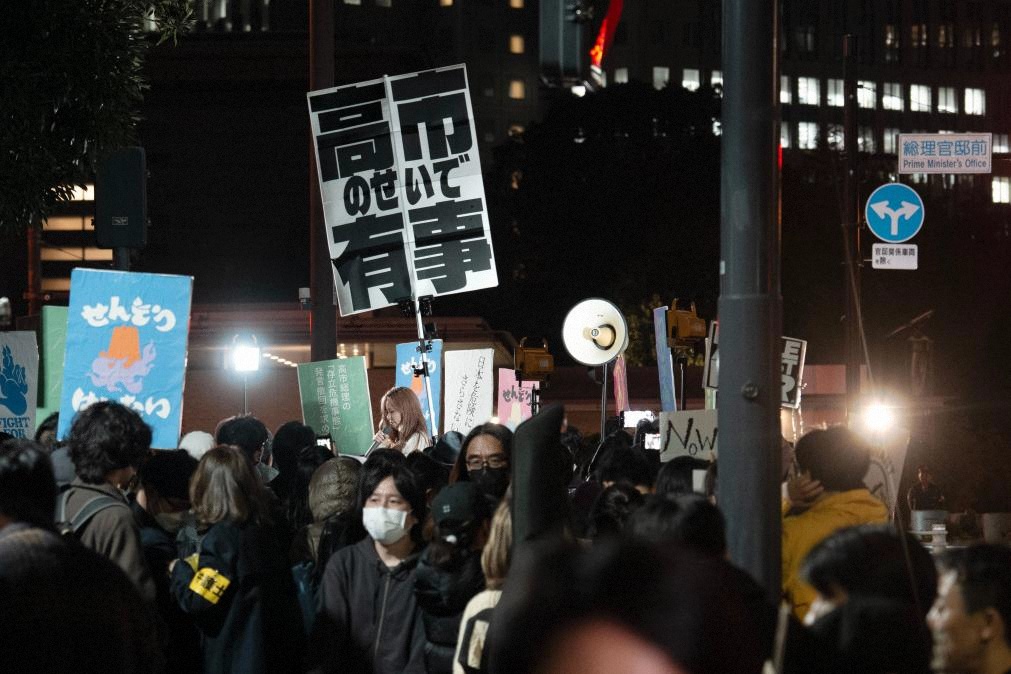
日本政坛右倾漩涡正加速旋转
Ren Min Ri Bao Hai Wai Ban· 2025-11-21 10:13
Core Viewpoint - The recent remarks by Japanese Prime Minister Fumio Kishida regarding Taiwan represent a significant escalation in Japan's stance on regional security, suggesting a potential military intervention in the Taiwan Strait, which has drawn widespread condemnation and raised concerns about the implications for Sino-Japanese relations and regional stability [1][2][3]. Group 1: Legal and Political Context - The term "survival crisis situation" was introduced by former Prime Minister Shinzo Abe in 2015, allowing Japan to exercise collective self-defense even without direct attacks on Japan [2][3]. - Kishida's comments directly link Taiwan's situation to Japan's national security, marking a departure from previous Japanese government practices that avoided explicit statements on this issue [4][5]. Group 2: Implications for Sino-Japanese Relations - The remarks violate the One China principle and Japan's previous political commitments, potentially undermining the political foundation of Sino-Japanese relations [3][9]. - The rhetoric of "Taiwan's issues equate to Japan's issues" reflects a dangerous trend in Japanese politics, aiming to intertwine China's national unification with Japan's security concerns [4][5]. Group 3: Domestic Political Dynamics in Japan - Kishida's statements may serve to justify increased defense spending and appeal to right-wing factions within Japan, indicating a shift towards a more militarized political stance [5][7]. - The overall political landscape in Japan is shifting rightward, with Kishida's government facing criticism for potentially escalating tensions in the region [6][8]. Group 4: Regional Security Concerns - Continued provocative statements from Japan could lead to heightened geopolitical tensions in the Asia-Pacific region, risking a military arms race and destabilizing the area [9][10]. - The historical context of Japan's militaristic past raises alarms about the potential for repeating previous mistakes, as current political rhetoric may incite fears of a resurgence of militarism [11].
X @外汇交易员
外汇交易员· 2025-11-21 07:48
日本首相高市早苗拒绝中国要求其收回近期有关台湾言论的要求,称日本在应对重大地区安全危机方面的立场没有改变。对于威胁日本生存的情况,政府将在检视所有可用资讯后,再以逐案方式判定一起地缘政治事件是否构成存亡危机事态。“我本人已在多次答复中阐明了这一立场。政府的立场始终如一。”“我和习近平主席确认了全面推进双边战略互利关系、构建建设性稳定关系的大方向。这一立场没有任何改变。”外汇交易员 (@myfxtrader):日本首相高市早苗回应此前的言论:政府将在检视所有可用资讯后,再以逐案方式判定一起地缘政治事件是否构成存亡危机事态。🗒️11月7日,高市早苗在国会答询中表示,“中国攻打台湾可能构成日本的‘存亡危机事态’,在此情况下,日本可以行使集体自卫权”。 ...
日本政坛右倾漩涡正加速旋转(环球热点)
Ren Min Ri Bao Hai Wai Ban· 2025-11-20 22:56
Core Viewpoint - Japanese Prime Minister Fumio Kishida's recent remarks in the National Diet regarding Taiwan have sparked global outrage, suggesting that a "crisis" in Taiwan could pose an existential threat to Japan, indicating a potential for military intervention in the Taiwan Strait [1][2][3] Group 1: Definition and Implications of "Existential Crisis" - The term "existential crisis" was introduced by former Prime Minister Shinzo Abe in 2015 through the "New Security Law," which allows for collective self-defense even if Japan is not directly attacked [2][3] - Kishida's comments directly link the situation in Taiwan to Japan's security framework, marking a significant shift in Japan's political stance and raising concerns about military involvement in Taiwan [3][4] Group 2: Political Trends in Japan - The remarks reflect a broader trend of rightward shift in Japanese politics, with Kishida's government attempting to justify increased defense spending and military expansion under the guise of a "China threat" narrative [5][6][7] - Historical parallels are drawn to Japan's militaristic past, with concerns that such rhetoric could lead to a resurgence of militarism and aggressive foreign policy [7][8] Group 3: Regional and International Reactions - Kishida's statements have drawn criticism from various quarters, including former Japanese leaders and international observers, who warn that such rhetoric could destabilize the region and provoke military tensions [9][10] - The Chinese government has firmly rejected these comments, emphasizing that Taiwan is a core interest and any external interference is unacceptable [9][10][11] Group 4: Potential Consequences - Continued provocative statements from Japan could lead to increased geopolitical tensions in the Asia-Pacific region, potentially igniting an arms race and undermining regional stability [9][10][11] - The domestic political landscape in Japan may also be affected, as public sentiment could shift against militaristic policies, contrasting with the government's current trajectory [11][12]
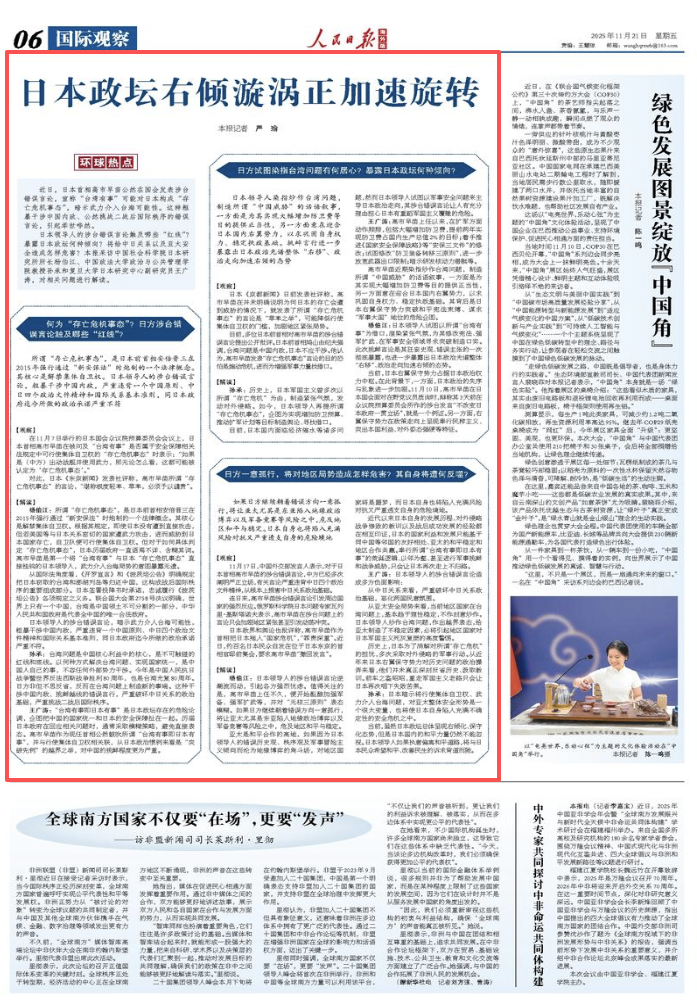
视频丨“存亡危机事态”谬论从何而来?起底高市黑历史
Yang Shi Xin Wen Ke Hu Duan· 2025-11-19 08:46
Core Viewpoint - Japanese Prime Minister Fumio Kishida's recent comments regarding Taiwan potentially constituting a "survival crisis situation" for Japan have sparked widespread criticism and protests, with many arguing that Japan has no standing to discuss "crisis" in relation to Taiwan due to its historical responsibilities towards the Chinese people [1][10][24] Group 1: Criticism of Kishida's Statements - Kishida's remarks have been met with strong opposition, with calls for Japan to retract its statements and provide a clear explanation to the Chinese people [4][10] - Taiwanese scholars have accused Kishida of deliberately creating tensions between China and Japan, suggesting that his comments serve the interests of Japanese right-wing factions rather than Taiwan itself [7][11] Group 2: Definition of "Survival Crisis Situation" - The term "survival crisis situation" was defined in Japan's security legislation, indicating scenarios where Japan can exercise collective self-defense even without direct military attack [8][10] - This classification allows Japan to respond militarily if a closely related country is attacked, posing a threat to Japan's survival [8] Group 3: Historical Context and Implications - Japan's historical actions, particularly its colonial rule over Taiwan from 1895 to 1945, render it the least qualified to comment on Taiwan's situation [10][24] - The historical context includes significant suffering inflicted on the Taiwanese population during Japanese rule, which complicates Japan's current stance on Taiwan [10] Group 4: Military Policy Changes - Kishida's government is reportedly considering revising Japan's post-World War II "Three Non-Nuclear Principles," which could allow for the introduction of nuclear capabilities [18][20] - This shift in military strategy indicates a potential move from a defensive posture to a more aggressive military stance, raising concerns about Japan's future military capabilities [22][23] Group 5: Kishida's Broader Military Strategy - Kishida's policies reflect a continuation and escalation of former Prime Minister Abe's militaristic approach, including calls for constitutional amendments and increased defense spending [23][24] - Critics argue that Kishida's administration is prioritizing military expansion over domestic welfare, potentially exacerbating regional tensions [27]
【环时深度】高市涉台挑衅言论法理谬误重重
Huan Qiu Shi Bao· 2025-11-18 22:59
Core Viewpoint - The article discusses the recent provocative statements made by Japanese Prime Minister Sanae Takaichi regarding Taiwan, which are seen as a serious challenge to China's core interests and a violation of established political agreements between China and Japan [1][3][5]. Summary by Sections Political Context - The diplomatic discussions between China and Japan on November 18 highlighted China's stern demand for Japan to retract its erroneous statements regarding Taiwan, which are viewed as a blatant interference in China's internal affairs [1]. - Takaichi's remarks are characterized as a significant deviation from Japan's historical commitments and the political consensus established through four key political documents between the two nations [3][5]. Historical Agreements - The four political documents, including the 1972 Sino-Japanese Joint Statement, affirm that Taiwan is an inseparable part of China and that Japan recognizes the People's Republic of China as the sole legitimate government of China [3][5]. - The 1978 Treaty of Peace and Friendship and subsequent agreements reiterate Japan's commitment to these principles, emphasizing that there is no room for misinterpretation regarding Taiwan's status [5][6]. Legal Implications - The article emphasizes that Takaichi's statements contradict the legal obligations Japan has under international law, particularly the principles outlined in the Sino-Japanese agreements [6][9]. - Experts argue that Japan's claims of "position differences" regarding Taiwan are unfounded, as the issue is clearly defined in both international law and bilateral agreements [6][7]. Military and Security Concerns - Takaichi's reference to a "survival crisis situation" stems from Japan's new security laws, which allow for military action even without direct threats, thus undermining Japan's post-war pacifist constitution [7][8]. - The new security framework has raised concerns about Japan's potential military interventions, which could lead to a significant shift in its defense posture and regional stability [8][11]. International Relations - The article critiques Takaichi's statements as a challenge to the post-war international order and fundamental principles of international law, such as non-interference in domestic affairs [9][10]. - The historical context of Taiwan's status is reinforced by international agreements, including the Cairo Declaration and the Potsdam Proclamation, which affirm Taiwan's return to China [9][10]. Domestic Reactions - There is a growing concern within Japan regarding the rise of right-wing ideologies that threaten the country's pacifist stance and historical narrative [11][12]. - Calls for a return to a peaceful national identity are echoed by various commentators, emphasizing the need for Japan to adhere to its commitments to peace and stability in the region [12].
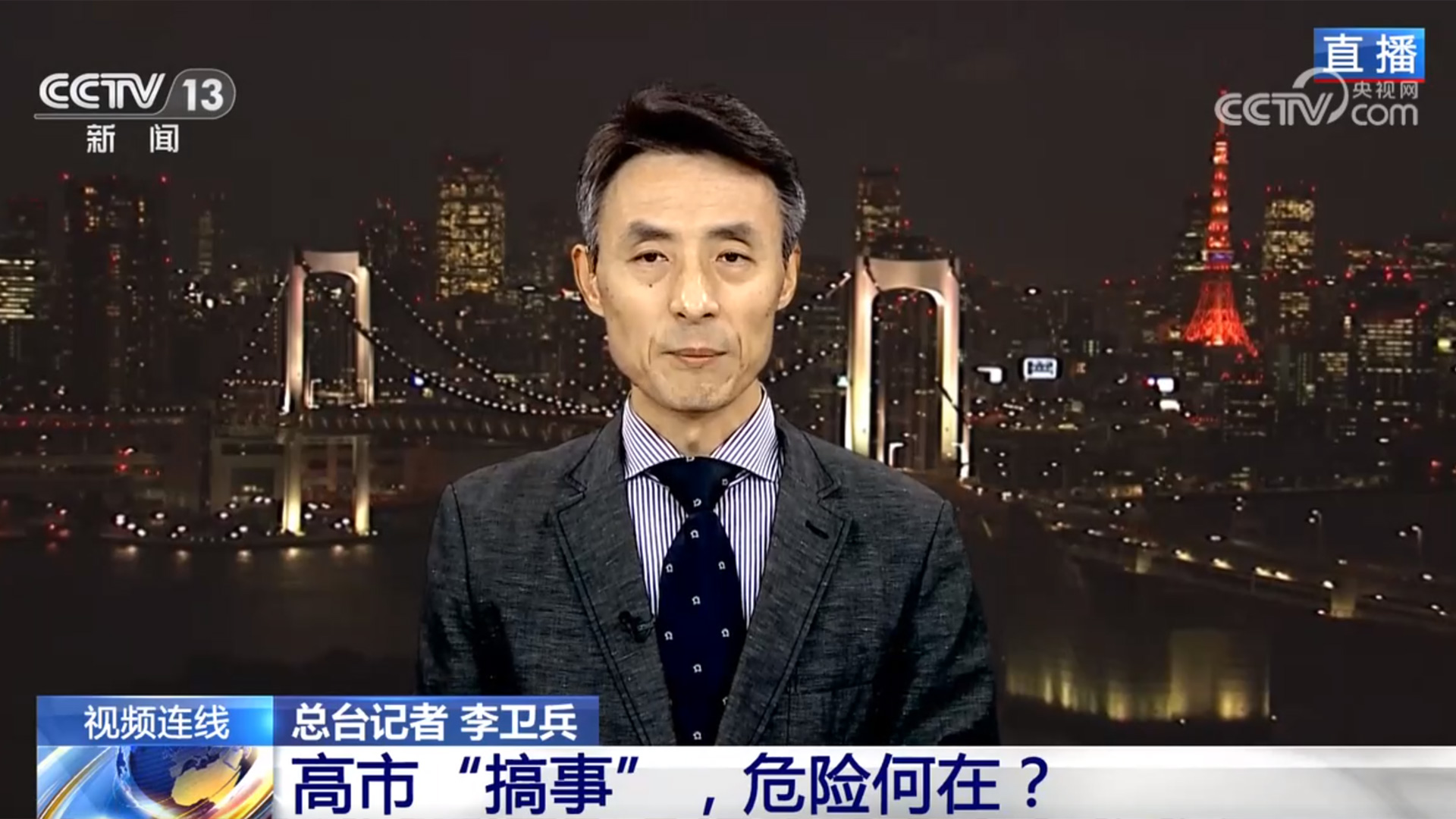
新闻1+1丨高市“搞事”,危险何在?
Yang Shi Wang· 2025-11-18 22:51
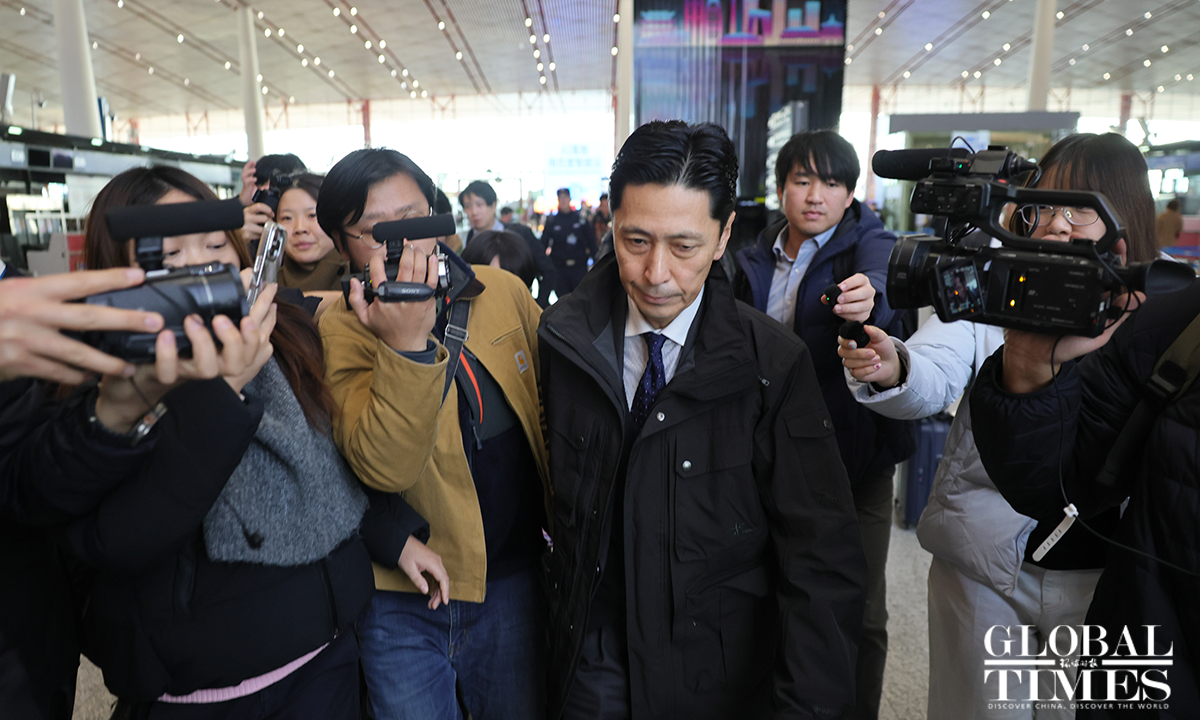
Core Viewpoint - The diplomatic tensions between China and Japan have escalated due to Japanese Prime Minister Sanae Takaichi's controversial remarks regarding Taiwan, which China views as a serious violation of its sovereignty and a threat to bilateral relations [1][7][12]. Group 1: Diplomatic Engagement - Recent diplomatic consultations in Beijing between Chinese and Japanese officials did not yield satisfactory results, as Japan's explanation of Takaichi's comments was deemed insufficient by China [1][6]. - Japan's Foreign Ministry aimed to clarify that Takaichi's statements did not reflect a change in government policy, but this was not accepted by China, which demands a retraction of the remarks [1][8]. Group 2: Domestic Reactions in Japan - Takaichi's potential plans to modify Japan's "Three Non-Nuclear Principles" have raised concerns domestically, with opposition parties questioning her intentions [3][4]. - Public opinion in Japan is increasingly critical of Takaichi's foreign policy approach, with fears that her actions could lead to significant diplomatic and security risks for the country [6][8]. Group 3: Implications for Japan-China Relations - The current situation is seen as a serious challenge to the political foundation of Japan-China relations, with calls for Takaichi to correct her statements to restore diplomatic stability [11][15]. - Analysts suggest that unless Takaichi retracts her controversial comments, the relationship between the two nations may continue to deteriorate, potentially leading to broader regional instability [12][15].
高市首相涉台谬论越界挑衅,日本被拖入“存亡危机”
Xin Jing Bao· 2025-11-18 10:14
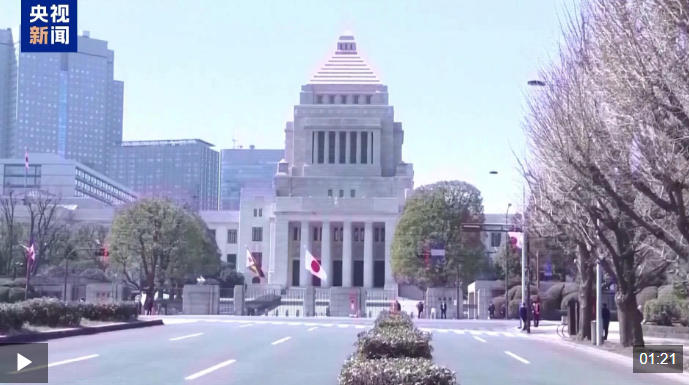
Core Viewpoint - Japanese Prime Minister Sanae Takaichi publicly stated that a "Taiwan contingency" could constitute a "survival crisis situation" allowing Japan to exercise collective self-defense, indicating a potential military intervention in the Taiwan Strait [1] Group 1: Political Implications - This marks the first time a sitting Japanese leader has expressed ambitions for military involvement in Taiwan since Japan's defeat in World War II [1] - Takaichi's remarks have sparked significant opposition within Japan, raising questions about the implications for Japan's defense policy and regional stability [1] Group 2: Strategic Context - The term "survival crisis situation" refers to scenarios that threaten Japan's national security, which could justify military action under Japan's pacifist constitution [1] - The provocative nature of Takaichi's statements suggests a shift in Japan's defense posture amid rising tensions in the Asia-Pacific region [1]
视频丨高市早苗错误言论被批:首相自身或成日本“存亡危机”
Yang Shi Xin Wen Ke Hu Duan· 2025-11-18 02:59
Core Viewpoint - The recent remarks by Prime Minister Kishi Sanae regarding Taiwan disregard legal and historical facts, posing risks to regional stability and Japan itself [2][5] Group 1: Political Context - Kishi is the first Japanese leader to directly link the concept of "Taiwan's situation" with "survival crisis," revealing intentions for military intervention in the Taiwan Strait [2] - Previous Japanese administrations have maintained a vague stance on the boundaries of "survival crisis," despite joint exercises between the Self-Defense Forces and the U.S. military under the backdrop of "Taiwan's situation" [2] Group 2: Reactions and Implications - Kishi's statements have sparked strong reactions, as they touch upon specific scenarios that the Japanese government has historically avoided addressing clearly [5] - The ambiguity in definitions related to "Taiwan's situation" could lead to dangerous implications for the exercise of collective self-defense [7] Group 3: Defense Policy - Kishi's administration is characterized by hawkish policies, including accelerating defense spending goals, establishing a "National Intelligence Agency," formulating anti-espionage laws, and easing weapon export regulations, which may intentionally escalate tensions [8]
“日本被首相拖入国家危机”
第一财经· 2025-11-17 00:58
Core Viewpoint - The article discusses the recent controversial statements made by Japanese Prime Minister Kishi Sanae regarding Taiwan, which have sparked protests and criticism within Japan, highlighting the potential risks to regional stability and Japan's own diplomatic relations [3][4][5]. Group 1: Political Context - On November 7, during a budget committee meeting, Kishi stated that a military conflict involving Taiwan could constitute a "survival crisis" for Japan, which could trigger Japan's collective self-defense rights under the new security law [4][6]. - Kishi's remarks have been criticized by various political figures, including former Prime Minister Noda Yoshihiko, who described her statements as reckless and damaging to Japan-China relations [5][6]. Group 2: Historical and Legal Implications - Kishi's statements are seen as a continuation of the right-wing ideology associated with former Prime Minister Abe Shinzo, who advocated for military expansion and constitutional revision [6][7]. - Legal experts argue that Kishi's interpretation of a "survival crisis" lacks a solid legal foundation, as Taiwan is not recognized as a sovereign state by Japan, thus complicating the application of the new security law [9][10]. Group 3: Regional and International Reactions - The article notes that Kishi's comments have provoked strong reactions from regional leaders and experts, who view her statements as a provocation that could escalate tensions in the Taiwan Strait [13][14]. - Critics emphasize that Japan's involvement in Taiwan-related military actions would be seen as aggression and could severely damage Japan's international standing and relations with China [11][12]. Group 4: Economic Consequences - The potential deterioration of Japan-China relations could have significant economic repercussions, as China is Japan's largest trading partner, with trade totaling $308.3 billion in 2024 [15][16]. - Experts warn that if relations worsen, the Japanese public will bear the brunt of the consequences, including reduced trade and tourism from China [15][16].