客家文化

Search documents
颁发22个奖项!兴宁市《花灯赋》征文比赛颁奖典礼圆满举行
Nan Fang Nong Cun Bao· 2026-02-03 03:34
Core Viewpoint - The "Flower Lantern Fu" essay competition in Xingning City successfully awarded a total of 22 prizes, celebrating the cultural significance of flower lanterns and promoting local heritage [4][10][43]. Group 1: Event Overview - The award ceremony for the "Flower Lantern Fu" essay competition took place on February 2, 2026, at the Xingning Cultural and Tourism Bureau [2][3]. - The event featured various awards including first, second, third prizes, and a popular online award, totaling 22 awards [3][4][18]. - The ceremony was attended by local officials, cultural representatives, and award-winning authors, highlighting the community's engagement with cultural activities [7][9][10]. Group 2: Competition Details - The competition was launched in December 2025 and received 111 valid submissions from across the country, showcasing a wide age range of participants from 13 to over 80 years old [15][16]. - The judging process was conducted anonymously and fairly, resulting in the selection of winners through initial and final evaluations [16][17]. - The first prize was awarded to Liu Rui from Puyang, Henan, for his work that integrates traditional themes with Hakka cultural elements [22][39]. Group 3: Cultural Significance - The event emphasized the importance of flower lantern culture as a representation of Hakka values and community spirit, aiming to enhance cultural confidence and local identity [12][13][39][42]. - The competition is part of a broader initiative to promote intangible cultural heritage and integrate cultural tourism in Xingning [40][41]. - All awarded and outstanding works will be compiled and published, ensuring the preservation and continued appreciation of this unique cultural memory [49].


广东最牛县城诞生
3 6 Ke· 2026-01-27 02:28
Core Viewpoint - Huizhou's Boluo County has become the first "billion county" in Guangdong Province, marking a significant economic milestone for the region [1] Group 1: Economic Achievement - Boluo County's GDP has surpassed 100 billion yuan, establishing it as a leading economic area within Guangdong, China's most economically robust province [1] Group 2: Historical and Cultural Significance - Boluo County has a history of over 2000 years and is recognized as one of the four ancient counties in Guangdong, with its fame largely attributed to the presence of Mount Luofu [3][4] - The cultural heritage of Boluo is deeply connected to Mount Luofu, which has been celebrated by historical figures such as Sima Qian and Su Dongpo, who contributed to its literary and cultural legacy [4][5] Group 3: Tourism and Local Culture - Boluo County features a unique Hakka cultural system, with over 70% of its population identifying as Hakka, preserving traditional customs and cuisine [6] - The region has developed into a popular tourist destination, with scenic routes like the 218 beautiful tourism road connecting Mount Luofu and Nankun Mountain, attracting visitors for leisurely drives [7]
梅州文化活动“多点开花”!消费热潮与文化盛宴焕发多元活力
Xin Lang Cai Jing· 2026-01-03 02:48
Group 1 - The article highlights the vibrant cultural activities across the city during the New Year holiday, showcasing the revitalization of the cultural and tourism consumption market through innovative cultural products and upgraded cultural experiences [2] - In Meizhou's Jiangbei Jiaying Ancient City, citizens and tourists enjoyed the unique charm of Hakka streets, with cultural products like fridge magnets and keychains featuring local landmarks and Hakka cuisine being particularly popular [4] - Museums and libraries organized immersive cultural experiences, such as a ceramic exhibition in Fengshun County Museum, displaying valuable pottery and porcelain that reflect the rich history of Chinese ceramic culture [4] Group 2 - Community activities also flourished, with the Liyuan Community in Meijiang District hosting a themed event called "Crafty Hands Paint Golden Characters" where residents engaged in hand-painting and shared their New Year aspirations [5] - The "Prosperous China, Blessings for the New Year" calligraphy exhibition at Meixian District Library attracted many visitors, emphasizing the cultural significance of the "Fu" character as a symbol of good fortune and traditional values [4]
了不起的河洛文化丨倚山入闽 向海拓路 “客从河洛来——重走客家千年迁徙路”行进式报道之三
He Nan Ri Bao· 2025-12-24 23:13
Core Viewpoint - The article explores the historical and cultural significance of the Hakka people, tracing their migration routes and the establishment of their identity in Fujian province, particularly in the areas of Shibi and Tingzhou, highlighting their resilience and adaptability throughout history [1][2][3]. Group 1: Historical Significance - The Hakka ancestral hall in Shibi village is regarded as the "ancestral land" and spiritual home for Hakka people worldwide, where they gather annually for ancestral worship [2]. - The ancient Shibi path, used by Hakka ancestors during their migration, symbolizes their journey and survival, leading to the establishment of their community in the fertile lands of Tingzhou [2][3]. - Tingzhou became a political, cultural, and economic center during the Tang dynasty, recognized as the "world Hakka capital," reflecting the Hakka people's identity and historical importance [3][4]. Group 2: Cultural Identity - The Hakka people maintain a strong sense of identity through the compilation of family genealogies, which document their migration and lineage, serving as a vital connection to their heritage [4][6]. - The Hakka genealogy museum in Shanghang County houses over 20,000 genealogies, making it a spiritual haven for Hakka individuals seeking to trace their roots [5][6]. - The Hakka people's commitment to family and cultural values is evident in their traditions, such as ancestor worship and the preservation of family teachings, which have been passed down through generations [6][7]. Group 3: Economic Development - The development of the Tingjiang River as a commercial trade route transformed Tingzhou into a major trade center, facilitating the movement of goods and people, and reshaping the Hakka people's living environment [11]. - The flourishing of the Tingjiang River trade during the Song to Ming and Qing dynasties connected the Hakka people to broader economic networks, enabling migration to Guangdong and overseas [11]. - The presence of Mazu temples in mountainous areas reflects the Hakka people's maritime connections and their reliance on sea trade, showcasing the cultural integration between land and sea [11].
7000名跑步爱好者齐聚河源开跑
Xin Lang Cai Jing· 2025-12-20 11:52
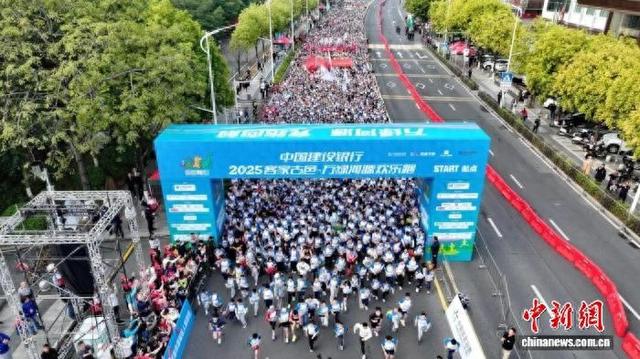
Core Viewpoint - The 2025 Hakka Ancient City Wanlvheyu Happy Run attracted 7,000 participants, showcasing the city's cultural and ecological advantages through a 5-kilometer route [1][3]. Group 1: Event Overview - The event took place on December 20 at the Heyuan Sports Center, featuring 7,000 running enthusiasts [1]. - The route started from the Heyuan Sports Center and extended to the Wanda Plaza in Dongyuan County, highlighting the ecological corridor along the Dongjiang River [3]. - The event included various cultural elements, such as Hakka culture and intangible cultural heritage displays, enriching the experience for participants [3]. Group 2: Activities and Engagement - Professional fitness coaches led warm-up exercises focusing on joint activities and muscle stretching to help participants avoid injuries [3]. - The event featured unique themed groups, including dinosaur mascots and the "Twelve Flower Gods," enhancing the festive atmosphere [3]. - The event was part of a broader series of cultural and tourism activities in Heyuan, aimed at providing diverse options for visitors [3].
瑞梅铁路江西段新建站房全部圆满封顶
Xin Lang Cai Jing· 2025-12-20 08:46
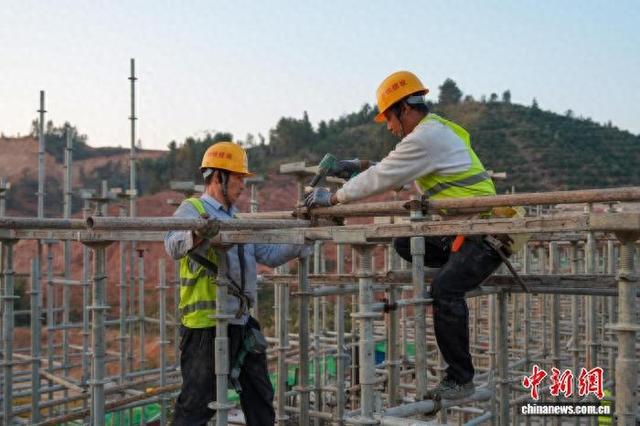
Core Viewpoint - The completion of the last concrete pour for the roof of the station building at Jiangxi Xunwu Station marks significant progress in the construction of the Ruimei Railway, laying a solid foundation for the timely operation of the entire line [1][5]. Group 1: Project Overview - The Ruimei Railway runs from Ruijin City in Jiangxi Province to Meizhou Station in Guangdong Province, with a total length of 240.29 kilometers and a design speed of 160 kilometers per hour [1]. - The Jiangxi section of the railway is 165.23 kilometers long and includes five stations: Ruijin, Huichang, Anyuan, Tianxin, and Xunwu [1]. Group 2: Station Design and Cultural Integration - The three new passenger station buildings each have an area of approximately 4,000 square meters and are designed with a "2 platforms and 4 lines" configuration [3]. - The design philosophy incorporates red culture and traditional Hakka architectural elements, creating a blend of modern simplicity and cultural significance [3]. - Each station reflects local cultural themes: Huichang Station symbolizes the "red flag," Anyuan Station resembles flowing water, and Xunwu Station combines book imagery with traditional architectural features [3]. Group 3: Construction Progress and Future Plans - The construction of the railway's substructure is progressing efficiently, with major technical challenges overcome, including the completion of the longest bridge, the Mianshui Grand Bridge [5]. - The project is set to transition to the installation of "four electrical" systems (communication, signaling, power, and electrification) and track laying by the end of December [5]. - The Ruimei Railway is one of the 102 key projects outlined in the national "14th Five-Year Plan," aimed at improving transportation infrastructure in the revolutionary old areas of Jiangxi Province and enhancing regional economic vitality [5].
客从河洛来——重走客家千年迁徙路丨此途汇赣 路启八方“客从河洛来——重走客家千年迁徙路”行进式报道之二
He Nan Ri Bao· 2025-12-19 00:00
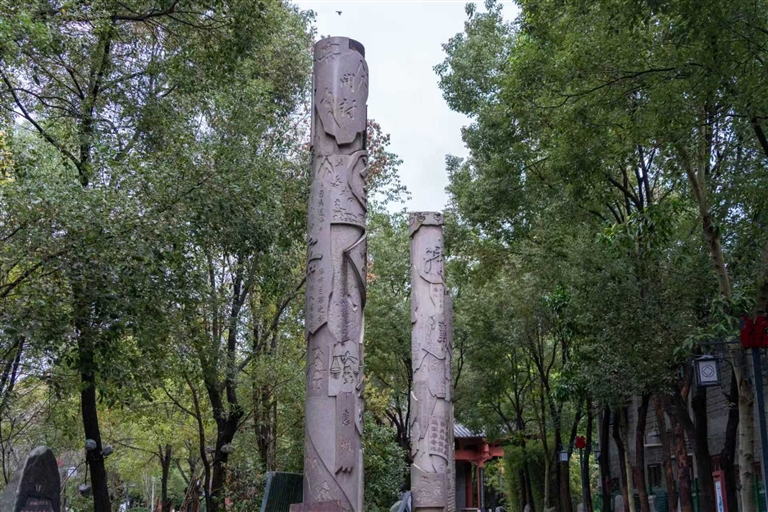
Core Insights - The article highlights the historical migration of Hakka ancestors from the Central Plains to Jiangxi, emphasizing the cultural significance of this journey and its lasting impact on Hakka identity and heritage [1][2][6]. Group 1: Historical Migration - The Hakka people migrated southward from the Central Plains over a period of more than 170 years, establishing a new home in Jiangxi, which became known as the "Hakka cradle" [2][6]. - Five commemorative pillars in the Jiangxi Hakka Museum symbolize the five major migrations of the Hakka people, serving as a spiritual landmark for their collective memory [2]. Group 2: Cultural Heritage - The architecture of Hakka roundhouses in Longnan City reflects the integration of Central Plains cultural elements with local traditions, showcasing the resilience and adaptability of the Hakka community [7][9]. - Traditional Hakka cuisine, such as the preparation of Lei Cha (pounded tea), illustrates the continuity of cultural practices from the Central Plains, adapted to local resources [10][11]. Group 3: Educational and Cultural Institutions - The Lianjiang Academy in Xingguo County represents the Hakka people's long-standing emphasis on education and cultural preservation, having played a significant role in local revolutionary history [14][17]. - Family teachings and cultural practices, such as the emphasis on filial piety and community harmony, are deeply rooted in Hakka traditions and continue to be passed down through generations [18][19]. Group 4: Modern Adaptation - The article discusses the modern revival of Hakka culture through innovative approaches, such as integrating traditional designs with contemporary products and utilizing technology to enhance cultural experiences [19].
千灯璀璨,舞韵添彩!兴宁杯花舞大赛邀您组队来战
Nan Fang Nong Cun Bao· 2025-12-18 09:33
Group 1 - The "Cup Flower Dance Competition" in Xingning is a key event of the "Shangdeng+" series, aimed at celebrating cultural heritage and promoting local traditions [3][12][14] - The competition encourages participation from the public, with a total of 20 teams competing in the finals scheduled for February 19, 2026 [17][19] - Participants must form teams of at least 16 members, and the competition is open to residents and public employees of Xingning [20][28] Group 2 - The competition features a prize pool with gold awards of 3000 yuan each for two winners, silver awards of 2000 yuan for three winners, and bronze awards of 1000 yuan for five winners [25][26] - The event promotes innovation in performances, allowing integration of various dance styles while emphasizing local cultural characteristics [22][23] - The competition aims to enhance the visibility of Xingning's cultural heritage and contribute to the local community's engagement in cultural activities [14][30]
了不起的河洛文化丨其源如岳 川行万里 “客从河洛来——重走客家千年迁徙路”行进式报道之一
He Nan Ri Bao· 2025-12-09 23:49
Core Insights - The event "Guests from He Luo" aims to retrace the migration path of the Hakka people, starting from Luoyang, and explore the cultural connections between He Luo culture and Hakka culture [1][6][19] - The journey will cover Hakka settlements in Jiangxi, Fujian, Guangdong, and extend to Malaysia, showcasing the stories of Hakka descendants and their cultural heritage [1][19] Group 1: Cultural Significance - The Hakka people, originating from the He Luo region, have maintained their cultural identity through language, customs, and family values during their migrations over the past 1,700 years [9][10][11] - The He Luo culture is considered the core of Hakka culture, with significant historical contributions to agriculture and social progress in southern China [9][10] - The Hakka spirit embodies a deep connection to their ancestral roots and a commitment to cultural preservation, which is evident in their traditions and community gatherings [11][15] Group 2: Historical Context - The migration of Hakka ancestors began during the late Western Jin Dynasty, leading to multiple waves of migration and the establishment of stable communities in southern regions [10][11] - The Hakka people have been recognized for their contributions to the spread of Chinese civilization, carrying advanced agricultural techniques and cultural practices to new areas [9][10] - The historical significance of Luoyang as the starting point for Hakka migration is highlighted by monuments and cultural sites that commemorate their journey [7][12][13] Group 3: Modern Implications - The establishment of the Luoyang Hakka Cultural Museum serves as a cultural landmark for Hakka people worldwide, fostering a sense of belonging and connection to their heritage [12][13] - Events like the World Hakka Conference strengthen ties among Hakka communities globally, promoting cultural exchange and unity [15][18] - The global Hakka population is estimated to be around 100 million, reflecting their widespread influence and the enduring legacy of their cultural practices [18]

1800多万潮客人的乡愁,藏在粤东这座小城
3 6 Ke· 2025-11-14 03:05
Core Insights - The article highlights the historical and cultural significance of Sanheba, a location in Meizhou, where the Han River converges, serving as a vital point for Hakka and Chaoshan people [4][8][12] - It emphasizes the deep-rooted connection between the local population and the Han River, which has nurtured over 18 million people in the region [8][12] - The narrative intertwines personal stories with historical events, particularly focusing on the Sanheba Battle in 1927, which played a crucial role in the Chinese revolutionary movement [24][25] Historical Significance - Sanheba is described as a pivotal site in Chinese revolutionary history, marking the beginning of significant uprisings such as the Nanchang Uprising and the Jinggangshan Uprising [6][24] - The area is home to a memorial dedicated to the martyrs of the Sanheba Battle, where Zhu De led troops against enemy forces, preserving the strength of the revolutionary army [16][24][25] - The memorial features a 15-meter high monument inscribed with Zhu De's calligraphy, symbolizing the sacrifices made during the battle [16][20] Cultural Context - The article illustrates the warmth and hospitality of the local people, showcasing their kindness and community spirit [3][4] - It highlights the architectural heritage of the Hakka people, particularly the Tai'an Building, which reflects the unique cultural identity and historical significance of the region [28][34] - The narrative emphasizes the importance of the Han River in shaping the local culture, economy, and identity, linking it to the agricultural and culinary traditions of the Hakka and Chaoshan communities [12][42]