
对外净资产

Search documents
德国经济学家泼冷水:我们是最大的债权国,但却是糟糕的投资者
Guan Cha Zhe Wang· 2025-05-29 09:16
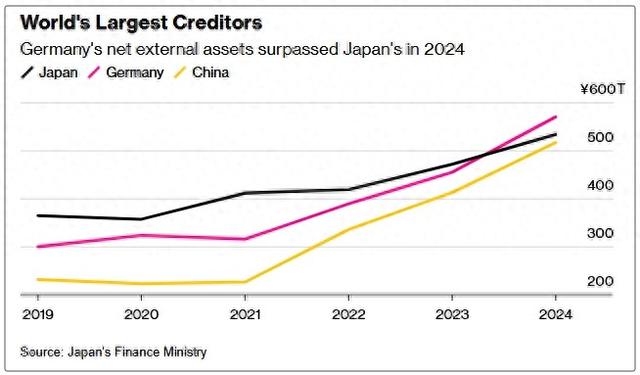
Group 1 - Germany has become the largest creditor nation globally with a net foreign asset exceeding 3.6 trillion USD, surpassing Japan's 34-year dominance [1][4] - The increase in Germany's net foreign assets is attributed to a significant trade surplus and a record current account surplus of 248.7 billion EUR in 2024 [1][4] - Despite being the largest creditor, German economists express concerns about the country's poor investment performance abroad, with a nominal return rate of only 4.8% on overseas investments [2][4] Group 2 - Direct investment in Germany has declined while cross-border investments have surged, leading to a total overseas claim of 13.9 trillion EUR against domestic liabilities of 10.4 trillion EUR [5] - The rise of Germany as the largest net creditor may provoke reactions from the U.S., particularly from figures like Trump, who criticize Germany's trade surplus with the U.S. [5] - The U.S. has a net foreign debt of 26.2 trillion USD, indicating that it benefits significantly from economic globalization despite not being a creditor nation [5]

34年来首次!日本失去这个全球第一
券商中国· 2025-05-27 23:23
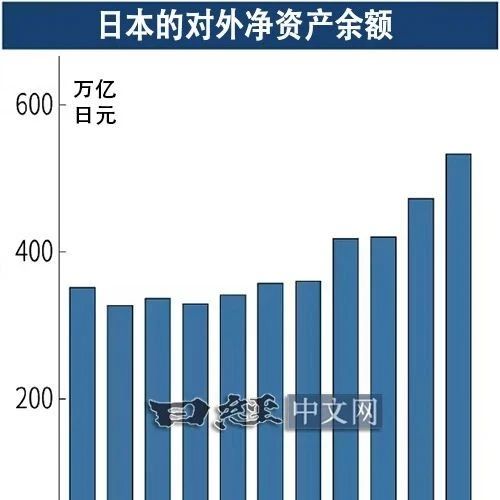
Core Viewpoint - Japan has lost its status as the world's largest net creditor nation for the first time in 34 years, overtaken by Germany, despite an increase in its net foreign assets [1]. Summary by Sections Japan's Net Foreign Assets - As of the end of 2024, Japan's net foreign asset balance is 533.05 trillion yen, reflecting a 12.9% increase from the previous year, marking a record high for six consecutive years [1]. Comparison with Germany - Germany's net foreign assets are projected to be 569.65 trillion yen by the end of 2024, surpassing Japan's for the first time in over three decades [1].

日本34年来首次失去对外净资产世界首位,被德国超过
日经中文网· 2025-05-27 06:38
Core Viewpoint - Japan's net foreign assets reached a record high of 533 trillion 500 billion yen by the end of 2024, marking a 12.9% increase from the end of 2023, but it has been surpassed by Germany, falling to second place for the first time in 34 years [1][2]. Group 1: Net Foreign Assets - As of the end of 2024, Japan's net foreign assets amounted to 533 trillion 500 billion yen, an increase of 12.9% from the previous year, marking the sixth consecutive year of record highs [1]. - Germany has become the world's largest net creditor nation with net foreign assets of 569 trillion 6512 billion yen, surpassing Japan [2]. - China and Hong Kong follow Japan, with net foreign assets of 516 trillion 2809 billion yen and 320 trillion 2584 billion yen, respectively [2]. Group 2: Foreign Assets and Liabilities - Japan's total foreign assets reached 1659 trillion 221 billion yen, an 11.4% increase from the end of 2023, continuing a 16-year growth trend [3]. - Approximately 70% of Japan's total foreign assets are denominated in foreign currencies, which increased in yen terms by 110 trillion yen due to yen depreciation [3]. - Japan's foreign liabilities amounted to 1125 trillion 9721 billion yen, a 10.7% year-on-year increase, marking six consecutive years of growth [3].
日本国债持续遇冷,财务省或就发债事宜探询市场意见
Sou Hu Cai Jing· 2025-05-27 05:46
Group 1 - Japan's overseas assets reached a historical high, but it lost its position as the world's largest net creditor nation for the first time in 34 years, with a net external asset balance of 533.05 trillion yen [1] - The Japanese government is stabilizing bond issuance despite rising long-term bond yields, which may increase debt servicing costs and pressure on expenditures [1] - The depreciation of the yen has led to an increase in both foreign assets and liabilities, with asset growth outpacing liabilities due to expanded overseas business investments [1] Group 2 - Japanese companies maintained strong foreign direct investment appetite in 2024, particularly in the US and UK, with significant funds flowing into finance, insurance, and retail sectors [3] - The shift towards direct investment over foreign bonds indicates a longer-term commitment, making it harder to quickly repatriate funds in times of risk [3] - Japan's economic minister expressed intentions to reach consensus with the US during the upcoming G7 summit, proposing conditions such as expanding agricultural imports and simplifying automotive import procedures [3] Group 3 - The Japanese government bond market experienced significant volatility, with a lack of bids leading to increased attention compared to US Treasuries [4] - Concerns over fiscal stability and reduced demand from life insurance companies have contributed to a scarcity of buyers in the Japanese bond market [4] - Investor confidence in traditional safe assets has been shaken, with ongoing market unease due to inflationary pressures and a lack of substantial macroeconomic policy responses [4]
34年来首次!日本这一全球地位被德国超越
Mei Ri Jing Ji Xin Wen· 2025-05-27 02:16
Group 1 - Japan's net foreign assets reached 533.05 trillion yen by the end of 2024, marking a 12.9% increase from the previous year and a record high for six consecutive years [1] - Japan has fallen to the second position as the world's largest net creditor nation, overtaken by Germany, which has net foreign assets of 569.65 billion yen [1] Group 2 - Japan's GDP experienced a quarter-on-quarter decline of 0.2% and an annualized decrease of 0.7% in Q1 2025, marking the first negative growth in a year [3][4] - The decline in Japan's economy is attributed to weak consumer spending and poor export performance [4] Group 3 - Personal consumption, which accounts for over half of Japan's economy, showed nearly zero growth in Q1, primarily due to rising prices affecting consumer capacity and willingness [5] - Exports of goods and services fell by 0.6%, while imports increased by 2.9%, indicating a negative impact on economic growth from trade dynamics [6] Group 4 - The Japanese government has allocated 388 billion yen from its reserve fund to address the economic challenges posed by U.S. tariff measures, with specific allocations for energy subsidies and local government support [8]

34年来首次,日本失去全球最大对外净资产国地位
news flash· 2025-05-27 01:36
Group 1 - Japan's net foreign assets reached 533.05 trillion yen by the end of 2024, marking a 12.9% increase from the previous year and achieving a record high for six consecutive years [1] - Japan has fallen from being the "world's largest net creditor nation" for the first time in 34 years, now ranking second behind Germany [1] - Germany's net foreign assets are projected to be 569.65 trillion yen by the end of 2024, according to the International Monetary Fund (IMF) [1]
【金融街发布】国家外汇管理局:2024年,我国经常账户顺差30213亿元
Zhong Guo Jin Rong Xin Xi Wang· 2025-03-28 09:50
Group 1 - The current account surplus for China in Q4 2024 is 11,719 billion CNY, while the capital and financial account shows a deficit of 13,394 billion CNY [1] - For the entire year of 2024, China's current account surplus amounts to 30,213 billion CNY, with a capital and financial account deficit of 30,932 billion CNY [1] - In USD terms, the current account surplus for Q4 2024 is 1,638 billion USD, driven by a goods trade surplus of 2,498 billion USD and a services trade deficit of 474 billion USD [1] Group 2 - The total external financial assets of China at the end of 2024 are 102,167 billion USD, with external liabilities of 69,209 billion USD, resulting in a net external asset of 32,958 billion USD [3] - Within the external financial assets, direct investment assets account for 31%, while securities investment assets represent 14% [3] - The external liabilities are primarily composed of direct investment liabilities at 52% and securities investment liabilities at 28% [3]
