
帝国主义

Search documents
牛弹琴:全世界要小心了
Xin Lang Cai Jing· 2026-01-07 00:01
Core Viewpoint - The article highlights a significant shift in the global role of the United States, emphasizing a more aggressive and imperialistic approach under the Trump administration, as articulated by White House Chief of Staff Mick Mulvaney [3][5][35]. Group 1: U.S. Global Actions - The U.S. is described as engaging in unprecedented military actions in the Western Hemisphere, particularly the intervention in Venezuela, which is seen as a precursor to further aggressive actions [6][35]. - Trump has issued threats against several countries, including Colombia, Cuba, Mexico, and Iran, indicating a broader strategy of intimidation [7][36]. - The U.S. has expressed a strong interest in Greenland, citing national defense concerns and framing it as a necessary acquisition to counter perceived threats from Russia and China [8][37]. Group 2: Reactions from Allies and Global Implications - The aggressive stance of the U.S. has caused alarm among its allies, with Denmark's Prime Minister warning that any military action against a NATO country would have severe consequences for the alliance [13][42]. - The article notes that the U.S. actions are undermining the post-World War II international order, which was built on principles of sovereignty and mutual respect among nations [14][43]. - A coalition of eight European countries issued a statement asserting Greenland's sovereignty, but the response is characterized as weak and lacking in condemnation of U.S. actions [18][47]. Group 3: Broader Global Context - The article suggests that the greatest threat to NATO is not Russia, but rather the United States itself, as it reasserts its imperial ambitions [22][51]. - The narrative indicates a growing fear among nations that the U.S. may target any country deemed strategically important, leading to a potential escalation of conflicts [21][52]. - The article concludes with a call for nations to be cautious and prepared for a world where U.S. imperialism is a dominant force, suggesting various strategies for response [28][57].

视频丨马杜罗夫妇拒绝美方指控 美各界谴责对委军事行动
Yang Shi Xin Wen Ke Hu Duan· 2026-01-06 23:36
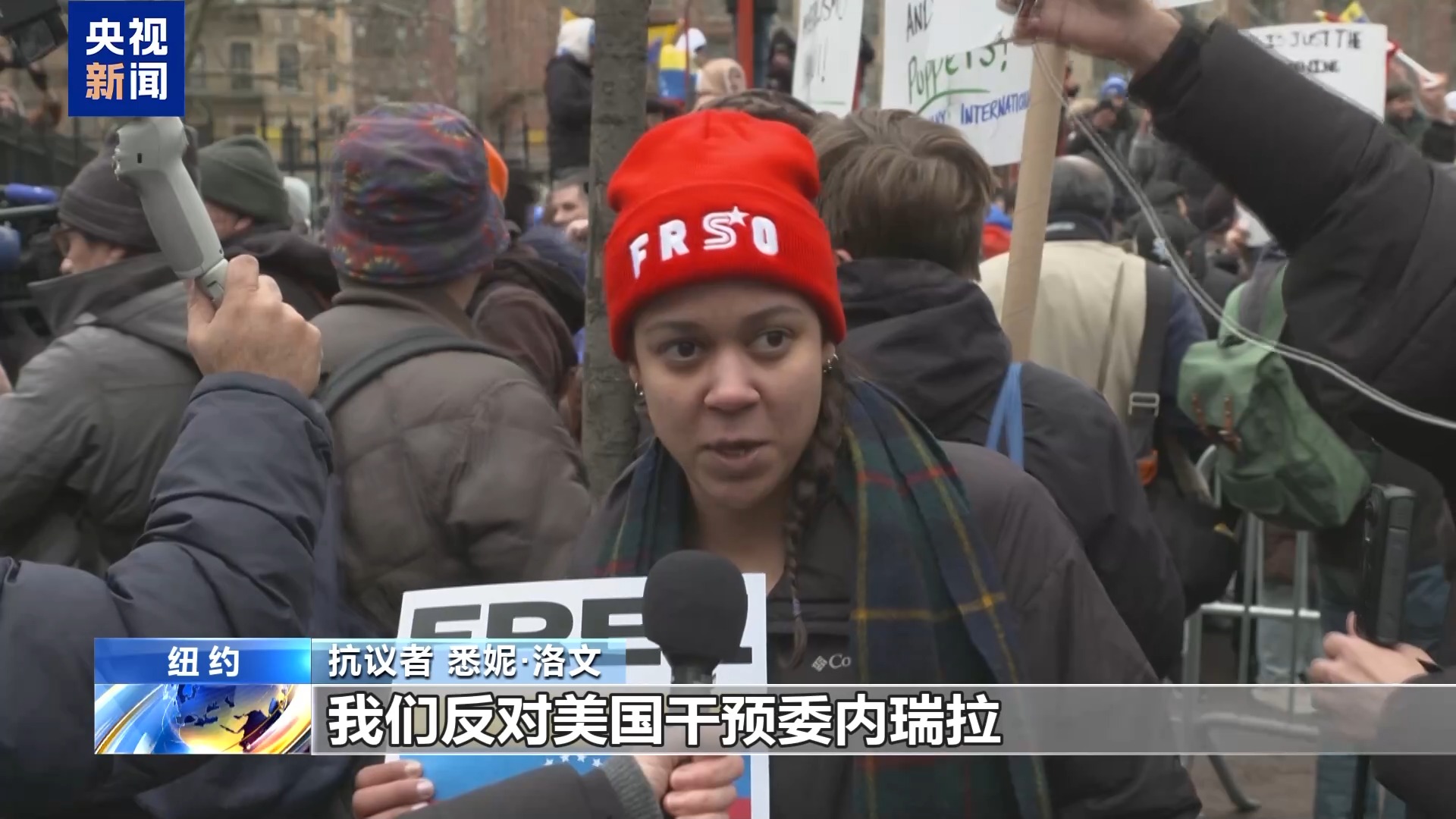
Core Viewpoint - The article discusses the legal proceedings against Venezuelan President Maduro and his wife in the U.S., highlighting public protests against U.S. intervention in Venezuela and concerns over the implications of such actions for international order and regional security [1][3][5]. Group 1: Public Sentiment and Protests - Protesters in New York demand the release of Maduro and criticize U.S. intervention as lacking legitimacy, viewing it as a political performance [1]. - Many protesters argue that U.S. actions create dangerous precedents and negatively impact regional security and international order [3]. - The protests reflect a broader sentiment that the U.S. is overstepping its bounds as a global power, with calls for an end to military interventions [5]. Group 2: Political Reactions in the U.S. - U.S. lawmakers express strong concerns regarding the legality of military actions against Venezuela, fearing that such interventions could lead to uncontrollable consequences [5][7]. - Senator Chuck Schumer warns that the situation in Venezuela could escalate, drawing parallels to past U.S. military interventions that resulted in significant costs for American families [7]. - Senator Bernie Sanders emphasizes the need for the U.S. government to focus on domestic issues rather than attempting to manage foreign nations, criticizing the imperialistic motives behind the intervention [9]. Group 3: Expert Opinions on U.S. Military Actions - Experts warn that the U.S. misuse of military force and violation of international law could destabilize the region and exacerbate issues like illegal immigration and drug trafficking [10]. - Historical analysis suggests that U.S. military interventions often lead to disastrous outcomes, with unpredictable consequences [12]. - Political scientists highlight the long-term negative effects of continuous warfare on U.S. society, including militarism and xenophobia, echoing historical warnings about the dangers of prolonged conflict [14].
“我无罪,仍然是委内瑞拉总统”!遭美强行控制后马杜罗首次出庭,夫人在突袭时受伤,委内瑞拉下令抓“内鬼”
Hua Xia Shi Bao· 2026-01-06 00:55
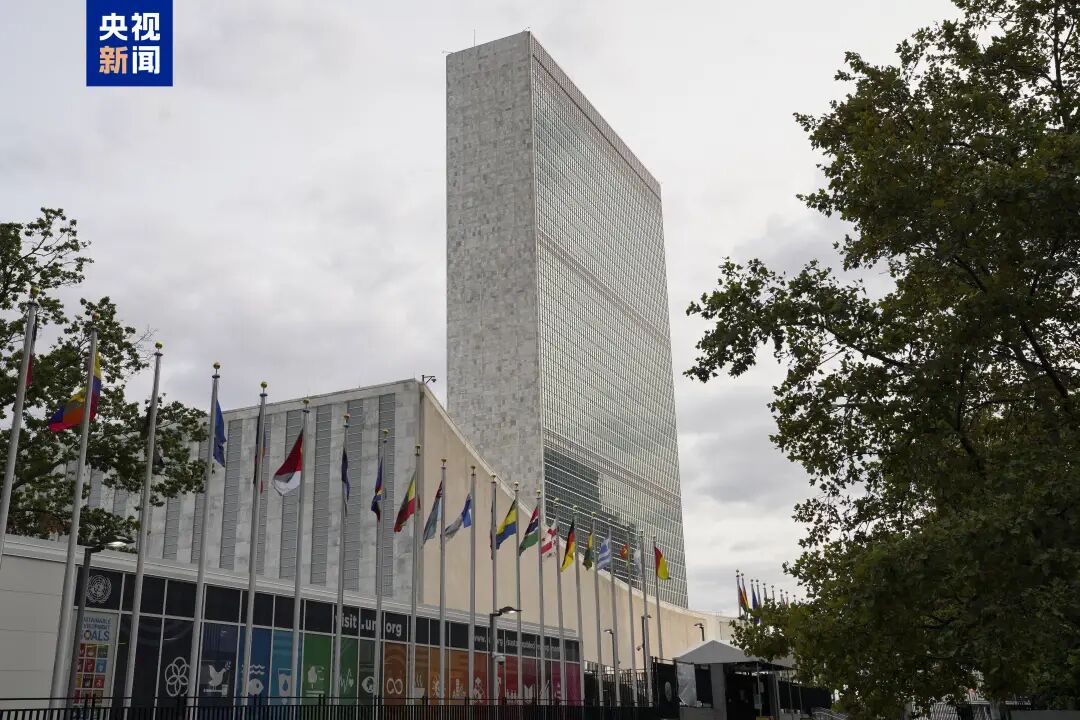
Group 1 - Maduro and his wife appeared in court on January 5, where he denied all charges and claimed "I am innocent" [1][3] - The court session was presided over by Judge Alvin Hellerstein, and Maduro faces multiple charges including "drug terrorism conspiracy" and "cocaine smuggling conspiracy" [3][5] - Maduro's legal team questions the legality of his detention and plans to submit extensive documentation to counter the legal challenges [3][4] Group 2 - The UN Security Council held an emergency meeting on January 5, where multiple countries condemned the U.S. military actions against Venezuela [6][9] - The UN reported that the situation in Venezuela has reached a "serious moment" due to U.S. military actions, which are seen as a violation of the UN Charter [9][10] - Venezuela's UN representative stated that despite U.S. military aggression, the country's governmental structure remains operational [12] Group 3 - Oil prices rose over 1% on January 5, with light crude futures increasing by $1.00 to $58.32 per barrel, and Brent crude rising by $1.01 to $61.76 per barrel [20][21] - The market is assessing the potential impact of U.S. military actions on Venezuela's oil supply, as the country holds the largest proven oil reserves globally [22] - At least 16 oil tankers attempted to breach the U.S. blockade on Venezuela, with 4 successfully leaving its waters [25][26]
俄罗斯代表:国际社会不应允许美国自诩为“最高法官”
Xin Hua She· 2026-01-05 22:44
Core Viewpoint - The article emphasizes that the international community should not allow the United States to disregard international jurisdiction, sovereignty, and the principle of non-interference, positioning itself as a "supreme judge" capable of invading any country and punishing alleged "wrongdoers" [1] Group 1 - Russia's permanent representative to the UN, Nebenzya, criticized the U.S. for intensifying neo-colonial and imperialist policies in Latin America [1] - The U.S. is accused of openly pursuing the goal of unrestricted control over Venezuela's natural resources and establishing its hegemonic ambitions in Latin America, which is described as an unprecedentedly shameless act [1] - Russia expresses support for Venezuela in maintaining its national interests and sovereignty [1]
日本民间团体友好人士:高市言论本质是为发动战争制造舆论
Yang Shi Xin Wen Ke Hu Duan· 2026-01-05 10:40
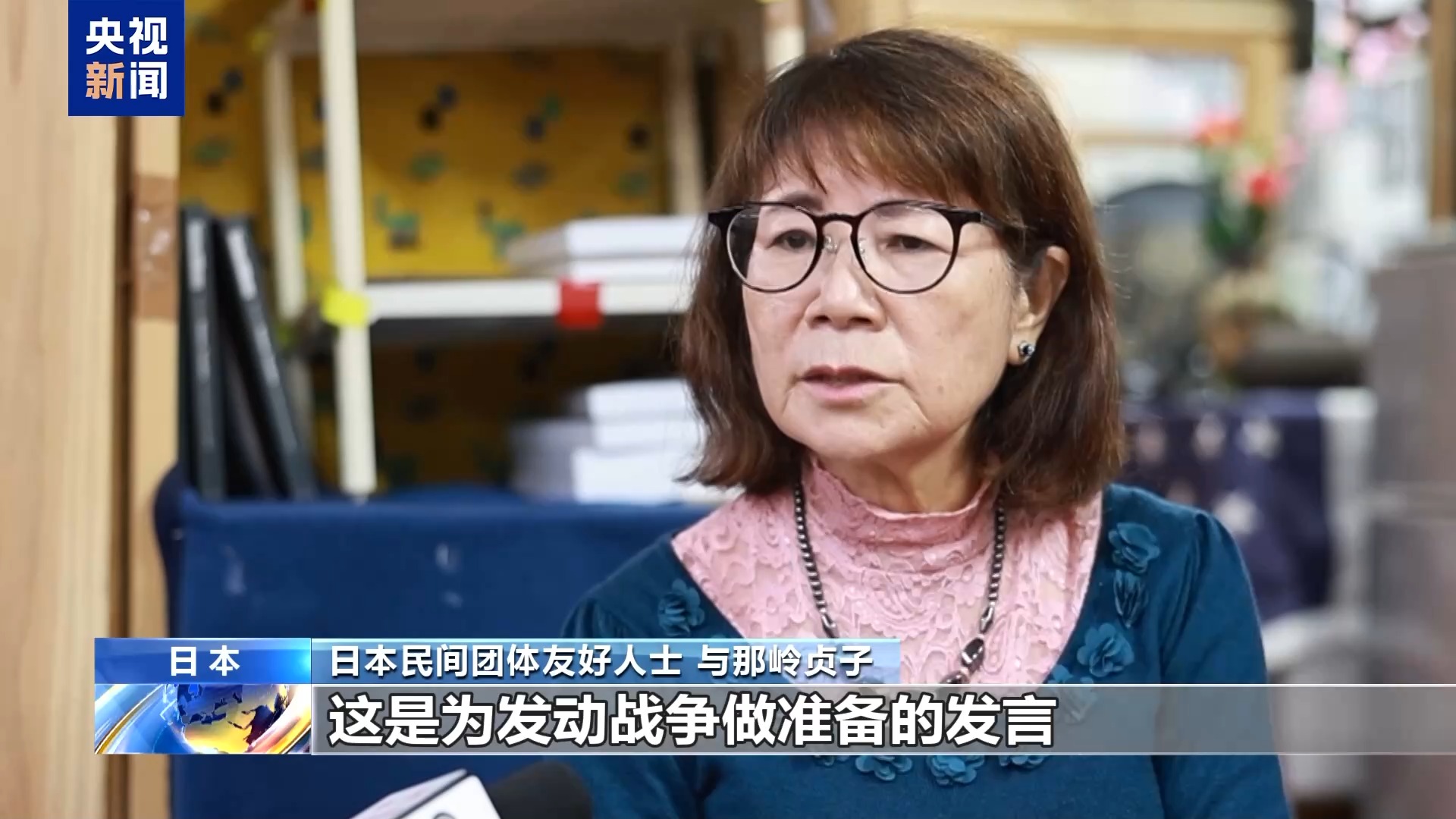
Group 1 - Japanese Prime Minister Sanae Takaichi's remarks regarding Taiwan have drawn strong dissatisfaction and condemnation from Japanese civil society groups, who argue that her statements deviate significantly from Japan's constitutional commitment to peaceful development and exacerbate regional tensions [1][3] - Civil society representatives, including Seki Shizuko, express a deep sense of crisis regarding Takaichi's comments, viewing them as preparatory rhetoric for war, and highlight the evolution of Japan's Self-Defense Forces from a police reserve to a military force, which they claim violates the constitution [3] - The civil society group emphasizes that Takaichi's dangerous rhetoric indicates a lack of reflection on Japan's past aggressive wars, suggesting a potential return to militarism and imperialism [3][5] Group 2 - Another civil society representative, Seki Masahiro, calls for Takaichi to retract her statements and return to a path of peace and friendship with China, expressing concerns about her intentions and the potential consequences of her remarks [5] - The sentiment among civil society members is that Takaichi's comments are not mere slips of the tongue but rather reveal her underlying beliefs, indicating a troubling mindset regarding Japan's historical military actions [5]
综合消息|多国政党组织和学者:美国打击委内瑞拉威胁地区和平安全
Xin Hua She· 2026-01-04 23:18
Core Viewpoint - The article discusses the large-scale military action initiated by the United States against Venezuela, which resulted in the capture of President Maduro and his wife, with widespread condemnation from various political parties and scholars who argue that the action is a violation of Venezuela's sovereignty and international law, aimed at controlling Venezuela's resources [1][2][3][4][5]. Group 1: International Reactions - Over 2000 people protested in Paris against the U.S. military action, with leaders claiming it is a guise for imperialism aimed at seizing Venezuelan oil resources [1]. - Thousands gathered in Madrid to protest the military intervention, labeling it an illegal invasion of Venezuela's sovereignty [2]. - German political figures condemned the U.S. actions as state terrorism and a dangerous shift in international order, emphasizing the lack of UN authorization [3]. - The South African Communist Party criticized the U.S. actions as imperialist aggression that threatens regional peace and stability [3]. - Various international leaders and scholars highlighted the historical precedent of U.S. interventions and the potential for significant disruption in international political systems [4][5]. Group 2: Implications for International Law - The military action is viewed as a blatant violation of the United Nations Charter and fundamental principles of international law, raising concerns about the establishment of dangerous precedents for global governance [5]. - Experts argue that the U.S. aims to install a puppet government in Venezuela to control its natural resources, particularly oil, which poses a threat to other nations in the region [5]. - The actions taken by the U.S. are seen as a reassertion of the Monroe Doctrine, which is particularly alarming for Latin American countries [3].
多国政党组织和学者:美国打击委内瑞拉威胁地区和平安全
Xin Hua She· 2026-01-04 15:00
德国左翼党联合主席扬·范阿肯在其党派网站上表示,美国对委动武是"野蛮的国家恐怖主义行 径"。 德国社民党外交政策专家阿迪斯·艾哈迈托维奇表示,如果未经联合国授权就使用军事力量,公开 推翻别国政权,那么强权将日益取代法律,"这是国际秩序中一个非常危险的转变"。 德国哥廷根大学国际法专家凯·安博斯说,美国打击委内瑞拉显然是为了推翻其所反对的马杜罗政 府,获取委石油资源。 南非共产党发表声明说,美方这一"卑劣的强盗行径"破坏了拉美和加勒比地区的和平与稳定,并将 数以百万计民众的生命置于严重危险之中。 南非工会联合会发表声明说,美国的行为不是外交、不是执法,也不是"推动民主",而是赤裸裸的 侵略、政权更迭战争和"帝国主义犯罪逻辑"。 新华社北京1月4日电 综合新华社驻外记者报道:美国3日凌晨对委内瑞拉发起大规模军事行动,突 袭委首都加拉加斯并抓走委总统马杜罗及其夫人。多国政党组织、政界人士和学者谴责美国以"缉毒"为 名采取军事行动,实则意在控制委内瑞拉资源。此举侵犯委内瑞拉主权,公然违反国际法,严重威胁到 拉丁美洲地区和平与安全。 据法国媒体报道,超过2000人3日晚在法国巴黎共和国广场举行抗议活动。左翼政党"不屈法 ...
委内瑞拉事件说明,美国不装了
Zhong Guo Xin Wen Wang· 2026-01-04 09:47
Group 1 - The article discusses the recent abduction of a democratically elected president by another country, highlighting it as a tragic event in the 21st century and a reflection of global power dynamics [1] - It emphasizes that the United States has a long history of intervening in Latin America, having orchestrated regime changes under various pretexts, which is not a new phenomenon [2] - The article points out that the root causes of such tragedies are deeply embedded in imperialism, colonialism, and hegemony, which undermine the principle of sovereign equality among nations [2] Group 2 - The U.S. National Security Strategy Report indicates a clear stance on Latin America, suggesting that the U.S. aims to eliminate anti-American regimes and leaders, sending a message of intimidation to other nations [3] - The article warns that the U.S. is reasserting its dominance in the Western Hemisphere, with a new version of the Monroe Doctrine emerging under Trump's administration, defining order, justice, and security in the region [3] - It highlights the strategic importance of Venezuela's oil and key minerals, indicating that the U.S. seeks to control these resources to prevent Latin America from developing independently [3][4]
委内瑞拉事件说明,美国不装了|国际识局
Xin Lang Cai Jing· 2026-01-04 09:40
Group 1 - The core issue highlighted is the ongoing dominance of imperialism, colonialism, and hegemony, particularly by the United States in Latin America, which has led to political instability and the undermining of national sovereignty [1][2] - The article discusses the historical context of U.S. interventions in Latin America, noting that the U.S. has orchestrated 41 regime changes in the region since the late 19th century, often under the guise of anti-terrorism and anti-drug efforts [1] - The recent actions against Venezuela's leadership are seen as a warning to other Latin American countries, signaling a return to a Monroe Doctrine-like approach under President Trump's administration, where the U.S. asserts its influence and control over the region [2][4] Group 2 - The U.S. aims to eliminate anti-American regimes in Latin America, using methods that serve to humiliate rather than simply remove leaders, thereby instilling fear among other nations [4] - The article emphasizes the strategic importance of Venezuela's oil and mineral resources, suggesting that U.S. control over these assets is crucial for its geopolitical strategy in the region [4] - The narrative indicates a broader trend of U.S. digital colonialism and imperialism, which is being reinforced by advancements in technology and digital networks, further entrenching U.S. dominance in the Western Hemisphere [4]
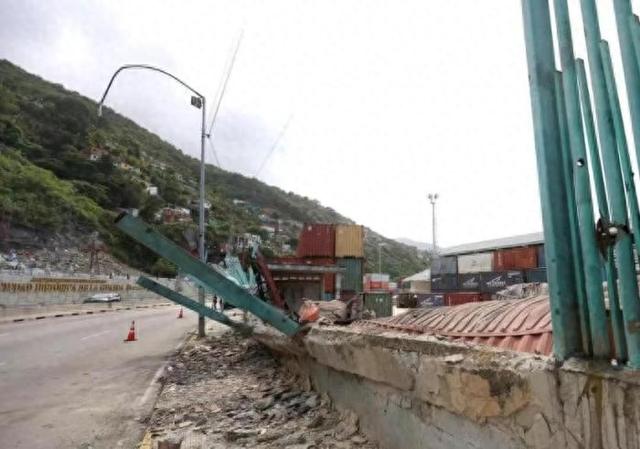
马杜罗:委内瑞拉正以最佳状态迎接挑战
Xin Lang Cai Jing· 2026-01-01 11:31
马杜罗表示,委内瑞拉实体经济数据增长,表明该国正在克服外部攻击和封锁。面对近一段时间的帝国 主义威胁,委内瑞拉国民的认同感增强。他呼吁国民团结起来,共同抵御帝国主义。(央视新闻) 委内瑞拉总统马杜罗在2025年12月31日播出的新年致辞中表示,委内瑞拉"正以最佳状态"迎接挑战。 ...