
技术性扩表

Search documents
美联储官宣,启动“技术性扩表”!
财联社· 2025-12-10 20:18
Core Viewpoint - The Federal Reserve has announced a 25 basis point interest rate cut, lowering the federal funds rate target range to 3.50%-3.75%, aligning with market expectations [1] Group 1 - The Federal Reserve will begin expanding its balance sheet this month by purchasing $40 billion in short-term government bonds, with the purchase scale expected to remain high for several months before significantly reducing [2] - From 2022 to the present, the Federal Reserve has been continuously reducing its holdings of government bonds, aiming to minimize its balance sheet without disrupting the market [4]


美联储政策大转向,美国经济亮红灯!人民币资产悄悄逆袭
Sou Hu Cai Jing· 2025-11-28 11:22
Core Viewpoint - The Federal Reserve's decision to stop balance sheet reduction starting December 1, 2025, is seen as a reaction to economic pressures rather than a proactive easing measure, leading to significant market fluctuations and a strengthening of the RMB assets [1][6][9]. Market Reaction - The immediate market response included a weakening of the US dollar, with fluctuations in the 99-100 range, and a surge of northbound capital into A-shares, making high-dividend assets in Hong Kong highly sought after [4][3]. - The RMB is benefiting from improved interest rate differentials and an upcoming peak season for exporters, indicating a potential for medium to long-term appreciation [4][12]. RMB Asset Strength - The rise of RMB assets is attributed to a "certainty premium," as global economic conditions remain weak and geopolitical risks are high, while China's stable growth outlook and asset valuation provide a safe haven for global capital [12][13]. - Foreign capital's increased allocation to RMB assets is not merely for short-term gains but reflects a long-term positive outlook, supported by stable cash flows in high-dividend A-share sectors [15]. Investment Strategy - The focus for investors should be on a balanced approach, emphasizing high-dividend assets while avoiding risky investments that rely heavily on external financing [18]. - Key risks to monitor include the high valuation of US tech stocks and the potential volatility in emerging markets due to cross-border capital flows [20][22].
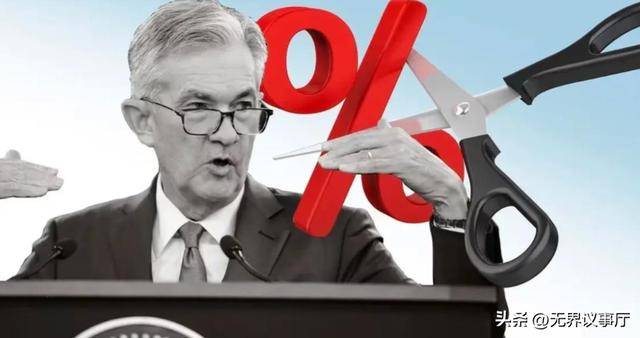
美联储急刹车!38万亿债务压顶,外资悄悄抄底,A股成最大赢家?
Sou Hu Cai Jing· 2025-11-28 07:29
Group 1 - The Federal Reserve's decision to halt the balance sheet reduction is not a voluntary action but a response to market pressures and rising debt levels [1] - As of mid-November, U.S. bank reserves have dropped to $2.8 trillion, the lowest since September 2020, nearing the critical threshold of $2.5 trillion that previously triggered a liquidity crisis [2][4] - The usage of the Standing Repo Facility (SRF) surged to a historical peak of $50.35 billion in November, indicating severe liquidity constraints among banks [4][6] Group 2 - The U.S. national debt surpassed $38.2 trillion as of November 18, with an annual increase of $2.2 trillion, and interest payments exceeding $1.1 trillion for the first time, accounting for nearly 20% of federal revenue [6][8] - The unemployment rate rose to 4.4% in September, with the unemployment rate for recent college graduates reaching 8.5%, indicating a challenging job market [8][10] - In October, corporate layoffs reached 153,000, a 175% increase year-over-year, marking the highest level in 20 years [10] Group 3 - The announcement of halting the balance sheet reduction led to a temporary boost in global markets, with significant foreign investment in A-shares, particularly in high-dividend sectors like banking and utilities [12][14] - The Chinese yuan is expected to appreciate due to improving interest rate differentials and seasonal factors in export settlements [14] - However, long-term risks remain, including potential capital flight from emerging markets and inflationary pressures that could hinder future monetary policy adjustments [16][17] Group 4 - The current technical expansion of the balance sheet is not equivalent to quantitative easing (QE) and is primarily aimed at addressing liquidity gaps rather than stimulating the economy [19][21] - The Federal Reserve has indicated that structural expansion of the balance sheet will only be considered if reserves fall to $2.7 trillion, suggesting there is still some buffer [21] Group 5 - Investment strategies should focus on high-dividend assets, particularly in sectors like banking and utilities, while avoiding high-valuation tech stocks that may be at risk of a market correction [23][25] - There is a growing trend among younger investors towards stable financial products such as money market funds and bond funds, which offer more secure returns [25] - Caution is advised against low-rated corporate bonds due to increased default risks stemming from delayed effects of Federal Reserve policies [26]
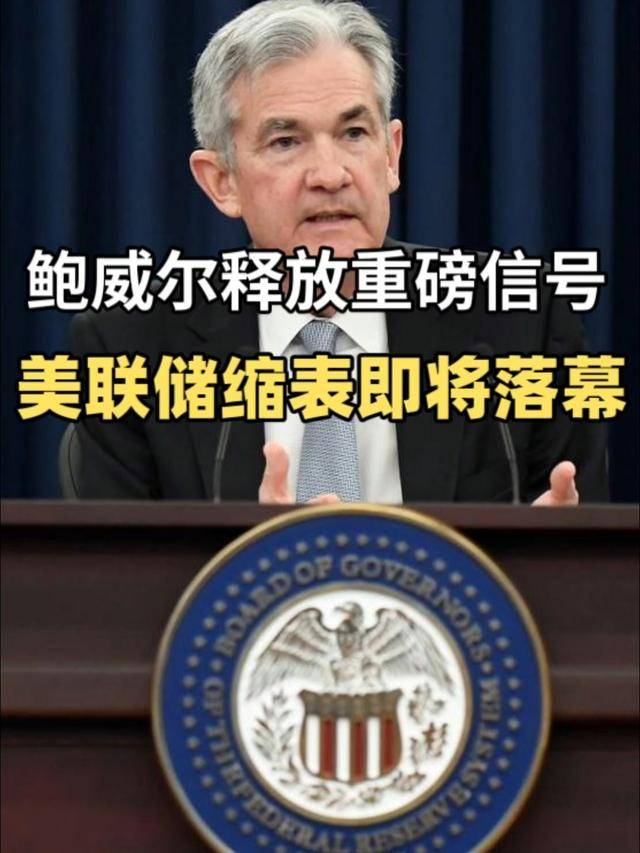
美联储即将停止缩表原因,未来将开启量化宽松政策?|国际
清华金融评论· 2025-11-26 09:51
Core Viewpoint - The Federal Reserve will stop balance sheet reduction on December 1, 2025, primarily due to increasing liquidity pressure in the U.S. market and escalating fiscal burdens. This move may provide short-term relief for global dollar liquidity but could amplify volatility in emerging markets in the medium to long term [1]. Group 1: Reasons for Stopping Balance Sheet Reduction - U.S. market liquidity is nearing a warning threshold, with bank reserves dropping to $2.93 trillion (approximately 9% of GDP), close to the "money shortage" threshold of $2.5 trillion to $3 trillion observed in 2019. Overnight rates, such as SOFR, have exceeded the target range, and the usage of the Standing Repo Facility (SRF) has surged to over $10 billion in a single day, indicating heightened financing pressures [3]. - Fiscal pressures are forcing a policy shift, as U.S. federal debt has surpassed $38 trillion, with net interest payments approaching defense budget levels. Continued balance sheet reduction raises government financing costs and exacerbates debt risks, leading to repeated calls from the White House for the Fed to lower interest rates, challenging the Fed's policy independence [3]. - Economic data shows weakness, with the unemployment rate rising to 4.4% in September 2025, indicating a cooling job market. Although inflation has decreased to 3%, it remains above the 2% target [3]. Group 2: Impact of Stopping Balance Sheet Reduction - In the short term, this decision is favorable as it improves liquidity, alleviates dollar financing costs, reduces repo rate volatility, and supports U.S. equity and bond markets. Emerging market capital is expected to flow back, leading to a weaker dollar (recently fluctuating between 99-100), with increased northbound capital inflows into A-shares and high-dividend assets in Hong Kong. The attractiveness of RMB assets is rising, supported by improved China-U.S. interest rate differentials and a peak season for exporters' currency conversion, enhancing the long-term appreciation expectations for the RMB [5]. - In the medium to long term, risks may arise, including increased volatility in emerging markets and potential local bubbles or debt risks due to cross-border capital "tidal effects," reminiscent of the turmoil in emerging markets following the end of balance sheet reduction in 2019. There are also inflationary concerns; if economic resilience exceeds expectations, inflation rebound could limit the Fed's capacity to lower interest rates [5]. Group 3: Future Policy Direction - Future policy may involve technical operations rather than quantitative easing (QE). The Fed may reinvest maturing MBS funds into short-term Treasury bonds to shorten asset duration. The New York Fed has indicated that if reserves fall to a critical point of $2.7 trillion, structural balance sheet expansion may be initiated, such as purchasing short-term Treasury bonds. However, QE is not expected to be implemented in the short term, as the current federal funds rate is between 3.75% and 4.0%, well above the zero lower bound, and conventional rate-cutting tools remain effective [7]. Group 4: Capital Market Considerations - There are opportunities for RMB asset allocation, particularly in high-dividend sectors of A-shares (banking, power, coal) with dividend yields reaching 3.8%, significantly higher than the U.S. stock market's 1.6%. The trend of foreign capital allocation is clear, supported by easing U.S. monetary policy and a narrowing decline in Chinese exports to the U.S. [9]. - Market volatility risks should be monitored, as U.S. tech stock valuations are at historical highs, with the NASDAQ's PE-TTM at 36.95 times, indicating ongoing short-term adjustment pressures. The lagging effects of Fed policy may impact corporate bonds, especially those with low ratings [9]. - It is important to note that the Fed's current policy shift is a passive adjustment under debt constraints rather than an active stimulus. Investors should focus on defensive strategies, increasing allocations to high-dividend assets, and pay attention to liquidity expectations adjustments in the upcoming December meeting. China's economy may benefit from improved external demand and capital inflows, but caution is warranted regarding cross-border volatility triggered by mixed signals from the Fed [9].
