投资认知

Search documents
追高之后,为什么牛市好像就“没了”?
Mei Ri Jing Ji Xin Wen· 2025-08-02 12:54
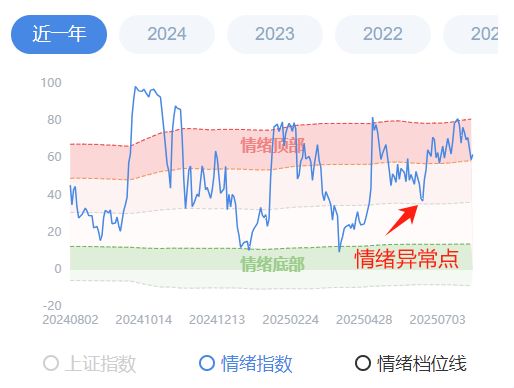
Core Insights - The current bull market appears to be temporarily paused, with various disappointing news emerging as investors rush to increase their positions [1][9] - The market has shown a significant deviation in investor behavior, particularly since June 23, indicating a lack of understanding of market dynamics [1][4] Group 1: Investor Behavior - Investors are overly optimistic, believing that low-probability events will continue to occur, which has led to a series of market anomalies [3][4] - The habit of chasing high prices is difficult to change, resulting in significant losses during bull markets [4][6] - Many investors overestimate their risk tolerance and fail to recognize the importance of focused investment strategies [7][8] Group 2: Market Dynamics - The "924" market anniversary is approaching, suggesting that the current bull market is not over but merely resting, with expectations for a potential new rally in August [9][11] - For a new market rally to occur, the "profit effect index" must drop to a "sentiment bottom," and the "financing buy-in ratio" should decrease to around 8% [9]

投资的大道理都是正确的废话,但多数人只见“废话”不见“正确”
Sou Hu Cai Jing· 2025-07-30 09:41
Core Insights - The essence of investment lies in understanding the truth, quality, and value of assets, where the ability to discern truth is crucial for survival in the industry [1][2] - Investment success is influenced by the level of cognitive understanding, with higher levels leading to better decision-making and outcomes [2][3] Group 1: Investment Philosophy - Investment is fundamentally about exploring the truth behind societal changes and understanding value through probability and odds [2] - The recognition of investment principles can be categorized into different levels, from fragmented (point) to comprehensive (array) understanding, with the latter being essential for effective decision-making [2][3] Group 2: Market Dynamics - The Chinese stock market presents unique challenges, and while past experiences may not directly translate to future success, strategic opportunities will continue to arise [3][4] - The best selling opportunities often occur when market sentiment is overly optimistic, while the best buying opportunities arise during periods of pessimism [8][9] Group 3: Risk Management - Effective risk management is crucial, as it prevents significant fluctuations in net value, and should be prioritized over merely smoothing out volatility [6][7] - High probability investments should be based on strong demand and supply barriers, with opportunities arising from concentrated negative sentiment [7][8] Group 4: Long-term Perspective - Successful investing requires a long-term perspective, patience, and the ability to endure market fluctuations while maintaining a disciplined approach [10][11] - Understanding that uncertainty is absolute and learning to make high-certainty decisions amidst it is key to investment success [11][12]

牛市过去十年,总结的三大教训!
雪球· 2025-07-18 08:41
Core Viewpoint - The article reflects on the lessons learned from the 2015 stock market crash in China, emphasizing the importance of risk management, market awareness, and the need for continuous learning in investment practices [4][5][6][7]. Group 1: Market Events and Historical Context - The article discusses the peak of the Chinese stock market at 5178 points on June 12, 2015, followed by a significant downturn where the Shanghai Composite Index fell by 35% and the ChiNext Index dropped by 43% within 17 trading days [4]. - It highlights the massive IPO activities that led to a freezing of 6.7 trillion yuan in funds, marking a new high since the IPO restart in 2014 [4]. - The article notes the extreme volatility in the market post-crash, with multiple instances of "千股涨停" (thousands of stocks hitting the daily limit up) and "千股跌停" (thousands of stocks hitting the daily limit down) [4]. Group 2: Investment Philosophy and Strategies - The article advises against leveraging and financing in capital markets, citing that such practices often lead to significant losses during market downturns [5]. - It emphasizes the need for investors to respect the market and acknowledge their limitations, suggesting that many enter the market with unrealistic expectations [6]. - Continuous learning and experience accumulation are crucial for investors, as the market's nature requires adaptability and awareness of changing conditions [7]. Group 3: Personal Reflections and Lessons - The author shares personal anecdotes of individuals who suffered significant losses due to over-leveraging and heavy positions during the 2015 crash, illustrating the psychological impact of such experiences [5][6]. - The article stresses the importance of reflecting on past mistakes and learning from them to avoid repeating them in future market cycles [7]. - It concludes with a call for investors to focus on improving their understanding of market dynamics and to be patient, waiting for favorable conditions to invest [7].

全职投资 VS 回职场兼职投资
集思录· 2025-06-13 11:36
Core Viewpoint - The individual is contemplating whether to continue full-time investing or accept a job offer from a state-owned enterprise, weighing the benefits of financial stability against the desire for personal freedom and investment growth [1][3]. Group 1: Investment Performance - The individual has been investing full-time for nearly a year, achieving an annualized return of approximately 11% in overseas accounts and an estimated 5-10% in A-shares [1]. - Despite having more time to research investment tools, the individual feels that full-time investing has only marginally improved annual investment performance by 2-4% [1]. Group 2: Employment Considerations - The job offer from the state-owned enterprise is valued at around 700,000 yuan annually, which is about 65% of the previous salary from a foreign company [1][2]. - The individual is hesitant to accept the job due to the significant salary reduction and the perception of a lack of job security in the current market, especially for older workers [2][3]. Group 3: Family and Social Dynamics - The individual's spouse works in a state-owned enterprise and has expressed concerns about the stability of income from full-time investing compared to a regular job [2]. - The individual has two children and owns two properties with a total value of approximately 10 million yuan, which adds to the pressure of making a stable income decision [2]. Group 4: Personal Reflection and Future Outlook - The individual is at a crossroads, considering the trade-offs between the freedom of full-time investing and the social and financial benefits of returning to a structured work environment [3][8]. - There is a recognition that working in a state-owned enterprise could provide social interactions and resources that are currently lacking in a full-time investment role [8].

全职投资 VS 回职场兼职投资
集思录· 2025-06-13 11:36
Core Viewpoint - The individual is contemplating whether to continue full-time investing or accept a job offer from a state-owned enterprise, weighing the benefits of financial stability against the desire for personal freedom and investment opportunities [1][3]. Group 1: Investment Performance - The individual has been investing full-time for nearly a year, achieving an annualized return of approximately 11% in overseas accounts, while A-share investments yield around 5-10% [1]. - Despite having more time to research investment tools, the individual feels that full-time investing has only marginally improved annual investment performance by 2-4% [1]. Group 2: Employment Considerations - The job offer from the state-owned enterprise is valued at an annual salary of 700,000, which is about 65% of the previous foreign enterprise salary [1][2]. - The individual is hesitant to accept the job due to the significant salary reduction and the perception of a lack of job security in the current market, especially for older workers [2][3]. Group 3: Personal and Family Dynamics - The individual's spouse works in a state-owned enterprise and has expressed concerns about the stability of income from full-time investing compared to a regular job [2]. - The family has two children and owns two properties with a total value of approximately 10 million, which includes a 900,000 mortgage [2]. Group 4: Social and Psychological Factors - The individual experiences occasional boredom and isolation from full-time investing, highlighting the importance of social interaction and a structured work environment [2][3]. - There is a recognition that working in a corporate environment could provide social benefits and a sense of normalcy for the children, as well as alleviate family concerns about the individual's career choices [8].