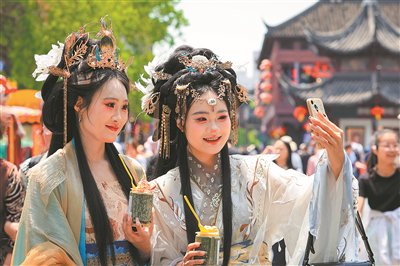
文化传承与创新

Search documents
岁序流转 文华日新(新春走基层)
Ren Min Ri Bao· 2026-02-13 00:28
Core Viewpoint - The article highlights the growing popularity of traditional culture and heritage in China, particularly among the youth, as they embrace cultural events and exhibitions during the festive season, showcasing a blend of ancient and modern aesthetics. Group 1: Cultural Exhibitions - The "Encountering the Archaeological Achievements of the King of Huainan" exhibition at the National Museum of China has become a popular attraction, featuring over 200 artifacts from the archaeological site [2][3] - The exhibition aims to present the archaeological process and the significance of the artifacts, allowing visitors to engage with history in a meaningful way [3] Group 2: Traditional Crafts - The rise of national trends in intangible cultural heritage is evident in Suzhou, where local artisans are creating modern jewelry inspired by traditional garden designs, making heritage accessible to contemporary consumers [4][5] - The artisan Lai Hangyu has successfully integrated traditional gold and silver craftsmanship into wearable art, resulting in high demand for his products [6] Group 3: Folk Music and Performance - The performance of the Dong ethnic group's songs in Guizhou has attracted tourists, showcasing the cultural richness and community spirit of the region [7][8] - Wu Jiajia, a representative inheritor of Dong songs, emphasizes the importance of passing down this musical tradition to younger generations while incorporating modern elements [9][10] Group 4: Ice Sculpture and Art - The ice sculpture industry in Harbin is evolving, with artists like Zhang Xin blending traditional techniques with modern tourism experiences, attracting more visitors to participate in ice carving [11][12] - Zhang aims to develop a new generation of skilled artisans who understand both the craft and the market, enhancing the cultural tourism experience [13] Group 5: Cultural Heritage Preservation - The "Hengyu Civilian Residence Museum" in Lijiang has become a vibrant cultural site, hosting events that connect visitors with local history and traditions [14][15] - The museum's approach to maintaining its operations through community engagement and cultural activities reflects a sustainable model for heritage preservation [16] Group 6: Educational Initiatives - Various cultural practitioners are actively engaging in educational outreach, aiming to teach traditional crafts and stories to younger audiences, ensuring the continuity of cultural practices [17][18][19][20][21]
理响中国·深改进行时:津派文化“活态新生”
Yang Shi Wang· 2026-02-11 08:33
天津,在推动文化传承发展上善作善成,正徐徐铺展一幅"以文化人、以文惠民、以文润城、以文兴 业"的生动画卷。《理响中国·深改进行时》"观察"系列第一期,看津派文化如何在时代浪潮中传承不 绝、创新不止。观看视频》》 [ 责编:杨煜 ] 当大运河的水流淌过杨柳青古镇,年画里的色彩正悄然融入日常生活;当百年历史建筑与数字艺术相 遇,城市记忆在创意中焕发新生;当鼓楼广场响起快板声与悠扬唱腔,曲艺正以青春之姿讲述新时代的 动人故事…… ...
国内首个AI文创智能体伙伴九色鹿 “鹿漫漫” 京东独家上线
Huan Qiu Wang· 2026-02-10 01:53
来源:中国网 近日,国内电商领军平台京东正式宣布,携手敦煌文旅集团、敦煌工美文化创意有限责任公司"敦煌文 创"IP品牌,联合文化IP运营机构北京艺述事文化创意发展有限公司,及科技创新企业北京中创立劢科 技有限公司,共同推出国内首个融合人工智能技术与深厚文化内涵的AI文创智能体伙伴——"鹿漫漫"。 该智能体获得了敦煌文旅集团与敦煌工美文化创意有限责任公司"敦煌文创"IP品牌的官方倾情支持与深 度参与,标志着以敦煌文化为代表的中华优秀瑰宝,在数字时代借助前沿AI技术,开启了创新传承与 活化的全新篇章。 九色鹿源自世界文化遗产敦煌莫高窟第257窟的经典壁画《鹿王本生图》,其故事所蕴含的善良、诚信 与正义精神穿越千年,历久弥新。此次发布的"鹿漫漫"并非一款简单的数字藏品或文创产品,而是被定 义为国内首个真正意义上的"AI文创智能体"伙伴。它深度融合了人工智能的交互与创作能力,旨在成为 一个能够与用户进行深度互动、提供个性化文化内容体验、并让用户持续参与文创衍生开发的"智慧文 化伙伴"。该智能体伙伴的诞生,正是敦煌文创秉承"让文物活起来"的理念,结合敦煌文旅"科技+文化 +旅游"融合发展战略所结出的创新果实。 本品核心 ...

东坡赤壁红曲黄酒,文化IP引领健康消费新风尚
Zhong Guo Fa Zhan Wang· 2026-02-09 08:03
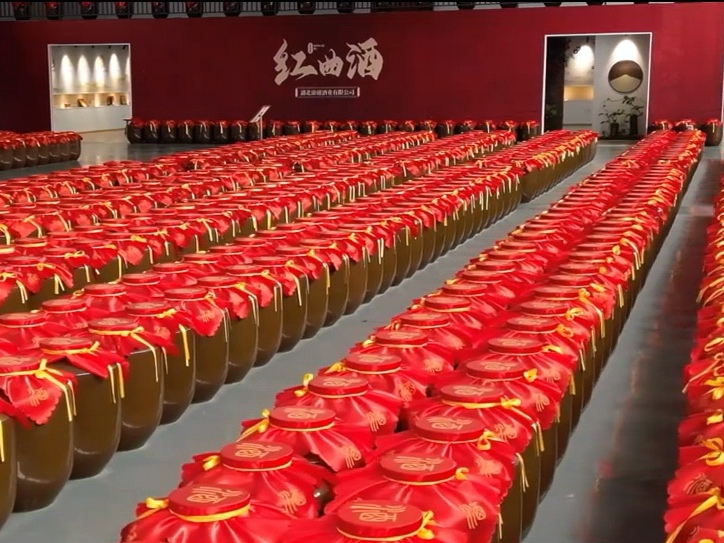
循着苏东坡在黄州"自酿蜜酒、夜饮东坡"的历史印迹,康磁酒业携百年积淀的制酒心法,让沉寂千年的 红曲黄酒技艺重焕新生。历经百年优选的大别山清泉水和美人糯稻米,非遗特制红曲,冬酿春榨,煎煮 封坛,得一年四时之气,成阴阳平和之好酒。2024年6月29日,湖北康磁酒业有限公司精心酿制的"东坡 酒坊"系列红曲酒在湖北省商务厅、湖北经视、美团联合举办的2024"新食力、新楚菜"国际品鉴月(邀请 赛)上闪亮登场,成为本场赛事主题品鉴酒,受到了现场各位评委以及各界嘉宾好评。同年,康磁酒业 获评国家高新技术企业、黄冈市农业龙头企业。 中国发展网讯2月1日,康磁酒业与王府井(600859)集团合作打造的"王府有礼"联名款黄酒正式上市。 这是东坡赤壁红曲黄酒进入北京市场一年来开展的首次联名合作,后续还计划与更多知名IP合作打造联 名产品。东坡赤壁红曲黄酒用实践证明,传统产业的新生,不仅在于扎根文化底蕴的守正,而且追求时 代需求的创新,让消费者在品味美酒的同时,感受优秀的中华传统文化。 在湖北麻城,藏着一座被誉为"老米酒之乡"的古镇——木子店。这里的老米酒,不仅是湖北非物质文化 遗产的代表性饮品,更是一部流淌着三千年岁月的地方史书。 ...

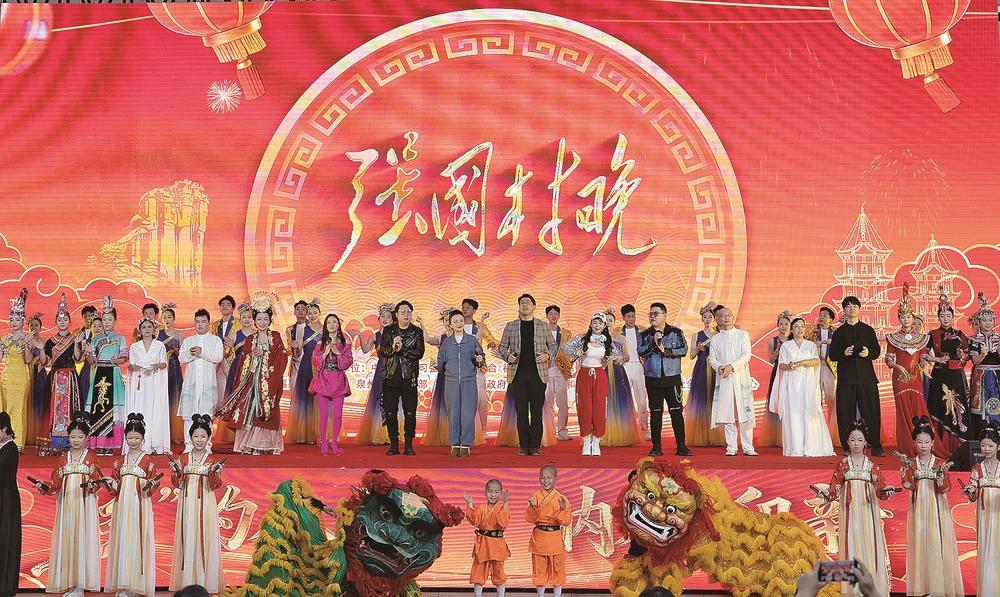
“‘乡’约八闽 纳福迎新——‘强国村晚+’活动”在德化举办
Xin Lang Cai Jing· 2026-02-07 23:55
南音表演《福盈刺桐城》 本报讯 (记者 汤海波 通讯员 钱嘉禾 文/图) "锵!"伴随着一声锣响,《大唐六骏》的鼓声隆隆响起,独门技艺木偶狮舞、泉州刣狮亮 相,"狮仔"时而腾空跃起,时而俯身探首,引得全场屏息凝神,掌声阵阵——舞台上,《狮舞闹春》火热开场。 "村晚"现场 跹,一针一线"绣"出古老的祈愿;舞蹈《走喜》则流淌着莆仙人家日常岁月中最朴实的欢庆。 节目之妙,更在于守正出新的融合。《瓷韵茶香》中瓷音配京腔,茶香伴花香,一曲"泥土的歌谣"奏出丝路瓷韵;《丝路弦影》中,民族器乐 古筝与沿丝绸之路传入中国的竖箜篌演绎穿越时空的对话。此外,南少林武术《少林雄风》虎虎生风,展现出"拳中有山河,棍下生风雷"。 当晚会临近尾声,熟悉的曲调响起,歌曲《爱拼才会赢》将全场气氛推向高潮。最终,在歌曲《我在福建等你来》的悠扬旋律中,一幅立体生 动的福建画卷徐徐铺展。 烟火年年,最抚人心;"村晚"搭台,还有年货可买。当天,台下的"福味市集"让村民感受到蒸蒸日上、热气腾腾的美好生活,更让游客"不虚 此行",以"人流量"释放乡村发展活力。 在非遗手工坊,厦门蔡氏漆线雕流光溢彩,福州软木画精致灵巧,瓷花捏塑栩栩如生,传承着匠人指尖的 ...
当“演戏会”遇到“水舞间”
Xin Lang Cai Jing· 2026-02-05 19:12
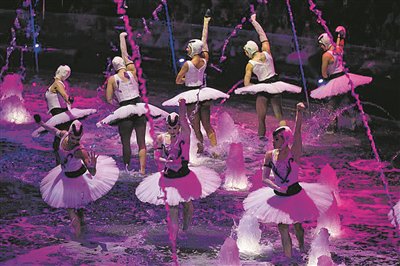
转自:贵州日报 2025年5月7日拍摄的《水舞间》汇演。 1月30日,澳门文化中心综合剧院,澳门特别行政区政府举行2025年度勋章、奖章和奖状颁授仪式。 授勋名单里,获授文化功绩勋章的澳门妈阁水陆演戏会,与获授旅游功绩勋章的《水舞间》汇演团队, 一个是香火、唱腔与锣鼓共鸣的信仰传承,一个是水效、光电与舞蹈交织的现代汇演。它们在表彰名单 上并肩而立、各自精彩,同时像一幅文化拼图里的两枚插片,紧密相连、不可分割。 "两个团体同获勋章,清晰而有力地展现出澳门文化的相容性、层叠性与多元性,构成了澳门文化特质 最生动、最浓缩的写照。"文化功绩勋章获得者、澳门理工大学人文及社会科学学院院长林发钦这样评 价。 百年回响与当代奇观 每年农历三月廿三日妈祖诞期间,妈阁水陆演戏会都会在妈阁庙前地搭盖戏棚,上演贺诞粤剧神功戏。 一方戏台上,演员身穿华丽戏服粉墨登场,唱腔悠长,灯火温暖,讲述着海上守护神妈祖的古老故事。 这一盛景历史悠久,在19世纪60年代,就曾有德国风景画家绘下妈阁古戏棚内外人头攒动、观者如潮的 热闹画面。 妈祖信俗植根澳门数百年,2014年列入国家级非物质文化遗产名录。妈阁水陆演戏会理事长、澳门妈祖 信俗代表性传 ...
春晚潮玩新势力,名创优品成为总台《2026年春节联欢晚会》潮玩合作品牌
Jing Ji Wang· 2026-02-05 08:19
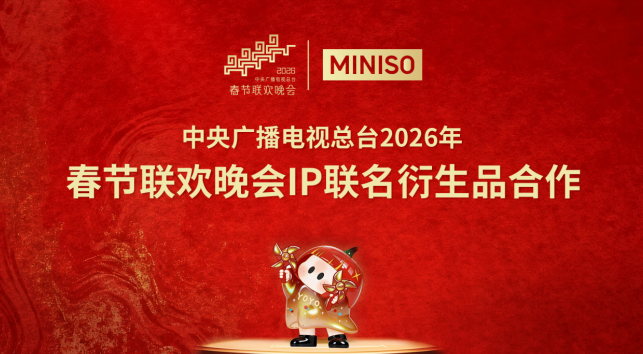
2月4日,中央广播电视总台与名创优品(MINISO)联合宣布,MINISO与总台达成《2026年春节 联欢晚会》IP联名衍生品合作,MINISO成为总台春晚潮玩合作品牌。 作为本次合作的重要成果,总台春晚与MINISO联名推出的马年系列IP潮玩产品,于当日在MINISO 全国门店及线上平台同步发售。该系列以"马到成功,一切优优"为创作灵感,深度融合传统生肖文化与 潮流创意,为全国消费者献上一份兼具潮流属性与情感温度的春节贺礼。 作为业务覆盖全球超112个国家和地区的中国品牌,MINISO凭借超过8500家门店的广泛布局,构 建了以IP设计为核心的全球化产品开发体系。依托中国供应链的强大效能,品牌持续将蕴含中国创意的 潮流产品与全球消费趋势相融合,不仅为总台春晚注入了鲜活的潮流气息与创新动能,更在延续文化传 统深层脉络的同时,构筑起连接全球年轻消费者的情感通路。 "马优优搪胶毛绒"以盲盒形式呈现,共设计9款不同动态与配饰的造型,在保持IP辨识度的同时增 强收藏趣味,让传统年味以轻松互动的方式融入日常;系列还包含多款契合新年主题的周边产品,IP挂 件选取"好事花生""发财麻将""年年有鱼""万柿如意"四组吉祥主题 ...
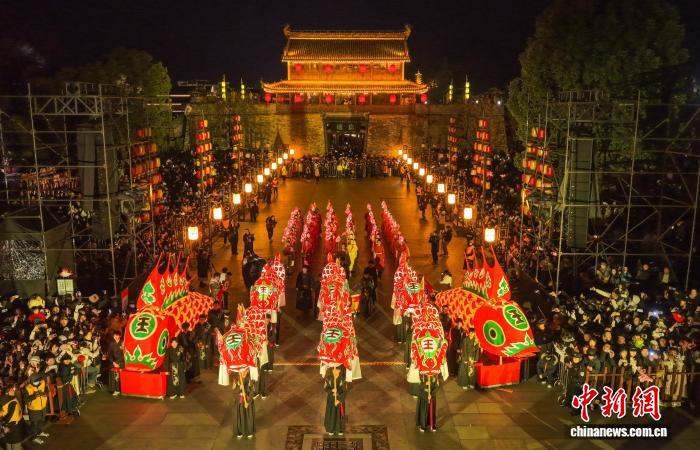
徽州鱼灯“出圈” 创新融合让年味更浓
Zhong Guo Xin Wen Wang· 2026-02-02 01:32
Core Viewpoint - The Huizhou fish lanterns have gained popularity and recognition beyond their traditional roots, becoming a significant cultural and tourism attraction in China, particularly in Shexian County, Anhui Province [4]. Group 1: Cultural Significance - The Huizhou fish lanterns are one of the oldest and best-preserved traditional customs in the region, symbolizing good fortune and family reunion during the Lunar New Year [1]. - The fish lantern performances not only serve as a folk art display but also strengthen familial bonds and evoke nostalgia among villagers [1][3]. Group 2: Performance and Craftsmanship - The fish lanterns are crafted with meticulous attention to detail, using specific materials and techniques passed down through generations, with a standard large lantern reaching up to 7 meters in length [3]. - During the performances, the fish lantern teams engage in dynamic displays, including traditional rituals that honor ancestors and emphasize community unity [3]. Group 3: Economic Impact and Tourism - The popularity of the fish lanterns has transformed them into a key tourism draw, with Shexian County establishing a professional performance team of nearly 1,000 members and integrating various artistic elements into the shows [4]. - The local economy has benefited from the fish lanterns through the development of cultural products and experiences, such as themed short films and merchandise, as well as immersive tourist activities [4]. Group 4: Digital and Cultural Integration - The success of the Huizhou fish lanterns in reaching a wider audience is attributed to the resonance between deep cultural roots and contemporary demands, facilitated by digital media and innovative tourism practices [4]. - The integration of fish lanterns into various settings, including cafes and homestays, along with their representation in mobile games, highlights their adaptability and appeal in modern culture [4].
古韵绽新彩 文化润民心
Xin Lang Cai Jing· 2026-01-31 19:28
Group 1: Cultural Activities and Community Engagement - The article highlights the integration of traditional Chinese culture into community activities during the New Year, showcasing various forms of art and cuisine as a means of cultural transmission and innovation [1] - Community classes, such as those teaching cloisonné craftsmanship and calligraphy, have been organized to engage residents, allowing them to experience and create traditional art forms [2][3] - The initiative aims to make high art accessible to the public, fostering a sense of cultural appreciation and community involvement [2] Group 2: Cultural Events and Performances - A cultural event at the Shandong Highway Xinjiang International Logistics Industrial Park featured performances that included traditional dances and songs, enhancing the cultural experience for attendees [4][5] - The event successfully reached over 3,000 participants through various performances and activities, promoting cultural exchange among different ethnic groups [6] Group 3: Culinary Heritage and Tourism - The article discusses the popularity of "Liu Yue Kitchen," known for its unique gray noodles, which have become a significant attraction for tourists, showcasing local culinary heritage [7][8] - The gray noodle-making technique, recognized as an intangible cultural heritage, has evolved over time and is now a source of livelihood for local residents [8][9] - The establishment of cultural festivals and events at the scenic area has further increased tourist interest, linking culinary experiences with local history and culture [9]
守正创新 凝聚Z世代文化认同
Xin Lang Cai Jing· 2026-01-30 18:44
Core Viewpoint - The article emphasizes the importance of engaging Generation Z (born between 1995 and 2009) in the United Front Work of the Communist Party of China, highlighting their unique cultural and political identity shaped by the digital age [3][4]. Group 1: Characteristics of Generation Z - Generation Z exhibits distinct traits such as "layered," "visual," "interactive," and "personalized" characteristics, forming tight-knit communities based on shared interests and preferring visual content over lengthy text [4]. - Their cultural acceptance logic has shifted from "passive transmission" to "active co-creation," indicating a transformation in value recognition from "rational cognition" to "emotional resonance" [4]. Group 2: Cultural Identity as a Foundation - Cultural identity is the prerequisite for political identity, and the United Front Work must innovate its content while adhering to core values and political stances [5]. - The article suggests deeply exploring traditional Chinese culture, such as the spirit of "self-improvement" and "harmony in diversity," to resonate with Generation Z [5]. Group 3: Narrating Contemporary Chinese Stories - The achievements of the new era, such as rural revitalization and technological innovation, should be narrated in a way that resonates with Generation Z, enhancing their understanding and recognition of national development [6]. - Real-life examples, like the transformation of rural areas documented by young village secretaries, can effectively engage youth and solidify their emotional connection to the country [6]. Group 4: Innovative Communication Paradigms - To genuinely connect with Generation Z, the United Front Work must innovate its communication methods across four dimensions: media, language, content, and context [7]. - Embracing digital media and creating immersive experiences, such as VR representations of historical events, can enhance engagement and make cultural narratives more appealing [7]. Group 5: Content and Context Innovation - Content should be lightweight and contextually relevant, integrating national sentiments into topics that resonate with youth, such as career development and cultural trends [8]. - The article advocates for breaking down barriers between online and offline spaces to create a seamless experience that encourages cultural recognition to evolve into political identity [8]. Group 6: Future Outlook - Winning over the youth is crucial for strategic advantage, and the United Front Work must balance political integrity with cultural confidence while embracing change [8]. - The article concludes that expanding the breadth and depth of cultural recognition is essential for uniting youth around the Party, contributing to national rejuvenation [8].