智算产业

Search documents
摩尔线程携手中国移动共推OISA 2.0协议标准体系,引领GPU互联技术新突破
Cai Fu Zai Xian· 2025-08-27 10:13
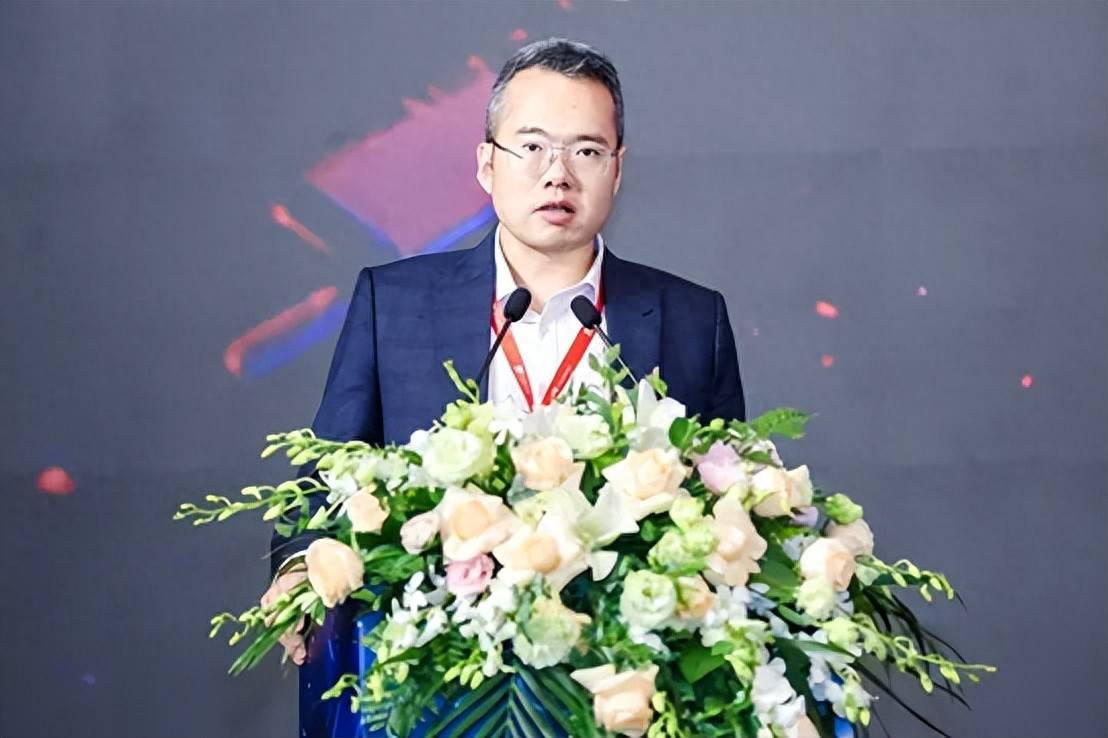
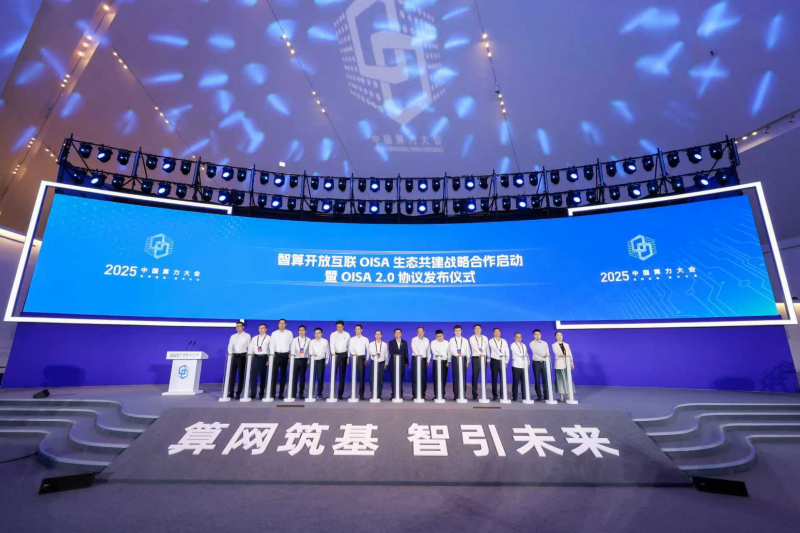
Core Insights - The launch of the OISA 2.0 protocol at the 2025 China Computing Power Conference signifies a significant step forward in China's intelligent computing industry, focusing on technological innovation and ecosystem collaboration [1][3] - The OISA (Omni-Directional Intelligent Sensing Interconnection Architecture) protocol aims to create an efficient, intelligent, flexible, and open AI chip interconnection system, enhancing the performance of super-node computing clusters [3] Industry Developments - The OISA 2.0 protocol supports up to 1024 AI chips, with bandwidth exceeding TB/s and interconnection latency reduced to hundreds of nanoseconds, facilitating data-intensive AI applications such as large model training and inference [3] - The collaboration between China Mobile and partners like Moore Threads emphasizes the importance of domestic GPU innovation and the establishment of an open, collaborative ecosystem in the AI and computing sectors [3] Company Contributions - Moore Threads has actively participated in the formulation of the OISA standard, showcasing its core technological capabilities in AI and computing, and ensuring compatibility with mainstream AI frameworks and applications [3] - As OISA 2.0 is implemented, Moore Threads plans to integrate the latest technological requirements into its product iterations, enhancing product advancement and optimizing architecture to support higher levels of independent innovation and integrated development in China's GPU ecosystem [3]


贵阳率先为算力产业立法
Ke Ji Ri Bao· 2025-08-05 23:39
Core Viewpoint - Guizhou Province, specifically Guiyang, has initiated local legislation in the field of computing power, providing a legal framework for the orderly development of the computing power industry, with the "Guiyang Computing Power Industry Promotion Regulations" taking effect on August 1 [1] Group 1: Legislative Framework - The "Guiyang Computing Power Industry Promotion Regulations" is the first local regulation to define the concept of "computing power," covering the entire value chain including infrastructure construction, software and hardware R&D, technological innovation, service applications, and security [1] - The regulations consist of five chapters and thirty-two articles, mandating that governments at the county level and above take measures to promote the collaborative development of the computing power industry and related sectors [1] Group 2: Industry Development - Guizhou's computing power scale is projected to exceed 55 Eflops in 2024, doubling from 2023, with intelligent computing accounting for over 90% of this capacity [2] - The province has issued 177 computing power vouchers nationwide, successfully surpassing the 10 billion yuan mark in the computing power industry scale [2]
“中国经验”构建多语言大模型,帮助小语种国家融入世界
Zhong Guo Qing Nian Bao· 2025-07-29 14:23
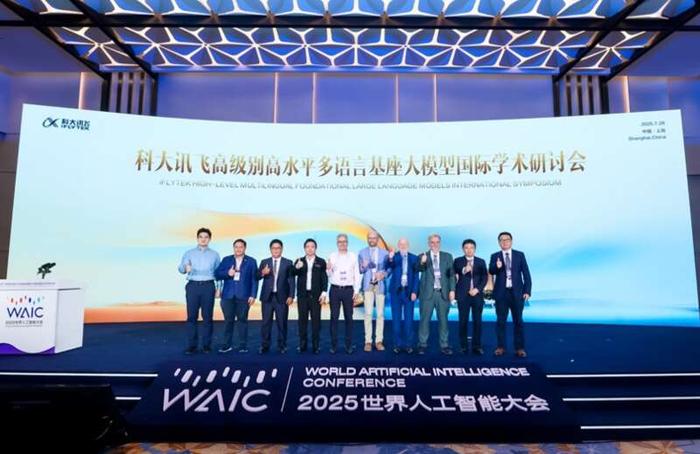
Core Viewpoint - The international academic seminar on high-level multilingual models highlighted the urgent need to address the digital divide affecting low-resource languages, as global mainstream models inadequately support these languages, posing a risk of marginalization for small language countries [1][5]. Group 1: Expert Opinions - Professor Vlado Delić from Serbia emphasized that Serbian language representation in general models is less than 0.1% in token usage, significantly lower than Slovenian, advocating for national-level models that reflect cultural identity to avoid translation errors in critical fields like healthcare and law [3]. - Avner Algom, founder of the Israeli Human Language Technology Association, stated that language services should not be designed solely for major languages, advocating for technological equity for small languages [5]. - Nipat Jongsawat from Thailand highlighted that language sovereignty is a strategic necessity for nations, not merely a choice [5]. Group 2: Technological Developments - Liu Cong, director of iFlytek Research Institute, reported that their multilingual model, Spark X1, expanded from supporting 81 languages in October 2022 to over 130 languages by July 2023, aiming to provide a comprehensive multilingual model and applications [5]. - The Spark X1 model reportedly outperforms GPT-4.1 in key languages such as Arabic, German, French, Korean, and Japanese, while the speech synthesis model supports 55 languages with leading industry performance [5]. - Zhang Xiao, deputy general manager of iFlytek's intelligent computing division, identified challenges in the rapid iteration of computing power and low efficiency in existing resources, proposing a five-element solution combining computing power, algorithms, data, applications, and ecosystem [7]. Group 3: Data Quality and Collaboration - Gábor Prószéky, director of the Hungarian Linguistics Research Center, stressed that data quality is more critical than quantity for building reliable large language models, noting the unique challenges posed by the Hungarian language's complex morphology [7]. - His team has developed the PULI model family, collaborating with Chinese AI counterparts to create a complete closed loop from training to application [7].

九章云极DataCanvas智算普惠中国行上海首发 推出企业级智能体
Yang Guang Wang· 2025-07-24 10:05
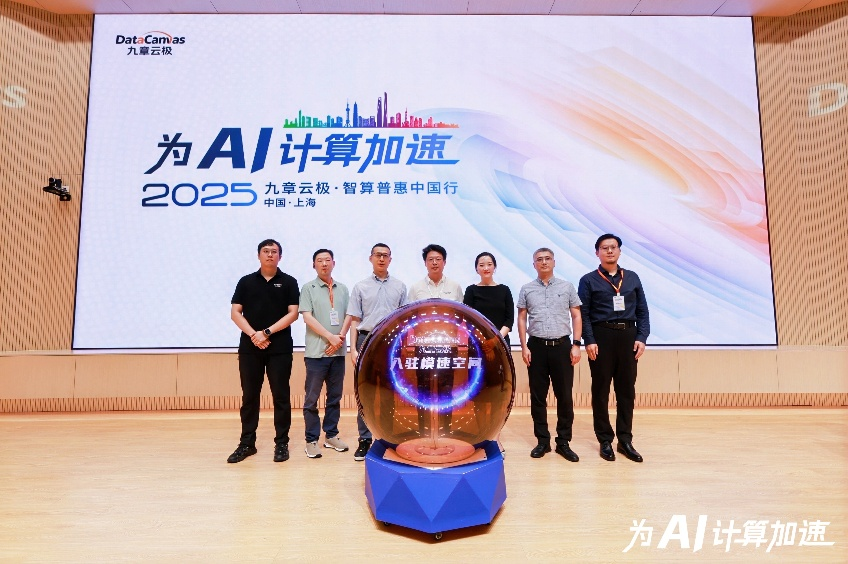
Group 1: Core Insights - The event held by DataCanvas in Shanghai showcased the company's latest achievements in AI computing power accessibility, providing practical solutions for the high-quality development of the AI industry [1][2] - Shanghai is actively implementing the national "East Data West Computing" strategy, introducing new industrial policies to support the development of the intelligent computing industry, aiming for a transformation towards self-controllable and green efficiency by 2025 [3][4] - DataCanvas has launched its new product "New Start" at the event, which focuses on commercializing intelligent agent technology and aims to create a comprehensive solution for enterprise-level intelligent agents [4][5] Group 2: Technological Innovations - DataCanvas's Alaya NeW Cloud has successfully overcome performance bottlenecks, achieving "second-level generation of millions of tokens," aimed at providing intelligent computing infrastructure services for global AI innovation enterprises [4][6] - The company has introduced a unique "1-degree computing power" measurement standard to standardize the supply and elastic scheduling of computing resources [4][6] Group 3: Market Strategy and Applications - DataCanvas has tailored computing power and channel policies for the Shanghai market, establishing a service system that supports flexible scheduling from single cards to clusters, addressing the differentiated computing power needs of key sectors like finance and healthcare [6][7] - The collaboration with various industries has demonstrated significant results, such as the partnership with Wuxi Yinlv Shandong AI Technology Co., which has transformed music creation through AI technology, producing millions of works with minimal sample learning [7][8] Group 4: Industry Impact - The establishment and development of DataCanvas in Shanghai not only accelerates the local intelligent computing industry but also provides valuable experience for the national intelligent computing industry construction [7] - The distributed computing network built by Alaya NeW Cloud aims to optimize computing resources across regions, making AI computing power a widely accessible social resource, thus supporting the high-quality development of China's digital economy [7][8]
31300P算力×2亿政策加持|2025DEMO WORLD智算服务&松江经开区专场前瞻
创业邦· 2025-06-17 10:18
Core Viewpoint - The 2025 DEMO WORLD Enterprise Innovation and Investment Conference will be held in Shanghai Songjiang, focusing on the integration of technological and industrial innovation, particularly in the intelligent computing service sector [1] Group 1: Event Overview - The conference will feature a special session on "Intelligent Computing Services & Shanghai Songjiang Economic Development Zone," aimed at showcasing the vitality of the intelligent computing industry and fostering cross-industry collaboration [1] - The event is organized by Chuangyebang, in collaboration with various local government entities, to promote innovation and investment opportunities in the region [1] Group 2: Industry Development - The intelligent computing service sector is one of the seven key industries in Songjiang's "2+7" modernization industrial system, with plans to establish a core supply source for intelligent computing in the Yangtze River Delta by around 2030 [1] - Songjiang aims to support the intelligent computing industry through nine initiatives, including financial support of up to 200 million yuan for qualifying enterprises [1] Group 3: Economic Performance - Songjiang Economic Development Zone ranks 16th among 233 national-level development zones in China and 2nd in Shanghai, housing 108 high-tech enterprises and 47 specialized and innovative companies [2] - The intelligent computing capacity in the Songjiang Economic Development Zone reaches 31,300 PetaFLOPS, positioning it among the leaders in the Yangtze River Delta [2] Group 4: Conference Activities - The conference will include presentations on the latest industry policies and investment environments, as well as deep sharing from leading enterprises and their partners [3] - A "New Quality Discussion" segment will feature over 10 intelligent computing service companies sharing their latest technologies and products, followed by a roundtable discussion on investment trends [4]
穿越智算时代的供需鸿沟,华为的解题与破题
Sou Hu Cai Jing· 2025-05-31 20:41
Core Insights - The emergence of DeepSeek has significantly elevated the intelligent computing industry, demonstrating the "Jevons Paradox" where technological advancements lead to increased demand despite reduced resource consumption [1] - The cost of model training has decreased by 85% over the past three years, while the elasticity of computing power demand has expanded sixfold, making AI technology more accessible to all enterprises [1] - By the end of 2024, China's intelligent computing AI computing power supply is expected to reach 1450 EFlops, with a projected growth rate of over 40% annually for the next three years [1] Group 1: Challenges in Intelligent Computing - The first major challenge arises from the exponential growth in computing power demand driven by large models, which requires over 200 times the hardware supply [5] - The second challenge is the rapid penetration of AI across various industries, leading to difficulties in integrating AI technology with specific scenarios, as many emerging applications lack best practices [6] - The third challenge pertains to the ecosystem, where developers face fragmentation of tools, high learning costs, and uneven resource access, complicating collaboration between traditional enterprises and AI technology suppliers [7] Group 2: Strategic Innovations and Solutions - Huawei emphasizes the need for a comprehensive transformation involving innovations in computing architecture, resource scheduling, business models, and computing infrastructure to address the supply-demand contradiction [3] - Huawei is committed to a long-term strategy that supports the intelligent computing industry through foundational infrastructure, AI ecosystem development, and product empowerment [15][16] - The company has established a complete solution for the MoE architecture, enhancing resource utilization by 20% through dynamic balancing of multiple experts [11] Group 3: Ecosystem Development and Collaboration - Huawei's strategy includes hardware openness, software openness, enabling partners, and talent development, aiming to create a collaborative AI industry ecosystem [12][14] - The company has partnered with over 2,500 industry collaborators and developed more than 5,800 certified solutions, demonstrating its commitment to ecosystem building [14] - Huawei's focus on synergizing computing and networking technologies positions it uniquely to address the challenges of intelligent computing and enhance overall performance [20]