智算产业

Search documents
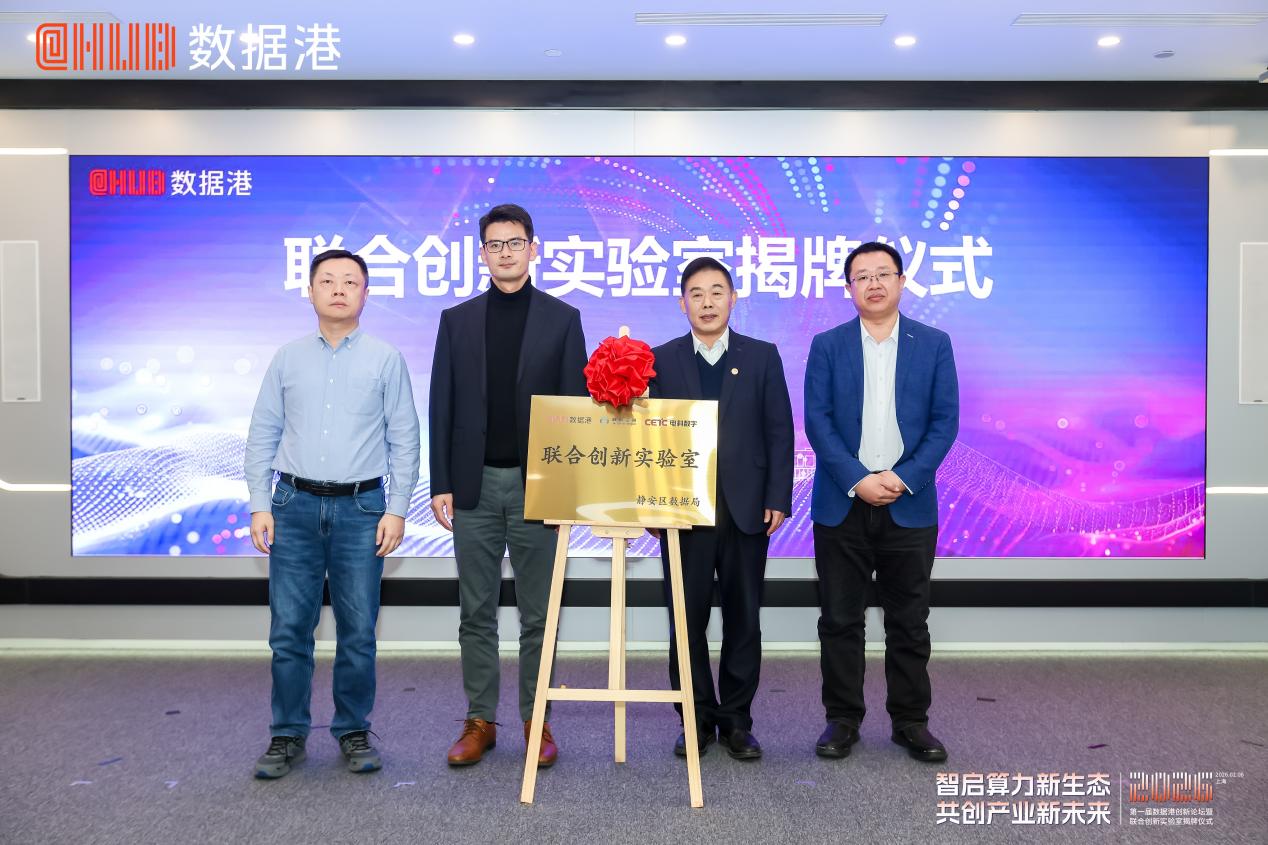
数据港第一届创新论坛在上海静安举行,联合创新实验室揭牌成立
Zhong Guo Jin Rong Xin Xi Wang· 2026-02-07 14:10
Group 1 - The first Innovation Forum and the unveiling of the Joint Innovation Laboratory were held in Shanghai, focusing on the theme "Intelligent Computing New Ecology, Co-creating New Future for Industries" to promote high-quality development of the digital economy [1][2] - Shanghai Data Port Co., Ltd. has established 35 high-standard data centers nationwide, creating a national computing power network and achieving industry-leading levels in green energy efficiency with a PUE (Power Usage Effectiveness) ranking among the best [1][2] - The company aims to transform from a "computing power infrastructure service provider" to a "comprehensive computing power service provider," emphasizing "intelligent computing" as its core development strategy [1][2] Group 2 - The Joint Innovation Laboratory will focus on core areas such as intelligent computing infrastructure architecture, large-scale cluster scheduling, green low-carbon technology, and full-stack domestic adaptation, aiming to build a leading industry model community and scenario-based computing power ecosystem [3] - A collaborative innovation platform was launched to deepen cooperation in the computing power field and promote the integration of computing resources with regional industries [3]


影响市场重大事件:德国企业巨头要为德军打造本土版“星链”;三星电子中国研究院计划投入脑机接口领域研究并进行技术储备;“上海市智算产业高质量发展倡议”启动
Mei Ri Jing Ji Xin Wen· 2026-01-28 10:10
Group 1 - German companies Rheinmetall and Bremen-based OHB are planning to jointly bid to provide a satellite internet service similar to the US Starlink for the German military, with a contract value potentially reaching several billion euros [1] - The initiative aims to create a secure military-grade satellite communication network in low Earth orbit for the German armed forces [1] Group 2 - The China Academy of Information and Communications Technology has released a report indicating that the data intelligence service industry is entering a phase of deep integration, driven by technological advancements and industry demand [2] - The report emphasizes that data intelligence service capabilities are crucial for advancing the "AI+" initiative [2] Group 3 - Samsung Electronics' China Research Institute plans to invest in brain-computer interface research and technology reserves, expressing confidence in the commercialization prospects of this technology [3] - The institute focuses on cutting-edge technologies such as artificial intelligence and next-generation communication [3] Group 4 - The "High-Quality Development Initiative for Shanghai's Intelligent Computing Industry" was launched to promote the construction of new intelligent computing centers and establish a high-level intelligent cloud service system [4] - The initiative aims to create a self-controlled industrial ecosystem and position the intelligent computing industry as a new engine for Shanghai's economic development [4] Group 5 - The National Energy Administration of China has approved the establishment of seven standardization technical organizations related to power safety governance and greenhouse gas emissions management in the energy sector [5] Group 6 - The "Implementation Plan for Strengthening Disease Prevention and Control" aims to establish a modern disease control system by 2027, with improved infrastructure and enhanced public health service capabilities [6] Group 7 - Shanghai is actively implementing the "AI+" initiative to lead the digital transformation of manufacturing, with the city's intelligent computing scale surpassing 120,000 PFLOPS [7][8] - The city plans to construct a batch of intelligent computing infrastructure ahead of demand [8] Group 8 - A report by Yole indicates that global DRAM memory demand is expected to grow by 23% in 2026, with over half of this growth coming from the data center sector, which is projected to increase by 28% [9] - The current DRAM market trend is expected to continue at least until 2027 due to the time required for new capacity to come online [9] Group 9 - The Chinese sports industry is projected to exceed 5 trillion yuan by 2025, with the sports goods market reaching 2.49 trillion yuan, driven by a surge in domestic consumption and innovation [10]
上海智算规模突破12万PFLOPS
Xin Hua Cai Jing· 2026-01-27 16:28
Core Insights - Shanghai's computing power scale has surpassed 120,000 PFLOPS, with nearly 20,000 PFLOPS managed by the municipal computing power scheduling platform, indicating significant resource aggregation effects in the city [1] - The city is actively implementing the "Artificial Intelligence +" initiative to lead the digital transformation of the manufacturing industry, with a focus on enhancing computing power applications in key sectors [1] - The Shanghai Computing Power Industry High-Quality Development Initiative has been launched to promote the construction of next-generation computing centers and a high-level cloud service system [2] Group 1 - Shanghai is advancing the construction of computing infrastructure and accelerating the large-scale deployment of domestically produced chips [1][2] - The city aims to create a self-controllable computing industry and establish a "national chip, model, and cloud" system to enhance the Shanghai brand in computing power [1] - The computing power industry is transitioning from "facility scale" to "comprehensive efficiency," with efforts to upgrade infrastructure and develop a domestically controllable ecosystem [2] Group 2 - The "Computing Power Economy Empowerment Co-Creation System" has been launched to address the challenge of converting computing resources into economic value [2] - A "Scientific Intelligent Open Community Computing Support Plan" has been signed, focusing on building computing infrastructure and cloud services for global scientists [2]
粤港湾控股(01396)附属天顿数据与华工科技(000988.SZ)签订战略合作协议
智通财经网· 2025-12-09 10:42
Core Viewpoint - The strategic cooperation agreement between Guangdong-Hong Kong Bay Holdings and Huagong Technology aims to establish a long-term partnership in AI computing power and network infrastructure, enhancing both companies' capabilities in the domestic and global markets [1] Group 1: Strategic Cooperation Agreement - Guangdong-Hong Kong Bay Holdings' subsidiary, Shenzhen Tiandun Data Technology, signed a strategic cooperation agreement with Huagong Technology on December 9, 2025, with a cooperation period of five years [1] - The agreement emphasizes complementary advantages, resource sharing, collaborative innovation, and mutual benefits [1] Group 2: Areas of Collaboration - The partnership will focus on comprehensive and in-depth cooperation in the fields of AI computing power and network infrastructure [1] - The collaboration will cover demand development, technological innovation, product research and development, product sales, and customer service [1] Group 3: Benefits of the Agreement - The agreement is expected to integrate the company's strengths in networking technology, computing power operations, and AI-generated content applications with Huagong Technology's expertise in optical communication and advanced optical module products [1] - The collaboration aims to create high-performance, stable, and reliable intelligent computing integrated products and solutions, promoting the development of both companies' products and services [1] - The partnership will facilitate the expansion of intelligent computing business in both domestic and global markets, contributing to the growth of the intelligent computing industry [1]

智算浪潮涌邕城 产业共生向未来
Xin Lang Cai Jing· 2025-11-29 05:24
Group 1 - The "2025 Integrated Intelligent Computing Industry Ecosystem Conference" held in Nanning focuses on the integration of intelligent computing to empower industrial upgrades and green computing infrastructure [1][2] - Nanning is rapidly developing its artificial intelligence industry, forming a comprehensive ecosystem covering computing power, algorithms, and application scenarios, with significant projects and leading companies establishing a presence [2][3] - The conference showcased Nanning's potential in the intelligent computing sector, highlighting favorable policies, geographical advantages, and complete industrial support, which stimulated strong cooperation interest among enterprises [3][5] Group 2 - Companies are leveraging Nanning's advantages to enhance local manufacturing through data empowerment, aiming to connect advanced industrial data solutions with the manufacturing needs of ASEAN countries [3][4] - The establishment of strategic partnerships, such as the collaboration between Supercom and Guangxi Nanyi Intelligent Technology, aims to create a domestic computing resource pool and enhance regional computing capabilities [5][6] - Nanning is positioned to develop key industries like new energy, electronic information, and equipment manufacturing, while promoting AI applications in collaboration with ASEAN countries [6]
中国移动联合产业伙伴发布“国芯国连”生态攻坚计划暨GSE2.5版本标准,筑基十万卡级智算集群自主互联
Xin Lang Cai Jing· 2025-10-13 12:08
Core Insights - China Mobile has launched the GSE 2.5 version protocol standard and initiated the "National Core National Connection" intelligent computing open interconnection GSE ecological initiative, highlighting the importance of large-scale computing clusters in global model competition [1] Group 1: GSE 2.5 Version Standard - The GSE 2.5 version standard enhances multiple key technologies based on the GSE 2.0 version, including support for streamlined message design and RDMA full operation type out-of-order reception mechanisms [1] Group 2: National Core National Connection Initiative - The "National Core National Connection" ecological initiative aims to gather industry forces and build an open and complete GSE ecosystem, collaborating with chip and equipment manufacturers to set milestones [1] Group 3: Future Collaboration and Goals - China Mobile plans to continue technical research, chip development, and ecosystem construction with industry partners to accelerate the industrialization of the "National Core National Connection" intelligent computing cluster, strengthening the foundation of China's computing infrastructure and enhancing the global competitiveness of the intelligent computing industry [1]

2025智算产业发展研究报告
Sou Hu Cai Jing· 2025-10-12 12:46
Core Insights - The report highlights the rapid transformation of the global economy driven by artificial intelligence (AI), predicting a 15% growth in global economic scale over the next decade, with a contribution of 11 trillion yuan to China's GDP by 2035 [1][16] - 2025 is identified as a pivotal year for the large-scale application of AI, with the intelligent computing industry emerging as a core engine for digital economic growth [1][17] Global Policy Landscape - A global competition in intelligent computing policies has commenced, with the US planning to invest $500 billion over four years to enhance AI infrastructure through the "Stargate Project" [1][19] - The European Union has launched the "InvestAI" initiative, aiming to raise €200 billion for AI investments and establish a €20 billion fund for building AI super factories [1][20] - Japan and South Korea are also accelerating their investments in AI and semiconductor industries, with Japan planning to invest over $65 billion by 2030 and South Korea establishing a national AI computing center [1][21][22] China's Development Path - China's intelligent computing industry is characterized by an "application-driven + inclusive service" approach, with multi-level policy support promoting AI applications across various sectors [2][24] - As of June 2025, China has 10.85 million standard racks in use, with an intelligent computing scale of 788 EFLOPS and a total storage capacity exceeding 1,680 EB, maintaining a leading position globally [2][16] Demand and Supply Dynamics - The demand side is shifting from "training" to "inference," with inference models evolving from pure text to multi-modal capabilities, expected to account for over 70% of global computing demand by 2026 [3][4] - On the supply side, major tech companies are significantly increasing their capital expenditures, with a projected $246 billion in 2024, and China's intelligent computing market growing by 43% [4][5] Future Trends - Five key trends are anticipated in the intelligent computing industry: accelerated domestic chip replacement, expansion of computing clusters, green transformation of AI infrastructure, evolution of integrated intelligent computing platforms, and increased penetration of AI applications in vertical industries [5][6] - The market for vertical AI applications is expected to grow from $5.1 billion to $47.1 billion by 2030, indicating substantial potential in various sectors [5] Regional Development - China's intelligent computing industry exhibits significant regional disparities, with Guangdong, Beijing, Jiangsu, and Shanghai leading in innovation, while other provinces are catching up through local economic vitality and policy support [6][24] - Technological innovations such as PD separation, heterogeneous mixed training, and silicon photonics are driving industry breakthroughs [6][6]
2025年中国智算云服务行业:人工智能时代下IaaS/PaaS/SaaS的产业机遇
Tou Bao Yan Jiu Yuan· 2025-09-29 12:44
Investment Rating - The report does not explicitly state an investment rating for the industry Core Insights - The rapid development of large model technology is fundamentally transforming the global computing paradigm, with a shift from traditional CPU cloud computing to GPU-centric intelligent computing [3] - The cloud service industry's value chain is being reshaped, with profound changes in the business logic, commercial models, and competitive factors across IaaS, PaaS, and SaaS layers [3] - The industry is transitioning from a "compute-first" approach to building model ecosystems and commercializing applications, with a significant application explosion expected around 2025 [16][19] Summary by Sections Industry Overview - The intelligent computing industry has formed a four-layer structure: hardware, cloud, model, and application, currently transitioning from "compute-first" to "model ecosystem building" and "application commercialization" [10][16] - The industry value transfer trend indicates a shift from heavy investment in infrastructure to a focus on model ecosystem construction and the commercialization of industry-specific agents [19] IaaS Layer Opportunities - The core value of the IaaS layer lies in selling GPU computing power, with high-end card retention and vertical industry capability construction being key to capturing high-value clients [30][33] - Major clients include internet giants, government enterprises, and AI-driven emerging industries, all of which have significant demand for GPU computing power [31] - The growth path for IaaS involves selling bundled solutions of IaaS, PaaS, and MaaS to industry clients, enhancing customer stickiness and increasing average transaction value [36] PaaS Layer Opportunities - MaaS is becoming the core revenue entry point for cloud vendors, with those possessing self-research capabilities needing to adopt a dual strategy of open and closed source to lock in customers [41][42] - The success of MaaS hinges on the ability to provide a rich model marketplace and a comprehensive toolchain for clients, driving resource consumption in IaaS and PaaS layers [42][44] SaaS Layer Opportunities - The SaaS market is shifting towards deep vertical integration, where the ability to build industry-specific products is crucial for customer retention [52][55] - Large cloud vendors face challenges from smaller firms that leverage low prices and localized services to capture market segments that larger companies cannot reach [55] - Effective strategies for entering the SaaS market include "soft-hard integration" and building Agent platforms to transform from direct competitors to value integrators and ecosystem enablers [57][59]
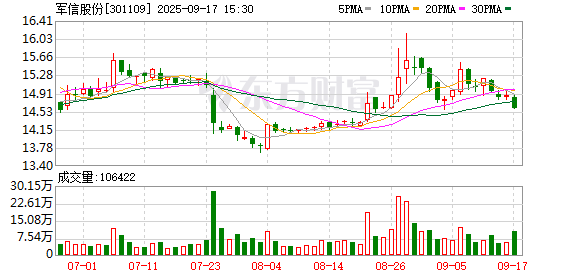
军信股份:公司持续关注新兴领域的融合发展
Zheng Quan Ri Bao· 2025-09-17 14:09
Group 1 - The company, Junxin Co., is focusing on the integration of waste incineration with emerging fields such as digital industry and intelligent manufacturing [2] - A strategic cooperation agreement has been signed with Changsha Digital Group Co., aimed at developing "waste-free cities," environmental digital upgrades, green electricity, and collaborative development in the intelligent computing industry [2] - The company will disclose any significant developments related to this cooperation in accordance with regulations [2]
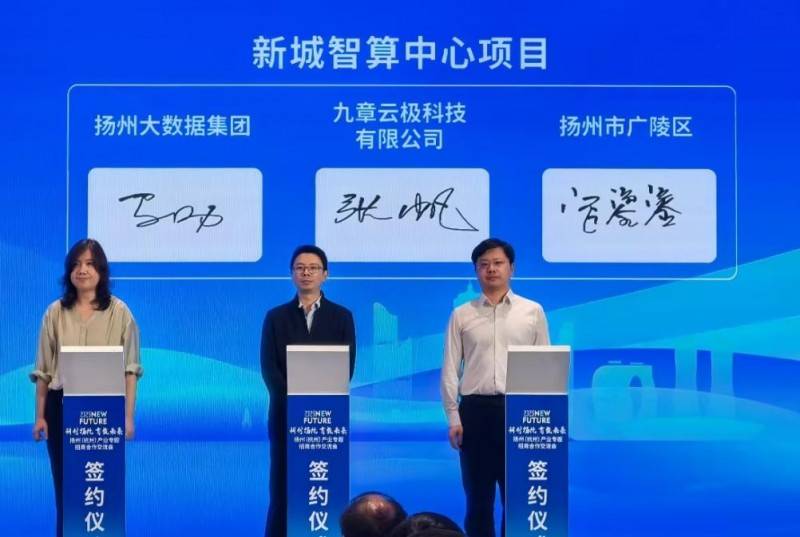
共筑智算新高地,九章云极携手扬州大数据集团、扬州广陵新城投资发展集团达成战略合作
Sou Hu Cai Jing· 2025-09-17 10:35
Core Insights - The event "Science and Innovation in Yangzhou and Future of Business Travel" was held in Hangzhou, where a strategic cooperation agreement was signed between Nine Chapters Cloud Extreme DataCanvas, Yangzhou Big Data Group, and Yangzhou Guangling New City Investment Development Group [1][3] - The collaboration aims to create a high-performance, highly available, and user-friendly inclusive computing center to accelerate the aggregation and deep application of the "AI+" industry in Yangzhou [1][3] Group 1 - The three parties will focus on the core aspects of the intelligent computing industry, integrating resource advantages to form a development synergy [3] - Yangzhou Big Data Group will leverage its data technology and resource advantages to build the data foundation and security barrier for the computing center [3] - Yangzhou Guangling New City Investment Development Group will utilize its operational and ecological cultivation advantages to provide support and scene docking for the computing center [3] Group 2 - Nine Chapters Cloud Extreme DataCanvas, as a leading AI infrastructure and intelligent computing cloud provider, will leverage its technological advantages in inclusive computing [3] - The company will address traditional AI computing cost issues, low utilization rates, and supply-demand mismatches through its innovative Nine Chapters Intelligent Computing Cloud platform [3] - The collaboration aims to provide comprehensive support for the construction of the inclusive computing center, covering everything from basic computing scheduling to upper-level model fine-tuning applications [3] Group 3 - This cooperation exemplifies the collaboration between government and enterprises in building an intelligent computing ecosystem [3] - It marks a significant step for Yangzhou in constructing a new type of infrastructure that integrates computing power, algorithms, and data [3] - The widespread penetration of inclusive computing services is expected to support the digital transformation of Yangzhou's characteristic industrial system and inject new momentum into the integrated development of the digital economy in the Yangtze River Delta [3]