智能手机市场竞争

Search documents
苹果全球营收普涨,大中华区下降
Guan Cha Zhe Wang· 2025-10-31 14:22
Core Insights - Apple's Q4 FY2025 revenue reached $102.466 billion, a record for the period, up 8% from $94.930 billion year-over-year [1] - Net profit surged 86% to $27.466 billion, with diluted earnings per share increasing 91% to $1.85 [1] - Following the earnings report, Apple's stock rose 2.35%, adding over $90 billion to its market capitalization [1] Revenue Breakdown - iPhone revenue grew 6.1% year-over-year to $49 billion, contributing nearly half of total revenue, although it fell short of analyst expectations of $50.1 billion [1][2] - Services revenue, including iCloud and Apple Music, increased 15% to $28 billion, exceeding analyst expectations of $28.2 billion [4] - Mac revenue rose 13% to $8.73 billion, surpassing the average analyst forecast of $8.6 billion [5] - iPad revenue remained stable at $6.95 billion, showing no significant change from the previous year [5] - Wearables, home, and accessories revenue slightly declined by less than 1% to $9.01 billion [6] Regional Performance - Revenue from Greater China fell 3.6% to $14.493 billion, marking the only regional decline, while other regions saw growth [6] - CEO Tim Cook attributed the decline in China to supply chain constraints and expressed optimism about the upcoming sales of the iPhone 17 series [6] - Recent data indicated that Apple's smartphone shipments in China ranked third, with 10.1 million units sold, reflecting a 2-position improvement year-over-year [7]



vivo重返第一、华为苹果争第二,OPPO荣耀危险了?
凤凰网财经· 2025-10-17 12:58
Core Insights - The Chinese smartphone market experienced significant shifts in rankings during the third quarter of 2025, with vivo reclaiming the top position with approximately 18% market share, while Huawei and Apple competed closely for the second and third spots with shares around 15-16% [3][5][11]. Market Performance Overview - In Q3 2025, the total smartphone shipments in China were 68.4 million units, reflecting a 0.6% year-over-year decline. The top five manufacturers were vivo, Apple, Huawei, Xiaomi, and OPPO, with their respective market shares being 17.3%, 15.8%, 15.2%, 14.7%, and 14.5% [5][11]. - The overall smartphone market in China saw a 3% decline compared to the previous year, indicating a return to normal market conditions after a period of fluctuations driven by government subsidies [11][12]. Manufacturer Strategies and Performance - **Vivo**: Achieved a steady increase in market share from Q1 to Q3, attributed to its strong offline channel presence and a cautious product release strategy. Vivo's market share rose from 15% in Q1 to 18% in Q3 [12][15]. The company also made significant gains in the mid-to-high-end market segment [12][15]. - **Apple**: Benefited from the launch of the iPhone 17 series, which led to an increase in market share from 13.7% in Q1 to 15.8% in Q3. Apple's strategy included price adjustments on older models to stimulate sales [15][17]. - **Huawei**: Maintained a stable market share around 16% despite a slight decline in Q3. The company focused on high-end products, such as the Mate XTs, to enhance profitability [19][20]. - **Xiaomi**: Experienced the most significant drop in market share, falling from 19% in Q1 to 15% in Q3. The decline was attributed to a lack of new popular models and the fading impact of government subsidies [21][23]. - **OPPO**: Managed to maintain a market share of around 15% but saw its ranking drop from third to fourth. The company faced challenges from both high-end competitors and budget brands [25][26]. - **Honor**: Entered the top five for the first time in Q3 2025 with a market share of 14.4%. The brand focused on the mid-range segment to avoid direct competition with high-end players [27][29]. Competitive Landscape and Future Outlook - The smartphone market in China is characterized by intense competition, with frequent shifts in rankings among the top players. The market is now in a "stock" phase, where every percentage point of market share must be fought for [30][41]. - The upcoming fourth quarter will be crucial for determining the annual rankings, with key product launches from vivo, Huawei, and others expected to influence market dynamics [36][39]. - The competition between Xiaomi and Apple for the third position is particularly tight, with only a narrow margin in cumulative shipments [38][40]. Overall, the Chinese smartphone market is entering a phase where maintaining market share and adapting to consumer demands will be critical for all players involved.

17系列出货不及预期?小米高管:没有削减订单计划
Sou Hu Cai Jing· 2025-09-30 01:08
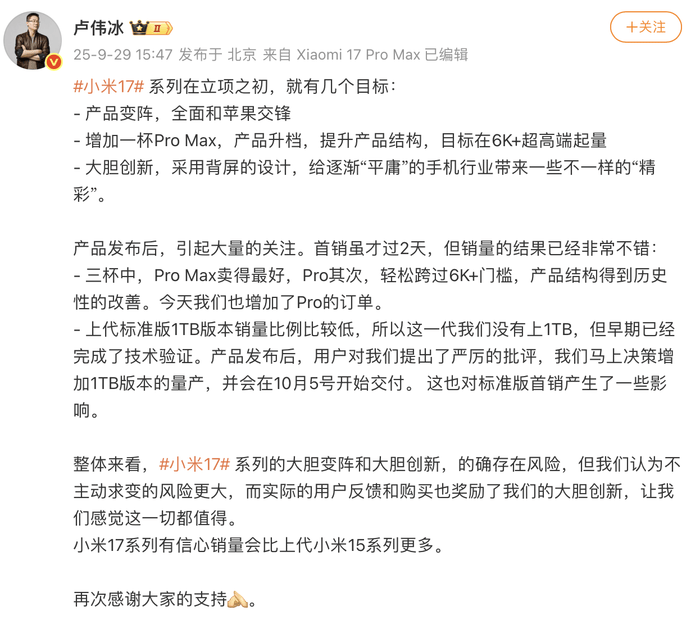
Group 1 - The core viewpoint of the news is that Xiaomi's 17 series smartphone shipments are significantly lower than expected, with a downward adjustment of 20% from the original target of approximately 10 million units, potentially falling below the 8 million units of the 15 series if no aggressive pricing or marketing strategies are implemented [1] - Analyst Guo Mingqiang noted that the main reason for the downward adjustment is the lower-than-expected demand for the standard version of the 17 series, which was initially expected to account for 50%-55% of total shipments but only accounted for about 15%-20% after launch [1] - The 17 series faces competitive pressure from iPhone and Huawei smartphones, with the iPhone 17 standard version exceeding sales expectations in the Chinese market, and upcoming models in 2026 posing further competition [1] Group 2 - Xiaomi Group President Lu Weibing stated that despite the initial two days of sales, the results for the 17 series are satisfactory, with the Pro Max model performing the best and surpassing the 6,000 yuan sales threshold [2] - The company’s public relations manager Wang Hua reiterated that there are currently no plans to reduce orders, as a new 16GB+1TB version of the standard model has been added, and additional orders for the Pro series will change the overall product mix [4][5] - Xiaomi launched the 17 series on September 25, with starting prices of 4,499 yuan for the 17, 4,999 yuan for the Pro, and 5,999 yuan for the Pro Max, claiming to have set sales records within the first five minutes of launch [6] Group 3 - In Q2, Xiaomi reported total revenue of 116 billion yuan, a year-on-year increase of 30.5%, marking three consecutive quarters of revenue exceeding 100 billion yuan, with adjusted net profit of 10.8 billion yuan, up 75.4% year-on-year [7] - The smartphone business generated revenue of 45.5 billion yuan with a gross margin of 11.5%, and global smartphone shipments reached 42.4 million units, a year-on-year increase of 0.6% [7]
苹果承认iPhone17系列相机存在漏洞
Xi Niu Cai Jing· 2025-09-23 10:18
Core Insights - Apple has confirmed that the upcoming iPhone 17 series and iPhone Air have camera imaging issues, specifically under direct bright LED lighting, which may result in black squares and white curves in photos [2] - Apple described the issue as "extremely rare" and has identified a technical solution, planning to address it through a software update, although the timeline for this update remains unspecified [2] Sales and Market Performance - Pre-sale data for the iPhone 17 series indicates that reservations have surpassed 4 million units, setting a new historical record [2] - Third-party platforms have begun offering price subsidies, with some models seeing actual transaction prices reduced by nearly 1,000 yuan compared to official pricing [2] Production and Market Share - According to global smartphone production data for Q2 2025, Apple's production volume is 46 million units, reflecting a 9% quarter-over-quarter decrease, suggesting a potential slowdown in market demand [2] - Apple maintains a leading position in the global high-end smartphone market with over 62% market share, but its ranking in the Chinese market has dropped to sixth place [2] - The high-end market is increasingly competitive, with domestic manufacturers leveraging differentiated advantages such as foldable screens and self-developed chips, which are squeezing Apple's market share [2] - Analysts note that Apple's main models have limited functional upgrades, failing to effectively stimulate replacement demand, leading to moderate expectations for shipment growth [2]
iPhone17开售首日:标准版无溢价,Pro遭黄牛拒收?
Guan Cha Zhe Wang· 2025-09-19 10:29
Core Viewpoint - The launch of the iPhone 17 series has generated significant consumer interest, but the market response, particularly in China, indicates potential challenges for Apple in maintaining its competitive edge against local brands and evolving consumer preferences [1][3][5]. Pricing and Sales - The official retail prices for the iPhone 17 series are as follows: iPhone 17 (256GB: 5999 RMB, 512GB: 7999 RMB), iPhone 17 Pro (256GB: 8999 RMB, 512GB: 10999 RMB, 1TB: 12999 RMB), iPhone 17 Pro Max (256GB: 9999 RMB, 512GB: 11999 RMB, 1TB: 13999 RMB, 2TB: 17999 RMB) [1]. - Initial reports indicate that the iPhone 17 Pro Max (256GB) is the most sought-after model among scalpers, with a price increase of 500-600 RMB, while other models see minimal to no price increase [4][5]. Market Dynamics - The global smartphone market saw a slight decline in shipments, with Apple experiencing a 2% decrease in year-over-year shipments, while Samsung's shipments grew by 7% [2]. - In the Chinese market, Apple has faced significant challenges, with a 4.1% decline in smartphone shipments, resulting in a market share of 13.9%, placing it fifth behind Huawei, Vivo, OPPO, and Xiaomi [3]. Consumer Sentiment and Product Reception - The iPhone 17 series has been marketed as having "the biggest innovation ever," with upgrades in camera, battery life, and design, but there are concerns about the perceived lack of novelty in Apple's flagship products [2][3]. - Initial consumer reactions to the iPhone 17 Pro and Pro Max have been mixed, with reports of scratches on display models and a lack of demand for the standard and Pro versions in the secondary market [5]. Competitive Landscape - Samsung's foldable phones have gained popularity, posing a challenge to Apple's market position, especially as Apple is reportedly not expected to release a foldable phone until late next year [2]. - Analysts suggest that the iPhone 17 Pro series may struggle to attract consumers due to its positioning and the availability of similar features in the standard version [5].
2025年第二季度,小米重夺东南亚智能手机市场桂冠,时隔四年再登顶,荣耀首次突破100万台出货量,市场整体持平
Canalys· 2025-08-13 03:18
Core Viewpoint - The Southeast Asian smartphone market is experiencing a slight decline in shipments due to ongoing tariff uncertainties, with a projected 1% decrease in Q2 2025, resulting in 25 million units shipped [1][3]. Market Performance - Xiaomi regained the top position in the Southeast Asian smartphone market for the first time in four years, with shipments of 4.7 million units and a market share of 19%, reflecting an 8% year-on-year growth [1][8]. - Transsion ranked second with 4.5 million units shipped and an 18% market share, showing a significant 17% increase year-on-year [1][8]. - Samsung followed closely in third place with 4.3 million units and a 17% market share, but experienced a 3% decline year-on-year [1][8]. - OPPO ranked fourth with 3.5 million units shipped and a 14% market share, facing a 19% year-on-year decline [1][8]. - Vivo, in fifth place, shipped 2.8 million units with an 11% market share, down 21% year-on-year [1][8]. Competitive Strategies - Xiaomi's success is attributed to its direct-to-consumer (DTC) and carrier channel expansion, which laid a solid foundation for scaling its sub-brands [3]. - Samsung has strengthened its channel diversification and high-end positioning through its enterprise market strategy, enhancing its average selling price (ASP) and creating new revenue streams beyond traditional retail [3]. - In the competitive landscape, differentiation beyond pricing remains a challenge for all manufacturers, with Xiaomi and Transsion leading in the low-price segment due to competitive pricing and active channel incentives [3]. Emerging Opportunities - TikTok's rapid expansion in the consumer electronics sector is opening new growth channels for smartphone manufacturers in Southeast Asia, with brands like Infinix and Xiaomi leveraging the platform for sales of low-cost models [6]. - The collaboration with local sellers and brands on TikTok, along with significant investments in partnerships and authorized brand stores, mirrors the early development stages of platforms like Shopee and Lazada [6].
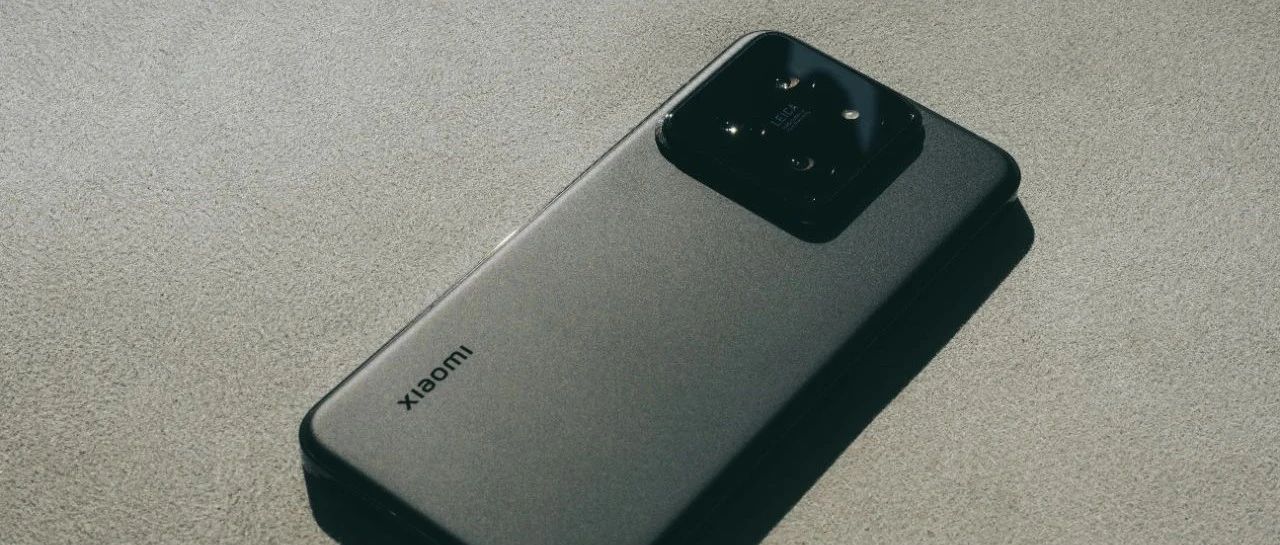
苹果回应首次关停中国直营店:购物中心内多家零售商都已离开
Xin Lang Cai Jing· 2025-07-29 09:27
Core Viewpoint - Apple is closing its first direct store in China located in Dalian due to the departure of multiple retailers from the shopping center, indicating a response to external commercial environment changes [2][3] Group 1: Store Closure Details - The Dalian store, which opened on October 24, 2015, is the first Apple Store in China to close, with the only other closure being a relocation in Beijing in July 2020 [2][3] - The closure is set for August 9, 2023, at 20:00, and is attributed to the broader trend of retailers leaving the Dalian Baijincheng shopping center [2][3] Group 2: Market Context - Despite the closure, Apple continues to expand in China, with a new store opening in Shenzhen on August 16, 2023, and a store in Hefei earlier this year, bringing the total to over 50 Apple Stores in China [3] - Market data shows a decline in Apple's sales and market share in China, with a 4.0% year-on-year drop in smartphone shipments in Q2 2023, and Apple holding a 13.9% market share, ranking fifth among manufacturers [3] - Apple's revenue from Greater China was reported at $16 billion for Q2 of the 2025 fiscal year, reflecting a 2% year-on-year decline [3]
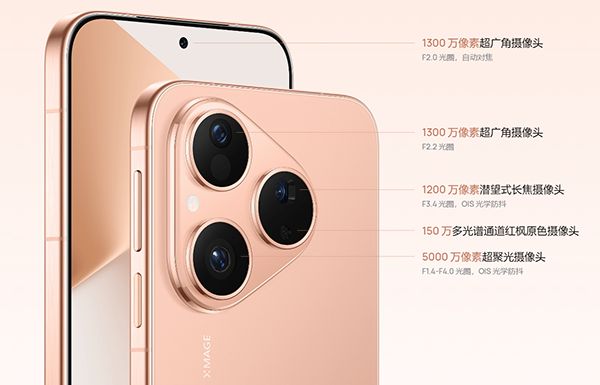
华为Pura80数字版将开售,比上代降价近千元
Guan Cha Zhe Wang· 2025-07-23 08:21
Core Insights - Huawei has launched the Pura80 digital version, which will officially go on sale on July 30, with a starting price of 4699 yuan, representing an 800 yuan decrease compared to the previous generation [1][3] - The smartphone market is facing increased competition, particularly in the 4000 yuan price range, with several brands including Apple and Xiaomi also adopting price reduction strategies [3][4] - The overall smartphone market in China has seen a decline in shipments, with a 4.0% year-on-year drop in Q2 2025, marking the end of six consecutive quarters of growth [3][4] Huawei's Market Position - Huawei regained the top position in China's smartphone shipments for the first time in four years, despite a 3.4% year-on-year decline in total shipments [3][4] - In Q2 2025, Huawei's market share was 18.1%, with shipments of 12.5 million units, while competitors like Vivo and OPPO experienced larger declines [4][5] - Huawei's high-end smartphone market remains strong, with a 69% year-on-year increase in shipments for devices priced above 600 USD, capturing 38% of that market segment [6] Market Dynamics - The smartphone market is under pressure due to low consumer confidence and extended replacement cycles, leading to a challenging environment for all brands [5][6] - Analysts predict that without significant new demand, Huawei's growth may slow down, potentially leading to single-digit growth or slight declines in the Chinese market [5] - The success of Huawei's HarmonyOS ecosystem is crucial for its long-term competitiveness against Apple, although it currently faces challenges with software bugs and incomplete functionalities [5][6]
中低端智能手机市场承压 高端市场现新机
Zhong Guo Jing Ying Bao· 2025-07-19 04:29
Core Insights - The global smartphone market is experiencing a slowdown, with significant challenges anticipated in the mid-to-low-end segment due to rising costs and reduced consumer spending [1][2][3] Market Performance - According to IDC, global smartphone shipments reached 295.2 million units in Q2 2025, reflecting a year-on-year growth of 1.0%, while Canalys reported a decline of 1% for the same period, marking the first drop after six consecutive quarters of growth [2][3] - The low-end smartphone market is particularly under pressure, with brands like Transsion facing a decline in shipments, down 1.7% according to IDC and 2% according to Canalys [2][3] Cost Pressures - A supply contraction from major memory chip manufacturers is leading to price increases in essential components, which is expected to significantly raise the production costs of low-end smartphones in the latter half of 2025 [1][3][4] - The transition to higher-end memory types like LPDDR5X is limited for many low-end devices due to compatibility issues, resulting in a supply shortage of LPDDR4X and escalating prices [4][5] Strategic Responses - Companies are considering adjustments to their product lines, with Transsion planning to enhance its mid-to-high-end offerings while maintaining its low-end base [3][6] - The rising costs of memory components are forcing brands to reconsider their pricing strategies and market positioning, potentially leading to exits from the low-price segment [5][6] Future Outlook - The market is expected to face continued pressure from rising component costs and economic uncertainties, particularly affecting the low-end segment, while the high-end market may remain a bright spot [6]
时隔两年,iPhone在华销量再现季度增长
Guan Cha Zhe Wang· 2025-07-04 08:19
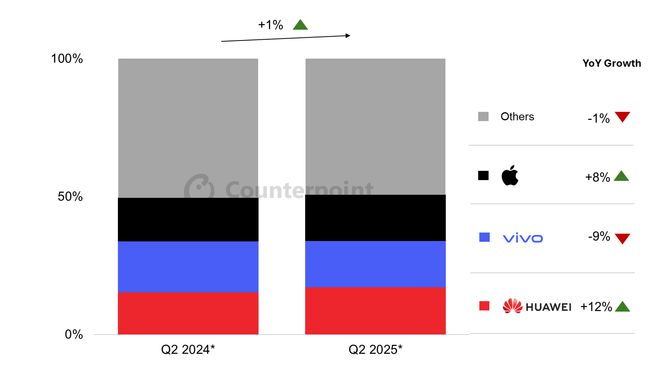
Core Insights - Counterpoint Research forecasts a slight year-on-year growth in China's smartphone sales by Q2 2025, led by Huawei and Apple [1] - Apple's iPhone sales in China saw an 8% year-on-year increase from March to June, marking its first growth since Q2 2023 [1][3] - Huawei is expected to achieve a 12% year-on-year growth and reclaim the top position in the Chinese market in Q2 [1] Group 1: Apple Performance - Apple's growth in May was primarily driven by promotional activities for the iPhone 16 series, with three models ranking among the bestsellers [3] - The timing of Apple's price adjustments in May was strategic, coinciding with the 618 promotional period, which positively impacted sales [3] - Despite the recent growth, Apple's revenue in the Greater China region has faced a decline, with a 0.34% drop year-on-year in Q4 FY2024 and a 7.73% decrease for the entire fiscal year [3][4] Group 2: Pricing Strategies - Apple implemented significant price reductions for the iPhone 16 series, with discounts reaching up to 2530 yuan (approximately 351 USD) to maintain competitiveness [4] - The iPhone 16 Pro 128GB model saw its price drop to 5499 yuan, a 31% reduction from its original price of 7999 yuan, marking a significant pricing strategy shift [4][6] Group 3: Market Challenges - Analysts predict that iPhone sales in China may decline in the second half of the year due to weak consumer spending and the aging product cycle of the iPhone 16 [6] - The limited upgrades expected with the iPhone 17 may not stimulate strong demand, while local competitors like Huawei are aggressively targeting the high-end smartphone market [6]