智能汽车生态

Search documents
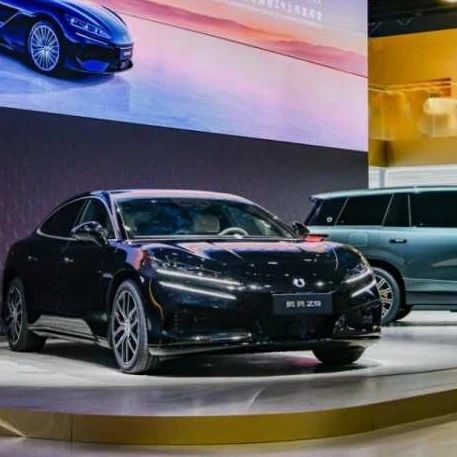
“五界十车”亮相成都车展,鸿蒙智行打响“体系战”
21世纪经济报道· 2025-08-31 15:47
Core Viewpoint - The Chengdu Auto Show in 2025 showcased the absence of ultra-luxury brands, with the highlight being the debut of Huawei's Hongmeng Zhixing featuring a full lineup of vehicles, demonstrating a comprehensive market coverage from mainstream to ultra-luxury segments [1][3]. Group 1: Product Launch and Market Response - Hongmeng Zhixing's exhibition area reached 3,000 square meters, making it one of the most crowded areas at the show, with ten vehicles from the "Five Realms" series on display [3]. - The pre-sale of the new models, including the Zhijie S7 and R7, saw over 10,000 orders within 24 hours, while the H5 model surpassed 50,000 orders in just 18 hours [5]. - The luxury model, the Zunjie S800, achieved over 12,000 pre-orders within three months of its launch, setting new sales records for million-level luxury cars in China [5]. Group 2: Strategic Positioning and R&D Investment - Hongmeng Zhixing's strategy differs from traditional automakers by adopting a "difficult first, easy later" approach, establishing a reputation with high-end products before expanding to broader markets [7]. - Huawei's R&D expenditure reached 96.95 billion yuan in the first half of 2025, accounting for 22.7% of its revenue, indicating a strong commitment to technological advancement [7]. - As of August 2025, Hongmeng Zhixing's assisted driving system has accumulated over 1.67 billion kilometers of driving, preventing more than 215,000 potential collisions [7]. Group 3: Market Differentiation and Ecosystem Development - The introduction of the "Five Realms" brand strategy allows Hongmeng Zhixing to cover diverse user travel needs through a systematic approach, leveraging Huawei's full-stack technology [9]. - The brand aims to penetrate the mass market by accurately identifying core user needs while maintaining cost efficiency, with strong confidence expressed by both Huawei and SAIC regarding the market potential [8][9]. - The differentiation lies in the ability to respond to various user demands through technology, with a focus on safety, space, and cost balance in the mainstream family market [9]. Group 4: Competitive Landscape and Future Outlook - The automotive industry's competitive focus has shifted from mechanical specifications to intelligent capabilities, with Hongmeng Zhixing redefining the value system of smart vehicles [12]. - The company has established a unified architecture that integrates smart cockpit, assisted driving, and electric drive systems, enhancing user experience and enabling rapid iterations [14]. - As the competition enters a new phase, the emphasis is on ecosystem efficiency, with Hongmeng Zhixing's comprehensive system capabilities positioning it to redefine competition rules for the next decade [15].


广汽集团今日涨近5%,旗下合资品牌官宣与小米、华为合作
Di Yi Cai Jing· 2025-06-12 11:46
Company Highlights - GAC Toyota announced the launch of its first mass-produced flying car, the AirCab, with a price not exceeding 1.68 million yuan, marking a significant step in innovation [1] - GAC Toyota aims for 80% of its sales to come from new energy vehicles (NEVs) by 2030, expanding its product matrix to include pure electric, plug-in hybrid, and range-extended versions [2] - The company will transfer development decision-making authority to Chinese engineers, implementing a chief engineer system to enhance localization [2] - GAC Toyota has partnered with Chinese tech companies Xiaomi, Huawei, and Momenta to accelerate localization efforts, with a focus on integrating Xiaomi's ecosystem into its vehicles [2] Industry Trends - Japanese joint venture brands are increasingly pursuing the new energy wave, with several companies launching new electric vehicle models in the first half of the year [3] - GAC Toyota's electric vehicle model, the Platinum 3X, has a starting price of around 100,000 yuan and has received nearly 30,000 new car orders [3] - GAC Toyota has invested 6.34 billion yuan in a dedicated production line for new energy vehicles, with a designed capacity of 200,000 units per year [3]

华为智能汽车生态“朋友圈”持续扩大与东风汽车全面深化战略合作
Zheng Quan Ri Bao· 2025-05-25 16:03
Core Viewpoint - The strategic cooperation agreement signed between Dongfeng Motor Group and Huawei marks a significant upgrade in their collaboration, focusing on automotive intelligence, digital transformation, and ecosystem development, which is crucial for Dongfeng's advancement towards high-end, intelligent, and global operations [1][2]. Group 1: Cooperation Details - The partnership will leverage Dongfeng's extensive experience in vehicle development, manufacturing, supply chain management, and sales services, alongside Huawei's strengths in cloud computing, AI algorithms, big data analysis, and industrial IoT technologies [2]. - Both companies plan to establish a joint innovation laboratory to focus on in-vehicle software development, continuous iteration of intelligent driving technologies, and the application of AI in various automotive scenarios [2][3]. Group 2: Market and Product Strategy - The collaboration will extend to multiple brands under Dongfeng, including Dongfeng Lantu, Dongfeng Mengshi, Dongfeng Yipai, and Dongfeng Nissan, aiming to create a range of intelligent vehicles tailored to different market segments and global user needs [3]. - There is an exploration of applying intelligent technologies in the commercial vehicle sector, aiming to integrate "hardcore products" with "smart technology" to build an open, shared, and mutually beneficial intelligent mobility ecosystem [3]. Group 3: Huawei's Role in the Automotive Industry - Huawei's strategy emphasizes becoming a "super supplier" for intelligent vehicles rather than manufacturing cars, expanding its ecosystem through various collaboration models with automakers [3][4]. - The company has developed intelligent automotive solutions that cover over 20 mainstream automakers, with cumulative sales of cooperative models exceeding 3 million units [3].

广汽集团成立华望汽车技术公司 注册资本15亿元
Zheng Quan Shi Bao Wang· 2025-03-21 03:59
Core Viewpoint - The establishment of Huawang Automotive Technology (Guangzhou) Co., Ltd. represents GAC Group's strategic expansion in the smart automotive ecosystem and high-end brand development, particularly in collaboration with Huawei on the GH project [1] Company Summary - Huawang Automotive Technology has been registered with a capital of 1.5 billion yuan, focusing on various sectors including automotive sales, manufacturing of automotive parts, and smart robotics [1] - GAC Group holds 100% ownership of Huawang Automotive Technology, indicating a strong commitment to its new ventures in the automotive industry [1] Industry Summary - The formation of Huawang Automotive Technology aligns with the growing trend of integrating artificial intelligence and smart technologies within the automotive sector, reflecting the industry's shift towards innovation and advanced manufacturing [1] - The collaboration with Huawei is expected to enhance GAC Group's capabilities in smart vehicle technology, positioning the company favorably in the competitive automotive market [1]
比亚迪“灵鸢”生意经
21世纪经济报道· 2025-03-04 13:14
Core Viewpoint - BYD is focusing on ecological competition in the automotive industry, emphasizing that consumers now view cars as mobile spaces for entertainment and social interaction rather than just transportation tools [1] Group 1: Technological Innovations - BYD launched the "Lingyuan" intelligent car-mounted drone system in collaboration with DJI, allowing users to control drone functions through a dedicated app while driving [1] - The "Lingyuan" system comes in two versions: a battery swap version primarily for the Yangwang brand and a fast-charging version for BYD's Dynasty, Ocean, Tengshi, and Fangchengbao brands, with a total price of 16,000 yuan [1] - The system will first be available on six models, including Fangchengbao Biao8 and Tengshi N9 [1] Group 2: Strategic Partnerships - BYD has formed partnerships with various tech companies, including OPPO and Huawei, to enhance user experiences through mobile connectivity and smart driving features [2] - The company has integrated functionalities with major smartphone brands, including Apple and Samsung, to broaden the ecosystem [2] Group 3: Industry Trends - The automotive industry is shifting from hardware manufacturing to ecological services, with companies like BYD aiming to build their ecosystems through collaborations rather than solely relying on internet companies [1][2] - The competition for user data and service interfaces is intensifying as automotive manufacturers seek to gain control over in-car experiences [3][4] Group 4: Future Directions - BYD's collaboration with DJI is seen as a significant step towards defining low-altitude scenarios and accelerating the company's smart technology layout [4] - The company aims to integrate various aspects of users' lives around the vehicle, moving from a traditional car sales model to an ecosystem-based approach [4] - The expansion of automotive space scenarios is becoming a critical battleground for brand value, with companies eager to build their own automotive ecosystems [6]