柠檬市场

Search documents
反内卷对利率中枢影响如何?
2025-07-21 00:32
Summary of Conference Call Records Industry or Company Involved - The discussion primarily revolves around the **anti-involution policy** and its implications on the **economic landscape** in China, particularly focusing on the **market structure**, **competition**, and **long-term interest rates**. Core Points and Arguments 1. **Anti-Involution Policy Overview** The anti-involution policy aims to prevent vicious competition and enhance product quality by promoting orderly exit of outdated capacities. It was first proposed in July 2024 and included in the government work report in March 2025 [2][2][2] 2. **Impact on Market Structure** The current market structure has shifted to monopolistic competition, where price reductions do not effectively stimulate demand. Companies are increasingly relying on marketing strategies to create demand, leading to sales expenses becoming a critical factor affecting production [1][5][6] 3. **Profit Pressure and Sales Expenses** The gap between individual production scale and effective production scale is narrowing, causing companies to invest heavily in sales to create demand, which increases profit pressure and can lead to losses [1][7][10] 4. **Quality of Products and Services** The impact of involution on product and service quality occurs in three stages: initial quality improvement, followed by quality decline, and ultimately quality degradation. Over-marketing leads to a "lemon market" scenario where R&D investment decreases, affecting product quality [1][9][10] 5. **Long-term Economic Effects** The anti-involution policy is expected to raise the long-term interest rate center by 10-20 basis points, although the profit recovery from production limits may be temporary. Historical data suggests that past production limits led to short-term GDP declines but nominal GDP recoveries [3][12][13] 6. **Global Context of Involution** Involution is a global phenomenon, often referred to as the high-income trap. Many high-income countries have faced similar issues, but China's current situation is more severe due to ineffective price competition [4][4] 7. **Future Economic Outlook** The policy aims to alleviate the pressure of excessive sales expenses and price competition, which may initially lead to profit transfers but is expected to have a positive long-term impact on overall economic growth and corporate profitability [10][12][13] Other Important but Possibly Overlooked Content 1. **Market Reactions** The stock and commodity markets have reacted significantly to the anti-involution sentiment, while the bond market has shown a more muted response. The focus should be on the macroeconomic perspective regarding the impact of the anti-involution policy on the bond market [11][12][14] 2. **External Trade and Monetary Policy** Attention should be given to the potential escalation of trade tensions post the expiration of the US-China agreement and the risks of negative export growth. Additionally, the central bank's efforts to guide interest rates lower and restart government bond trading are crucial [15][15] 3. **Investment Strategies** Future investment strategies should consider sectors like AI and military industries that may benefit from the anti-involution policy. Monitoring policy changes and their effects on the economic environment will be essential for formulating investment approaches [20][20][21]
对症下药根治“速成证书”
Jing Ji Ri Bao· 2025-07-09 02:29
Group 1 - The core issue is the investigation of a company for allegedly promoting illegal advertisements for "high school volunteer planning experts" training, which claims to provide certification in just three days [1] - The "high school volunteer planning expert" is not recognized in the national vocational qualification directory, and the so-called "national-level certificate" is merely a printed page [1] - The training and certification market exhibits characteristics of a "lemon market," where poor quality services drive out quality services due to severe information asymmetry between buyers and sellers [1] Group 2 - To address the rapid certification issue, it is essential to establish a standardized skill certification system, including a unified certificate verification platform to trace training records and verify certificate authenticity [1] - The need for educational reform is emphasized, advocating for the integration of vocational enlightenment into basic education to reduce blind worship of certificates [2] - The market should shift towards valuing problem-solving abilities over mere certification, allowing companies to pay a premium for skills rather than certificates, thus activating new momentum for innovation and development [2]
避免“内卷式”竞争,促进平台经济健康有序发展
Di Yi Cai Jing· 2025-06-15 13:00
Core Viewpoint - The Chinese food delivery market is experiencing "involutionary" competition, where platforms and merchants are increasing investments without significant improvements in overall market efficiency, leading to resource misallocation and waste [1][2]. Group 1: Market Dynamics - The food delivery industry exhibits typical network economy characteristics, where larger platforms can reduce average delivery costs through increased order and rider density, but this leads to a "subsidy arms race" among competitors [2][3]. - Recent estimates indicate that daily order volume in the food delivery market has peaked at 140 million, significantly up from 100 million year-on-year, with a notable shift towards lower-priced items like beverages [3][4]. Group 2: Economic Theories - The "lemon market" theory explains how information asymmetry leads consumers to rely on price as a primary decision factor, resulting in a market distortion where low-quality offerings prevail [4][5]. - The "disease of cost disease" theory highlights how excessive reliance on subsidies distorts market competition, leading to resource misallocation and inhibiting innovation and quality improvements [6][7]. Group 3: Challenges for Small Merchants - Small merchants face a "prisoner's dilemma" in the price war, where participating may yield short-term sales but create long-term low-price expectations, making it difficult to return to reasonable pricing [7][8]. - The competitive pressure forces small merchants to cut costs, often compromising quality and service, which can damage brand reputation and customer loyalty over time [7][8]. Group 4: Social Costs - The negative impacts of "involutionary" competition extend beyond business, leading to irrational consumption patterns and potential health issues due to increased intake of sugary beverages [9]. - Employment quality is declining as businesses reduce labor costs, affecting workers' rights and job security, while overall market resources are wasted in unproductive competition [9][10]. Group 5: Path to Resolution - To break the cycle of "involutionary" competition, the industry needs to focus on infrastructure improvements and regulatory frameworks that promote sustainable practices rather than relying solely on price subsidies [10][11]. - Enhancing operational efficiency through better logistics and inventory management, along with fostering innovation and quality service, is essential for long-term industry health [10][11].

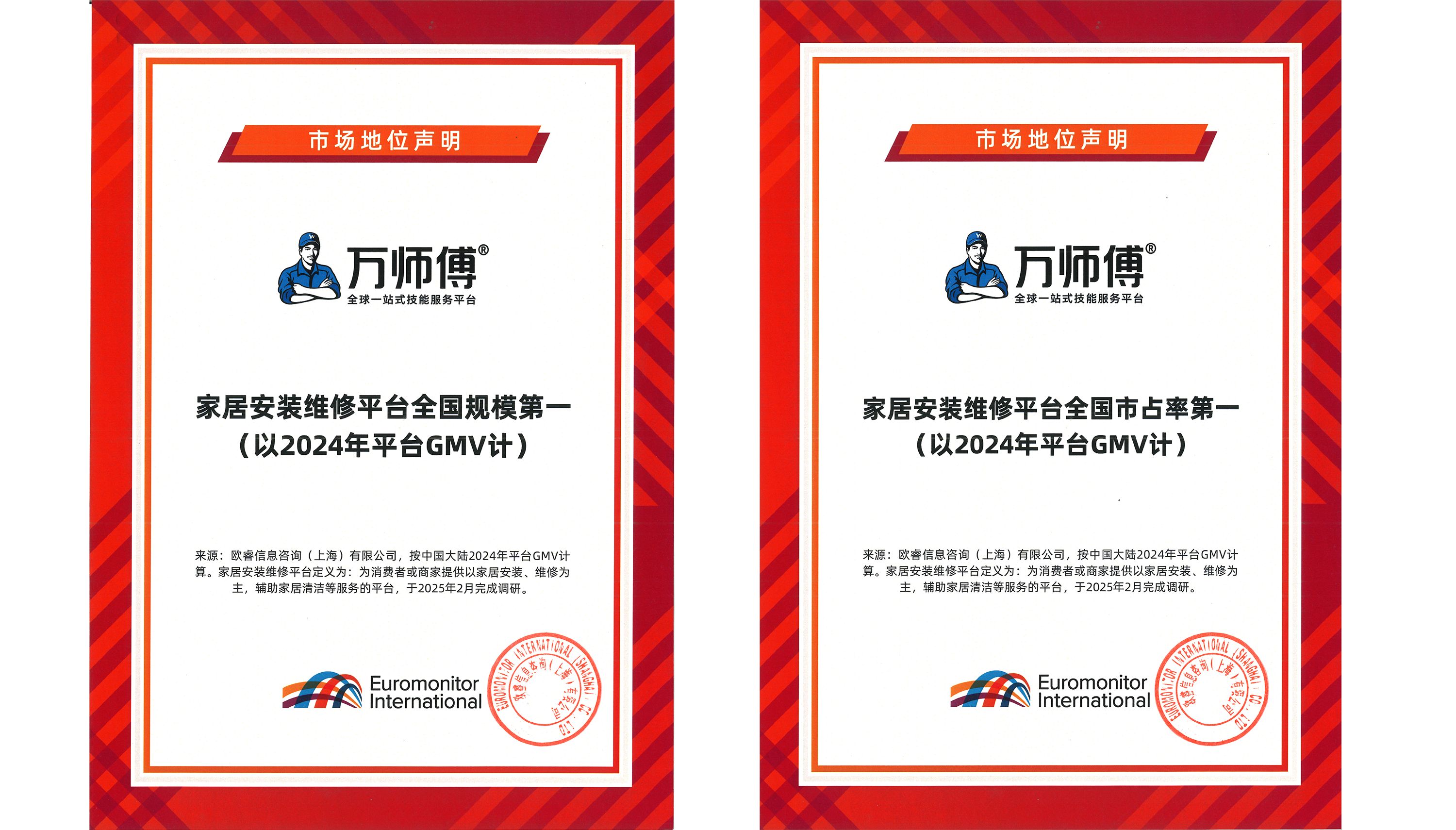
用「确定性」革命家居服务,万师傅稳居全国规模第一
3 6 Ke· 2025-05-08 03:53
Core Insights - The article highlights the transformation in the home services industry driven by consumer demand for high-quality and convenient home living, alongside businesses seeking efficiency and cost reduction through internet-based models [1][4] - The company "Wanshifu" has emerged as a leading player in the home installation and repair platform sector in China, recognized for its innovative approach to standardizing services and enhancing transparency [1][4] Industry Overview - The home services market is characterized by a large scale but low concentration, leading to issues such as information asymmetry and inconsistent service quality, often referred to as a "lemon market" [5][10] - The need for industry giants to provide standardized products is crucial to address these challenges, focusing on eliminating pain points like slow service delivery and unclear pricing [5][10] Company Positioning - Wanshifu, established in 2013, has utilized internet technology to deconstruct the "last mile" of home services, creating a standardized service process that enhances consumer trust [6][8] - The company has implemented a transparent pricing model across various service categories, addressing the issue of price opacity and ensuring predictable service delivery [8][9] Standardization Efforts - Wanshifu has actively participated in developing industry standards, contributing to multiple guidelines that enhance service quality and accountability across the home services sector [9][15] - The company has achieved recognition as the top-rated home after-sales service platform in China, reflecting its commitment to standardization and quality [9] Service Provider Development - The growth of service providers on the Wanshifu platform has been significant, with over 3.7 million registered service providers by February 2025, covering 99% of urban areas in China [10][11] - Wanshifu emphasizes the importance of professional education and skill certification for service providers, ensuring a high standard of service delivery [11][14] Ecosystem and Trust Building - The company has built a new ecosystem in the industry by focusing on standardization and mutual satisfaction between consumers and service providers, which is essential for long-term growth [15][16] - Wanshifu's partnerships with major brands like IKEA and its role as a preferred service platform highlight its influence and reputation in the home services market [16][19] Positive Feedback Loop - The company's approach has created a positive feedback loop, enhancing user experience and reducing customer acquisition costs while attracting more skilled service providers to the platform [19]