
概念验证

Search documents
八大处整形医学概念验证中心:首家专注整形医学的概念验证机构
思宇MedTech· 2025-12-13 13:41
文章来源: 八大处整形概念验证中心 转载要求:可以直接转载,请在文首注明来源 过去十年,整形外科与再生医学领域的技术创新并不缺少想法,更不缺论文、专利和早 期成果。真正的难点在于:如何让这些成果跨越 " 死亡之谷 " , 从实验室原理走向可 验证的原型,再进入量产体系,最终成为真正被临床采用、被市场认可的产品。 在这一背景下,北京八大处整形科技发展有限公司牵头建设的 八大处整形医学概念验 证中心 ,成为国内首个专注整形外科科技成果转化的专业平台。 2025 年 10 月31 日 ,在 第三届八大处整形美容产业论坛 · 主论坛中, 北京八大处整形科技发展有限公司 姚贵金总经理 系统介绍了 平台建设思路、组织架构与实践探索 ,为整形与医美行业提 供了一个可参考的 " 创新到产业化 " 路径 。 活动回顾: 科技引领整形,创新驱动未来:第三届八大处整形美容产业论坛圆满召开 圆满落幕!第三届整形外科创新转化大赛决赛 一、概念验证:创新转化的核心环节 1. 概念验证是什么? 概念验证(Proof of Concept, PoC)是创新走向产业化的关键节点,强调以最小成本、最快速度验证技术的 科学性、可量产性与商业价值。 ...


经济大省挑大梁|上海高质量孵化器再扩容,至今共启动建设18家
Xin Lang Cai Jing· 2025-12-11 09:21
Core Insights - Shanghai has expanded its list of high-quality incubators, adding six new entities, bringing the total to 18 by the end of 2024, focusing on emerging industries such as large models, quantum optics, intelligent sensing, humanoid robots, synthetic biology, and cell and gene therapy [1] Group 1: New Incubators - The newly added incubators include Nest Shanghai Innovation Incubator, Sinan Brain-Machine Intelligence Incubator, Shanghai Aimi Sanjiang New Materials Industry Innovation Center, "Shutong Chain Valley" Blockchain Application Innovation Incubator, "D Zero Bay" Sci-Tech Innovation Incubator, and Zhangjiang High-Tech 895 Incubator [1] - The expansion aligns with Shanghai's implementation plan for cultivating high-quality incubators, which was released in June 2023 [1] Group 2: Focus on New Materials - Shanghai Aimi Sanjiang New Materials Industry Innovation Center is the only high-quality incubator in the city focusing on the new materials sector, emphasizing membrane materials, carbon-based materials, and special alloys [4] - The center aims to create a closed-loop innovation ecosystem for the new materials industry by providing technical empowerment, market connections, and capital support [4] Group 3: Specialized Incubator Models - The core incubation model of the Shanghai Aimi Sanjiang New Materials Industry Innovation Center includes project co-creation, equity incubation, industry acceleration, and precise empowerment, enhancing the success rate and feasibility of projects [4] - The center is also focusing on hardware materials related to artificial intelligence and embodied intelligence industries, such as lightweight materials for humanoid robot joints and flexible sensing materials for robot skin [5] Group 4: Other Incubator Focus Areas - Nest Shanghai Innovation Incubator focuses on the biopharmaceutical industry, particularly synthetic biology and cell and gene therapy, providing comprehensive support for project transformation [7] - Sinan Brain-Machine Intelligence Incubator targets brain-machine interfaces and cognitive disorder interventions, establishing a collaborative model with academic and medical institutions for accelerated development [9] - "Shutong Chain Valley" Blockchain Application Innovation Incubator emphasizes core blockchain technology and application scenarios, integrating various resources to support startups [11] - "D Zero Bay" Sci-Tech Innovation Incubator focuses on electronic information and advanced equipment, promoting technology transfer and entrepreneurship [13] - Zhangjiang High-Tech 895 Incubator specializes in integrated circuits, creating a comprehensive incubation system that connects talent, services, and applications [15]
合力破解成果转化“最初一公里”瓶颈——专家共议概念验证平台建设新机制
Huan Qiu Wang Zi Xun· 2025-11-28 09:02
Core Viewpoint - Hangzhou is accelerating the construction of an innovative ecosystem by implementing "precise services + open sharing" to encourage innovation outcomes from universities, projects funded by science and technology investment funds, and local government investment attraction projects [1] Group 1: Concept Verification Platform Development - The concept verification platform involves multiple stakeholders, including universities, research institutions, enterprises, investment institutions, and government departments, requiring high coordination [1] - Hangzhou adopts a "targeted organization + open solicitation" approach to cultivate concept verification centers, implementing a phased strategy of "create first, certify later" [2] - The Shanghai International Green Low-Carbon Concept Verification Center has completed 23 concept verifications, resulting in 6 prototypes and facilitating a conversion value of 138 million yuan [2] Group 2: Challenges and Solutions - Despite initial successes, issues such as resource dispersion, inconsistent standards, and insufficient collaboration remain prevalent [3] - The establishment of a "Concept Verification Platform Service Alliance" aims to promote resource sharing, mechanism learning, and service collaboration to enhance the overall effectiveness of the national concept verification system [3] - The Ministry of Science and Technology emphasizes the need for a sustainable operation mechanism for concept verification platforms, combining government leadership with enterprise operation [3]
杭州加速打造全国科技成果概念验证之都
Hang Zhou Ri Bao· 2025-11-28 02:28
Core Insights - Hangzhou is accelerating the industrialization of scientific and technological achievements by addressing the "first kilometer" of results transformation through concept validation [3] - The city has established a comprehensive service system for technology innovation and industrial integration, focusing on four distinctive models: investment-driven, demand-driven, application-driven, and platform-accelerated [3][9] Investment-Driven Model - Early-stage capital is crucial for transforming scientific results, as it provides the necessary funding for projects that are in their infancy and carry high risks [4] - The investment-driven model combines "preliminary validation + equity investment," where initial funding is converted into equity upon successful validation, encouraging further social capital investment [4] Demand-Driven Model - The demand-driven model allows market needs to guide project selection and validation, significantly reducing the time from research to product readiness [6] - Projects validated under this model often originate from the market demands of upstream and downstream industry clients, creating a positive cycle of "market-research-benefit-research" [6] Application-Driven Model - The application-driven model focuses on finding real-world scenarios for technology validation, which is essential for successful commercialization [7] - This model emphasizes collaboration with initial scene partners to share the validation process, enhancing the likelihood of successful technology transfer [7] Platform-Accelerated Model - The platform-accelerated model aims to cultivate hard technology achievements through a full-chain service system that includes evaluation, selection, transformation, financing, and commercialization [9] - Concept validation centers in Hangzhou are increasingly involved in the initial stages of transformation, providing comprehensive support including funding, facilities, and technical resources [9] Future Outlook - Hangzhou's technology bureau plans to continue leveraging concept validation centers as engines for innovation, aiming to enhance the city's role as a hub for scientific and technological achievement transformation [10]
湖北揭牌首批31家省级概念验证中心,8家企业运营主体入选
Di Yi Cai Jing Zi Xun· 2025-11-27 03:11
Core Insights - The concept validation centers are crucial for transforming laboratory research into market-ready products, enhancing the efficiency of technology transfer [1] - The Hubei Provincial Science and Technology Department announced a list of 31 entities selected for the 2025 provincial concept validation center cultivation, with 8 being enterprises [1] - These centers will focus on emerging, frontier, and disruptive technologies, promoting innovation resource sharing across related industries [1] Group 1 - The concept validation centers will provide services such as principle validation, product and scenario system validation, prototype preparation, technical feasibility validation, and commercial prospect validation [1] - The first batch of selected centers includes 21 from Wuhan, 2 from Xiangyang, and others from various cities, with a majority being operated by universities and research institutions [1] - The centers will follow a management principle of government guidance and market leadership, emphasizing the role of market entities [1] Group 2 - The "Advanced Functional Materials Concept Validation Center" created by Wuhan Zhongke Advanced Materials Technology Co., Ltd. focuses on cutting-edge materials technology and aims to support the transformation and upgrading of the materials industry [2] - The "Aerospace Chemical New Energy Materials Concept Validation Center" in Xiangyang will conduct validation services for new technologies in the fields of new energy and safety protection materials [2] - The "Poultry Breeding and Egg Processing Concept Validation Center" by Hubei Shendan Health Food Co., Ltd. aims to accelerate the industrialization of egg product technologies through specialized evaluation and incubation mechanisms [2] Group 3 - Hubei will strengthen the role of enterprises in technological innovation over the next five years, establishing a differentiated support system for technology enterprises [3] - The province plans to enhance collaboration between industry, academia, and research through various innovation platforms, promoting the conversion of technological achievements into productive forces [3] - A "Big Dipper" style technology transfer system will be developed to support the establishment of concept validation, pilot testing, scenario innovation, and enterprise incubation platforms [3]
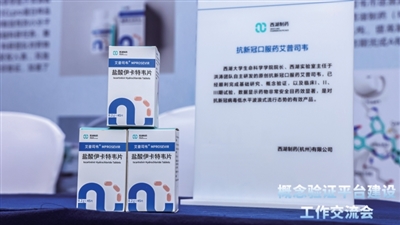
概念验证平台建设工作交流会在杭州举行
Zhong Guo Xin Wen Wang· 2025-11-26 17:11
Core Viewpoint - The conference in Hangzhou focused on the construction of concept verification platforms, which serve as accelerators for the initial stage of technology transfer, effectively reducing early risks and increasing the success rate of technology commercialization [1] Group 1: Concept Verification Platforms - Concept verification platforms are essential for accelerating the transformation of scientific and technological achievements, with Hangzhou aiming to become a national hub for technology transfer and verification [1] - In 2022, Hangzhou proposed to build a preferred location for technology transfer, achieving nearly 1 trillion yuan in technical transaction volume and new product output in 2023 [1] - The city employs a "targeted organization + open solicitation" approach to cultivate concept verification centers, focusing on key industries and regions [1] Group 2: Funding and Support Mechanisms - Shanghai is increasing financial support for concept verification platforms, with funding up to 30 million yuan for new platforms and annual subsidies of up to 3 million yuan for self-built platforms [3] - The funding strategy includes flexible and rapid use of funds through innovative mechanisms, enhancing the financial empowerment of the verification platforms [2][3] Group 3: Collaborative Models and Best Practices - Various cities shared their experiences in concept verification, such as Jinan's comprehensive service system integrating early project verification, patent layout, and industry-academia collaboration [4] - Wuhan's center focuses on standardized training to cultivate technology managers familiar with local industry characteristics and policies [4] - The establishment of a service alliance for concept verification platforms aims to enhance resource sharing and service efficiency [4]
建设概念验证、中试验证平台:打通科技成果转化的“任督二脉”
Xin Hua She· 2025-11-20 05:15
Core Viewpoint - The "14th Five-Year Plan" emphasizes the construction of concept verification and pilot testing platforms to accelerate the efficient transformation and application of major scientific and technological achievements, facilitating the transition of innovation results from "shelves" to "market" [1] Group 1: Concept and Pilot Testing - Concept verification involves validating technological feasibility and assessing commercial value and market potential, acting as a "filter" for marketable research outcomes [2] - Pilot testing serves as a transitional experiment from prototype to production, focusing on process compatibility, batch stability, and cost-effectiveness, considered the "last mile" of technology transfer [2] Group 2: Impact on Technology Transfer - Establishing concept verification and pilot testing platforms is crucial for technology transfer, significantly reducing risks and promoting industrialization and collaboration between academia and industry [2][3] - Statistics indicate that the industrialization success rate for technology that has undergone pilot testing can reach over 80%, compared to only about 30% for those that have not [3] Group 3: Current Developments - The construction of concept verification and pilot testing platforms in China has accelerated, creating a comprehensive service network for technology transfer [4] - Over 2,400 pilot testing platforms have been established nationwide, with the first batch of 241 key pilot platforms undertaking 25,000 pilot service projects [4] - Approximately 90 concept verification and pilot testing platforms have been established by national technology innovation centers, enhancing the quality of technology transfer and facilitating the commercialization of research outcomes [4]
新华鲜报·规划建议新看点丨建设概念验证、中试验证平台:打通科技成果转化的“任督二脉”
Xin Hua She· 2025-11-20 04:54
Core Viewpoint - The "14th Five-Year Plan" emphasizes the integration of technological and industrial innovation, highlighting the establishment of concept verification and pilot testing platforms to accelerate the efficient transformation and application of major scientific and technological achievements [1]. Group 1: Concept and Pilot Testing - Concept verification involves validating the feasibility of technology and assessing its commercial value and market potential, acting as a "filter" for marketable research outcomes [5]. - Pilot testing serves as a transitional experiment from prototype to production, focusing on process compatibility, batch stability, and cost-effectiveness, often referred to as the "last mile" of technology transfer [5]. Group 2: Impact on Technology Transfer - Establishing concept verification and pilot testing platforms is crucial for facilitating the transformation of scientific achievements, reducing risks, promoting industrialization, and enhancing collaboration between academia and industry [5]. - Statistics indicate that the industrialization success rate for technologies that undergo pilot testing can reach over 80%, compared to only about 30% for those that do not [6]. Group 3: Current Developments - The construction of concept verification and pilot testing platforms in China has accelerated, creating a comprehensive service network for the transformation of scientific achievements [7]. - Over 2,400 pilot testing platforms have been established nationwide, with 241 key platforms selected for cultivation by the Ministry of Industry and Information Technology, which have undertaken 25,000 pilot service projects [7].
今年前三季度,南京以知识产权作支点
Nan Jing Ri Bao· 2025-11-12 02:46
Core Insights - The "2025 Jiangsu Province Patent Auction Season" focused on the software and information service industry, highlighting significant patent transfer and licensing activities in Nanjing [1] - Nanjing's patent transfer and licensing reached 12,900 instances from January to September, with 2,516 cases from universities and research institutions [1] - Intellectual property pledge financing benefited 996 companies, amounting to 9.534 billion yuan [1] Group 1 - 18 high-value patents from 11 universities, including Nanjing University and Southeast University, were signed on-site, covering fields such as new generation information technology, biomedicine, new materials, and environmental protection, with an intended amount exceeding 27 million yuan [1] - A strategic collaboration was established between China People's Property Insurance Company and various concept verification centers to enhance risk mitigation and financial empowerment in patent conversion [1][2] Group 2 - The insurance product matrix developed by China People's Property Insurance covers the entire process from concept verification to achievement transformation, with a premium rate of 3% to 10% for concept verification insurance [2] - The Southeast University Concept Verification Center has selected 10 quality projects from over 60 for support, accelerating the implementation of projects in fields like medical engineering and new materials [2] Group 3 - The event featured a promotion of 2,660 "Double Five-Star" patents and 320 open licensing patents, along with a focus on key patents in the software and information service sector [2] - Various technology demands were announced by units in the Nanjing metropolitan area, promoting cross-regional collaborative innovation [2][3]
雄安新区首支概念验证基金设立,重点聚焦空天信息等领域
Jing Ji Guan Cha Bao· 2025-10-29 01:44
Core Viewpoint - The establishment of the "Hebei Xiong'an Zhongke Concept Verification Fund" aims to cultivate and introduce high-quality innovative results, focusing on early-stage technologies in key industries such as aerospace information, artificial intelligence, new materials, life sciences, and biotechnology [1][2] Group 1 - The fund has an initial scale of 20 million yuan, supporting technology verification, application scenario validation, commercialization verification, and incubation of technological achievements, with individual project support up to 1 million yuan [1] - The fund operates on a market-oriented basis, sharing risks and returns with project parties, and encourages innovation while being tolerant of failures not caused by subjective factors [2] - Successful projects will be recommended to sub-funds and investment institutions, creating a supportive mechanism for enterprise growth and facilitating the transition from concept verification to industrialization [2] Group 2 - The fund promotes collaboration among local governments, leading enterprises, investment institutions, and universities, aiming to establish a new model of cooperation in the Beijing-Tianjin-Hebei region [2] - The Xiong'an Science Park will leverage this fund to efficiently promote the transformation of scientific and technological achievements, focusing on frontier fields like aerospace information and biotechnology [2]