水利基础设施建设

Search documents
“十四五”时期 中国建成世界上规模最大水利基础设施体系
Ren Min Ri Bao Hai Wai Ban· 2025-09-30 01:27
Core Viewpoint - China has established the world's largest water conservancy infrastructure system, contributing significantly to flood control, water supply, food security, and ecological safety during the 14th Five-Year Plan period [4][2]. Infrastructure Development - Since the beginning of the 14th Five-Year Plan, 172 major water conservancy projects have been initiated, optimizing the layout, structure, function, and system integration of water conservancy infrastructure [3]. - By the end of 2024, China will have built 95,000 reservoirs, 200 large and medium-sized water diversion projects, 6,924 large and medium-sized irrigation areas, and 318,000 kilometers of embankments [3]. - Water conservancy investment has exceeded 1 trillion yuan for three consecutive years from 2022 to 2024, with total investment during the 14th Five-Year Plan expected to surpass 5.4 trillion yuan, 1.6 times that of the 13th Five-Year Plan [3]. Disaster Prevention and Response - The country has successfully managed floods exceeding warning levels in 3,981 rivers and has not experienced any major dam failures since 2022, demonstrating enhanced flood and drought disaster prevention capabilities [3]. - Effective measures have been taken to ensure water supply for both drinking and irrigation in drought-affected areas, particularly in the Yangtze and Pearl River basins [3]. Environmental Improvement - The 14th Five-Year Plan has led to significant improvements in the ecological conditions of key rivers and lakes, achieving a 98.6% compliance rate for ecological flow standards [5]. - Initiatives such as the Mother River Revival Action have resulted in the restoration of over 1,300 square kilometers of water area in major lakes [5]. Water Resource Efficiency - During the 14th Five-Year Plan, China's total water consumption has remained stable despite an average economic growth rate of 5.5% [6]. - The water usage per unit of GDP and industrial added value has decreased by 17.7% and 23.6%, respectively, compared to 2020 [7]. Technological and Institutional Advancements - The development of a digital twin water conservancy system has been prioritized to enhance flood prevention and water resource management [9]. - New laws and regulations, including the Yangtze River Protection Law and the Groundwater Management Regulations, have been implemented to strengthen water resource management [9].
我国水利连破纪录 按下建设“加速键”
Yang Shi Xin Wen Ke Hu Duan· 2025-09-29 23:36
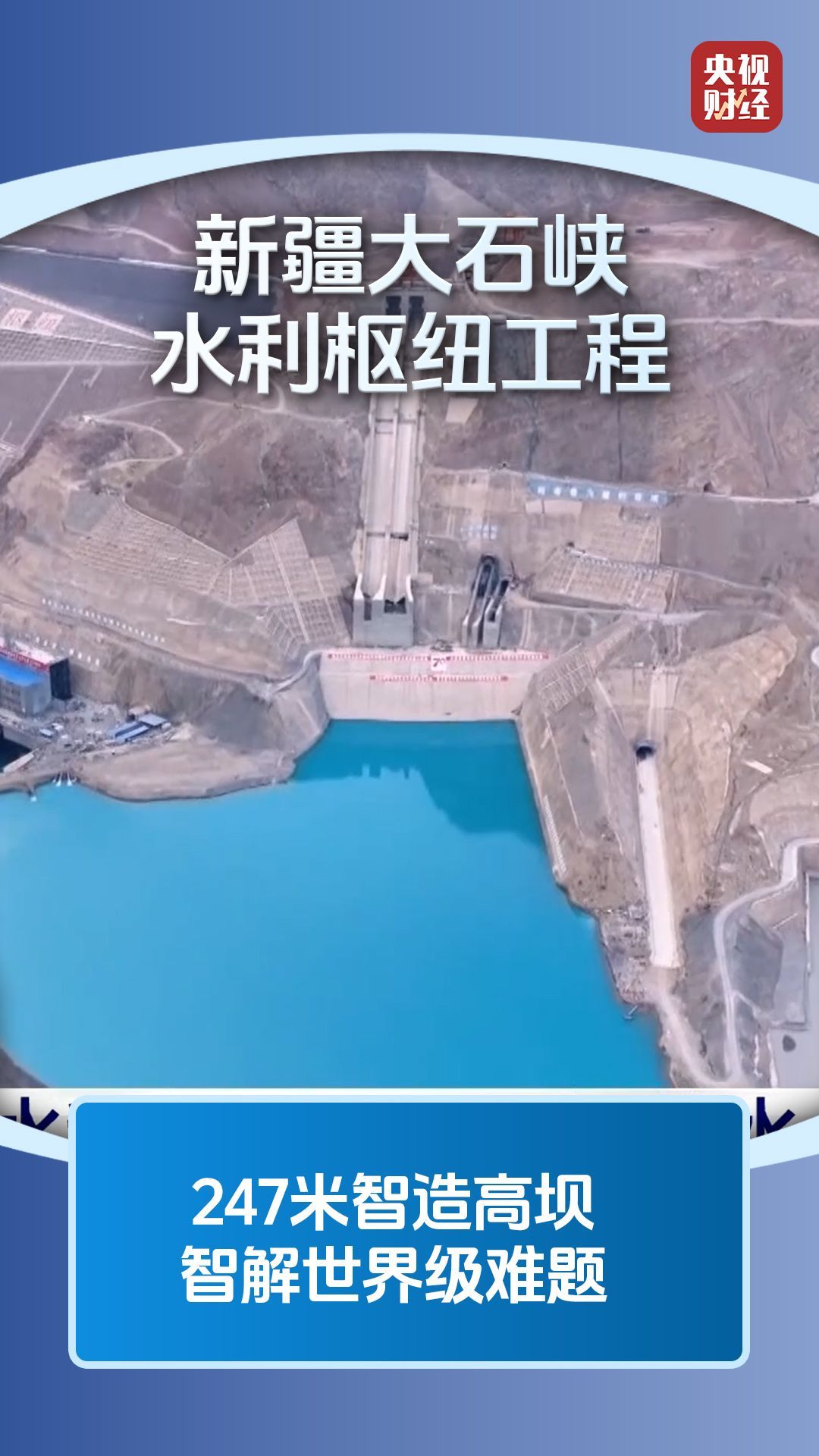
Group 1 - The core viewpoint of the articles highlights significant advancements in China's water conservancy infrastructure construction since the start of the 14th Five-Year Plan, with investments exceeding 1 trillion yuan for the first time in 2022 and projected to reach 13.529 billion yuan in 2024, totaling over 54 trillion yuan by the end of the plan, which is 1.6 times that of the previous five-year plan [1] - Since the beginning of the 14th Five-Year Plan, 172 major water conservancy projects have been initiated, optimizing the layout, structure, function, and system integration of water infrastructure [1] - By the end of 2024, China will have built 95,000 reservoirs, 200 large and medium-sized water diversion projects, 6,924 large and medium-sized irrigation areas, and 318,000 kilometers of embankments, forming the world's largest and most comprehensive water conservancy infrastructure system [1] Group 2 - The Dashi Gorge Water Conservancy Hub Project, a major national water conservancy project, has successfully begun water storage, featuring a maximum dam height of 247 meters, setting a world record for concrete-faced rockfill dams [2][5] - The project plans to install three 250,000-kilowatt turbine generator sets, with a total installed capacity of 750,000 kilowatts, capable of producing over 1.8 billion kilowatt-hours of clean electricity annually, sufficient to meet the annual electricity needs of 650,000 households [2] - The project employs "smart construction" techniques to address various challenges, including high seismic intensity and rapid flood discharge, utilizing real-time data for dynamic reservoir management and health monitoring of the dam [5] Group 3 - The Yunnan Central Water Diversion Project has made significant progress, with the successful construction of the Qujiang inverted siphon, marking a breakthrough in this major national water conservancy project [6] - This project is the largest water diversion project under construction in China, spanning 664.326 kilometers, with an average annual water diversion capacity of 3.4 billion cubic meters, benefiting over 11 million people along the route [9] - The Chongqing Zhaodu Reservoir Project has successfully completed the first tunnel, enhancing regional water supply and irrigation capabilities while serving as a flood control barrier for the surrounding areas [13]

非凡“十四五” | 这三个“最”,凸显治水成绩单含金量!
Xin Hua She· 2025-09-29 04:36
Core Viewpoint - China has made significant progress in water conservancy development during the "14th Five-Year Plan" period, contributing to flood safety, water supply security, food security, and ecological safety [1] Group 1: Water Infrastructure Development - Investment in water conservancy construction reached over 1 trillion yuan for the first time in 2022, marking three consecutive years of record-breaking investment [2] - A total of 172 major water conservancy projects were initiated since the start of the "14th Five-Year Plan" [2] - By the end of 2024, China will have built 95,000 reservoirs, 200 large and medium-sized water diversion projects, 6,924 large and medium-sized irrigation areas, and 318,000 kilometers of embankments, forming the world's largest and most comprehensive water conservancy infrastructure system [2] Group 2: Flood and Drought Disaster Prevention - The flood control capacity of reservoirs is 185.6 billion cubic meters, protecting a population of 660 million [4] - The national flood retention area has a capacity of 109 billion cubic meters, with 133,000 hydrological monitoring stations established [4] - The proportion of flood disaster losses to GDP decreased from 0.28% during the "13th Five-Year Plan" to 0.18% during the "14th Five-Year Plan" [4] Group 3: Ecological Environment Improvement - Several rivers, including the Grand Canal and the Xiliao River, have been fully restored after decades of disconnection [6] - The ecological flow compliance rate for key rivers and lakes reached 98.6%, with 140,000 issues of "disorderly occupation, mining, stacking, and construction" addressed [6] - An estimated 340,000 square kilometers of soil erosion control area will be added, with a soil conservation rate of 73% [6] Group 4: Water Resource Utilization - The national water network coverage is expected to reach 80% by the end of the "14th Five-Year Plan," with irrigated farmland area reaching 109 million acres and rural tap water coverage at 96% [7] - By 2024, water consumption per 10,000 yuan of GDP and per 10,000 yuan of industrial added value is projected to decrease by 17.7% and 23.6%, respectively, compared to the end of the "13th Five-Year Plan" [7] - The effective utilization coefficient of irrigation water in farmland increased from 0.565 at the end of the "13th Five-Year Plan" to 0.58 [7]
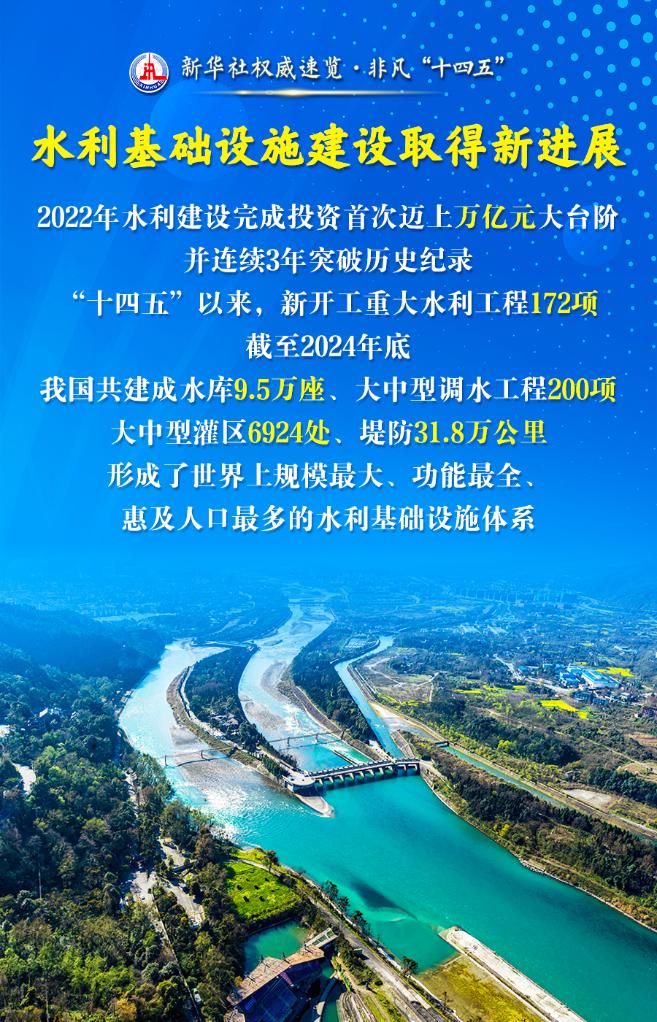
我国建成世界上规模最大、功能最全、惠及人口最多的水利基础设施体系
Bei Jing Shang Bao· 2025-09-29 02:17
Core Insights - The Ministry of Water Resources reported significant advancements in water infrastructure construction since the start of the 14th Five-Year Plan, with investment in 2022 exceeding 1 trillion yuan for the first time, marking a historical record for three consecutive years [1] Investment Highlights - The total investment in water infrastructure construction is expected to reach 13,529 billion yuan in 2024, with the overall investment during the 14th Five-Year Plan projected to exceed 54,000 billion yuan, which is 1.6 times that of the 13th Five-Year Plan [1] Project Development - A total of 172 major water conservancy projects have commenced since the beginning of the 14th Five-Year Plan, leading to an accelerated optimization of the layout, structure, function, and system integration of water infrastructure [1] Infrastructure Achievements - By the end of 2024, China is expected to have built 95,000 reservoirs, 200 large and medium-sized water diversion projects, 6,924 large and medium-sized irrigation areas, and 318,000 kilometers of embankments, establishing the largest and most comprehensive water infrastructure system in the world, benefiting the largest population [1]
连续3年破纪录 我国建成世界上规模最大水利基础设施体系
Yang Shi Wang· 2025-09-29 02:12
Core Insights - The press conference highlighted the achievements in high-quality water conservancy development during the "14th Five-Year Plan" period in China [1] Investment and Infrastructure Development - Water conservancy construction investment reached over 1 trillion yuan in 2022, marking a historical record for three consecutive years [1] - The total investment in water conservancy construction is expected to exceed 5.4 trillion yuan during the "14th Five-Year Plan," which is 1.6 times that of the "13th Five-Year Plan" [1] - By 2024, the investment in water conservancy construction is projected to reach 1.3529 trillion yuan [1] Major Projects and Infrastructure - A total of 172 major water conservancy projects have commenced since the beginning of the "14th Five-Year Plan" [1] - By the end of 2024, China will have built 95,000 reservoirs, 200 large and medium-sized water diversion projects, 6,924 large and medium-sized irrigation areas, and 318,000 kilometers of embankments [1] - This infrastructure system is recognized as the largest, most comprehensive, and most beneficial to the population globally [1]
水利部:预计“十四五”水利建设完成投资超5.4万亿元 是“十三五”的1.6倍
Zheng Quan Shi Bao Wang· 2025-09-29 02:10
Core Insights - The Ministry of Water Resources reported significant advancements in water infrastructure construction since the start of the 14th Five-Year Plan, with investments exceeding 1 trillion yuan for the first time in 2022, marking a historical record for three consecutive years [1] Investment Highlights - The total investment in water infrastructure construction is projected to reach 13,529 billion yuan in 2024, with an expected total investment exceeding 54,000 billion yuan during the 14th Five-Year Plan, which is 1.6 times that of the 13th Five-Year Plan [1] Project Development - A total of 172 major water conservancy projects have commenced since the beginning of the 14th Five-Year Plan, indicating a rapid optimization of the layout, structure, function, and system integration of water infrastructure [1]
尼泊尔巴贝灌溉项目即将竣工
Shang Wu Bu Wang Zhan· 2025-08-18 08:44
Core Insights - The Babai Irrigation Project in Nepal, known as the "National Glory Project," has achieved significant progress, with 82% of the total work completed and expected to be fully operational by the fiscal year 2025-26 [1] Project Progress - The project has completed 34.5 kilometers of the East Canal, 31.6 kilometers of the West Canal, and 321.5 kilometers of branch canals [1] - Key facilities such as land acquisition for 386.79 hectares, headworks, and siphon structures have also been completed [1] Financial Performance - In the fiscal year 2024-25, the project reached a remarkable 99.84% completion rate and a 99.7% fund execution rate, with an annual investment of 2.37 billion Nepalese Rupees [1] - Since the project's inception, a total of 18.96 billion Nepalese Rupees has been allocated, with 15.47 billion Nepalese Rupees already spent [1] Agricultural Impact - Upon completion, the project will irrigate 21,000 hectares of farmland on the eastern bank and 15,000 hectares on the western bank [1]
新疆大石峡水利枢纽工程预计9月下闸蓄水
Zhong Guo Xin Wen Wang· 2025-08-12 07:59
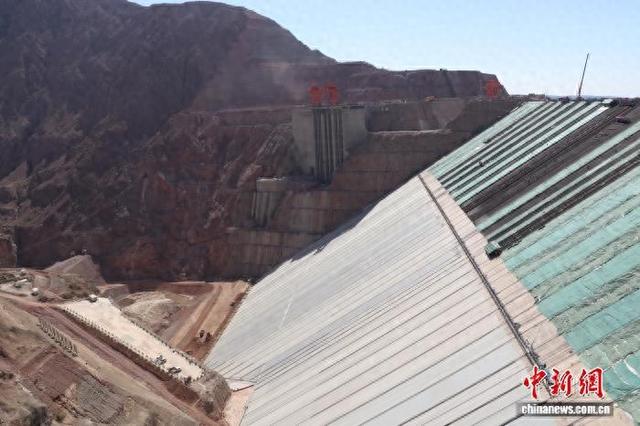
Core Insights - The Dashi Gorge Water Conservancy Project in Xinjiang is set to begin water storage in September 2023, one month ahead of schedule, marking a significant milestone in its construction [1][3] - The project, with a total investment of 8.997 billion RMB, is part of the 172 major water-saving supply projects approved by the State Council and one of the first 12 PPP pilot projects by the Ministry of Water Resources [3] - Upon completion, the reservoir will have a total capacity of 1.17 billion cubic meters and will significantly benefit over 8 million acres of farmland in the Aksu River basin [3][5] Project Progress - As of August 9, 2023, 74% of the dam's concrete panel has been completed, with 42 blocks finished [1][3] - The project is expected to be fully completed by October 2026, with three hydroelectric generator sets currently in the assembly phase [5] - The total installed capacity of the power station will be 750,000 kilowatts, with an anticipated annual electricity generation of 1.893 billion kilowatt-hours [5] Environmental Impact - The project is located in one of the driest and ecologically fragile areas of China, specifically the upper reaches of the Tarim River basin [3] - The reservoir will end the history of the Aksu River basin lacking a controlled reservoir, ensuring an average annual discharge of 3.42 billion cubic meters to the Tarim River [3]
省委书记刘宁到郑州市郑东新区、二七区调研检查防汛工作
He Nan Ri Bao· 2025-08-09 11:45
Group 1 - The article highlights the severe weather conditions in Henan province, particularly focusing on the heavy rainfall and the resulting flood warnings issued in Zhengzhou [1][2] - The provincial government is actively engaged in flood prevention measures, with specific emphasis on improving water infrastructure and urban planning to mitigate flooding risks [1][2][3] - Liu Ning, the provincial secretary, stresses the importance of modern water network construction and the need for comprehensive flood defense systems to enhance urban resilience against flooding [1][3] Group 2 - The article discusses the ongoing challenges of urban flooding in the Erqi District, emphasizing the need for effective drainage solutions and infrastructure improvements [2] - Liu Ning's visit to the China Railway Zhengzhou Bureau highlights the focus on ensuring safety in railway operations during flood conditions, including equipment maintenance and emergency protocols [2] - The article underscores the heightened demands for flood prevention and disaster relief efforts due to the unpredictability of extreme weather events, calling for enhanced monitoring and response strategies [3]

刘宁到郑州市郑东新区二七区调研检查防汛工作
He Nan Ri Bao· 2025-08-09 09:35
Group 1 - The province is experiencing heavy rainfall, with a yellow rainstorm warning issued for Zhengzhou, indicating significant weather impacts [1] - The construction of the Qili River flood diversion project, spanning 28.76 kilometers, aims to alleviate urban flooding pressure and integrate flood control with ecological restoration [1] - Emphasis on the importance of water infrastructure for national security and the need for quality and safety in flood control projects [1] Group 2 - The 二七区 area is prone to flooding during rainy seasons, necessitating effective water drainage and emergency measures to ensure public safety [2] - The provincial leadership is focused on improving urban planning and infrastructure to address urban flooding issues through targeted strategies [2] - The railway sector is also under scrutiny for flood risk management, with directives for safety measures and equipment maintenance during the rainy season [2] Group 3 - The province remains in a critical flood prevention period, with heightened demands for disaster response due to extreme weather unpredictability [3] - There is a call for enhanced responsibility, risk assessment, and monitoring to ensure public safety and stability during flood events [3] - Implementation of dual control management for hazardous areas is emphasized, alongside proactive emergency response preparations [3]