汽车产业高质量发展

Search documents
中央经济工作会议绘就汽车业“稳进提质”新蓝图
Zhong Guo Qing Nian Bao· 2025-12-23 00:45
Core Insights - The Chinese automotive industry is expected to demonstrate resilience and growth by 2025, driven by record production and sales, strong export performance, and advancements in new energy and smart technologies [1] Group 1: Economic Policy and Market Dynamics - The Central Economic Work Conference emphasizes "stability while seeking progress" and "quality improvement and efficiency enhancement" as core principles for guiding the automotive industry towards a transformation from "scale expansion" to "quality leap" by 2026 [2] - The conference highlights the importance of domestic demand, signaling a commitment to implement consumption-boosting policies, including the continuation and optimization of the vehicle trade-in subsidy program, which has significantly contributed to domestic passenger car sales [3][4] - The meeting also addresses the need to eliminate unreasonable restrictions in the consumption sector, such as vehicle purchase limits, to unlock suppressed demand and enhance consumer confidence [3][4] Group 2: Addressing Industry Challenges - The conference identifies the issue of "involution" in the automotive industry, calling for the establishment of a unified national market regulation to combat irrational competition and ensure fair market practices [5][6] - Measures have been initiated to curb market chaos, including the development of compliance guidelines for automotive pricing and the cleaning up of overdue payments to businesses, which are critical for maintaining a healthy supply chain [6] Group 3: Future Development Goals - The conference outlines three core goals for the automotive industry: innovation, high-level openness, and green low-carbon transformation, with a focus on fostering new growth drivers through technological advancements [7][8] - The push for electric vehicle (EV) technology is expected to deepen, with an emphasis on developing advanced battery systems and AI-driven autonomous driving capabilities [7] - The meeting also stresses the importance of establishing a comprehensive overseas service system for the automotive industry, promoting a shift from mere product exports to a more integrated approach that includes local manufacturing and service provision [8] Group 4: Green Transition and Sustainability - The conference calls for accelerated development of a new energy system and enhancement of the national carbon emissions trading market, setting higher standards for the growth of the new energy vehicle sector [9][10] - The automotive industry is urged to adopt low-carbon innovations and establish carbon footprint management systems, positioning itself favorably in future international green trade [10] Group 5: Overall Strategic Direction - The series of initiatives from the Central Economic Work Conference serves as a comprehensive "navigation system" for the automotive market, providing both short-term stability and long-term strategic direction towards becoming a leading automotive nation through innovation, openness, and sustainability [11]
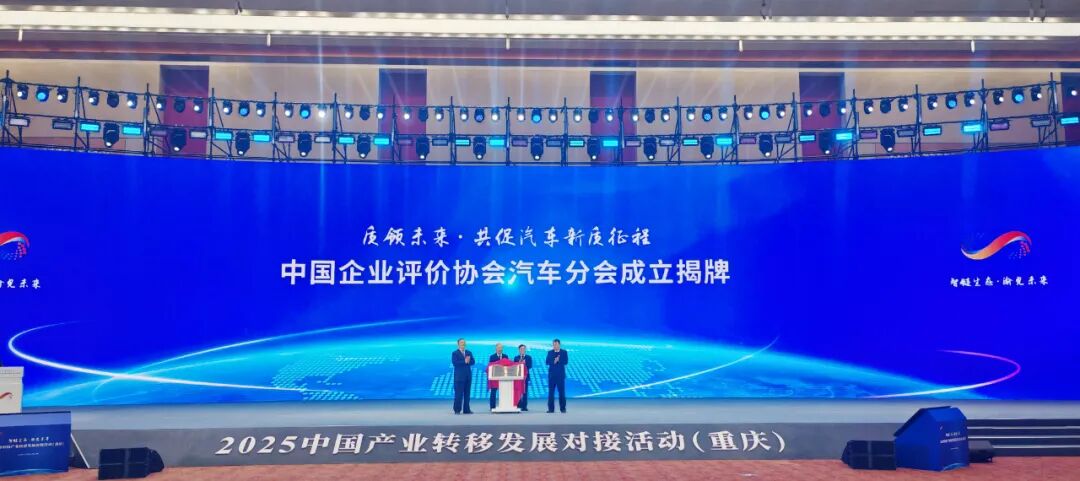
中国企业评价协会汽车分会揭牌成立 以评促建助力汽车产业高质量发展
Xin Hua Cai Jing· 2025-12-09 09:50
Group 1 - The China Automotive Evaluation Association's Automotive Branch was officially established during the "2025 China Industry Transfer Development Docking Event (Chongqing)" [1] - The branch aims to implement strategies for high-quality development in the automotive industry and to respond to the global technological revolution and industrial transformation [3] - The branch will focus on building a service platform for the automotive industry, promoting evaluation standards, establishing quality benchmarks, and enhancing resource connectivity [3] Group 2 - The branch will initiate a membership recruitment process to gather industry resources and support the development of enterprises [3] - It aims to assist companies in improving quality and efficiency, addressing industry challenges, and contributing to national strategic goals [3]

中国农业银行信用卡中心副总裁佟春雨:三个维度赋能汽车产业高质量发展
Zheng Quan Ri Bao Wang· 2025-11-29 03:53
Core Insights - Automotive finance is a crucial component of the automotive industry ecosystem, serving as a key "lubricant" that supports the entire production to consumption chain [1] - The China Agricultural Bank is committed to enhancing collaboration across three dimensions to empower high-quality development in the automotive industry [1] Group 1 - Automotive finance provides essential funding for both vehicle manufacturers and consumers, facilitating the transition from scale expansion to structural upgrades in the industry [1] - Financial institutions are innovating differentiated products in response to changing consumer demands and government policies, effectively lowering the barriers to vehicle purchases [1] - The China Agricultural Bank aims to align with national strategies, enhance bank-enterprise integration, and deepen inter-industry collaboration to meet the diverse financial needs of the automotive sector [1] Group 2 - The China Agricultural Bank will play a significant bridging role by collaborating with industry peers in areas such as financial technology, product innovation, and risk prevention [2] - The bank seeks to establish a regular cooperation mechanism to break down industry barriers and data silos, promoting resource sharing and complementary advantages [2] - The goal is to create a more dynamic consumer finance ecosystem that offers timely, convenient, and precise financial services [2]

孙志洋到第二十三届广州国际汽车展览会调研
Guang Zhou Ri Bao· 2025-11-22 01:38
Core Insights - The Guangzhou International Auto Show is a significant event for the domestic automotive industry, showcasing new technologies and products while promoting collaboration and innovation among automotive enterprises [2][3] Group 1: Event Overview - The 23rd Guangzhou International Auto Show is held from November 21 to 30, covering an area of 220,000 square meters with nearly 1,100 vehicles on display, including 93 new car debuts [2] - The event features the 2025 Guangzhou Automotive Development Summit Forum and various trade negotiation meetings, providing a platform for global automotive industry collaboration [2] Group 2: Government Support and Industry Development - Guangzhou's mayor emphasizes the importance of the automotive industry as a key pillar for the city, highlighting its comprehensive design and R&D system for vehicles and core components [2] - The city government aims to enhance cooperation with automotive enterprises, focusing on innovation, demand orientation, and quality improvement to advance the automotive industry's upgrade [2][3] Group 3: Event Management and Future Prospects - The mayor calls for improved collaboration with co-organizers to optimize exhibition logistics, safety, and overall service quality to create a favorable environment for the event [3] - Continuous policy optimization is promised to create the best industrial and consumer environment, ensuring automotive companies can develop confidently and consumers can purchase safely [3]
展望“十五五” 巩固车优势 第二十届中国经济论坛平行论坛广州举行
Zhong Guo Qi Che Bao Wang· 2025-11-18 08:47
Core Insights - The forum emphasized the significance of aligning thoughts and actions with the spirit of the 20th National Congress of the Communist Party, particularly in planning for the next five years under the "14th Five-Year Plan" [3] - The automotive industry is seen as a crucial pillar for macroeconomic development, with a focus on high-quality growth, technological self-reliance, and the establishment of a modern industrial system [3][4] Group 1 - The "14th Five-Year Plan" outlines key goals for the automotive industry, including significant advancements in high-quality development, increased levels of technological independence, and a balanced approach to development and security [3] - The next five years present a strategic opportunity for China's automotive industry to transition from a major automotive nation to a strong automotive power, driven by rising penetration of new energy vehicles and widespread application of intelligent technologies [3] - Innovation in the automotive sector should not only focus on electrification and intelligent networking but also explore advancements in materials, foundational technologies, and internet applications [3] Group 2 - The forum included various segments such as keynote speeches, thematic discussions, and roundtable forums, where participants shared insights on the automotive industry's role in economic development and the resilience of the automotive supply chain [4] - Attendees proposed strategies and suggestions for the automotive industry's development during the "14th Five-Year Plan" period, highlighting the need for strategic planning and practical implementation to achieve high-quality growth [4]

“增量不增利”局面尚未明显改善 汽车产业在销量增长与“质”的提升上寻找平衡
Zhong Guo Jing Ying Bao· 2025-11-15 13:47
Core Insights - The automotive industry in China experienced rapid growth in October, with a growth rate of 16.8%, contributing 22.8% to the overall industrial growth [1] - Despite the increase in sales, the automotive sector is facing a "growth without profit" situation, with profit margins declining compared to previous years [1][3] - The government is implementing measures to guide the industry towards healthy development and improve profitability [5][6] Group 1: Industry Performance - In October, the production of new energy vehicles increased by 19.3%, leading to a 30.4% rise in the production of lithium-ion batteries for automotive use [1] - The automotive industry's profit margin was reported at 4.5%, lower than the average profit margin of 6% for downstream industrial enterprises [3] - From January to September 2025, the automotive industry generated revenue of 78,235 billion yuan, a year-on-year increase of 7.8%, while profits grew by 3.4% [3] Group 2: Profitability Challenges - Toyota's net profit for the second quarter of the 2026 fiscal year reached 932 billion yen (approximately 430 million yuan), reflecting a 62% year-on-year increase, significantly outpacing domestic competitors [2] - The combined net profit of seven domestic car manufacturers was only 160.25 million yuan, which is 37.27% of Toyota's profit [2] - The competitive environment has led to a trend of low pricing strategies among car manufacturers, which may compromise product quality and profitability [2] Group 3: Regulatory Measures - The Ministry of Industry and Information Technology has emphasized the need for healthy competition in the automotive sector to safeguard long-term industry health [4] - New regulations are being introduced to manage the export of electric vehicles, requiring companies to obtain export licenses and ensure adequate overseas service capabilities [6][7] - The government aims to establish clear boundaries for compliance and foster a healthy development ecosystem within the automotive industry [7]
第三十二届中国汽车工程学会年会在渝开幕,设置百余场活动
Nan Fang Du Shi Bao· 2025-10-23 08:35
Core Insights - The 32nd China Society of Automotive Engineers Annual Conference and Exhibition (SAECCE 2025) and Automotive Innovation Technology Exhibition (AITX) opened in Chongqing, China, featuring a comprehensive agenda including an opening ceremony, five main forums, 100 specialized meetings, and 35 concurrent activities [1][2] Industry Overview - Since the 14th Five-Year Plan, China's automotive industry has significantly increased its production and sales scale, with a forecast of over 31 million vehicles produced and sold in 2024, marking a historical high and maintaining the world's leading position for 16 consecutive years [1] - New energy vehicle (NEV) sales are projected to rise from less than 1.4 million in 2020 to nearly 13 million in 2024, increasing its market share from 5.4% to over 40% [1] - In the first three quarters of this year, China's automotive production and sales both exceeded 24 million units, with NEVs accounting for over 46% of the market, reflecting a growth rate of approximately 35% [1] Technological Developments - The latest "Energy-saving and New Energy Vehicle Technology Roadmap 3.0" was released, establishing a new research framework of "1+5+26" to guide the development of the automotive industry towards seven major goals by 2040 [2] - The roadmap will be published globally in both Chinese and English, with ongoing evaluations and revisions to provide strategic decision-making references for various stakeholders [2] Awards and Recognition - The 2025 Automotive Industry Baobin Award was presented to Zhu Huaron of Changan Automobile, marking the tenth recipient since the award's inception, recognizing significant contributions to the automotive industry [2] Industry Trends - Discussions during the "Peak Dialogue" segment highlighted the importance of entrepreneurial spirit and long-termism in industry development, emphasizing the need for a transparent and ethical industry ecosystem [3] - Changan Automobile's chairman stressed the necessity of balancing brand enhancement, profitability, and safety systems, while advocating for a long-term, localized, and ESG-integrated international strategy [3] - The founder of Horizon proposed that companies should embrace patience and risk awareness, achieving sustainable competitiveness through specialized collaboration and innovation [3]

亮点满满!第三十二届中国汽车工程学会年会暨展览会隆重开幕
Zhong Guo Qi Che Bao Wang· 2025-10-23 02:36
Core Insights - The 32nd China Society of Automotive Engineers Annual Conference and Exhibition (SAECCE 2025) commenced in Chongqing, featuring over 120 sessions and the launch of the Automotive Innovation Technology Exhibition (AITX) with eight thematic exhibition areas [2][4]. Industry Growth and Achievements - Since the 14th Five-Year Plan, China's automotive industry has significantly increased production and sales, with both surpassing 31 million units in 2024, marking a historical high and maintaining the world's largest automotive market for 16 consecutive years. New energy vehicle sales rose from under 1.4 million in 2020 to nearly 13 million in 2024, increasing market share from 5.4% to over 40% [4]. - Technological advancements include a 30% reduction in the cost of power batteries, a 30% increase in the average range of new electric passenger vehicles to 500 kilometers, and an increase in the application of L2-level assisted driving features in new cars from approximately 16% to over 60% [4][5]. Ecosystem Development - China has established the world's largest and most resilient automotive industry system, fostering diverse innovation scenarios and a robust infrastructure network. This includes pilot projects in fuel cell vehicles, battery swapping, and intelligent connected vehicles [5]. Regional Development and Strategic Importance - Chongqing is positioned as a key city in China's automotive landscape, benefiting from national strategies such as the Belt and Road Initiative and the Chengdu-Chongqing Economic Circle. The city aims to become a hub for intelligent connected new energy vehicles, emphasizing high-quality manufacturing and technological innovation [7]. Awards and Recognition - The 2025 Automotive Industry Rao Bin Award was presented to Zhu Huarong, Chairman of China Changan Automobile Group, highlighting the progress of Chinese brands from a weak automotive nation to a strong one [11][13]. Collaborative Initiatives - The "Transparent Supply Chain for the Automotive Industry" project was launched to create a unified data standard system and promote a transparent and collaborative supply chain ecosystem among major automotive companies [15]. - The "CSAE Automotive Science and Technology Innovation (Chongqing) Alliance" was established to integrate government, industry, academia, research, finance, and application, aiming to enhance the development of Chongqing's automotive industry [17]. Industry Dialogue and Perspectives - Discussions at the conference emphasized the importance of high-quality development, innovation, and global competitiveness. Key figures highlighted the need for a respectful and orderly industry environment, avoiding excessive competition [19][20]. - The transition from low-end to high-end markets for Chinese brands was noted, with a focus on brand strength and safety in the context of new energy and intelligent transformation [22][26]. Future Trends and Innovations - The automotive industry is shifting towards system innovation, integrating electric and intelligent technologies. The future of vehicles is seen as a convergence point for energy, data, and user experience, driving a revolution in mobility and lifestyle [26][28]. - The conference also showcased the launch of the 2025 annual projects by the China Automotive Research Institute, focusing on advanced topics in intelligent connected vehicles [32].




政策助力新能源汽车产业高质量发展
Zheng Quan Ri Bao Wang· 2025-09-29 12:12
Core Viewpoint - The Chinese government is focusing on optimizing policies and regulations to support the growth and stability of the new energy vehicle (NEV) industry, addressing challenges such as irrational competition and promoting high-quality development [1][2][3] Group 1: Policy Initiatives - The Ministry of Industry and Information Technology plans to enhance tax incentives for NEVs and promote rural adoption to expand market consumption [1] - A joint initiative by eight government departments has introduced a work plan for the automotive industry from 2025 to 2026, outlining 15 action measures and 3 support measures to boost domestic consumption and improve supply quality [2] - Specific measures include promoting electric vehicle trials in public sectors, enhancing charging infrastructure in rural areas, and reforming insurance policies for NEVs [2] Group 2: Industry Challenges - The NEV industry faces significant challenges, including irrational competition and issues related to exaggerated marketing claims, which can undermine market order [1] - The ongoing price war has led to reduced R&D investments and a detrimental "bad money drives out good" phenomenon, creating deeper crises within the industry [3] - There is a need for companies to shift from price competition to value competition through technological innovation and service upgrades to establish differentiated advantages [2][3] Group 3: Future Outlook - The NEV industry is expected to improve its development environment through clear goals and policy guidance, which will stabilize consumer expectations and stimulate market demand [3] - Differentiated incentive measures, such as extended tax exemptions for products meeting specific energy density and efficiency standards, are anticipated to drive technological upgrades [3]
中国汽车市场一周行业信息快报——2025年9月第4期
Zhong Guo Zhi Liang Xin Wen Wang· 2025-09-22 05:23
Core Insights - The Chinese automotive market is experiencing significant policy and industry dynamics, with initiatives aimed at improving supplier payment practices and addressing inventory levels [1][2][3] Group 1: Supplier Payment Practices - The China Automotive Industry Association (CAAM) released a guideline on supplier payment practices, focusing on key aspects such as order confirmation, delivery and acceptance, payment and settlement, and contract duration [2] - The Ministry of Industry and Information Technology (MIIT) emphasized the importance of shortening payment terms to enhance operational efficiency and foster long-term cooperation between automakers and suppliers [3] Group 2: Inventory Levels - As of the end of August 2025, the national passenger car inventory stood at 3.16 million units, a decrease of 130,000 units from the previous month, indicating a reduction in dealer pressure [6] - The inventory level represents a 42-day supply, down by 4 days from the previous month, with manufacturer inventory accounting for 23.9% of the total [6] Group 3: Strategic Collaborations - Huawei and BAIC have deepened their collaboration on the "Enjoy" brand, forming a strategic community that will invest 20 billion yuan over the next three years, focusing on dedicated teams and resources [3] - Zeekr Technology's shareholders approved a merger agreement with Geely Automobile, with 94.2% voting in favor, leading to Zeekr becoming a wholly-owned subsidiary of Geely [5] Group 4: Regulatory Developments - MIIT is seeking public input on mandatory national standards for intelligent connected vehicles, specifically for combined driving assistance systems, which will enhance safety and regulatory compliance [7][11] - The new standards aim to align with international regulations and improve product safety, thereby supporting the overall safety of road traffic [11] Group 5: Electric Vehicle Infrastructure - As of the end of August 2025, China's electric vehicle charging infrastructure reached 17.348 million units, marking a year-on-year increase of 53.5% [17] - Public charging facilities accounted for 4.316 million units, with a growth of 37.8%, while private charging facilities reached 13.032 million units, growing by 59.6% [17]