汽车产业高质量发展

Search documents
品牌冗余成行业发展“绊脚石”,长安朱华荣建议强化整合统筹
第一财经· 2026-03-06 14:29
Core Viewpoint - The fragmentation of resources among over 50 independent automotive groups in China threatens the country's leading position in the new energy vehicle sector and increases consumer choice anxiety and risks related to after-sales service [3]. Group 1: Industry Challenges - The redundancy of brands in the automotive industry has become a "stumbling block" for high-quality development, leading to potential after-sales service disruptions when companies exit the market [3]. - In the past decade, the closure of automotive companies has affected millions of car owners, shifting the after-sales responsibilities from companies to consumers [3]. Group 2: Proposed Solutions - Three specific measures were proposed to address the challenges in the automotive industry: 1. Implement special support policies for mergers and acquisitions of advantageous enterprises, focusing on capacity integration, tax incentives, and financial empowerment [4]. 2. Establish a collaborative mechanism among local governments to guide leading enterprises in optimizing capacity layout and improving industrial chain support [4]. 3. Create a fault-tolerant mechanism for mergers and acquisitions of central and state-owned enterprises, clarifying responsibilities and exemption clauses for cross-regional and cross-ownership integrations [4].



【宝鸡】2025年汽车产业总产值超670亿元
Shan Xi Ri Bao· 2026-02-13 00:31
Group 1 - The core viewpoint is that Baoji's automotive industry is projected to achieve a total output value exceeding 67 billion yuan by 2025, with a year-on-year growth of 12.35%, and vehicle production is expected to surpass 240,000 units, growing by 6.45% [1] - Baoji currently has 86 enterprises in the automotive and parts industry cluster, with 12 engaged in vehicle and special vehicle production [2] - The city has established a "cluster leader + industry chain leader" working mechanism and introduced a three-year action plan for the enhancement of the automotive and parts industry, providing comprehensive support for newly introduced key projects [2] Group 2 - Baoji is becoming an essential part of Shaanxi's automotive industrial landscape, focusing on high-quality development in the automotive sector, promoting advancements towards high-end, intelligent, and green technologies [3] - The city aims to enhance the research and development investments of leading enterprises and optimize the industrial chain ecosystem, while attracting projects that strengthen and extend the supply chain [3] - Baoji is striving to become a significant automotive industry base and a development hub for new energy vehicles in the province and nationwide [3]
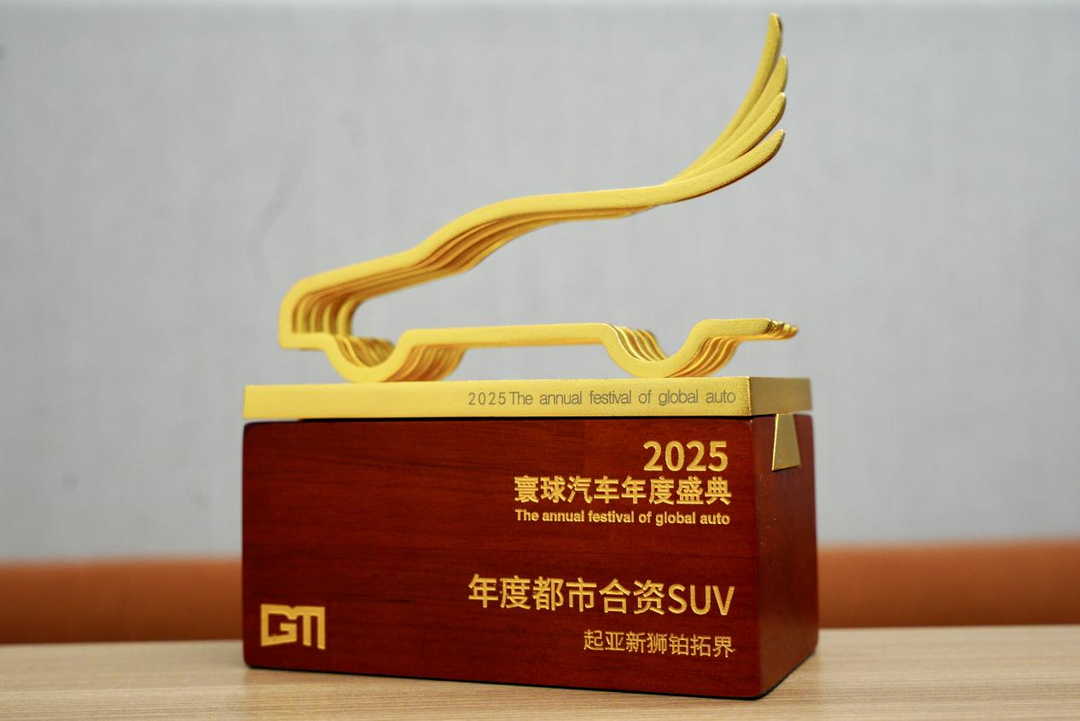
起亚新狮铂拓界荣膺“年度都市合资SUV”大奖,新车将于一季度上市
Yang Zi Wan Bao Wang· 2026-02-12 03:16
Group 1 - The 12th Global Automotive Annual Ceremony was held in Beijing, highlighting the high-quality development of the Chinese automotive industry [1] - The Kia Sportage was awarded the "2025 Global Automotive Annual Urban Joint Venture SUV" award for its comprehensive product value and leading competitiveness in its class [1][3] - The award reflects the market and consumer expectations for the Kia Sportage, which is set to officially launch in the first quarter [8] Group 2 - The Global Automotive Annual Ceremony is known for its "professional, fair, and open" evaluation mechanism, led by industry experts and mainstream media [3] - The Kia Sportage has a legacy of 33 years and five generations, with global sales projected to reach approximately 570,000 units in 2025 and cumulative sales exceeding 8 million units [5] - The Kia Sportage has received numerous international design awards and the highest safety certification from authoritative organizations, including the "Top Safety Pick+" rating from the IIHS [5] Group 3 - The Kia Sportage combines global heritage with localized intelligent technology, aiming to set a new value benchmark for compact joint venture SUVs in China [5][8] - The vehicle was first unveiled in the Chinese market during the 2025 Guangzhou Auto Show, with tennis champion Li Na announced as its brand ambassador [5]
汽车车门把手强制性国家标准发布
Ren Min Ri Bao· 2026-02-03 08:58
Core Viewpoint - The newly approved national standard for automotive door handles aims to enhance safety and usability, addressing critical issues related to door handle operation and emergency access [1] Group 1: Standard Specifications - The standard, titled "Safety Technical Requirements for Automotive Door Handles" (GB 48001—2026), will be implemented starting January 1, 2027 [1] - It specifies mechanical release configuration requirements, door opening and layout area, operational space requirements, and labeling and operational instructions for interior door handles [1] Group 2: Industry Impact - The standard is expected to significantly improve the safety performance of door handles, guiding technological innovation and industrial application in this area [1] - It aims to enhance emergency escape and safety rescue capabilities, thereby strengthening consumer safety and improving road traffic safety levels [1] - The implementation of this standard provides a solid technical foundation for the high-quality development of China's automotive industry [1]
汽车车门把手强制性国家标准发布 将于2027年1月1日起实施
Ren Min Ri Bao· 2026-02-02 22:18
Core Viewpoint - The newly approved mandatory national standard for automotive door handles, titled "Safety Technical Requirements for Automotive Door Handles" (GB 48001—2026), aims to enhance safety and usability in vehicle door handle design, set to be implemented on January 1, 2027 [1] Group 1: Standard Specifications - The standard specifies mechanical release configuration requirements for door handles, including opening mechanisms, layout areas, operational space requirements, and identification and operation instructions for interior door handles [1] - It addresses key pain points such as difficulties in operating external door handles, inability to open doors after accidents, poor convenience of internal door handles, and low recognition of internal door handle functions [1] Group 2: Industry Impact - The establishment of this standard is expected to significantly improve the safety performance of door handles, guiding and regulating technological innovation and industrial application in this area [1] - It aims to strengthen emergency escape and safety rescue capabilities, thereby enhancing consumer safety and improving overall road traffic safety levels [1] - The standard provides a solid technical foundation for the high-quality development of China's automotive industry [1]
事关汽车车门把手安全 强制性国家标准发布
Xin Hua Wang· 2026-02-02 13:08
Core Viewpoint - The newly approved mandatory national standard for automotive door handles, effective from January 1, 2027, aims to enhance safety and usability in vehicle design [1] Group 1: Standard Specifications - The standard, titled "Safety Technical Requirements for Automotive Door Handles" (GB 48001—2026), specifies mechanical release configurations, door opening requirements, layout areas, operational space, and internal handle markings and instructions [1] - It addresses key issues such as difficulties in operating external door handles, inability to open doors after accidents, poor convenience of internal handles, and low recognition of internal handle functions [1] Group 2: Industry Impact - The implementation of this standard is expected to significantly improve the safety performance of door handles, guiding and regulating technological innovation and industrial application in this area [1] - It aims to strengthen emergency escape and safety rescue capabilities, thereby enhancing consumer safety and improving overall road traffic safety levels [1] - The standard provides a solid technical foundation for the high-quality development of China's automotive industry [1]
盘点2025年汽车产业政策新风向:从追求“规模速度”到比拼“质量效益”
Zhong Guo Qing Nian Bao· 2026-01-27 22:48
Core Insights - The Chinese automotive industry achieved significant milestones in 2025, with total vehicle production and sales showing steady growth, and new energy vehicle sales surpassing 10 million units for the first time, achieving a market penetration rate of over 50% [2][10] - A comprehensive set of policies was implemented to guide and correct the industry, with over 30 key standards and regulatory policies released by relevant departments, averaging more than 2.5 per month [2] Group 1: Market Competition and Regulation - The year 2025 marked a shift from "price wars" to "value wars," with a strong emphasis on curbing "involution" in the automotive sector through regulatory measures [3][4] - Key regulations included a "60-day payment cycle" for suppliers and a "price behavior compliance guideline" aimed at restoring order in the market and protecting supplier rights [3][4] - Major automakers like SAIC, BYD, and Geely adopted the 60-day payment cycle, which is seen as a move towards healthier industry ecology and stable cash flow for suppliers [3][4] Group 2: Safety and Technological Standards - Policies focused on safety in both intelligent connected vehicles and new energy vehicles were intensified, establishing a robust safety regulatory framework [5][6] - In the intelligent connected vehicle sector, new mandatory standards were introduced to ensure safety and prevent exaggerated claims about advanced driving capabilities [5] - The new national standards for electric vehicle batteries introduced stringent safety requirements, including tests for fire resistance and crash safety, which are considered the strictest in history [6] Group 3: Future Policy Directions - The continuity and foresight of policies in 2026 are expected to reinforce the stability of the automotive industry, with high standards established in 2025 set to be fully implemented [7] - Future competition will focus on the resilience and collaboration of the entire supply chain, emphasizing technological research, high-end manufacturing, and global operations [7] - Policies will increasingly support the development of cutting-edge technologies like L3-level autonomous driving and solid-state batteries, while promoting collaboration across the supply chain [7][10] Group 4: Global Expansion and Innovation - The push for "going global" is shifting from product export to "industry chain export" and "standard export," with a focus on building a complete ecosystem for Chinese automakers in international markets [9][10] - Companies like Leap Motor and Chery are rapidly expanding globally, utilizing diverse strategies to enhance their market presence and competitiveness [9][10] - The policies are driving innovation across the supply chain, with companies like Xinwangda developing advanced battery technologies to meet stringent safety and performance standards [8][9]
2025年产销累计完成3453.1万辆和3440万辆 中国汽车产销量连续17年全球第一
Shang Hai Zheng Quan Bao· 2026-01-14 17:51
Core Insights - The Chinese automotive industry achieved significant growth in 2025, maintaining its position as the world's largest market for 17 consecutive years, with total production and sales reaching 34.53 million and 34.40 million vehicles respectively, marking year-on-year increases of 10.4% and 9.4% [1][3] - The export of vehicles exceeded 7 million units, with a notable increase of 21.1% year-on-year, reflecting the growing international competitiveness of Chinese automotive brands [2][3] Production and Sales Performance - In the passenger vehicle segment, production and sales reached 30.27 million and 30.10 million units respectively, with year-on-year growth of 10.2% and 9.2%, marking a historic milestone of surpassing 30 million units for the first time [2] - The commercial vehicle sector also saw robust growth, with production and sales totaling 4.26 million and 4.30 million units, reflecting increases of 12% and 10.9% year-on-year [2] - In the rapidly growing new energy vehicle (NEV) sector, production and sales reached 16.63 million and 16.49 million units, with year-on-year growth of 29% and 28.2%, accounting for 47.9% of total new vehicle sales [2] Future Outlook - For 2026, the industry anticipates continued growth, with total vehicle sales projected to reach 34.75 million, a 1% increase year-on-year, and NEV sales expected to hit 19 million, reflecting a 15.2% increase [4] - The implementation of supportive policies aimed at promoting green consumption and stabilizing market expectations is expected to bolster consumer confidence and drive automotive sales [4] - Ongoing efforts to address "involution" in competition and enhance industry governance are expected to contribute to sustained high-quality development in the automotive sector [4]
两条主线支撑 2025年汽车产销规模再创新高
Zheng Quan Ri Bao· 2026-01-14 16:01
Core Viewpoint - The Chinese automotive industry is expected to continue its growth trajectory in 2025, driven by policy support, abundant supply, and infrastructure improvements, achieving record production and sales figures [1] Group 1: Production and Sales Forecast - In 2025, China's automotive production and sales are projected to reach 34.53 million and 34.40 million units, respectively, representing year-on-year growth of 10.4% and 9.4% [1] - The automotive industry will maintain a production and sales scale above 30 million units for three consecutive years, remaining the world's largest for 17 years [1] Group 2: New Energy Vehicles (NEVs) - NEVs are expected to play a crucial role as a growth engine, with sales projected to reach 16.49 million units, a year-on-year increase of 28.2%, accounting for 47.9% of total new car sales [1][2] - In December alone, NEV sales reached 1.71 million units, showing a year-on-year growth of 7.2% and a market share increase to 52.3% [2] Group 3: Export Performance - Automotive exports are anticipated to hit 7.098 million units in 2025, reflecting a year-on-year growth of 21.1%, marking the first time exports surpass 7 million units [3] - NEV exports are projected to reach 2.615 million units, nearly doubling year-on-year, with December exports alone reaching 300,000 units, a year-on-year increase of 120% [3] Group 4: Market Dynamics and Competition - The market is witnessing a concentration of sales among leading companies, with the top ten automotive groups accounting for 83.9% of total sales, totaling 28.876 million units [2] - Chinese brand passenger vehicles are expected to see a sales increase of 16.5% to 20.936 million units, capturing 69.5% of the passenger vehicle market share, up 4.3 percentage points from the previous year [3] Group 5: Future Outlook for 2026 - The automotive industry is projected to experience moderate growth in 2026, with total sales expected to reach 34.75 million units, a year-on-year increase of approximately 1% [5] - The growth will rely more on structural upgrades and sustained high demand for NEVs rather than price competition [5] - Key competitive factors for companies will shift towards product and technology management, channel and inventory coordination, and global market diversification [5]
行业机构寄望汽车业“十五五”发展
Zhong Guo Qi Che Bao Wang· 2026-01-08 01:19
Core Insights - The automotive industry in China is entering a critical phase of high-quality development during the "14th Five-Year Plan" period, focusing on innovation, globalization, and sustainability [3][4][5]. Group 1: Industry Transformation - The next five years will be pivotal for the automotive industry as it shifts from scale expansion to high-quality development, with a strategic opportunity to seize the global automotive industry's high ground [3]. - The integration of electrification and intelligence technologies is expected to deepen, with new electronic architectures and centralized computing platforms enabling software-defined vehicles [3][4]. - Green and low-carbon initiatives remain a priority, with plans to establish carbon emission accounting systems and product carbon footprint management throughout the lifecycle of vehicles [3][4]. Group 2: Globalization and Market Opportunities - The globalization of the automotive industry is seen as a crucial pathway for becoming a strong automotive nation, with Chinese companies accelerating overseas expansion as their technology and quality improve [3][5]. - The global low-carbon transformation positions new energy vehicles (NEVs) as a key direction, with China holding a 70% share of the global electric vehicle market [5]. - The "Belt and Road" initiative is expected to facilitate automotive exports by providing convenient logistics and cooperation platforms [5]. Group 3: Innovation and Technology - The automotive industry is expected to integrate deeply with new information technologies, smart cities, and artificial intelligence, enhancing the development of supply chains and industry ecosystems [4][19]. - The penetration rate of NEVs is projected to reach around 65% by 2030, driven by national strategic guidance, continuous technological innovation, and improved infrastructure [4][12]. - Significant advancements in battery technology, particularly solid-state batteries, are anticipated, with initial applications expected by 2027 [17]. Group 4: Market Dynamics and Consumer Trends - The automotive market is expected to experience micro-growth with fluctuations, influenced by macroeconomic factors and consumer behavior [9][10]. - NEVs are projected to become the mainstay of the automotive market during the "14th Five-Year Plan," with penetration rates potentially reaching 55%-60% by 2030 [9][10]. - The demand for intelligent vehicles is expected to rise, with innovations such as drone-equipped smart cars likely to emerge [10]. Group 5: Challenges and Regulatory Environment - The automotive industry faces challenges such as tariff barriers and new technology obstacles that could hinder international expansion [5][10]. - The regulatory landscape is shifting, with policies transitioning from purchase incentives to usage management, impacting the market dynamics for NEVs [14][15]. - The industry must adapt to a more competitive environment, focusing on innovation and cost reduction to maintain profitability [22].