河湖长制

Search documents
贵州南明河、三岔河上榜!水利部公布2025年幸福河湖优秀案例
Xin Lang Cai Jing· 2026-01-04 09:41
近年来,各地深入贯彻习近平生态文明思想和习近平总书记关于治水重要论述精神,贯彻落实中共中央 办公厅、国务院办公厅《关于全面推进江河保护治理的意见》,以河湖长制为抓手,统筹水灾害、水资 源、水生态、水环境、水文化和岸线保护,建成一大批群众可感可及、人水和谐共生的幸福河湖,探索 形成了一批成效显著、特色鲜明、可复制可推广的典型经验。 1月4日,水利部公布2025年幸福河湖优秀案例名单。其中,贵州省南明河(清水江贵阳市段)、三岔河(六 盘水市段)入选,具体如下: 为全面展示河湖长制实践成效及幸福河湖建设成果,发挥优秀案例引领带动作用,2025年水利部组织开 展了幸福河湖优秀案例征集发布活动,筛选出北京市亮马河等28个幸福河湖优秀案例,现予发布。 2025年幸福河湖优秀案例名单 (按行政区划排序) 北京市 南运河(沧州市段) 黑龙江省 讷谟尔河(五大连池市段) 江苏省 古运河(无锡市) 浙江省 亮马河 河北省 孝妇河(淄博市张店区段) 大汶河(东平县段) 河南省 洛河(巩义市段) 沙颍河(漯河市段) 浒溪 安徽省 西淠河(六安市裕安区段) 福建省 汀江(龙岩市段) 山东省 湖北省 柏临河 莺河 湖南省 浩江湖 广东省 ...
菏泽市水务局:推动数字化河湖建设
Qi Lu Wan Bao· 2025-12-23 13:22
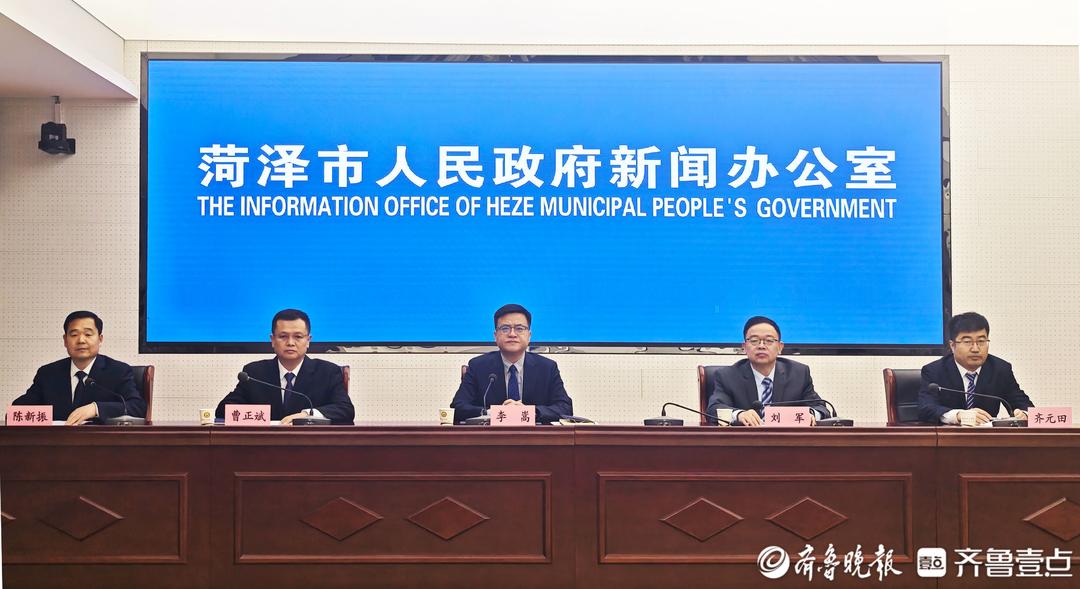
按照水利部、省水利厅数字孪生建设、河湖库一体化监测感知体系先行先试工作有关部署,结合水网建设实际、河湖管护需要和近年来数字河湖建设实践 经验,以实用为原则、以问题为导向、以增效为目标,开展视频监控实时捕捉、无人机定期巡检,有序推动数字河湖建设,提升河湖管理水平。让数据信 息多跑路,让人员少跑腿,为基层减负,尽可能把违法违规行为遏制在萌芽状态,提高监管效率。 打造无人机管理平台 建成集无人机、人工智能、数字孪生技术于一体的智慧巡河系统,可覆盖东鱼河、洙赵新河、东鱼河北支、万福河等重点市管河道45条智慧巡检航线,对 河湖"四乱"、违法排污、漂浮垃圾等场景进行智能识别,实现"无人机自主巡河-数据自动采集-平台智能分析-隐患预警及时推送"的全流域智能化应用。云 平台支持多款机型作业,通过网页端进行航线规划,利用机场执行飞行任务,可远程获取实时作业信息,提高团队合作效率。 据介绍,2025年,菏泽市水务局深入贯彻落实市委、市政府关于全面推进河湖长制的决策部署,以持续改善河湖生态环境质量为核心,强化责任担当,狠 抓工作落实,全市河湖长制工作取得新进展、新成效。在推动数字化河湖建设方面,李嵩介绍了目前和下步主要开展的工作。 ...

现代水网织锦绣——山东“十四五”水利高质量发展纪实
Zhong Guo Jing Ji Wang· 2025-12-19 13:16
Core Viewpoint - Shandong Province has achieved significant advancements in water resource management and investment, showcasing its commitment to water conservation and public welfare through various accolades and substantial financial investments in water infrastructure [1][2][11]. Investment Growth - Water investment in Shandong has seen a remarkable increase from 200 billion to 320 billion, with projections for the "14th Five-Year Plan" period to exceed 320 billion, marking a 1.6 times growth [2]. - In the past five years, annual water investment has steadily risen from 40.5 billion to an expected 80 billion by 2025, indicating a robust upward trend [2]. Infrastructure Development - The provincial government has implemented comprehensive planning frameworks, including the "Shandong Modern Water Network Construction Plan" and the "National Provincial Water Network Pilot Zone Construction Plan (2023-2025)" [4]. - Major water infrastructure projects, such as the successful completion of the Laolan Reservoir and the initiation of several other large-scale reservoirs, are expected to enhance water supply capacity by 1 billion cubic meters [4]. Management Innovations - Shandong has established a provincial water network operation scheduling center, promoting unified management of key water resources across the province [5]. - By the end of the "14th Five-Year Plan," the provincial water network will cover over 7,100 kilometers, with a water supply capacity reaching 12.5 billion cubic meters [5]. Ecological Improvements - The implementation of the river and lake chief system has evolved through three phases, enhancing ecological governance and community engagement in water management [6]. - Since 2017, Shandong has upgraded its river and lake management approach, focusing on ecological, economic, and social benefits, with 65 pilot projects initiated to enhance river and lake ecosystems [6][9]. Soil and Water Conservation - Shandong has made significant strides in soil and water conservation, with an additional 6,240 square kilometers of soil erosion control area established, achieving a soil conservation rate of 86.77%, surpassing the national average by 13.94 percentage points [8]. Rural Water Supply - Investment in rural water supply has surged from 20 billion during the "13th Five-Year Plan" to 54.85 billion in the "14th Five-Year Plan," reflecting a strong commitment to improving water access for rural populations [11]. - The province has achieved nearly universal access to rural water supply, with 100% county-level management and 97% large-scale water supply rates, significantly exceeding national averages [11].
临沂绘就幸福河湖新图景
Da Zhong Ri Bao· 2025-12-09 02:57
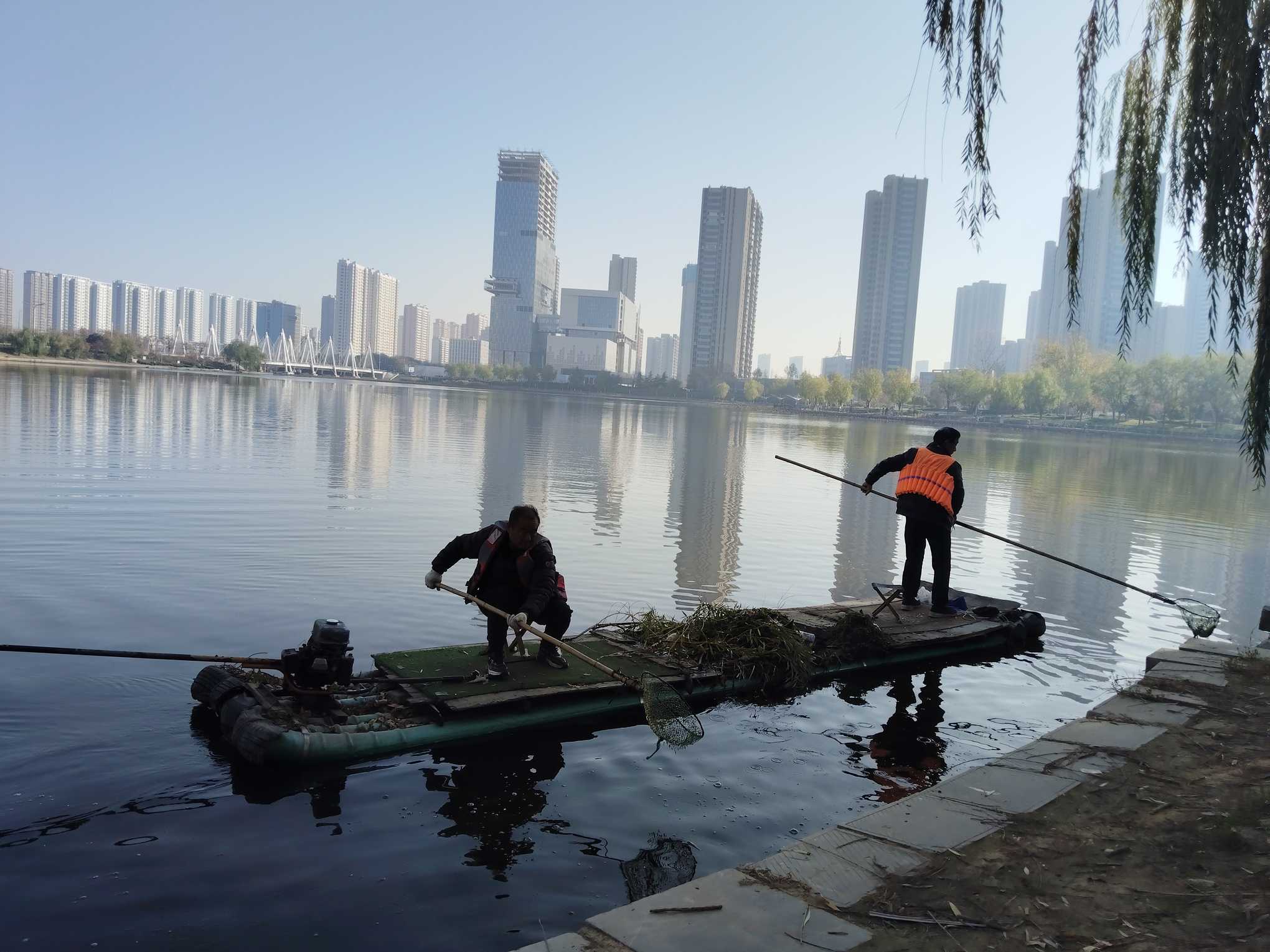
"为提升河湖长履职效能,我们结合莒南水系连通及水美乡村建设项目,全面升级河湖管理系统, 实现了河湖'天上看、云端管、地上查、智慧治'的立体化监管格局,数字化已成为幸福河湖建设的核心 引擎。"莒南县河长办常务副主任、县水利局局长李永山介绍。 "十四五"以来,临沂市以河湖长制为抓手,统筹水资源、水生态、水环境治理,数字化赋能成效显 著。全市成功创建淮河流域幸福河湖4个、省级幸福河湖37个,沂河城区段更是入选国家级示范河湖。 在治理层面,累计完成沂蒙山区域山水林田湖草沙一体化治理项目46个,治理面积达620平方公里;实 施小流域综合治理59条,新增水土流失治理面积679平方公里,水土保持率提升至76.23%。通过母亲河 复苏行动,实施生态补水1.07亿立方米,统筹调度沂河、沭河等4条重点河流水资源,并整治河湖"四 乱"问题超过1.7万处。兰山区、莒南县的国家级水系连通及水美乡村建设也顺利完成,河湖生态持续向 好。 守护每一条河流,滋养每一片湖泊。如今,在数字技术的强力赋能下,临沂的河湖管理正朝着更精 准、更高效、更智慧的方向迈进。一幅清水长流、安全宜居、人文兴盛的生动画卷,正在广阔的沂蒙大 地上全面铺展,诠释着"幸 ...
李国英调研福建闽江流域保护治理工作
Shui Li Bu Wang Zhan· 2025-11-30 02:57
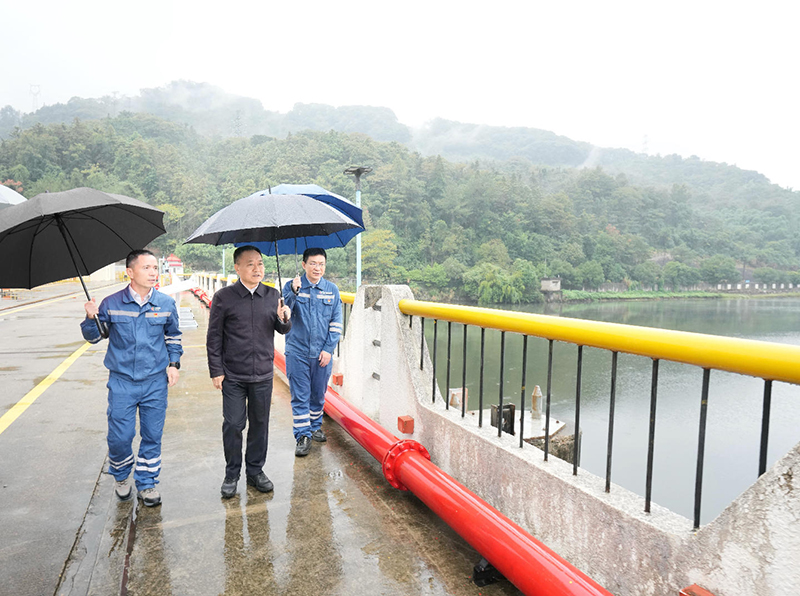
Core Viewpoint - The Ministry of Water Resources emphasizes the importance of modernizing water management systems in the Fujian province to ensure water safety and support high-quality development in line with national modernization goals [1][3]. Group 1: Modernization Goals - The focus is on constructing a modern water infrastructure system that enhances flood safety and operational sustainability, while also improving the capacity for disaster prevention and water resource management [3][5]. - The goal is to achieve a "systematic, safe, efficient, green, intelligent, and orderly" water network that integrates various aspects of water management [3]. Group 2: Technological Integration - The Ministry aims to accelerate the development of a digital twin water network and an integrated monitoring system that combines various technologies for better water management [3][5]. - Emphasis is placed on enhancing predictive capabilities for flood forecasting through advanced monitoring and warning systems [5]. Group 3: Governance and Management - The approach includes strengthening the river and lake chief system, promoting unified planning, governance, and management of river basins [5]. - There is a commitment to addressing issues through both remediation and preventive measures, focusing on the ecological protection of important river systems [5].
【咸阳】深化河湖长制推进渭河综合治理
Shan Xi Ri Bao· 2025-11-04 23:10
Core Points - The article highlights the successful implementation of the river and lake chief system in Xianyang City, which has led to significant ecological improvements and community engagement in water protection efforts [1][2][3] Group 1: River and Lake Chief System - The river chief system in Weicheng District has established a three-level inspection mechanism, enhancing the efficiency and accuracy of waterway inspections through the integration of drone technology and ground patrols [1][2] - The system has demonstrated its effectiveness during the flood season, with real-time monitoring and coordinated responses to water level threats, ensuring public safety [2] Group 2: Ecological Improvements - The transformation of the Weiliu Wetland from a polluted area to a vibrant ecological park illustrates the success of water quality improvement initiatives, with a reported annual recycling of 1.5 million cubic meters of reclaimed water [2][3] - The water quality at the district's exit section has consistently met Class II surface water standards for four consecutive years, reflecting the positive impact of the governance efforts [3] Group 3: Community Involvement - The district has actively engaged the community in water protection through outreach programs, distributing over 10,000 river and lake protection manuals and encouraging public supervision [2] - The emphasis on community participation is seen as essential for the long-term sustainability of river protection efforts [2]
水利部举办强化河湖长制专题研究班
Zheng Quan Shi Bao Wang· 2025-10-28 00:56
Core Points - The training program for local party and government leaders on river and lake management was held from October 20 to 24, organized by the Ministry of Water Resources at the Zhejiang Provincial Party School [1] - The program emphasized political, professional, and targeted aspects, combining theoretical and practical elements to meet the needs of river and lake management and protection [1] - The training utilized a diverse teaching approach, including specialized lectures, case studies, interactive discussions, and on-site teaching, aimed at enhancing the awareness and capabilities of local leaders in their roles as river and lake stewards [1] - The initiative aims to fully implement the river and lake chief system, contributing to the construction of safe, life-sustaining, and happy rivers and lakes [1]
浙江“治水”升级:发力全域幸福河湖,水旅IP带富百姓
2 1 Shi Ji Jing Ji Bao Dao· 2025-10-16 14:01
Core Points - Zhejiang Province has officially issued the "Implementation Plan for Accelerating the Construction of Happy Rivers and Lakes" as a guiding document for river and lake protection and governance [1][2] - The vision for Happy Rivers and Lakes includes safety, health, beauty, vitality, and contributing to common prosperity [1] - By 2030, 95% of counties in Zhejiang are expected to have established Happy Rivers and Lakes, with specific targets set for 2027 [2] Summary by Sections Implementation Plan - The plan aims for 90 counties to complete the construction of Happy Mother Rivers by 2027, with 1,000 high-quality water-friendly villages and 80% of counties achieving the Happy Rivers and Lakes goal [2] - Key tasks include enhancing planning, improving safety, promoting ecological protection, and integrating water resources with tourism and industry [2] River Chief System - The River Chief System emphasizes multi-party collaboration, responsibility assignment, and problem-solving [3][4] - In the past year, nearly 50,000 River Chiefs in Zhejiang addressed 265,000 river and lake issues, ensuring the health of these water bodies [4] Innovative Practices - Zhejiang plans to revise river protection regulations to incorporate the Happy Rivers and Lakes requirements, promoting innovative practices based on successful examples from cities like Quzhou [5][6] - Quzhou has initiated a comprehensive Happy Rivers and Lakes demonstration zone, focusing on high-quality water sources and developing related industries [6] Economic Impact - In Tian Tai County, the tourism revenue from water-related activities is projected to reach 4.95 billion yuan in 2024, showcasing the economic benefits of integrating water culture with tourism [7] - The "15-minute water-friendly circle" initiative in Pujiang County has led to significant economic growth, with total tourism revenue expected to exceed 30 million yuan in 2024 [8]
襄阳全面强化河湖长制,加快建设美丽幸福河湖
Zhong Guo Huan Jing Bao· 2025-10-09 07:09
Core Viewpoint - The article emphasizes the importance of water resource management and ecological restoration in Xiangyang, Hubei Province, as part of the broader strategy for sustainable development and environmental protection in the region [1][2][3]. Group 1: Water Resource Management - Xiangyang has a rich water resource network with 1,154 reservoirs and 985 rivers, which is crucial for the city's development [1]. - The city aims to ensure long-term water safety by implementing strict water resource management policies, including a negative list for risk prevention and a flood control system with a target of over 90% compliance [1][2]. - In 2024, Xiangyang plans to keep its total annual water usage and water usage per unit of GDP below provincial control indicators, showcasing a commitment to efficient water use [2]. Group 2: Environmental Improvement Initiatives - The city is focused on creating a livable water environment by completing environmental remediation in 180 administrative villages and managing wastewater in 300 villages [2]. - Efforts are being made to restore small water bodies and enhance public access to water spaces, contributing to the overall quality of life for residents [2]. - The ecological restoration actions aim to build green corridors and protect biodiversity in the Han River basin, aligning with the "Ten-Year Fishing Ban" in the Yangtze River [2]. Group 3: Cultural and Historical Integration - The article highlights the promotion of Xiangyang's unique water culture through the restoration of historical sites along the Xiang River, creating a cultural tourism circuit [3]. - The integration of cultural heritage with environmental initiatives is intended to enhance the region's appeal and foster community engagement [3].
我国形成世界上规模最大水利基础设施体系(权威发布·高质量完成“十四五”规划)
Ren Min Ri Bao· 2025-09-29 22:30
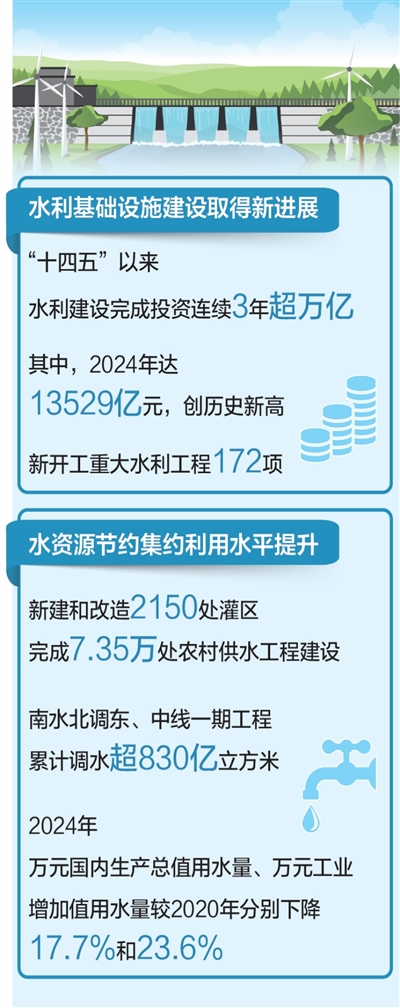
Core Insights - The Chinese government has made significant progress in water conservancy development during the "14th Five-Year Plan" period, enhancing flood safety, water supply security, food security, and ecological safety [4][5]. Investment and Infrastructure - Water conservancy construction investment has exceeded 1 trillion yuan for three consecutive years, reaching a historical high of 1.3529 trillion yuan in 2024, with a total expected investment of 5.4 trillion yuan during the "14th Five-Year Plan," which is 1.6 times that of the "13th Five-Year Plan" [5]. - A total of 172 major water conservancy projects have commenced since the beginning of the "14th Five-Year Plan," with 95,000 reservoirs, 200 large and medium-sized water diversion projects, and 6,924 large and medium-sized irrigation areas completed by the end of 2024 [5]. Disaster Management and Water Resource Allocation - The proportion of flood disaster losses to GDP has decreased from 0.28% during the "13th Five-Year Plan" to 0.18% during the "14th Five-Year Plan" [5]. - The national water network coverage is expected to reach 80.3% by the end of this year, with significant projects like the South-to-North Water Diversion and other major water diversion projects enhancing water resource allocation [6]. Water Conservation and Efficiency - Water resource utilization has improved, achieving zero growth in total water consumption despite economic growth, with water usage per unit of GDP and industrial output decreasing by 17.7% and 23.6% respectively compared to 2020 [7]. - The area of effective irrigation has increased to 6.38 million hectares, with unconventional water utilization reaching 25.1 billion cubic meters [7]. Agricultural Support and Rural Water Supply - The government has focused on modernizing irrigation systems and ensuring rural water supply, with a target of 96% for rural tap water coverage by the end of the "14th Five-Year Plan" [8]. - The construction of 30 major water diversion and key water source projects has been prioritized to support food production in major grain-producing areas [8]. Ecological Restoration and Soil Conservation - The area affected by soil erosion in the Loess Plateau has been reduced by over half, with significant measures taken to improve vegetation and soil conservation [11]. - The ecological environment of rivers and lakes has improved, with a focus on restoring flow in historically dried rivers and enhancing ecological water flow standards [10].