
水资源保护

Search documents
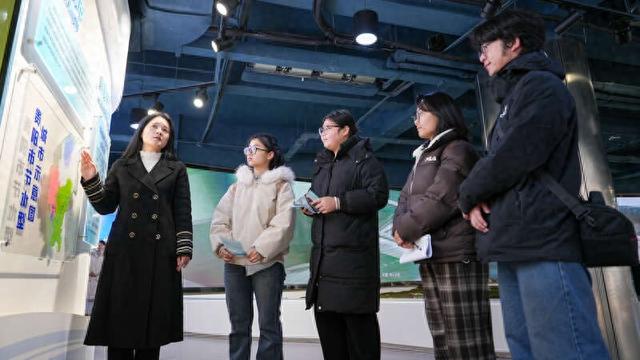
贵阳市水环境科普馆:问渠那得清如许?
Xin Lang Cai Jing· 2026-01-25 12:06
Core Insights - The Guizhou Water Environment Science Popularization Museum serves as an educational base that showcases the transformation of water quality in the city, emphasizing the importance of water conservation and treatment practices [1][3] Group 1: Museum Overview - The museum is located at the confluence of the Nanming River and the Xiaoche River and is free to the public, featuring nine sections that narrate the stories of local rivers, water resource status, and water management practices [1] - The museum includes a small-scale water purification facility that allows visitors to experience the wastewater treatment process firsthand, demonstrating the journey from polluted to clean water [3] Group 2: Educational Impact - Since its opening in 2016, the museum has attracted over 100,000 visitors, hosting various educational activities during significant events such as World Water Day and National Ecological Day to promote water conservation awareness [3] - The museum aims to instill a sense of responsibility among citizens regarding water protection, highlighting that individual efforts contribute to the overall health of the environment [3]

自助洗车店实现持证排水
Xin Lang Cai Jing· 2026-01-06 23:42
Core Viewpoint - The illegal discharge of car wash wastewater into urban drainage systems poses significant environmental risks, prompting legal actions and regulatory measures to ensure compliance within the car wash industry [1][2]. Group 1: Regulatory Actions - As of November 2025, the local prosecutor's office has urged nine self-service car wash outlets and seven car wash shops to obtain the necessary permits for discharging wastewater into urban drainage systems [1]. - In August 2025, the prosecutor's office initiated an administrative public interest litigation process, recommending that relevant authorities take action against car wash shops violating wastewater discharge regulations [2]. - Following inspections, two self-service car wash shops were found to have complied with water quality standards and subsequently obtained the required permits, while additional shops were also prompted to regularize their operations [2]. Group 2: Environmental Impact - Car wash wastewater contains pollutants such as oil and detergents, which are considered "invisible killers" threatening urban environments [1]. - The prosecutor's office has identified multiple instances of non-compliance among car wash shops, indicating a broader issue of environmental harm due to improper wastewater management [1]. Group 3: Industry Response - The collaboration between the prosecutor's office and regulatory agencies has led to a shift from lax wastewater management practices to more regulated operations within the car wash industry [2]. - Local volunteers and officials have expressed the importance of ongoing supervision to ensure that the car wash industry operates within legal and environmental standards [2].
护黄河水脉安全
Xin Lang Cai Jing· 2026-01-06 23:42
Core Viewpoint - The article highlights the illegal water extraction practices of a new building materials company in Ningwu County, Shanxi Province, which has been operating without the necessary water extraction permits since its establishment in 2020, raising concerns about water resource management in the Yellow River basin [2][3][4]. Group 1: Company Practices - The new building materials company specializes in producing sintered bricks from coal gangue, presenting itself as an environmentally friendly enterprise that utilizes solid waste [2]. - Despite its green image, the company has been illegally extracting water from a self-built well without any permits or metering facilities, relying solely on this source for its production needs [2][3]. - The company has now installed a legal water extraction permit and a water metering system, demonstrating a shift towards compliance with water resource regulations [6]. Group 2: Regulatory Actions - The Ningwu County Procuratorate initiated an investigation into the company's water usage as part of a broader effort to protect water resources in the Yellow River basin, uncovering the company's illegal practices [2][4]. - Following the investigation, the water resources department issued a notice to the company to cease illegal activities, requiring it to apply for the necessary permits and install metering facilities, along with a fine of 100,000 yuan [5]. - A collaborative effort between the procuratorate and local water and tax departments has led to the establishment of a data-sharing platform to enhance the monitoring and enforcement of water resource regulations [6]. Group 3: Broader Implications - The illegal water extraction by this single company is indicative of a larger issue within the coal industry in the region, as multiple upstream coal washing enterprises were found to be operating without the required permits [4]. - The successful resolution of this case is seen as a step towards ensuring the sustainable management of water resources, which is crucial for the ecological safety of the Yellow River basin [6].
水源探秘+非遗体验!龙岩40多组家庭120余人走进生态研学课堂
Xin Lang Cai Jing· 2026-01-03 15:09
Group 1 - The event "Water as a Medium, Meeting in Jiangshan" was successfully held, organized by Longyan Media Center and Fujian Peugeot Mineral Water Co., Ltd. [1] - The activity attracted over 40 families, with more than 120 participants, highlighting community engagement in ecological education [1] - The program included immersive visits to water sources, scientific research, and intangible cultural heritage experiences, integrating water resource protection with traditional cultural transmission [1]
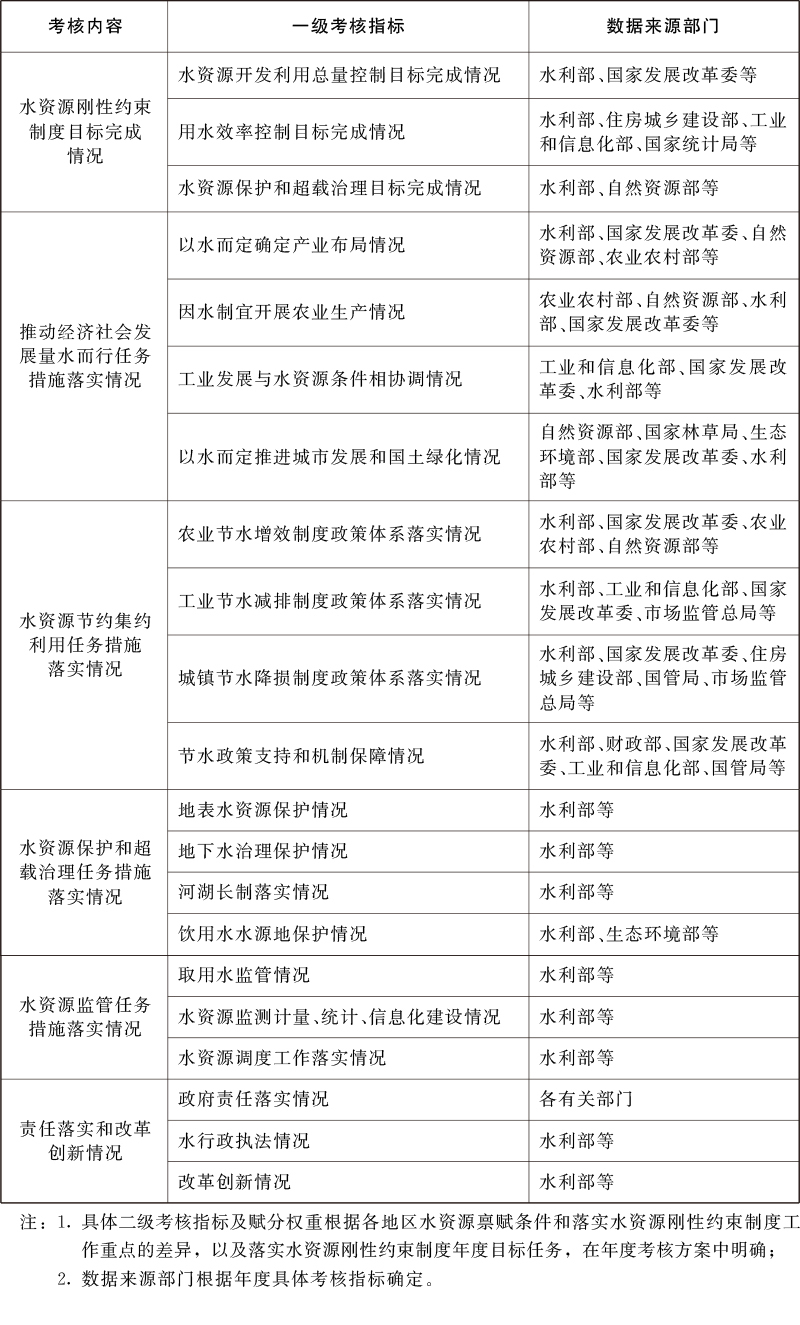
守好“塞上江南”的丰饶密码
Xin Lang Cai Jing· 2026-01-02 17:26
Core Viewpoint - The article highlights the importance of ancient irrigation channels in Ningxia's agricultural development, emphasizing the role of local judicial authorities in protecting water resources and ensuring the sustainability of agriculture and livestock industries [3][4][5]. Group 1: Agricultural Development - The ancient irrigation system in Ningxia, including the Huinong Canal, has been crucial for irrigating approximately 9.82 million acres of farmland, supporting local agriculture and livestock industries [4]. - The local government and judicial authorities are actively involved in promoting modern agriculture and protecting farmers' interests, as emphasized by President Xi Jinping during his visit in June 2020 [3][4]. - The "Nine Canals Green" public interest litigation initiative was launched to enhance water resource protection and ensure the sustainability of irrigation projects [5]. Group 2: Legal and Regulatory Actions - Since 2021, local authorities have faced challenges with illegal land occupation and water resource management, prompting judicial intervention to rectify these issues [4][5]. - The Wu Zhong City Procuratorate has supervised the rectification of over 40 safety hazards in irrigation channels and removed more than 3,660 square meters of illegal constructions [7]. - The collaboration between the procuratorate and water administration departments has led to significant improvements in channel management and water resource protection [6][7]. Group 3: Environmental and Resource Management - The article discusses the importance of protecting farmland from illegal occupation, with nearly 50% of arable land in Wu Zhong being rain-fed and vulnerable to encroachment [8][9]. - The local procuratorate has taken measures to restore illegally occupied farmland, ensuring that agricultural land remains productive [9][10]. - Efforts to combat illegal activities in the agricultural sector, such as the sale of counterfeit agricultural products, are ongoing to maintain the integrity of local farming [13]. Group 4: Economic Impact - The salt pool sheep industry is highlighted as a key economic driver in the region, with 80% of local farmers' income derived from this sector [11][12]. - The procuratorate's involvement in legal matters related to the sheep industry has helped stabilize businesses and ensure fair practices [12][13]. - The overall goal is to create a favorable legal environment for agricultural and livestock industries, contributing to the economic well-being of local communities [13].
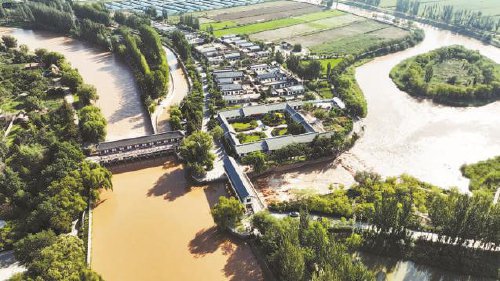
国务院办公厅关于印发《落实水资源刚性约束制度考核办法》的通知
Yang Shi Wang· 2025-12-31 09:47
Core Viewpoint - The State Council of China has issued a new assessment method for implementing a rigid water resource constraint system, aimed at promoting efficient and sustainable water resource utilization while improving ecological environments [1][2]. Group 1: Assessment Framework - The assessment method is designed to ensure that water resource development remains within the limits of ecological carrying capacity, supporting high-quality development [3]. - The assessment applies to provincial governments and emphasizes goal-oriented and problem-oriented approaches, with a focus on scientific indicator setting and efficient execution [4]. - The assessment will be conducted annually, with a scoring system where a score of 90 and above is considered excellent, 80-89 good, 60-79 passable, and below 60 as failing [4][5]. Group 2: Implementation and Oversight - A working group composed of various ministries, including the Ministry of Water Resources and the National Development and Reform Commission, will oversee the implementation of the assessment [4][5]. - Each province is required to conduct self-assessments and submit reports to the State Council, which will then be verified by the working group [5][6]. - The results of the assessments will be used as a reference for evaluating provincial leaders and for allocating central funding [6][7]. Group 3: Accountability and Compliance - Provinces that fail to implement the rigid water resource constraint system effectively will not be rated above "passable" [4][6]. - Significant achievements in implementing the system will be recognized, while provinces with poor performance must submit corrective measures within a month of the assessment results [6][7]. - Any fraudulent activities during the assessment process will lead to automatic failure and accountability for responsible parties [7]. Group 4: Specific Assessment Indicators - The assessment will include various indicators such as total water resource utilization control, water efficiency targets, and the implementation of water-saving policies across different sectors [9][10]. - Specific indicators will be tailored based on regional water resource conditions and the focus of the rigid constraint system implementation [10].
贵阳贵安推进河湖治理提质增效
Ren Min Wang· 2025-12-31 01:11
Group 1 - The core focus is on the continuous improvement of river and lake ecological environments in Guiyang and Gui'an through precise strategies and comprehensive efforts in water resource protection and pollution prevention [1][2] Group 2 - Significant achievements in water pollution prevention include the construction and renovation of 132.57 kilometers of sewage pipelines and the cleaning of 497,201 drainage facilities this year [1] - The second phase of the Maijia River sewage treatment plant has added a processing capacity of 50,000 tons per day, which is now operating stably [1] - A total of 527 river discharge outlets have been rectified, with 4 remaining expected to be completed by the end of the year [1] - The goal is to achieve over 80% rural sewage treatment rate by the end of the year, with 26 rural sewage treatment projects completed [1] Group 3 - The ecological restoration efforts include the completion of 35,000 acres of degraded forest restoration projects in the Wujiang River basin and 4,000 acres of state-owned degraded forest restoration [2] - A total of 39,000 acres of afforestation has been completed, achieving a 100% completion rate [2] Group 4 - Water law enforcement has intensified, with 1,723 water administration inspections conducted and 2,343 inspections of pollution sources in the "Two Lakes" area [2] - A total of 3,958 minor violations were corrected on-site, and 73 notices were issued to stop or correct illegal activities [2]
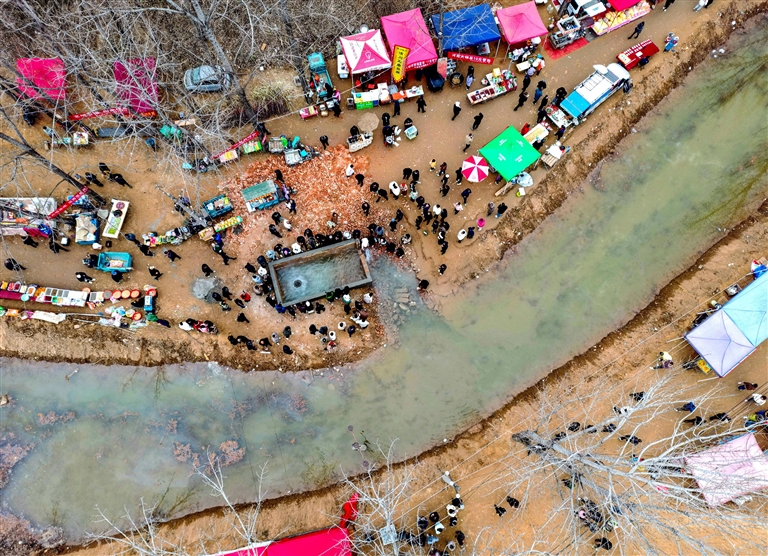
贾鲁河源头复涌记
He Nan Ri Bao· 2025-12-24 23:34
Core Viewpoint - The resurgence of a long-dry well in Zhengzhou's Jialu River area has attracted significant public interest and is seen as a symbol of ecological recovery and improved groundwater management in the region [12][19]. Group 1: Well Resurgence Details - A well that had been dry for 32 years began to flow again on December 3, 2023, initially at a rate of a few cubic meters per hour, which stabilized at around 100 cubic meters per hour [12][13]. - The resurgence has transformed the surrounding area, with the river width increasing from less than 3 meters to nearly 10 meters and a depth approaching 3 meters [12][13]. - The water temperature from the well is approximately 30 degrees Celsius, although water quality is currently not suitable for drinking due to some indicators exceeding standards [13][18]. Group 2: Historical Context - The Jialu River has a rich history, dating back to the Warring States period, and has undergone significant water management efforts over the centuries [15]. - Historical records indicate that the area was once abundant with springs, which have dried up due to mining activities and groundwater depletion since the 1990s [14][15]. Group 3: Factors Behind Resurgence - The resurgence is attributed to a combination of geological, ecological, and meteorological factors, including improved groundwater recharge and ongoing ecological restoration efforts [16][18]. - The area has unique hydrogeological conditions that facilitate the flow of karst groundwater, which has been positively impacted by the cessation of mining activities [17][18]. - Increased rainfall since 2021, approximately 30% above average, has also contributed to the replenishment of groundwater resources [18]. Group 4: Broader Ecological Impact - The resurgence of the well is part of a larger trend in Henan province, where other water bodies have also seen increased flow, indicating successful ecological governance and water resource management [19][20]. - Zhengzhou has implemented a comprehensive water resource management system, which includes the use of reclaimed water and has significantly improved groundwater levels in recent years [20][21]. - The province has seen a notable increase in the proportion of good water quality in surface water and a decrease in pollution levels, reflecting broader environmental improvements [21].
碧水丹心 丹江口水库的“守护者”
Zhong Guo Qing Nian Bao· 2025-12-06 02:03
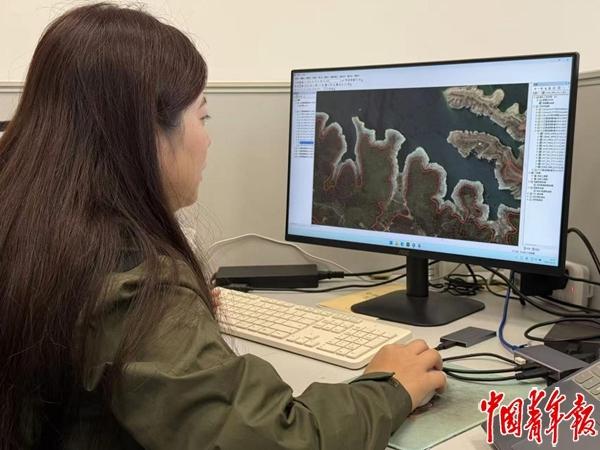
Core Viewpoint - The article highlights the importance of water resource protection in the Danjiangkou Reservoir area, emphasizing the role of technology and community engagement in safeguarding water quality and availability for millions of households downstream [3][5]. Group 1: Technology in Water Resource Management - Zhang Xuele, a technician at the Danjiangkou Reservoir Management Center, utilizes advanced technologies such as drones and satellite remote sensing to monitor the reservoir's shoreline and detect illegal activities [4][3]. - The integration of an "air-ground-space" perception network enhances the efficiency of inspections, allowing for a broader coverage compared to traditional manual methods [4][3]. - Data collected from these technological tools is compiled into a monthly "Reservoir Inspection Report," which serves as a record of changes in the reservoir area [4]. Group 2: Community Engagement and Education - Zhang actively engages with the local community to promote water conservation, organizing activities and educational sessions to raise awareness about the importance of protecting water resources [5][6]. - A notable instance involved her successfully persuading a local villager to stop using pesticides in sensitive areas, demonstrating the effectiveness of empathetic communication in fostering cooperation [5]. - The article underscores the significance of building relationships with the community to transform resistance into collaboration, ultimately enhancing the collective effort in water protection [5][6]. Group 3: Personal Commitment and Mission - Zhang expresses a deep personal connection to the Danjiangkou Reservoir, viewing her work as a mission to protect a vital resource that supports millions of families in cities like Beijing and Tianjin [5][6]. - The recognition from national leadership, such as a letter from President Xi Jinping, serves as motivation for Zhang and her colleagues, reinforcing the importance of their work in environmental protection [5][6]. - The commitment to water resource protection is portrayed as a continuous effort, with Zhang emphasizing that it requires daily dedication and action rather than mere rhetoric [6].
数百家民宿引水私用,保护水资源观念需要刷新
Nan Fang Du Shi Bao· 2025-11-17 09:52
Core Insights - The article discusses the resolution of a "drying crisis" in the Yandang Mountain scenic area, highlighting issues related to illegal water extraction and the need for water resource protection [1][2]. Group 1: Water Resource Management - The Yandang Mountain scenic area has 247 hotels and guesthouses, with 105 having no recorded water usage and 138 using less than 100 tons annually, significantly below the industry average of 273 tons [1]. - A proposal by a local political advisor pointed out that many accommodations illegally diverted water sources, leading to downstream water shortages [1]. - The local prosecutor's office issued recommendations to address illegal water extraction, which has since been rectified [1][2]. Group 2: Legal and Environmental Implications - The article emphasizes that the current water extraction practices violate national water laws, which state that water resources are state-owned and require permits for extraction [2]. - The scenic area has experienced severe environmental consequences, including stream drying and lake desiccation, signaling the urgent need for regulatory compliance [2]. - The article calls for nationwide inspections to identify and rectify unauthorized water extraction practices to prevent further environmental degradation [2]. Group 3: Community and Economic Considerations - The authorities have taken steps to protect the interests of local residents by maintaining some legal water extraction points and providing monthly subsidies for domestic water use [3]. - The article stresses the importance of balancing economic development with water resource protection, advocating for updated perspectives on sustainable practices [3]. - The phrase "green mountains and clear waters are as valuable as mountains of gold and silver" serves as a reminder of the need for sustainable resource management in the scenic area [3].