
消费者权益保障

Search documents
飞机机型临时调整 付费升舱变强制降舱 消费者权益保障标准不清
Bei Jing Shang Bao· 2025-08-06 14:30
Core Points - The article discusses a consumer's experience with an airline, specifically Southern Airlines, regarding a last-minute downgrade from a premium economy class to standard economy due to a change in aircraft type, leading to dissatisfaction and inconvenience for the consumer [1][2][6] Summary by Sections Consumer Experience - A consumer named Liu Na faced issues when her family was downgraded from premium economy to standard economy on a Southern Airlines flight due to a last-minute aircraft change [2][6] - The family was not only downgraded but also had their seats scattered, resulting in them sitting apart from each other [2][6] Airline's Communication - Liu Na received a text message from Southern Airlines informing her of the downgrade, but the message did not specify the reason for the change [2][9] - Upon contacting customer service, Liu Na was told that the aircraft change did not have premium economy available, which contradicted the information provided by the airline's customer service when contacted by reporters [2][9] Ticket Purchase and Upgrade - Prior to the downgrade, Liu Na had purchased tickets for her family and upgraded them to premium economy for better comfort, especially considering the age of her parents and the presence of her young daughter [5][10] - The upgrade cost was 657 yuan for all three passengers, and Liu Na specifically chose a flight that offered premium economy for its advantages in space and convenience [5][10] Options Provided by the Airline - After the downgrade, Liu Na was presented with two options: accept the downgrade or cancel the tickets for a refund [8][9] - Customer service indicated that if Liu Na accepted the downgrade, she would receive a refund for the upgrade fee, but this did not meet her needs for comfort and seating arrangement [9][10] Airline's Policy and Consumer Rights - Southern Airlines stated that their policy allows for refunds of upgrade fees in cases of involuntary downgrades, but Liu Na argued that the risks associated with aircraft changes were not clearly communicated at the time of purchase [11][12] - Legal experts noted that airlines have an obligation to inform consumers about potential risks that could affect their travel experience, such as aircraft changes leading to downgrades [16][17]


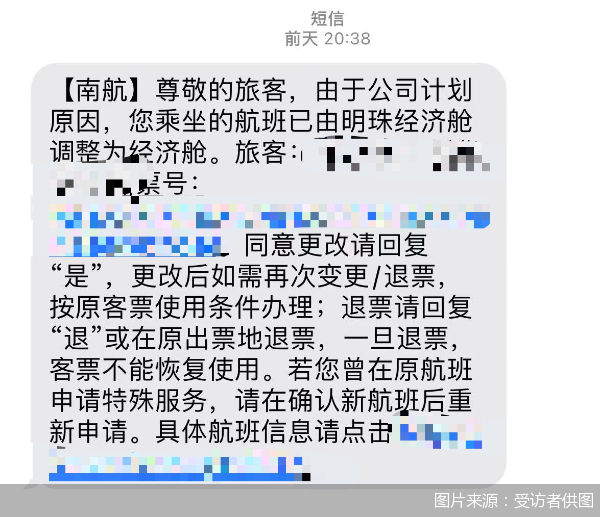
飞机机型临时调整,付费升舱变强制降舱,消费者权益保障标准不清
Bei Jing Shang Bao· 2025-08-06 14:13
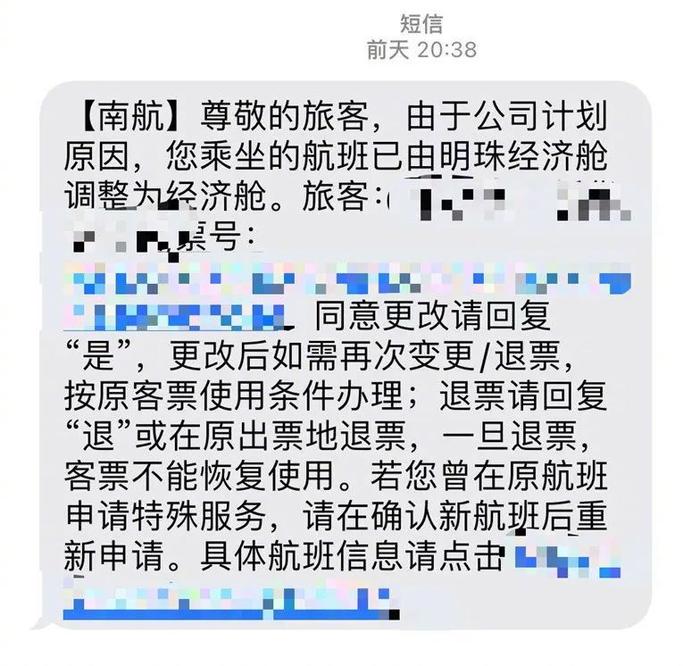
Core Viewpoint - The airline's last-minute aircraft change led to a forced downgrade for a passenger and her family, highlighting a lack of clear communication regarding the risks associated with upgrading to a premium cabin [1][11][15] Group 1: Incident Overview - A passenger, Liu Na, experienced a downgrade from a premium cabin to standard economy due to a last-minute aircraft change by China Southern Airlines (CZ3106) [2][6] - The family was not only downgraded but also had their seats scattered, resulting in discomfort during the flight [2][6] - Liu Na had specifically chosen the flight for its premium cabin to accommodate her elderly parents and young daughter [5][10] Group 2: Airline's Response and Policies - China Southern Airlines stated that the downgrade was a non-voluntary situation and offered to refund the upgrade fee [11][12] - The airline's policy indicates that if a passenger is downgraded due to aircraft changes, they will be refunded the upgrade fee, but does not clearly specify "aircraft change" as a risk in the upgrade product details [11][12][15] - The airline's terms suggest that changes in flight schedules or aircraft types are possible and do not guarantee the originally booked cabin class [14] Group 3: Consumer Rights and Legal Perspective - Legal experts argue that airlines should clearly communicate all potential risks associated with upgrades, including the possibility of aircraft changes leading to downgrades [15] - The vague language in the airline's policies regarding "public safety" and "special flight guarantees" may mislead consumers about the risks of downgrades [15] - There is a call for airlines to explicitly list "aircraft change" as a potential reason for downgrades in their upgrade product descriptions to ensure consumer awareness [15]
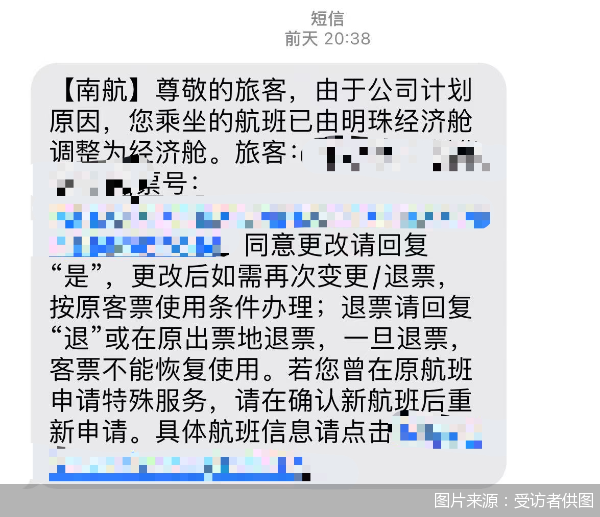
“两老一小”升舱后遭强制降舱!南航:不接受就只能退票重买
Bei Jing Shang Bao· 2025-08-06 13:52
Core Points - The article discusses a consumer's experience with China Southern Airlines (CSA) regarding a last-minute downgrade from a premium economy class to standard economy due to a change in aircraft type, leading to dissatisfaction and inconvenience for the passenger and her family [1][2][4][5] Group 1: Incident Overview - The consumer, Liu Na, had booked premium economy seats for her elderly parents and daughter on flight CZ3106 from Beijing to Guangzhou, but received a last-minute notification of a downgrade to standard economy due to a change in aircraft [2][4] - The downgrade not only separated the family into different seats but also did not provide the comfort and convenience that premium economy was expected to offer [5][7] Group 2: Customer Service Response - Upon receiving the downgrade notification, Liu Na was presented with two options: accept the downgrade or cancel the ticket, with the latter option being financially burdensome due to increased ticket prices close to the travel date [7][8] - Liu Na attempted to negotiate alternative solutions with customer service, including rebooking on a flight with premium economy availability, but was met with refusal [8][9] Group 3: Company Policy and Consumer Rights - CSA stated that the downgrade was a non-voluntary action and that they would refund the upgrade fee, but Liu Na argued that the terms did not clearly outline the risk of aircraft changes leading to downgrades [9][10][13] - Legal experts noted that consumers purchasing upgrades expect to receive the promised service level, and any factors affecting this should be clearly communicated by the airline [13][14]
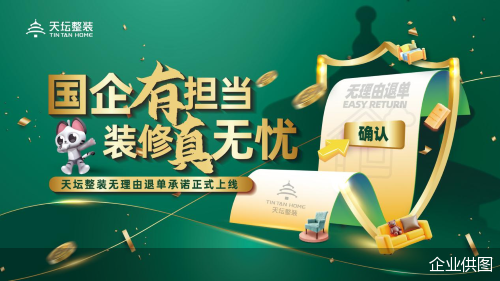
天坛整装推出“无理由退单”服务承诺,为消费者提供更安心的装修保障!
Bei Jing Shang Bao· 2025-07-15 06:31
Group 1 - The core viewpoint of the article emphasizes the introduction of a "no-reason return policy" by Tiantan Decoration, which aims to enhance consumer confidence and protect consumer rights in the home decoration industry [3][4] - Tiantan Decoration's "no-reason return" policy allows consumers to withdraw from contracts at any stage, whether before or after construction begins, without incurring penalties [3][4] - This initiative is part of a broader effort to improve service quality in the home decoration industry, shifting the focus from price competition to reputation competition, ultimately benefiting consumers, companies, and the industry as a whole [4] Group 2 - The "no-reason return" policy is currently available only in the Beijing area and will be effective until December 31, 2025 [3] - The policy aims to provide consumers with the right to experience services before making final decisions, thereby increasing accountability for service quality among companies [3][4] - Tiantan Decoration's commitment to consumer rights is reinforced by its state-owned enterprise background, which emphasizes service quality and consumer autonomy [4]
淘宝客服回应罗马仕余额不足:49万台缺陷充电宝召回背后的消费者权益困局
Sou Hu Cai Jing· 2025-07-04 04:38
Core Viewpoint - The incident involving Romoss power banks highlights the fragility of e-commerce platforms' consumer protection mechanisms, as thousands of users face refund issues due to the seller's insufficient account balance after a recall of 490,000 defective products [1][3]. Group 1: Incident Overview - Romoss Technology announced a recall of 490,000 power banks due to defects in battery cell materials that could cause overheating or even fires [3]. - Consumers are experiencing a tug-of-war with the platform and the seller, as many report being unable to receive refunds due to the seller's insufficient account balance [3][4]. - The platform's response has raised public concerns about the efficacy of e-commerce consumer protection systems [3]. Group 2: Platform Mechanism Analysis - The guarantee deposit system, intended to protect consumers, has proven ineffective in this case, with estimated recall costs exceeding 40 million yuan, far surpassing the typical guarantee deposit for ordinary sellers [4]. - Signs of financial distress in the company, such as operational shutdowns and changes in legal entities, indicate a collapsing funding chain [4]. - The platform has failed to implement a dynamic guarantee deposit mechanism that aligns with product risk, nor has it monitored high-recall-risk sellers effectively [4]. Group 3: Legal Perspective - Romoss has violated the safety assurance obligations under Article 26 of the Product Quality Law, while the platform may have neglected its qualification review responsibilities under Article 38 of the E-commerce Law [5]. - The legal challenge for consumers is exacerbated by the priority of debt repayment, where consumer claims rank lower than employee wages in bankruptcy situations [5]. - The recall execution is complicated by safety risks, as some courier companies refuse to accept returns, and the platform's suggested disposal method poses additional hazards [5]. Group 4: Consumer Self-Help Strategies - Consumers are advised to stop using the recalled products immediately and to file complaints through the 12315 platform, providing necessary order and business license information [6]. - For non-recalled products showing defects, consumers should classify them as hazardous waste and retain evidence [6]. - When purchasing alternatives, consumers are encouraged to choose brands with transparent supply chains, such as Xiaomi and Anker, to avoid falling into low-price traps again [6]. Group 5: Industry Implications - The crisis reflects a broader issue of supply chain quality control failures, particularly with the battery cell supplier's misconduct [7]. - The current e-commerce guarantee deposit system is inadequate for handling large-scale product recalls and unexpected events [7]. - The industry needs to establish a special risk reserve system for e-commerce and mandate product liability insurance for high-volume sellers to protect consumers from bearing the risks of corporate failures [7].
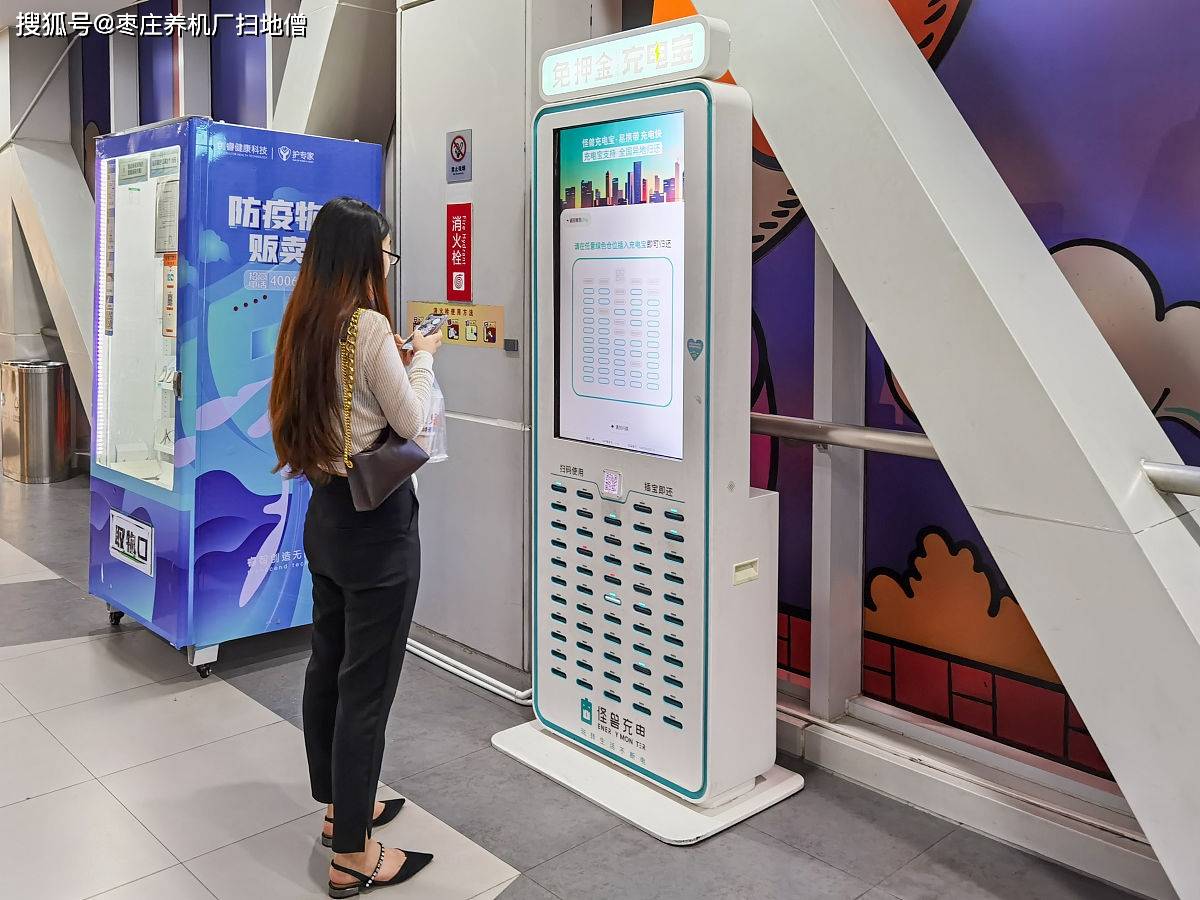
充电宝新规落地,执行需要温度
Xin Hua Ri Bao· 2025-07-02 21:18
Core Viewpoint - The recent recall of multiple power bank brands, including Romoss and Anker, is primarily driven by safety concerns following 15 incidents of power banks catching fire on flights this year, leading to new regulations prohibiting the transport of non-compliant power banks on domestic flights [1][2] Group 1: Industry Response - Several power bank brands have announced recalls of their products, and multiple brands' 3C certification has been "suspended" [1] - The Civil Aviation Administration of China has issued an emergency notice banning passengers from carrying power banks without clear 3C markings or those that have been recalled [1] Group 2: Consumer Impact - The new regulations have rendered many power banks as "prohibited items," causing confusion among consumers, with many power banks being abandoned at airport security [1] - There are concerns regarding the usability of previously purchased non-compliant power banks after the mandatory 3C certification requirement takes effect in August 2024 [1] Group 3: Recommendations for Stakeholders - Manufacturers are urged to implement effective recall solutions, such as establishing convenient return points in urban areas and ensuring safe return channels for problematic power banks [2] - Transportation hubs like airports and stations should proactively inform travelers about policy changes through clear signage and online announcements, and consider providing temporary storage services [2] - Regulatory bodies and companies need to offer clear guidelines for the disposal or recycling of recalled products to prevent consumer confusion [2] - The industry should use this opportunity to enhance standards and dynamic regulation to prevent problematic power banks from re-entering the market [2]
误购550只小鸡崽不可退,免密支付的“隐忧”
Jin Rong Shi Bao· 2025-04-23 03:10
Core Viewpoint - The incident involving an elderly man mistakenly purchasing 550 chicks for 790 yuan highlights the risks associated with "no-password payment" systems, raising concerns about consumer rights in special product transactions [1][2]. Group 1: Incident Overview - An elderly man in Bengbu, Anhui, accidentally placed an order for 550 chicks due to unfamiliarity with online shopping and the use of no-password payment, leading to a situation where the merchant refused to accept returns citing the nature of the goods [1]. - The incident has sparked widespread discussion on social media, with many questioning the safety and practicality of no-password payment systems [1]. Group 2: Risks of No-Password Payment - The convenience of no-password payments can obscure significant risks, particularly for elderly users who may lack familiarity with online transactions and the associated risks [2]. - Elderly individuals often do not realize they have activated no-password payment features, leading to unintended purchases and potential financial losses [2]. - The presence of "small amount no-password" features can create a false sense of security, making users more vulnerable to fraud through repeated small transactions [2]. Group 3: Recommendations for Improvement - Payment platforms should take greater responsibility in designing no-password payment features, ensuring that they consider user safety, especially for older adults [3]. - It is recommended that payment platforms provide a default setting to disable no-password payments for elderly users and offer clear instructions for enabling or disabling such features [3]. - Consumers are encouraged to enhance their awareness of payment security, regularly check transaction records, and avoid using simple passwords to protect their financial information [3].
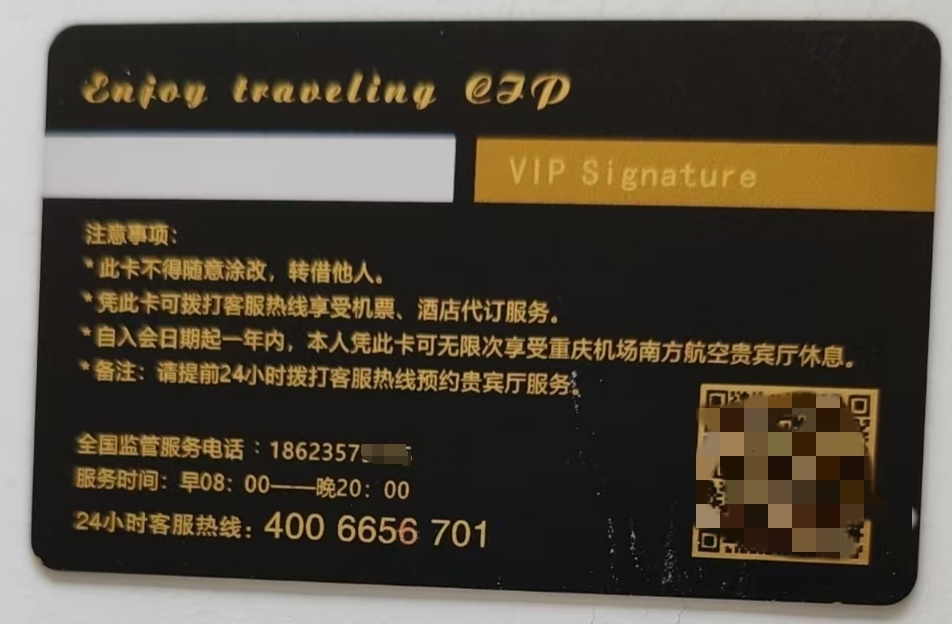
机场人员推销“尊享卡” 消费者遇“高价抵扣”“退卡无门”乱象
Yang Guang Wang· 2025-04-12 23:26
Core Viewpoint - The article highlights consumer complaints regarding the "Respect Card" scheme at airports, where travelers are misled into purchasing a card that offers limited benefits and often results in higher ticket prices compared to official airline rates [1][10]. Group 1: Consumer Experiences - Multiple consumers reported being approached by individuals in uniforms at airports, promoting the "Respect Card" with promises of discounts and VIP access, leading to confusion and dissatisfaction when trying to use the card [1][10]. - One consumer, Ms. Shi, shared her experience of purchasing the card for 1980 yuan, only to find that the actual discounts on tickets were minimal and often higher than the official prices [3][5]. - Another consumer, Mr. Lin, expressed frustration after realizing that the promised benefits of the card were not delivered, and attempts to seek refunds were ignored [10][11]. Group 2: Misrepresentation and Accountability - The article reveals that the sales personnel promoting the "Respect Card" are not official airport staff but rather affiliated with a third-party company, raising questions about accountability and consumer protection [14][18]. - Airport officials confirmed that the card sales personnel are not employees of the airport or the airline, suggesting a lack of oversight in the operations of these third-party vendors [14][20]. - The airline involved, Southern Airlines, distanced itself from the sales practices, indicating that the personnel were renting space at the airport and were not authorized representatives [18][20].
珍爱网回应“多店关闭”,称系业务优化!曾被315晚会点名
Nan Fang Du Shi Bao· 2025-03-24 08:03
Group 1 - The core viewpoint of the news is that Zhenai.com is undergoing business optimization, which includes the closure of multiple stores and adjustments with partners, but it assures that overall operations and member services remain unaffected [1][2]. - Zhenai.com has faced public scrutiny due to allegations of consumer deception highlighted during the 2024 CCTV 315 Gala, leading to an investigation by the Shenzhen Market Supervision Administration [1][2]. - The company has established a special task force to address the issues raised and has committed to ensuring that all signed marriage service agreements are fulfilled, protecting member rights despite any operational changes [1][2]. Group 2 - Following the CCTV report, Zhenai.com issued an apology and stated that it would take strict measures to investigate and rectify the identified problems [2]. - The Shenzhen Market Supervision Administration promptly interviewed the company's management regarding the issues exposed during the gala, and the involved stores have suspended operations pending investigation [2].