特许经营模式

Search documents
一年收租100亿美元,“大地主”藏不住了
投中网· 2025-07-30 06:36
Core Viewpoint - McDonald's is planning to sell eight retail properties in Hong Kong, with a total market value of approximately HKD 1.2 billion, as part of a phased strategy to divest all its properties in the region, which are valued at over HKD 3 billion [3][4][5]. Summary by Sections Property Sale Details - The properties for sale are located in key areas such as Tsim Sha Tsui, Causeway Bay, and Mong Kok, with sizes ranging from approximately 6,800 square feet to 19,000 square feet [3]. - The auction for these properties is set to close on September 16, with JLL acting as the exclusive agent [3]. Market Context - The overall market for retail properties in Hong Kong is currently experiencing a downturn, with capital values in core areas declining by 2.3% quarter-on-quarter and 5.4% year-on-year, and down 70.5% compared to ten years ago [7]. - The average estimated return rate for core area retail properties is approximately 2.47% based on net effective rent [7]. McDonald's Business Model - McDonald's operates primarily on a franchise model, with 95% of its restaurants globally being franchised, while rental income significantly contributes to its overall revenue [5][12]. - In 2024, McDonald's reported total revenues of USD 25.92 billion, with rental income accounting for approximately 38.65% of total revenue, amounting to USD 10.01 billion [12]. Historical Context - McDonald's has a long history of real estate investment, dating back to the 1970s, when it was emphasized that the core business is real estate rather than just selling food [11]. - The company has previously sold properties in Hong Kong, generating profits of nearly HKD 100 million in past transactions [13]. Future Outlook - McDonald's has indicated that it will continue to evaluate its property holdings and optimize its real estate portfolio, with no immediate changes planned for restaurant operations in the properties being sold [9].



麦当劳要卖香港商铺,“大地主”藏不住了
凤凰网财经· 2025-07-29 15:32
Core Viewpoint - McDonald's plans to sell eight retail properties in Hong Kong, with a total market value of approximately HKD 1.2 billion, as part of a phased strategy to divest all its properties in the region, which are valued at over HKD 3 billion [1][2]. Group 1: Property Sale Details - The eight properties for sale are located in key areas such as Tsim Sha Tsui, Causeway Bay, and Mong Kok, and have been held by McDonald's for several decades, with some properties being over 50 years old [2][3]. - The properties have a total rental occupancy rate of 100%, with McDonald's restaurants operating in each location, and some properties also housing other retail tenants [2][3]. - The sale is being managed by JLL, which indicates that the properties will continue to operate as McDonald's restaurants post-sale, providing stable rental income for potential investors [3]. Group 2: Market Context and Implications - The current valuation of retail properties in Hong Kong is low, prompting McDonald's to sell at this time, despite its significant rental income from properties globally [2][5]. - The overall market for commercial properties in Hong Kong has been under pressure, with rising vacancy rates and declining rental prices due to economic challenges [5][6]. - McDonald's has historically been recognized as a significant player in real estate, with rental income accounting for nearly 38.65% of its total revenue in 2024, amounting to USD 10.017 billion [8][9].

48亿省级重点交通工程公示 路桥特许模式再行“山西实践”
Xin Lang Cai Jing· 2025-07-26 10:47
Core Insights - The construction of the new section of National Highway 307 in Shanxi, with an estimated total investment of over 4.8 billion yuan, marks a significant step towards substantial construction and is a beneficial attempt at the BOT (Build-Operate-Transfer) model in Shanxi [1] - Shanxi Road and Bridge has won 17 concession projects totaling 1,296 kilometers and an investment of 99.2 billion yuan, demonstrating the importance of the concession model for the company [2] - The company reported a revenue of 785 million yuan from highway concession projects in the first half of 2023, a year-on-year increase of 2.31%, accounting for 99.32% of its total revenue [2] Investment and Financing - The new highway project will have a construction period of 36 months, with 20% of the total investment funded by the government and the concessionaire, while the remaining funds will be raised through project company financing [1] - The BOT model is the most commonly used method in Shanxi Road and Bridge's concession operations, providing a diversified financing model that ensures the smooth progress of projects [1] Recent Developments - In the second half of 2024, Shanxi Road and Bridge won multiple concession projects, including the Dazhong Ring Expressway and National Highways 109 and 208, with a total bid amount of approximately 12.9 billion yuan [4] - The first highway concession project in Shanxi, the Fenzhi to Wutai Expressway, has been signed, with a total length of 71.246 kilometers and an investment of 10.498 billion yuan [5] - The company currently manages and operates approximately 3,992 kilometers of various grades of highways, establishing itself as a key player in transportation project investment and construction in Shanxi [5]
中原环保(000544) - 2025年07月16日投资者关系活动记录表
2025-07-17 01:00
Group 1: Wastewater Treatment Business Overview - The wastewater treatment business is the core of the company's operations, utilizing a concession model for daily processing and fee collection [2] - In 2024, the company processed approximately 936 million tons of wastewater, averaging about 2.56 million tons per day [2] - The main cost components of wastewater treatment include electricity, chemicals, equipment maintenance, safety management, depreciation, personnel costs, and laboratory expenses [2] Group 2: Pricing and Contractual Aspects - The company can apply for price adjustments based on the concession agreement when the pricing mechanism is triggered [3] - The typical concession agreement duration for wastewater treatment projects in Zhengzhou is 30 years, with options for transfer, repurchase, or renewal upon expiration [3] Group 3: Upgrading and Compliance - Recent upgrades have been made to meet higher discharge standards, such as the upgrade of certain plants to the Yellow River Basin's first-level discharge standards [3] - The company has completed the upgrade of the first phase of the Ma Taogang wastewater treatment plant to first-level A standards [3] Group 4: Financial and Operational Insights - The company enjoys a national tax incentive policy of three exemptions and three reductions for its wastewater treatment business [3] - The average financing cost is around 3%, with a focus on cost reduction as a key task for 2025 [4] - The company is actively monitoring external market opportunities for strategic acquisitions, assessing projects based on IRR/ROE criteria [4] Group 5: Accounts Receivable and Cash Flow - Accounts receivable primarily consist of government debts related to wastewater treatment and PPP projects, with ongoing efforts to ensure timely collections [4] - Current cash flow is under pressure due to issues with accounts receivable collections [4]

摩根士丹利:中国酒店
摩根· 2025-07-16 00:55
Investment Rating - The report indicates a positive outlook for the Chinese hotel industry, highlighting significant growth potential in brand penetration and market expansion Core Insights - The total number of hotels in China has reached 350,000, with branded hotels increasing from 16% in 2017 to 40% currently, reflecting a compound annual growth rate of 12% over five years, yet still below the global average of 72% [1][4] - The economy hotel segment constitutes 78% of the total hotel count but contributes less than 50% to market value, while high-end and mid-to-high-end hotels account for a higher proportion of room numbers, reaching 38% [1][5] - The market is highly fragmented, with even leading hotel groups holding relatively small market shares, such as 4%-8% in regions like Xinjiang [1][8] - The franchise model dominates, with over 90% of large hotel groups operating under this model, although this is still lower than international brands like Marriott and InterContinental, which operate at 99% [1][10] - The average room price for chain hotels in China is projected to be 235 RMB (approximately 30 USD) in 2024, influenced by hotel tier and city classification [1][11] Summary by Sections Market Supply - The supply of hotels in China has seen significant changes over the past decades, with a peak in growth around 2018, followed by a decline in 2019 exacerbated by the pandemic, but a rapid rebound has occurred since 2023 [3] Brand Development - The growth of branded hotels has been robust, maintaining an upward trajectory even during the pandemic, with expectations for further increases in brand penetration to 50%-60% in the future [4] Hotel Distribution - Economic hotels dominate the total property count at 78%, while high-end and mid-range hotels have a higher share in terms of room numbers, with high-end hotels making up 38% [5] City-Level Penetration - Brand penetration rates vary by city tier, with first-tier cities like Beijing and Shanghai at 60% and over 50% respectively, while second-tier cities are at 48% and third-tier cities at 33% [6] Revenue Channels - In terms of booking channels, OTAs account for 27% (possibly exceeding 30%), direct sales for 18%, and offline bookings for 55% [2][12][13] Performance Trends - The hotel market is expected to see stable occupancy rates in 2025, but average daily rates may decline, indicating a potential decrease in overall revenue despite stable guest flow [16] - The leisure segment is projected to perform well in 2025, while business demand is expected to decline by 4%-5% year-on-year [17] Company Performance - Among major listed hotel companies, HTST leads the market, while BTGM Xinjiang and ATPSD show relatively weaker performance, highlighting a divergence in post-pandemic recovery [19] International Brands - International hotel brands like Marriott and Hilton are rapidly expanding in China, with a significant portion of their global pipeline located in the country, reflecting a strong growth trajectory [20]
Yum!(YUM) - 2025 FY - Earnings Call Transcript
2025-05-28 18:30
Financial Data and Key Metrics Changes - The company reported an 8% core operating profit growth over the last two years, maintaining this growth in Q1 [12][28] - The long-term growth algorithm aims for 5% unit growth annually, coupled with same-store sales growth translating to 7% system sales growth, targeting at least 8% core operating profit growth [31][32] Business Line Data and Key Metrics Changes - Taco Bell US significantly outperformed the US QSR industry in Q1, achieving a 9% same-store sales growth [62] - KFC International is the leading unit development engine, opening a new restaurant approximately every three hours [10][25] Market Data and Key Metrics Changes - The company operates in over 50 countries with a 98% franchise model, providing resilience in various macroeconomic environments [11][12] - Yum China continues to expand, serving only one-third of the Chinese population, indicating substantial growth potential [43][44] Company Strategy and Development Direction - The company is focused on transforming into a pure-play franchisor, emphasizing digital and technology capabilities through initiatives like Byte by Yum [12][21] - The strategic imperative includes leveraging scale across brands for procurement and supply chain efficiencies [58][60] Management's Comments on Operating Environment and Future Outlook - Management expressed confidence in the growth potential of KFC and Taco Bell, highlighting the resilience of the business model amid macroeconomic volatility [11][12] - The management acknowledged the challenges faced in international markets, particularly with Taco Bell in China, but remains optimistic about future growth [38][44] Other Important Information - The company has made significant investments in technology and digital capabilities, with over 40 AI projects underway [92][106] - The leadership team is seen as a critical factor in maintaining the brand's relevance and innovation [76][82] Q&A Session Summary Question: What is still underappreciated in the stock today? - Management believes the growth potential and the value of Byte technology are underappreciated by investors [24][27] Question: How sustainable is the 5% unit growth beyond 2025? - Management is confident in sustaining the 5% unit growth due to strong franchise capabilities and market opportunities [31][34] Question: How does the algorithm hinge on recovery in China? - While China has been a primary growth driver, there are still significant opportunities for unit growth globally [42][46] Question: How does the company view competition in the market? - The company is focused on outcompeting rivals and believes its franchising capabilities provide a competitive advantage [53][56] Question: What role does digital play in the company's strategy? - Digital initiatives, particularly Byte, are expected to enhance operational efficiency and improve franchisee economics [83][86] Question: How does the company balance investments in technology versus profitability? - Management aims to optimize resources while ensuring long-term growth through strategic investments in technology [96][97]

便利店赛道杀出一匹黑马“左邻右舍”
FBIF食品饮料创新· 2025-05-11 16:14
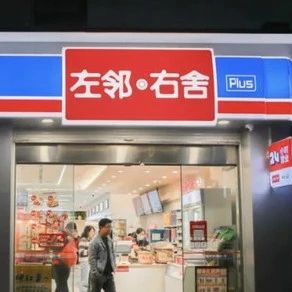
Core Viewpoint - The convenience store industry in China is witnessing significant growth, with the emergence of new players like "左邻右舍" (Left Neighbour) and "生活驿站" (Life Station) under the Chicheng Holding Group, which have rapidly expanded their store numbers and are challenging established brands like 美宜佳 (Meiyijia) and 芙蓉兴盛 (Furong Xingsheng) [1][5][12]. Group 1: Industry Overview - The latest convenience store TOP100 list by the China Chain Store & Franchise Association (CCFA) shows that 美宜佳 leads with nearly 40,000 stores, maintaining its position for three consecutive years [1]. - The entry threshold for the top ten has increased, with the tenth place, 红旗连锁 (Hongqi Chain), now requiring 3,447 stores, up from 2,800 the previous year [3]. - The overall ranking stability among top brands contrasts with significant fluctuations among lower-ranked brands, indicating a solidified position for leading players [3]. Group 2: Growth of New Players - "左邻右舍" and "生活驿站" have collectively reached 5,310 stores, marking a notable entry into the top ten for the first time [3][5]. - The rapid growth of these brands is attributed to their franchise model, with an average of over 400 new stores opened annually over the past four years [5]. - In 2024, "左邻右舍" is projected to exceed 11 billion in sales, with Chicheng Holding reporting a revenue of 1.065 billion, a 15.39% increase year-on-year [12]. Group 3: Business Model and Strategy - The franchise model allows for low entry costs, with an investment of approximately 120,000 to 140,000 yuan for a 30-40 square meter store [6]. - "左邻右舍" focuses on community services, offering utilities payment, package collection, and public transport card recharges, which enhances customer foot traffic [8][9]. - The product offering is more localized and affordable compared to competitors, avoiding imported trendy items and focusing on everyday necessities [7][8]. Group 4: Competitive Landscape - "左邻右舍" is positioned to compete directly with 芙蓉兴盛, which also emphasizes community service and has a similar store count [12]. - Other local supermarkets are enhancing their community service offerings, indicating a competitive environment for "左邻右舍" [13]. - The introduction of popular products in stores aims to attract more customers, with items like 瑞士卷 (Swiss Roll) and 榴莲千层 (Durian Layer Cake) being offered at competitive prices [14].
因价格战担忧,星巴克中国中资买方仅两家
阿尔法工场研究院· 2025-02-27 10:31
Core Viewpoint - The article discusses the significant strategic shift of Starbucks in China, driven by intense competition from local brands like Luckin Coffee and Kudi Coffee, which have rapidly reshaped the market landscape through aggressive pricing strategies [1][10]. Group 1: Starbucks' Strategic Shift - Starbucks is reportedly considering selling a stake in its China business, with multiple bidders including KKR, China Resources Group, and Meituan entering the fray [2][3]. - The potential sale is part of a broader strategy to adapt to the changing dynamics of the Chinese coffee market, where local brands have gained substantial market share [9][10]. - Starbucks aims to complete the transaction by the end of 2025, with ongoing negotiations focusing on the sale proportion and franchise agreements [5][6]. Group 2: Market Performance and Challenges - In fiscal year 2024, Starbucks' global revenue was $36.2 billion (approximately 262.75 billion RMB), with a year-on-year growth rate slowing to 1%, and net profit declining by 8.82% to $3.761 billion (approximately 27.30 billion RMB) [9]. - Starbucks' China revenue for fiscal year 2024 was $2.958 billion (approximately 21.47 billion RMB), down 1.4% year-on-year, with same-store sales and average transaction value both declining by 8% [9]. - Despite opening 790 new stores, the company fell short of its goal to reach 9,000 stores by 2025, indicating challenges in maintaining growth in the competitive landscape [9]. Group 3: Competitive Landscape - The rise of local brands like Luckin Coffee, which has surpassed Starbucks in market leadership, highlights the intense price competition in the Chinese coffee market [10]. - Local brands offer significantly lower prices, attracting price-sensitive consumers, which has forced Starbucks to implement promotional strategies while trying to maintain its premium positioning [10]. - The article suggests that Starbucks' potential partnership with local firms could provide valuable market insights and resources to better cater to local consumer preferences [17]. Group 4: Implications of the Potential Sale - The introduction of strategic partners or a franchise model could lead to a more asset-light operational approach for Starbucks, reducing fixed costs and operational risks while establishing a stable revenue stream [17]. - The potential sale could accelerate industry consolidation and transformation in the Chinese coffee market, increasing competitive pressure on local brands [18]. - Starbucks' localization strategy may serve as a model for other international brands, emphasizing the need for deeper adaptation to the Chinese market [19].