
白银逼空

Search documents
伦敦白银流动性几近“枯竭”,本轮逼空如何收场?
Jin Shi Shu Ju· 2025-10-15 10:14
Core Insights - The recent surge in silver prices is attributed to skyrocketing leasing rates, strong demand from India, and inventory mismatches leading to supply constraints, compounded by short sellers being forced to cover their positions, creating a short squeeze effect [1] Group 1: Factors Contributing to Silver Price Surge - Leasing rates have soared to unprecedented levels, with annualized rates exceeding 30% as of October 10, 2025, indicating high borrowing costs for physical metal in the London market [1] - Strong demand from India has systematically depleted available silver stocks in London, with the increase in purchases exceeding typical seasonal patterns [1] - Inventory mismatches have arisen due to concerns over potential tariffs, leading to significant metal transfers from London to New York, creating unresolved supply issues [1] - Ongoing uncertainty regarding the U.S. "Section 232" investigation into critical minerals, including silver, continues to affect trader behavior despite the exemption from tariffs since April 2025 [1] Group 2: Mechanism of the Short Squeeze - Short sellers in the London market are pressured to borrow physical metal at escalating leasing rates, with annualized rates now surpassing 30% [2] - The extreme borrowing costs create a strong incentive for short sellers to cover their positions by purchasing physical metal [2] - The simultaneous attempt by short sellers to cover their positions leads to a shortage of available physical inventory, further driving up prices [3] - As more short sellers cover their positions, this behavior generates additional buying pressure, creating a self-reinforcing price momentum [4] - The relatively small size of the silver market compared to gold amplifies price fluctuations, resulting in greater volatility and extreme price dislocations [4] Group 3: Differences from Previous Market Dynamics - The current short squeeze appears to be driven by broader market forces rather than manipulation by concentrated investors [5] - Regulatory oversight has matured compared to past instances, providing better tools for monitoring and addressing potential market abuses [5] - Upgraded global trading infrastructure allows for faster position adjustments and market responses [5] - The current short squeeze occurs within a broader context of strong precious metal performance, with gold reaching historical highs, indicating that macroeconomic and investor sentiment factors are influencing the overall environment [5] Group 4: Potential Outcomes of the Current Situation - Increased physical silver shipments to London are expected to alleviate current supply constraints [6] - High prices may lead to "demand destruction," potentially reducing the pressure for physical purchases [6] - The completion of short position liquidations will eliminate a significant source of buying pressure [6] - Regulatory intervention may ensure market order if disruptions exceed acceptable limits [6] - New supply sources entering the market at higher price points will ultimately increase available inventory [6]
出租白银的爆赚机会:全球白银正空运往英国套利,背后是一场史诗级逼空
Mei Ri Jing Ji Xin Wen· 2025-10-14 22:29
Core Insights - The silver market is experiencing a historic surge, characterized by three significant phenomena: skyrocketing rental rates, a price discrepancy between London and New York, and silver's price increase outpacing that of gold [2][3][18]. Group 1: Rental Rates - The annualized rental rate for one-month silver in London surged from 6% to 35% within a short period, indicating a dramatic increase in borrowing costs for physical silver [6][11]. - Historical data shows that since 2010, the one-month silver rental rate has typically remained below 5%, highlighting the current spike as unprecedented [7][11]. Group 2: Price Discrepancy - The spot price of silver in London recently exceeded the New York futures price by over $3 per ounce, creating significant arbitrage opportunities [12][15]. - This price gap has only been observed a few times since 1975, often linked to market manipulation or extreme market conditions [12][18]. Group 3: Price Increase - The spot price of silver has surpassed $53 per ounce, marking a year-to-date increase of approximately 78%, while gold's increase during the same period was only 60.2% [3][16]. - Historical comparisons show that silver's price movements often exceed those of gold during bull markets, as evidenced by past market cycles [24]. Group 4: Market Dynamics - The current silver market dynamics are driven by multiple factors, including tight physical supply, increased demand for silver ETFs, and concerns over potential tariffs affecting silver imports [18][20][22]. - The liquidity of silver in London has decreased significantly, with available stocks dropping from 850 million ounces to about 200 million ounces since mid-2019, a decline of 75% [22]. Group 5: Arbitrage Opportunities - Arbitrage strategies are being considered due to the significant price difference between London and New York, although high transportation and rental costs may limit the feasibility of these trades [28][29]. - The logistics of transporting silver between markets can delay arbitrage transactions, impacting the timing and profitability of such strategies [29][30].


全球白银正空运往英国套利,背后是一场史诗级逼空?
Hu Xiu· 2025-10-14 13:47
Core Insights - The silver market is experiencing a historic surge, with significant price increases and rental rates, indicating a potential supply squeeze and heightened demand [1][3][17]. Group 1: Silver Price Surge - The spot silver price has surpassed $53 per ounce, marking a year-to-date increase of 78%, significantly outpacing gold's 60.2% rise during the same period [2][15]. - The current silver price has broken historical records, surpassing the previous peak of $49.45 per ounce set in 1980 [5][15]. Group 2: Rental Rates and Market Dynamics - The annualized rental rate for one-month silver borrowing in London skyrocketed from 7.46% on October 7 to 35.87% on October 9, reflecting a dramatic increase in borrowing costs [8][11]. - The surge in rental rates indicates a tight supply of physical silver, adversely affecting short positions and increasing delivery costs for those shorting silver [11][23]. Group 3: Market Behavior and Arbitrage Opportunities - The price discrepancy between London spot silver and New York futures has led to arbitrage opportunities, with traders moving silver from New York to London to capitalize on the price difference [14][30]. - The logistics of transporting silver, especially with high rental costs, may delay arbitrage activities, impacting market dynamics [33][36]. Group 4: Supply and Demand Factors - Concerns over liquidity in the London market have triggered a global rush to acquire silver, further driving up prices [14][22]. - The decline in available silver inventory in London, exacerbated by increased demand from ETFs and physical purchases, has contributed to the current market conditions [18][25]. Group 5: Historical Context and Future Outlook - Historical patterns show that during previous bull markets, silver often outperformed gold, suggesting a potential for continued strong performance in the current environment [25][26]. - Analysts suggest that while the current market is influenced by various factors, the likelihood of a repeat of past manipulation events is low due to stricter regulations [28][29].
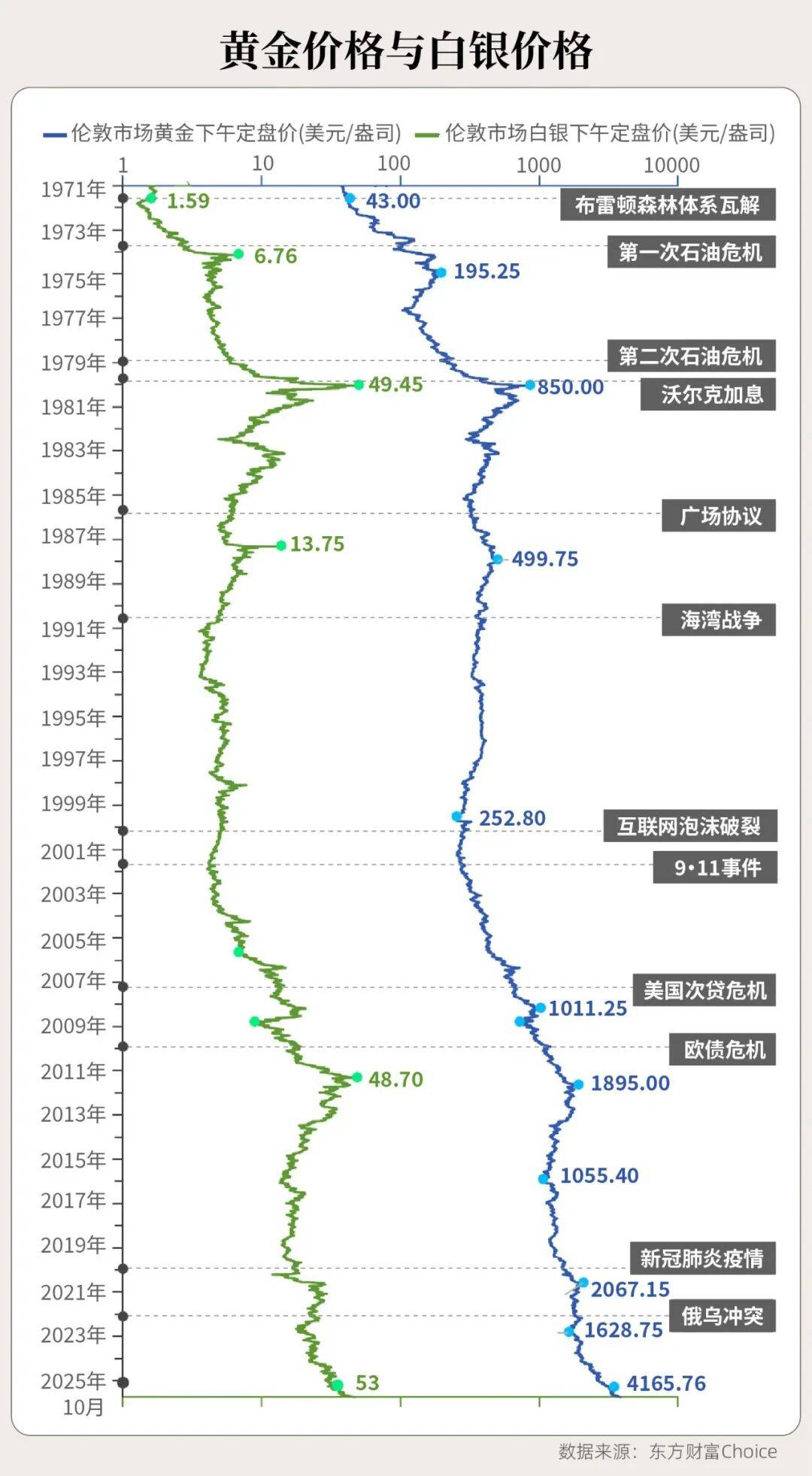
50年一遇世纪大逼空 白银空头满世界搜罗银锭忙交割
经济观察报· 2025-10-14 11:49
Core Viewpoint - The London silver market is experiencing a liquidity crisis, leading to a significant surge in silver prices, with analysts noting that the market is effectively "stalled" due to insufficient physical silver to meet delivery demands for billions of dollars in contracts [1][22]. Group 1: Market Conditions - The London silver spot price reached $51.91 per ounce, with an intraday high of $51.97 per ounce as of October 13 [3]. - The premium of London silver spot prices over New York COMEX silver futures peaked at $3, a historical high [3][12]. - The overnight annualized leasing rate for silver in London exceeded 100%, indicating extreme scarcity [3]. Group 2: Factors Influencing the Market - The liquidity crisis in the London silver market is attributed to three main factors: anticipated U.S. tariffs on silver imports, significant inflows into silver ETFs, particularly from India, and insufficient silver production to meet industrial demand [10][11]. - Over the past six years, the freely circulating silver inventory in London has decreased from 850 million ounces to less than 200 million ounces [11]. Group 3: Market Dynamics - Hedge funds and multi-strategy investment firms have increased their bets on rising silver prices, pushing the market to new highs [12]. - The lack of resistance from short-sellers has allowed silver prices to break through key psychological levels without significant pushback [8][9]. - The current situation mirrors historical events from the 1980s when similar market dynamics were observed [14]. Group 4: Future Outlook - Analysts predict that large quantities of silver from New York and Hong Kong will soon flow into the London market, potentially alleviating the current shortage [20]. - However, logistical challenges, including customs delays due to government shutdowns, may prolong the liquidity crisis [20][21]. - Investment banks are beginning to take positions in the market, with forecasts suggesting a target price of $65 per ounce for silver by 2026 [22].

一场完美的“白银逼空”!伦敦金库捉襟见肘,印度买家愿付10%溢价抢购
Jin Shi Shu Ju· 2025-10-14 10:16
Group 1 - The core viewpoint of the articles highlights the significant rise in silver prices, which have surged by 70% this year, outpacing gold's 55% increase, driven by supply constraints and increased demand amid geopolitical tensions and inflation [1][2][4] - Silver's unique properties as an excellent conductor make it essential in various industries, including electronics, electric vehicles, and medical devices, contributing to its growing demand [2][3] - The silver market is characterized by its smaller trading volume and tighter liquidity compared to gold, with approximately 790 million ounces of silver stored in London, valued at around $40 billion, compared to gold's $1.1 trillion [3][4] Group 2 - The decline in London silver inventories by about one-third since mid-2021 has led to a reduction in available metal for lending or delivery, exacerbating supply shortages as global demand has exceeded mine production for four consecutive years [4] - India's demand for silver has surged, particularly ahead of the Diwali festival, with imports nearly doubling compared to last year, highlighting the tightness in physical supply as Indian buyers pay prices significantly above global benchmarks [6] - The ongoing high prices of silver may impact industries reliant on it, such as solar panel manufacturing, potentially leading to a search for alternative materials as companies face pressure on profitability [7]
逼空式上涨,白银也“疯狂”
3 6 Ke· 2025-10-14 03:40
Core Viewpoint - The London silver spot market is experiencing a severe liquidity crisis, leading to a short squeeze and significant price increases, with spot prices reaching historical highs [1][2][3]. Group 1: Market Conditions - As of October 13, the London silver spot price reached $51.91 per ounce, with an intraday high of $51.97 per ounce, marking a significant premium over New York COMEX silver futures [1]. - The overnight annualized leasing rate for silver in London exceeded 100%, indicating a severe shortage of available silver for short delivery [1][5]. - The London Bullion Market Association (LBMA) is monitoring the tense situation in the silver market due to the lack of liquidity [2]. Group 2: Factors Influencing Price Movement - The tightness in the London silver market is attributed to three main factors: anticipated U.S. tariffs on silver imports, significant inflows into silver ETFs, particularly from India, and insufficient silver production to meet industrial demand [5][6]. - Over the past six years, the freely circulating silver inventory in London has decreased from 850 million ounces to less than 200 million ounces [5]. Group 3: Market Dynamics - The lack of resistance from short sellers has allowed silver prices to rise without significant pushback, as many short positions are unable to cover due to the scarcity of physical silver [4][6]. - The current situation resembles historical events where short sellers faced similar challenges, indicating a potential repeat of past market dynamics [6][8]. Group 4: Investment Strategies - Hedge funds and multi-strategy investment firms are increasingly betting on rising silver prices, with expectations to push prices to $53-$55 per ounce in the short term [10]. - The short positions in the London silver market are primarily held by arbitrageurs and speculative capital, while major banks like JPMorgan also hold significant short positions [9][10]. Group 5: Future Outlook - There is uncertainty regarding the sustainability of the current price increases, as large quantities of silver from New York and Hong Kong are expected to flow into London, potentially alleviating the shortage [11]. - The efficiency of customs operations due to potential government shutdowns may delay the arrival of silver, prolonging the current market conditions [11].