税务优化

Search documents
税优保障如何成为私募精英的“隐形铠甲”?
私募排排网· 2025-08-04 03:36
Core Insights - The A-share market showed a trend of fluctuating growth in the first half of 2025, with quantitative private equity becoming a prominent investment force, achieving an average return of 8.32% across all private equity securities products, and 10% for stock strategy private equity [1] - Among 1,243 quantitative long strategy products, 93.32% achieved positive returns, with an average return rate of 15.42%, significantly outperforming other sub-strategies [1] - A wave of dividends emerged in the industry, with 558 private equity products distributing dividends, accounting for 14.09% of the total, amounting to 5.655 billion yuan [1] - High income for private equity managers leads to increased tax burdens, prompting them to seek legal and compliant tax optimization strategies [1] Group 1: Investment Performance - The average return for private equity securities products in the first half of 2025 was 8.32% [1] - Stock strategy private equity led with an average return of 10% [1] - Quantitative long strategy products had a remarkable average return of 15.42%, with 93.32% achieving positive returns [1] Group 2: Dividend Distribution - By the end of June 2025, 558 private equity products had distributed dividends, representing 14.09% of the total products with performance data [1] - The total amount of dividends distributed reached 5.655 billion yuan [1] Group 3: Tax Optimization Strategies - High income levels for private equity managers result in significant tax liabilities, including corporate income tax and value-added tax [1] - The need for tax optimization strategies is emphasized due to the high tax burden faced by managers in the quantitative private equity sector [1] Group 4: Risk Management and Insurance - Private equity managers face core risks including compliance, investment, operational, liquidity, reputation, and ethical risks throughout the fundraising, investment, management, and exit processes [3] - Professional liability insurance is deemed essential for private equity managers to mitigate risks associated with investment decisions and internal management [3][4] - The selection of professional liability insurance should focus on coverage that matches core business risks, including management and professional liability [4] Group 5: Employee Benefits and Insurance - The importance of a comprehensive employee benefits and insurance system is highlighted for attracting and retaining top talent in private equity firms [5] - Group accident insurance and employer liability insurance are included in the core benefits to provide comprehensive protection for employees [5] Group 6: Tax-Advantaged Insurance - The organization considers tax-advantaged insurance options, such as supplementary medical insurance, which can be deducted from total wages within 5% to reduce tax burdens [6] - The focus is on balancing tax compliance, employee needs, and cost-effectiveness when selecting insurance products [6] Group 7: Insurance Configuration Recommendations - Recommendations for insurance configurations for different roles within private equity firms include high-end medical insurance, critical illness insurance, and professional liability insurance [10][12][13][15] - Specific insurance products are suggested based on the unique risks associated with investment research, marketing, and operational roles [10][12][13][15]


为什么身边有钱人,家里有多套房,却捂住不抛售?真实原因太扎心
Sou Hu Cai Jing· 2025-07-18 02:43
Core Insights - The article discusses the complex motivations behind wealthy individuals holding multiple properties, emphasizing that real estate serves as a crucial component of their asset allocation strategy [1][5][12] - It highlights the stability and reliability of rental income from real estate investments, which provides a consistent cash flow despite market fluctuations [1][6][12] Group 1: Investment Logic - Real estate is perceived as a "hard currency" due to its high preservation rate, with core urban residential properties maintaining a value retention rate of 98.7% in 2024 [2] - The rental yield in first-tier cities remains stable between 2.5% and 3.2%, which, while modest, is valued for its reliability [1][2] - Investors view real estate as a "ballast" in their diversified portfolios, providing stability during market volatility [2][10] Group 2: Economic and Policy Context - The ongoing urbanization process supports housing demand, with the urbanization rate reaching 67.5% by the end of 2024, indicating a steady influx of population into cities [5] - The government's "housing is for living, not speculation" policy framework suggests that property prices will not experience extreme fluctuations, benefiting long-term holders [5][12] Group 3: Tax and Wealth Preservation - Holding real estate offers tax advantages compared to frequent buying and selling, as selling may incur significant personal income tax liabilities [6] - Real estate serves as a means of wealth preservation, especially in uncertain economic times, as it provides a tangible asset that can safeguard capital [6][10] Group 4: Long-term Value and Legacy - Wealthy individuals often purchase properties not just for personal use but also for future generations, as real estate is easier to pass down and less likely to cause disputes [7] - The investment philosophy of these individuals focuses on long-term strategic value rather than short-term gains, reflecting a more patient and calculated approach to wealth accumulation [7][12] Group 5: Market Trends and Future Outlook - Despite a cooling market, structural opportunities remain in core urban areas and high-quality districts in strong second-tier cities, which are still considered scarce resources [8][12] - The article suggests that real estate will continue to be a significant pillar of the Chinese economy, with a clear intention from policymakers to stabilize the market [12][13]

如何才能守住财富
Sou Hu Cai Jing· 2025-07-14 02:57
Core Insights - The article emphasizes that maintaining wealth is more challenging than acquiring it, highlighting the importance of a scientific strategy and long-term discipline in wealth management [1][10]. Financial Immunity System - Establishing a "financial immunity system" is crucial for wealth preservation, allowing individuals to confidently face risks [2]. Investment Strategies - Wealth preservation does not equate to avoiding investments; rather, it involves a strategy of protecting capital first and then seeking appreciation [2]. - Recommended strategies include: - **Forced Savings**: Save 20%-30% of monthly income before spending, as exemplified by a programmer who doubled his assets in five years by investing in index funds [6]. - **Budget Management**: Track all expenses to differentiate between necessary and impulsive spending, leading to significant savings over time [6]. - **Emergency Fund**: Maintain 3-6 months' worth of living expenses in liquid assets to handle unexpected events [6]. Risk Management - Diversification is key, with suggested asset allocation: 30% in safe assets, 40% in stable assets, 20% in aggressive assets, and 10% in liquid assets [6]. - Long-term investment is preferred over short-term speculation, with a focus on trends over several years [6]. - Avoid investments in areas not fully understood, such as cryptocurrencies and futures [6]. Behavioral Insights - Common pitfalls include excessive spending for status, blind borrowing, and impulsive investments, which can lead to financial ruin [7]. - Understanding legal frameworks and tax optimization can significantly enhance wealth preservation [8][13]. Wealth Transfer and Education - Wealth management should also focus on passing knowledge and assets to the next generation, emphasizing financial literacy from a young age [9][13]. - Utilizing legal tools like trusts and wills can help secure wealth for future generations [13]. Conclusion - Effective wealth management requires a combination of strategy, discipline, and continuous learning, with a focus on long-term goals rather than immediate gratification [11].

Roundhill推“反分红”标普ETF 帮投资者避股息税
Huan Qiu Wang· 2025-07-08 05:28
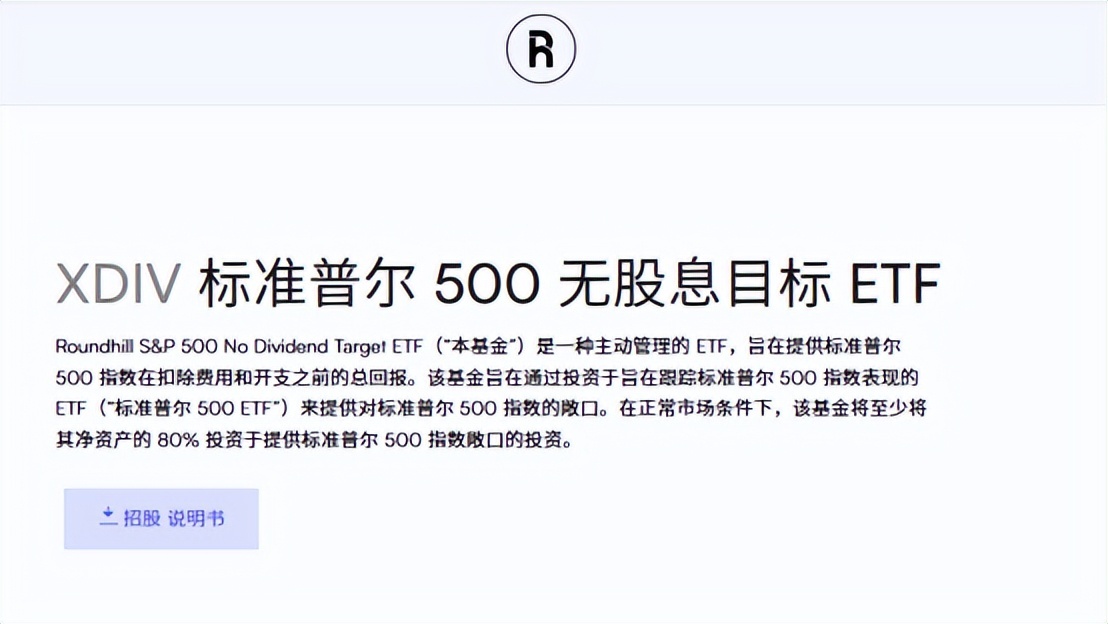
Core Insights - Roundhill Investments has launched a new ETF called "S&P 500 No Dividend Target ETF" (XDIV), set to debut on July 10, aiming to track the S&P 500 index while avoiding dividend payouts and associated tax burdens [1][4] - The ETF is designed for tax-conscious investors who seek exposure to the S&P 500 without incurring dividend tax liabilities, filling a gap in the market for such products [4][5] Group 1 - Roundhill is known for innovative ETFs, having previously launched the award-winning Magnificant Seven ETF (MAGS) and the "China Dragon" ETF (DRAG) [4] - The strategy of XDIV involves selling positions in S&P 500 ETFs before dividend dates to prevent investors from receiving dividends, thus avoiding ordinary income tax [4] - The ETF will invest in other S&P 500 ETFs, such as Vanguard's VOO, and will switch to non-dividend paying funds close to the ex-dividend date [4] Group 2 - XDIV is part of a growing trend of "tax-optimized" products in the market, with other firms like LionShares and F/m Investments also launching similar ETFs [5] - Experts in the ETF industry view the strategy as a smart move, with the ability to avoid capital gains tax becoming a key selling point for ETFs [5]