空天经济

Search documents
争夺太空,中国放大招了
首席商业评论· 2026-01-25 04:48
Core Viewpoint - The article emphasizes the urgency and significance of China's recent application for approximately 203,000 low and medium Earth orbit satellites, which is a strategic move in the global space race against competitors like SpaceX and other international players [5][7][8]. Group 1: China's Satellite Application - In late 2025, China submitted a record application for about 203,000 satellites, which is five times the number planned by SpaceX's Starlink and 15 times the current total number of satellites in orbit globally [7]. - The International Telecommunication Union (ITU) operates on a "first come, first served" basis for satellite frequency and orbital resource allocation, making this application a critical strategic maneuver for China [8][9]. - The urgency is underscored by the ITU's introduction of a milestone mechanism, requiring satellites to be launched within specific timeframes, emphasizing the need for rapid deployment to secure future technological advancements [9]. Group 2: Global Competition - Following China's application, the U.S. Federal Communications Commission (FCC) quickly approved SpaceX's request to deploy an additional 7,500 Starlink satellites, indicating a heightened competitive response [7]. - SpaceX's ambitious plans include launching over 1,000 missions annually by 2026, significantly increasing its satellite deployment capabilities [11][12]. - The competition for low Earth orbit is intensifying, with various countries and companies, including Amazon's Project Kuiper and the European Union's IRIS², also vying for orbital slots [13]. Group 3: China's Response and Infrastructure Development - China is rapidly developing its commercial space launch capabilities, with significant construction efforts at multiple launch sites, including Wenchang, aiming for a launch capacity of over 60 missions per year by 2026 [15][17]. - The establishment of a dedicated Commercial Space Administration in China marks a significant step towards the industrialization and marketization of its space sector, enhancing its competitive edge [17][18]. - China's satellite constellation plans include the deployment of over 38,000 satellites across three major constellations by 2035, necessitating an average of 10 satellite launches per day to meet these goals [19].

从商业航天热度看空天经济潜力
21世纪经济报道· 2026-01-18 06:39
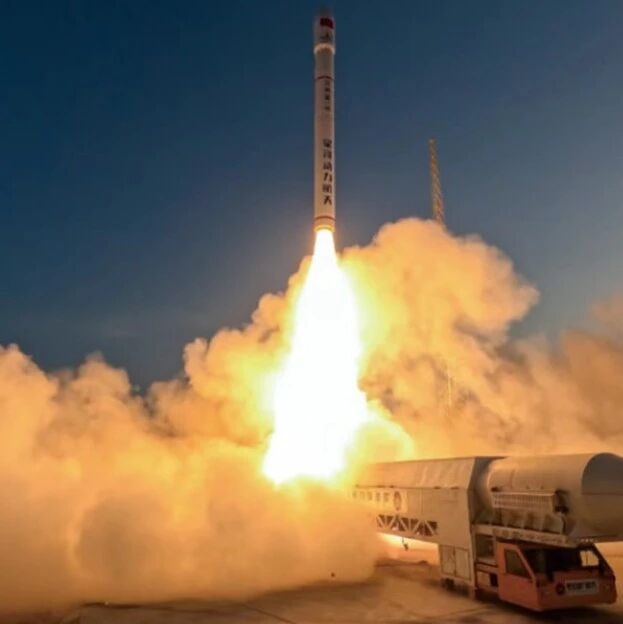
Core Viewpoint - The article emphasizes the significance of the aerospace economy as a new growth engine for high-quality economic development, driven by advancements in commercial space and low-altitude economies, which are reshaping industrial patterns and releasing substantial economic and strategic value [1][4][15]. Group 1: Aerospace Economy Development - The aerospace economy is no longer solely associated with space exploration and national security but has emerged as a key driver of new productive forces, expanding industrial boundaries and creating new economic spaces [4][5]. - The global commercial space market is rapidly expanding, with low Earth orbit-related industries becoming central to this growth, as evidenced by over 10,000 low-orbit satellites deployed by leading companies [5][6]. - The aerospace economy is characterized by high technology, high added value, and high driving force, capable of continuously generating new demand, employment, and output [6][12]. Group 2: Synergy Between Low-altitude Economy and Commercial Space - The low-altitude economy and commercial space are interdependent, forming a synergistic industrial ecosystem that enhances overall productivity [8][9]. - The low-altitude economy has developed a robust foundation of technology and industry, providing valuable applications and operational experiences that support the commercialization of high-altitude and space sectors [9][10]. - The deployment of large-scale satellite constellations will provide essential communication and navigation support for low-altitude operations, facilitating the transition from pilot applications to widespread adoption [10][11]. Group 3: Innovation and Institutional Support - Continuous innovation and ecological optimization are crucial for the sustainable development of the aerospace economy, requiring a focus on core technology breakthroughs and collaborative innovation systems [12][13]. - Institutional innovation and policy support are vital for the healthy development of the aerospace economy, necessitating optimized approval processes and regulatory frameworks to enhance efficiency and reduce operational costs [13][14]. - An open and collaborative industrial ecosystem is essential for unleashing the potential of the aerospace economy, encouraging regional specialization and international cooperation to enhance competitiveness [14][15].

从商业航天热度看空天经济潜力
2 1 Shi Ji Jing Ji Bao Dao· 2026-01-16 23:05
Core Insights - The aerospace economy is becoming a focal point for economic growth, driven by advancements in commercial space and large-scale satellite constellation deployments [1][2] - The integration of low-altitude economy and commercial space is reshaping the industry landscape, creating significant economic and strategic value [1][4] Industry Overview - The aerospace economy is now recognized for its industrial attributes and economic value, serving as a key driver for new productive forces [2] - The development of the aerospace economy breaks traditional geographical limitations, opening new avenues for economic growth [2][3] - The global commercial space market is rapidly expanding, with near-Earth orbit industries becoming a core component [2][3] Competitive Landscape - The aerospace sector has become a critical arena for major power competition, with countries increasing investments in commercial space and satellite networking [3] - Leading companies have deployed over 10,000 low-Earth orbit satellites, establishing strong market barriers and intensifying competition for frequency resources [3] Economic Impact - The aerospace economy is characterized by high technology, high added value, and strong driving force, capable of generating new demand, employment, and output [4] - The rapid growth of China's low-altitude economy, exceeding 30% in recent years, exemplifies the potential of the aerospace sector [4] Synergy Between Low-altitude Economy and Commercial Space - The low-altitude economy and commercial space mutually promote each other, forming a synergistic industrial ecosystem [5][6] - The low-altitude economy provides a foundation for commercial space, while breakthroughs in space technology address core challenges for low-altitude development [5][6] Innovation and Policy Support - Continuous innovation and ecological optimization are essential for the sustainable development of the aerospace economy [8][9] - Institutional innovation and policy support are crucial for the healthy development of the aerospace sector, addressing bottlenecks and enhancing efficiency [9][10] Collaborative Ecosystem - Building an open and collaborative industrial ecosystem is key to unleashing the potential of the aerospace economy [10] - Encouraging regional specialization and international cooperation can enhance resource integration and innovation, driving high-quality development in the aerospace sector [10]
“钟才文”接力“钟才平”在人民日报撰文 释放哪些信号?
Zhong Jin Zai Xian· 2026-01-14 00:04
Core Viewpoint - The article emphasizes the significance of the "Five Musts" proposed at the Central Economic Work Conference, which serves as a fundamental guideline for current economic work and aims to enhance China's economic stability and strategic positioning in international competition [1][2]. Summary by Relevant Sections Economic Potential and Policy Framework - The "Five Musts" include fully tapping economic potential, balancing policy support with reform and innovation, ensuring effective regulation, combining investments in physical and human capital, and strengthening internal capabilities to face external challenges [1][2]. - The framework is designed as a closed-loop logic system, with "fully tapping economic potential" as the core goal supported by policy reform, market governance, resource allocation, and risk management [2]. Action Guidelines for Economic Development - The "Five Musts" provide a comprehensive action guide for the beginning of the 14th Five-Year Plan, focusing on solidifying the material foundation for Chinese-style modernization and leveraging the advantages of a vast and internally cyclical economy [3]. - The article highlights the importance of multi-dimensional collaboration to convert economic potential into actual high-quality development outcomes [3]. Key Development Directions - The article identifies three main development directions: boosting consumption and effective investment, integrating technological and industrial innovation, and promoting urban-rural integration and regional coordinated development [4]. - Among these, boosting consumption and effective investment is seen as a critical focus for immediate results, while integrating technological and industrial innovation is expected to provide both short-term breakthroughs and long-term empowerment [4]. Emerging Pillar Industries - The article emphasizes the need to expand new technologies and products in sectors such as intelligent economy, green economy, biological economy, and aerospace economy, which are positioned as emerging pillar industries [5][6]. - This strategic focus aims to cultivate new growth engines that support high-quality development and establish a modern industrial system with global competitiveness [7]. Shift in Industrial Development Strategy - The shift from "cultivating and expanding" to "pillar leading" in the context of emerging industries highlights the importance of scale effects and the ability to drive upgrades across the supply chain [7][8]. - The new approach emphasizes a system-wide perspective on industrial development, integrating technology across various sectors and focusing on high quality and high added value [8].
“钟才文”接力“钟才平”在人民日报撰文,释放哪些信号?
财联社· 2026-01-13 06:49
Core Viewpoint - The article emphasizes the "Five Musts" proposed at the Central Economic Work Conference, which serve as fundamental guidelines for economic work under the new circumstances, aiming to consolidate and expand the positive momentum of the economy and gain strategic advantages in international competition [1][2]. Summary by Sections Five Musts - The "Five Musts" include: fully tapping economic potential, balancing policy support with reform and innovation, ensuring both flexibility and regulation, integrating investment in physical and human capital, and honing internal capabilities to face external challenges [1][2]. Systematic Framework - The "Five Musts" form a closed-loop logical system centered on the goal of fully tapping economic potential, supported by policy reform, market governance, resource investment, and risk response, creating a complete action framework [2]. Action Guidelines for Economic Work - The article serves as a specific action guide for economic work at the beginning of the 14th Five-Year Plan, emphasizing a systematic thinking framework that balances domestic and international factors while addressing both short-term and long-term goals [3]. Key Development Directions - The article highlights three key development directions: boosting consumption and effective investment, promoting deep integration of technological and industrial innovation, and facilitating urban-rural integration and regional coordinated development [4]. Emerging Pillar Industries - The article identifies intelligent economy, green economy, biological economy, and aerospace economy as new emerging pillar industries, signaling a strategic focus on cultivating new growth engines that support high-quality development [5][6]. Shift in Industrial Development - The shift from "following and catching up" to "leading and layout" in industrial development is marked by focusing on four high-potential areas, aiming to create globally competitive industrial clusters that inject strong momentum into high-quality economic development during the 14th Five-Year Plan [7].

深刻把握“五个必须” 推动“十五五”良好开局
Ren Min Ri Bao· 2026-01-13 00:35
Group 1 - The core viewpoint emphasizes the necessity of fully tapping into economic potential, combining policy support with reform innovation, ensuring effective governance while allowing market flexibility, integrating investments in both physical and human capital, and honing internal capabilities to face external challenges [1][6][20]. Group 2 - Fully tapping into economic potential is crucial for solidifying the material foundation of Chinese-style modernization, leveraging the country's multiple advantages to foster new growth points and high-quality development [2][3]. - China, as the world's second-largest economy, benefits from a vast market that ensures internal circulation, a robust innovation ecosystem, and a strong industrial supply chain, positioning it as a key player in the global economic landscape [3][4]. - The Chinese economy has shown resilience against external shocks, maintaining its status as a major contributor to global economic growth, supported by a large consumer market and a complete industrial system [4][21]. Group 3 - The approach of combining policy support with reform innovation is essential for addressing the intertwined cyclical, structural, and institutional issues in the economy, ensuring effective macroeconomic governance [7][9]. - This dual approach has been proven effective in navigating complex domestic and international environments, enhancing macroeconomic stability while promoting structural reforms [8][10]. Group 4 - Achieving a balance between market freedom and government regulation is vital for enhancing economic governance and ensuring high-quality development [12][13]. - The focus should be on creating a fair competitive environment while allowing market forces to allocate resources efficiently, thus fostering a dynamic economic order [14][15]. Group 5 - Investments should be closely integrated between physical assets and human capital, with a shift towards enhancing human development as the economy matures [16][18]. - There is significant room for improvement in both physical and human capital investments, with current levels lagging behind developed countries, indicating potential growth areas [17][19]. Group 6 - The emphasis on internal capabilities is crucial for responding to external challenges, with a focus on maintaining strategic determination and leveraging the advantages of a large economy [20][22]. - Historical resilience against external shocks has been demonstrated, with strategies to shift towards domestic demand and innovation driving economic stability and growth [21][23].
从“1”到“2”:首只收益翻倍卫星产业ETF背后的叙事
Jin Rong Jie· 2026-01-09 01:28
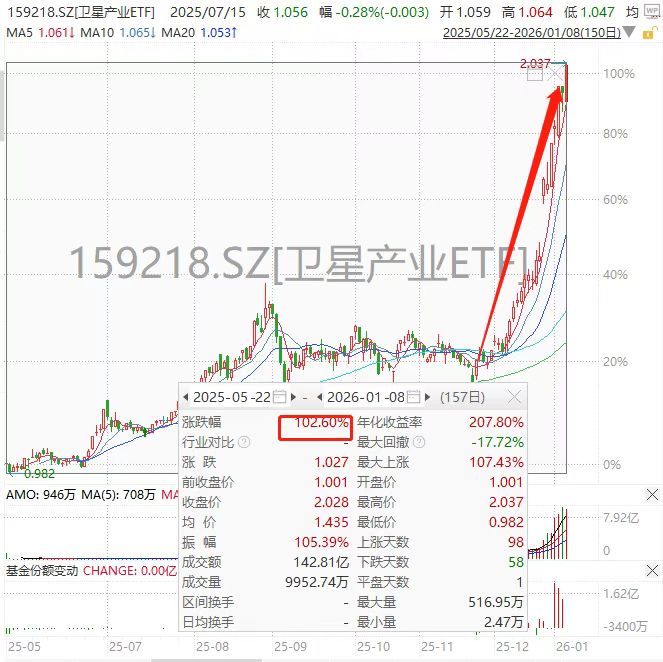
Group 1 - The satellite industry ETF (159218) has achieved a historic milestone by crossing the 2 yuan mark, marking a significant transition from the "1 yuan era" to the "2 yuan era" with a closing price of 2.028 yuan and a 5.19% increase on January 8 [1][3] - The ETF's trading volume reached 970 million yuan, with over 1 billion yuan flowing into the market within the first four trading days of the year, leading to a management scale of nearly 3 billion yuan [1][3] - This breakthrough is attributed to a fundamental shift in the global commercial space industry, moving from laboratory technology breakthroughs to comprehensive commercialization and large-scale operations [3] Group 2 - Key global events, such as SpaceX's intention to inspect Chinese supply chains and the construction of China's first offshore rocket recovery base, indicate deep integration of the global industrial chain and aim to reduce launch costs [3] - Major cities like Guangzhou are incorporating "aerospace economy" into their urban development strategies, reflecting a broader acceptance of the commercial space industry [3] - The satellite industry ETF's doubling in value signifies the capital market's confidence in China's significant role in the global commercial space competition, transitioning from vague expectations to a new phase driven by clear paths, substantial progress, and grand visions [3]
开盘10分钟,过亿资金加码卫星产业ETF(159218)!北方导航逆市封板!
Sou Hu Cai Jing· 2026-01-07 02:01
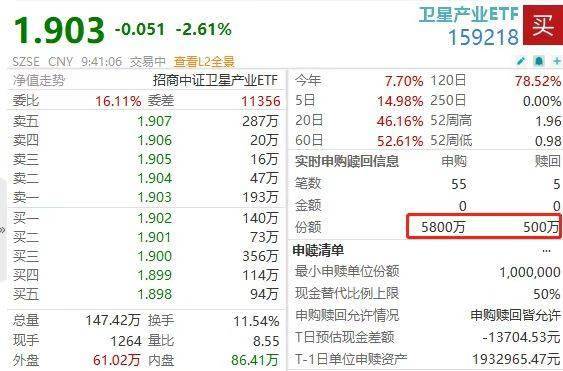
Core Viewpoint - The satellite industry is undergoing significant adjustments, with the satellite industry ETF (159218) experiencing a notable decline of 2.41% as of 9:40 AM on January 7, while Northern Navigation saw a counter-trend surge with a trading volume exceeding 290 million CNY and a net inflow of over 100 million CNY during the session [1][2]. Group 1: Market Performance - The satellite industry ETF (159218) has shown a six-year growth of 7.70% and a 120-day increase of 78.52%, indicating strong long-term performance despite recent volatility [2]. - The ETF's trading volume reached 147.42 million shares with a turnover rate of 11.54%, reflecting active market participation [2]. Group 2: Industry Dynamics - Recent developments in the international aerospace sector have heightened the urgency for domestic advancements in autonomous satellite systems, particularly in light of SpaceX's adjustments to its Starlink satellite orbits, which underscore the complexities of low-Earth orbit competition and governance [3]. - Research indicates that China is planning a long-term lunar navigation system, showcasing a grand vision from Earth to deep space, which reinforces the strategic resource attributes of satellite internet [3]. Group 3: Investment Outlook - The satellite industry ETF (159218) is recognized as the first investment tool covering the entire industry chain, including rocket launches, satellite manufacturing, ground equipment, and operational services, making it a preferred vehicle for systematic and efficient investment in the "aerospace economy" [3]. - The convergence of policy, capital, and technology is creating a strong and certain trend, enhancing the medium to long-term growth logic of this sector, positioning the ETF as a focal point of market attention [3].

北斗基准站建设与全球航天潮共振!卫星产业ETF(159218)盘前获超千万增仓
Jin Rong Jie· 2026-01-07 02:01
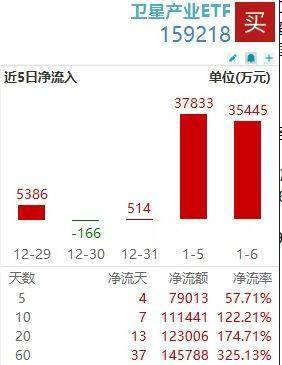
Core Viewpoint - The satellite industry continues to show strong performance, with significant capital inflows and high trading volumes in the satellite industry ETF (159218) [1][3]. Group 1: Market Performance - On January 7, the satellite industry ETF (159218) saw a pre-market increase of over 10 million, with a net capital inflow of nearly 800 million in the last five trading days [1]. - The ETF has demonstrated a "volume and price rise" pattern, indicating robust market interest [1]. - The ETF covers the entire industry chain, including rocket launches, satellite manufacturing, ground equipment, and operational services, making it a key tool for systematic investment in the "aerospace economy" [3]. Group 2: Policy and Development - The Ministry of Natural Resources announced significant advancements in China's surveying and mapping industry during a press conference on December 30, highlighting the establishment of a nationwide satellite navigation positioning reference station network [1]. - This initiative aims to enhance the Beidou navigation service, with the reference stations playing a crucial role in high-precision navigation [1]. - The Ministry has implemented management measures to integrate data from 7,000 reference stations, facilitating a national and provincial Beidou application and service center network [1]. Group 3: Global Trends - The global aerospace sector is entering a rapid development phase, with an average of over 26 launches per month as of November, and an expected total of over 320 launches for the year, setting a historical record [1].
商业火箭龙头拟易主!卫星产业ETF(159218)量价齐飙,5日揽金近8亿
Sou Hu Cai Jing· 2026-01-07 01:37
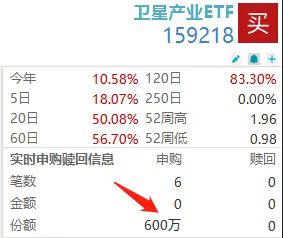
风险提示:基金有风险,投资需谨慎。 消息面上,国内商业航天行业迎来标志性事件:航天科工集团旗下科工火箭公司的控股权转让事项取得 新进展。据悉,该公司整体估值约为112亿元,若交易完成,将成为国内首家实现控股权转移的成熟商 业火箭企业。此举被视为商业航天领域深化市场化改革、加速产融结合的重要信号,进一步提振了市场 对产业商业化进程的预期。 在"十五五"规划强调建设航天强国、支持商业航天发展的政策基调下,产业正迎来密集催化。从蓝箭航 天科创板IPO获受理,到此次科工火箭控股权拟转让,均反映出资本与产业互动的持续深化。商业航天 已从技术验证阶段,逐步迈向规模化、市场化发展的关键节点。 据了解,卫星产业ETF(159218)覆盖火箭发射、卫星制造、地面设备及运营服务等全产业链环节,成为 资金系统性布局"空天经济"核心赛道的重要工具。在政策支持明确、资本加速进入、技术迭代突破的共 振下,该板块中长期成长逻辑持续强化。 卫星产业延续近期强势。数据显示,截至1月6日,卫星产业ETF(159218)在近五个交易日内累计获资金 净流入近8亿元,成交量持续处于高位,呈现明显的"量价齐升"格局。 ...