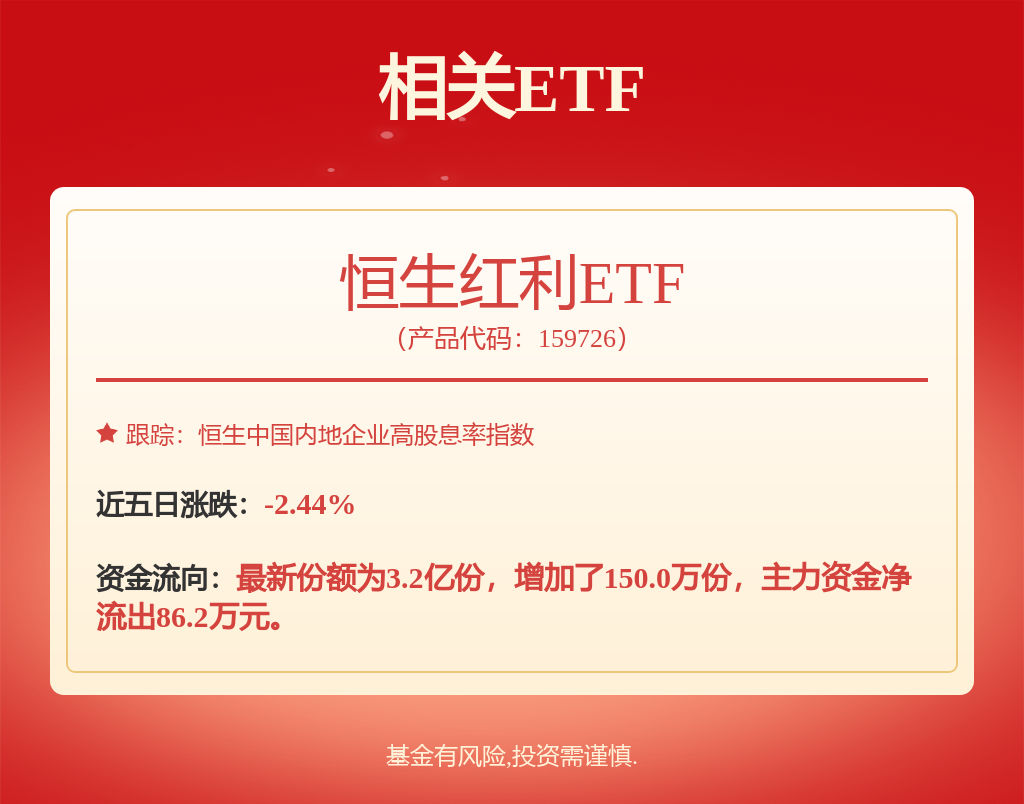
红利质量

Search documents
2025收官倒计时,主动权益投资哪家强?
Xin Lang Cai Jing· 2025-12-30 03:26
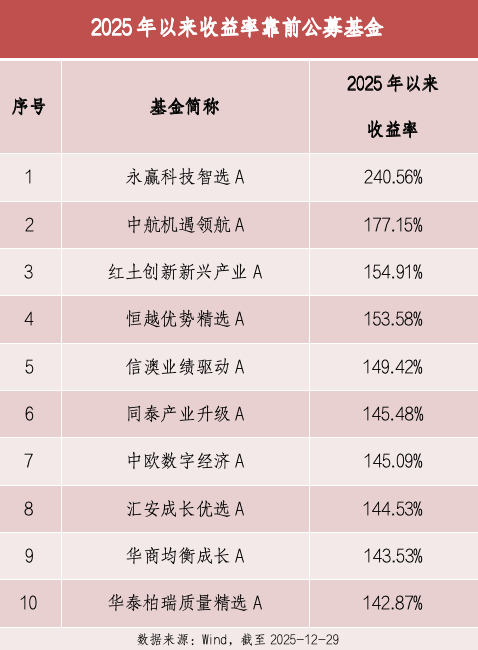
Core Insights - The A-share market has experienced a structural rally in 2025, leading to a significant performance year for equity funds, with 84 funds achieving over 100% returns, including 70 active equity funds, and the highest return exceeding 200% [1][8] - The CSI 300 index saw a rise of approximately 18% during the same period, highlighting the active management capabilities of public funds [1] Fund Performance - The top-performing public funds since 2025 include: - Yongying Technology Smart A: 240.56% - AVIC Opportunity Navigator A: 177.15% - Hongtu Innovation Emerging Industry A: 154.91% - Hengyue Advantage Selection A: 153.58% - Xin'ao Performance Driven A: 149.42% [2][9] - Among the 70 active equity "doubling funds," eight fund companies produced three or more such funds, predominantly larger fund companies [2][10] Fund Company Analysis - The fund companies with the most "doubling funds" include: - E Fund Management Co., Ltd.: 10 funds - Fortune Fund Management Co., Ltd.: 8 funds - Yongying Fund Management Co., Ltd.: 5 funds - Anxin Fund Management Co., Ltd.: 4 funds [3][10] - Hongtu Innovation Fund has shown remarkable performance with an average return of 84.69% across its eight active equity products, with three funds achieving over 100% returns [4][11] Investment Strategy - Hongtu Innovation Fund leverages its unique characteristics of "state-owned background + venture capital gene" to build a specialized investment research system, focusing on deep industry research and integrating it with market investment strategies [5][12] - The fund's investment strategy emphasizes high-growth sectors such as AI, aerospace, military, new energy, semiconductors, fintech, robotics, and consumption, aligning with national development strategies [6][13] - The fund's product layout is characterized by precision focus, with equity investments targeting high-growth sectors and fixed-income products emphasizing high dividend yields [6][13] Market Outlook - As 2025 concludes, the competition in active equity investment has shifted towards a deeper evaluation of research capabilities, suggesting that investors should prioritize firms with strong research advantages and long-term performance support to seize future market opportunities [6][13]

双创领涨,红利质量占优,攻守兼备红利组合跑出超额
Changjiang Securities· 2025-12-28 11:45
- The report introduces several active quantitative products launched by the Changjiang Quantitative Team since July 2023, including the Dividend Selection Strategy and the Industry High Win Rate Strategy[7][14] - The "Dividend 50 Combination" strategy outperformed the CSI Dividend Total Return Index with a weekly excess return of approximately 0.52%, ranking around the 17th percentile among similar products[8][16][23] - The "Electronic Balanced Allocation Enhanced Combination" strategy achieved a weekly return of about 4.82%, slightly underperforming the overall electronic sector return[8][26][33]
分红早知道|最近24小时内,福晶科技、山东路桥等2家A股上市公司发布分红派息实施公告!
Mei Ri Jing Ji Xin Wen· 2025-12-18 01:34
Group 1 - The Low Volatility Dividend Index (H30269.CSI) includes 50 securities with good liquidity, continuous dividends, moderate payout ratios, positive growth in dividends per share, high dividend yields, and low volatility, with a one-year dividend yield of 5.03% as of December 17 [1] - The Low Volatility Dividend ETF (159547) tracks this index and has the lowest comprehensive fee rate among ETFs, with quarterly assessments for dividends [1] - The Dividend Quality Index (931468.CSI) consists of 50 listed companies that provide continuous cash dividends, have high payout ratios, and exhibit strong profitability, with a one-year dividend yield of 2.68% as of December 17 [1] Group 2 - Shandong Road and Bridge announced a cash dividend of RMB 0.12 per 10 shares (tax included), with the record date on December 23, 2025, and the ex-dividend date on December 24, 2025 [1] - Shandong Road and Bridge is classified under the construction decoration sector and is not part of the Low Volatility Dividend Index or the Dividend Quality Index [1] Group 3 - Fuzhijing Technology declared a cash dividend of RMB 1.00 per 10 shares (tax included), with the record date on December 24, 2025, and the ex-dividend date on December 25, 2025 [2] - Fuzhijing Technology is classified under the electronics sector and is also not part of the Low Volatility Dividend Index or the Dividend Quality Index [2]

分红早知道|最近24小时内,青岛港、申万宏源、辉隆股份、新大正、财通证券等5家A股上市公司发布分红派息实施公告!
Mei Ri Jing Ji Xin Wen· 2025-12-17 03:30
Group 1: Dividend Indices - The Low Volatility Dividend Index (H30269.CSI) includes 50 securities with good liquidity, continuous dividends, moderate payout ratios, positive growth in dividends per share, high dividend yields, and low volatility, with a dividend yield of 5.05% as of December 16 [1] - The Dividend Quality Index (931468.CSI) consists of 50 securities that continuously pay cash dividends, have high payout ratios, and exhibit high profitability, with a dividend yield of 2.72% as of December 16 [1] Group 2: Company Dividend Announcements - Qingdao Port announced a cash dividend of RMB 0.1466 per share (tax included), with the record date on December 23, 2025, and the ex-dividend date on December 24, 2025 [1] - Shenwan Hongyuan declared a cash dividend of RMB 0.35 per 10 shares (tax included), with the same record and ex-dividend dates as Qingdao Port [2] - Huillong Co. announced a cash dividend of RMB 0.5 per 10 shares (tax included), with the same record and ex-dividend dates [2] - Xinda Zheng declared a cash dividend of RMB 1.50 per 10 shares (tax included), with the same record and ex-dividend dates [2] - Caitong Securities announced a cash dividend of RMB 0.06 per share (tax included), with the same record and ex-dividend dates [3]



分红早知道丨最近24小时内,贵州茅台、五粮液、宁波银行、马可波罗等6家A股上市公司发布分红派息实施公告
Mei Ri Jing Ji Xin Wen· 2025-12-11 02:41
Group 1: Dividend Indices - The Low Volatility Dividend Index (H30269.CSI) includes 50 securities with good liquidity, continuous dividends, moderate payout ratios, positive growth in dividends per share, high dividend yields, and low volatility, with a 1-year dividend yield of 4.21% as of December 10 [1] - The Dividend Quality Index (931468.CSI) consists of 50 listed companies that provide continuous cash dividends, have high payout ratios, and exhibit strong profitability, with a 1-year dividend yield of 3.48% as of December 10 [1] Group 2: Company Dividend Announcements - Kweichow Moutai announced a cash dividend of 23.957 RMB per share (tax included), with the record date on December 18, 2025, and the ex-dividend date on December 19, 2025 [1] - Wuliangye announced a cash dividend of 25.78 RMB for every 10 shares (tax included), with the record date on December 17, 2025, and the ex-dividend date on December 18, 2025 [2] - Yidong Electronics declared a cash dividend of 1.00 RMB for every 10 shares (tax included), with the record date on December 16, 2025, and the ex-dividend date on December 17, 2025 [2] - Shouchuang Securities announced a cash dividend of 0.10 RMB per share (tax included), with the record date on December 18, 2025, and the ex-dividend date on December 19, 2025 [2] - Ningbo Bank declared a cash dividend of 3.00 RMB for every 10 shares (tax included), with the record date on December 16, 2025, and the ex-dividend date on December 17, 2025 [3] - Marco Polo announced a cash dividend of 3.00 RMB for every 10 shares (tax included), with the record date on December 17, 2025, and the ex-dividend date on December 18, 2025 [3]




分红早知道|最近24小时内,艾罗能源、卓易信息、卓创资讯、瑞泰新材等4家A股上市公司发布分红派息实施公告!
Mei Ri Jing Ji Xin Wen· 2025-12-03 06:34
Group 1 - The Low Volatility Dividend Index (H30269.CSI) includes 50 securities with good liquidity, continuous dividends, moderate payout ratios, positive growth in dividends per share, high dividend yields, and low volatility, with a one-year dividend yield of 4.09% as of December 2 [1] - The Low Volatility Dividend ETF (159547) is the ETF with the lowest comprehensive fee tracking this index [1] - The Dividend Quality Index (931468.CSI) consists of 50 listed companies that provide continuous cash dividends, have higher payout ratios, and exhibit high profitability, with a one-year dividend yield of 3.43% as of December 2 [1] Group 2 - Airo Energy announced a cash dividend of 0.9375 CNY per share (tax included), with the record date on December 8, 2025, and the ex-dividend date on December 9, 2025 [2] - Zhuoyi Information declared a cash dividend of 0.10 CNY per share (tax included), with the same record and ex-dividend dates as Airo Energy [2] - Zhuochuang Information will distribute a cash dividend of 4.00 CNY for every 10 shares (tax included), with the same record and ex-dividend dates [2] - Ruitai New Materials will distribute a cash dividend of 1.00 CNY for every 10 shares (tax included), with the record date on December 9, 2025, and the ex-dividend date on December 10, 2025 [2]

分红早知道丨最近24小时内,艾融软件、天富龙、华新建材、盐津铺子等6家A股上市公司发布分红派息实施公告
Mei Ri Jing Ji Xin Wen· 2025-11-28 02:43
Group 1: Dividend Announcements - Aierong Software announced a cash dividend of 0.0497863 per share (tax included), with the record date on December 3, 2025, and the ex-dividend date on December 4, 2025 [1] - Weida Optoelectronics declared a cash dividend of 0.0999934 per share (tax included), with the record date on December 5, 2025, and the ex-dividend date on December 8, 2025 [1] - Tianfulong reported a cash dividend of 0.50 yuan per share (tax included), with the record date on December 3, 2025, and the ex-dividend date on December 4, 2025 [1] Group 2: Additional Dividend Announcements - Huaxin Building Materials announced a cash dividend of 0.34 yuan per share (tax included), with the record date on December 3, 2025, and the ex-dividend date on December 4, 2025 [2] - Shengtun Mining declared a cash dividend of 0.05 yuan per share (tax included), with the record date on December 3, 2025, and the ex-dividend date on December 4, 2025 [2] - Yanjinpuzi reported a cash dividend of 0.3999984 yuan per share (tax included), with the record date on December 4, 2025, and the ex-dividend date on December 5, 2025 [2] Group 3: Dividend Indices - The Dividend Low Volatility Index (H30269.CSI) includes 50 securities with good liquidity, continuous dividends, moderate payout ratios, positive growth in dividends per share, and low volatility, with a one-year dividend yield of 4.10% as of November 27 [3] - The Dividend Quality Index (931468.CSI) consists of 50 securities with continuous cash dividends, high payout ratios, and strong profitability, with a one-year dividend yield of 3.45% as of November 27 [3] - The Dividend Low Volatility ETF (159547) tracks the Dividend Low Volatility Index with the lowest comprehensive fee rate [3]
分红早知道|最近24小时内,思特威-W、江阴银行、山东威达和奥美森等4家A股上市公司发布分红派息实施公告!
Mei Ri Jing Ji Xin Wen· 2025-11-27 01:55
Group 1 - Company A (奥美森) announced a cash dividend of 5.00 RMB per 10 shares (including tax), with the record date on December 1, 2025, and the ex-dividend date on December 2, 2025 [1] - Company B (思特威-W) declared a cash dividend of 0.125 RMB per share (including tax), with the record date on December 2, 2025, and the ex-dividend date on December 3, 2025 [1] - Company C (江阴银行) will distribute a cash dividend of 1.0 RMB per 10 shares (including tax), with the record date on December 2, 2025, and the ex-dividend date on December 3, 2025 [1] Group 2 - Company D (山东威达) announced a cash dividend of 0.50 RMB per 10 shares (including tax), with the record date on December 3, 2025, and the ex-dividend date on December 4, 2025 [2] - The Low Volatility Dividend Index (红利低波) consists of 50 securities with good liquidity, continuous dividends, moderate payout ratios, positive growth in dividends per share, and low volatility, with a dividend yield of 4.12% as of November 26 [3] - The Dividend Quality Index (红利质量) includes 50 securities with continuous cash dividends and high payout ratios, showing a dividend yield of 3.44% as of November 26 [3]


分红早知道丨最近24小时内,龙竹科技、宏远股份、中航机载和中汽股份等4家A股上市公司发布分红派息实施公告
Mei Ri Jing Ji Xin Wen· 2025-11-26 01:59
Group 1 - Longzhu Technology announced a cash dividend of 1.50 RMB per 10 shares (including tax), with the record date on December 2, 2025, and the ex-dividend date on December 3, 2025 [1] - Hongyuan Co. declared a cash dividend of 1.00 RMB per 10 shares (including tax), with the record date on December 2, 2025, and the ex-dividend date on December 3, 2025 [1] - AVIC Aircraft announced a cash dividend of 0.022 RMB per share (including tax), with the record date on December 3, 2025, and the ex-dividend date on December 4, 2025 [1] Group 2 - Zhongqi Co. declared a cash dividend of 0.38 RMB per 10 shares (including tax), with the record date on December 1, 2025, and the ex-dividend date on December 2, 2025 [2] Group 3 - The Low Volatility Dividend Index (H30269.CSI) selects 50 securities with good liquidity, continuous dividends, moderate payout ratios, positive growth in dividends per share, and low volatility to form its sample [3] - The Low Volatility Dividend ETF (159547) tracks this index with the lowest comprehensive fee [3] - The Dividend Quality Index (931468.CSI) selects 50 listed companies that continuously pay cash dividends, have high payout ratios, and exhibit strong profitability [3] - The Dividend Quality ETF (159758) is the only ETF tracking this index [3]
红利质量ETF: 华夏中证红利质量交易型开放式指数证券投资基金2025年中期报告
Zheng Quan Zhi Xing· 2025-08-29 10:11
Fund Overview - The fund is named "Huaxia CSI Dividend Quality ETF" and was established on December 20, 2021, with a total share of 546,290,777.00 at the end of the reporting period [1][2] - The fund aims to closely track the CSI Dividend Quality Index, targeting an absolute tracking deviation of no more than 0.2% on a daily basis and an annual tracking error of no more than 2% [1][2] - The fund employs various investment strategies, including full replication, alternative strategies, and investment in derivatives and bonds [1][2] Financial Performance - The fund achieved a realized income of 8,028,150.80 RMB and a profit of 19,549,449.27 RMB during the reporting period from January 1, 2025, to June 30, 2025 [2][3] - The weighted average net value profit rate for the period was 3.60%, with a net asset value of 514,654,634.43 RMB and a net asset value per share of 0.9421 RMB at the end of the period [2][3] - The cumulative net value growth rate since the fund's inception is -5.79% [2][3] Market Environment - The macroeconomic environment in China showed resilience, with a GDP growth rate of 5.3% in the first half of 2025, supported by counter-cyclical policies and adjustments in export structures [12][13] - The A-share market experienced high volatility but recorded positive returns across major indices, with sectors like non-ferrous metals, banking, and military industries performing well [12][13] - The fund's tracking deviation was +2.04%, primarily due to dividend distributions, operational expenses, and index adjustments [13] Management and Operations - The fund management company, Huaxia Fund Management Co., Ltd., has a strong reputation and extensive experience in managing ETF products, being one of the largest in the domestic market [4][5] - The fund management adheres to strict compliance with regulations and has implemented robust risk monitoring and control mechanisms [11][15] - The fund did not distribute profits during the reporting period, aligning with regulatory requirements [14][15] Client Services - In the first half of 2025, the fund management company focused on enhancing customer experience through improved online services and educational initiatives [7] - The company has established liquidity service partnerships with several securities firms to ensure smooth market operations for the fund [13]