结构性矛盾

Search documents
全国各地现理发店倒闭潮,没有电商冲击,理发店为什么自己能干黄?
Xin Lang Cai Jing· 2025-05-29 01:28
Core Insights - The hair salon industry is facing a significant closure trend, with over 300,000 salons expected to shut down in 2024, and closure rates projected to reach 18.73% in first-tier cities and 26.3% in third- and fourth-tier cities by 2025 [2] Group 1: Operational Challenges - The reliance on prepayment models, such as "pay 5000 get 2000 free," has led to a cash flow dependency that shifts operational focus, resulting in a fragile financial structure [2] - Over 70% of consumers express dissatisfaction with aggressive upselling practices, with 58% of high-end salon customers leaving due to excessive marketing efforts [2] Group 2: Cost Pressures - Rental costs in prime commercial areas are significantly higher, with a 50㎡ salon in Shanghai's Jing'an district costing 40,000 to 60,000 yuan per month, three times the cost of community shops [3] - The average monthly salary for skilled hairdressers is around 8,000 yuan, but the industry faces a high turnover rate of 37% and a low retention rate of less than 20% for new hires, exacerbating service quality issues [3] Group 3: Changing Consumer Behavior - The sales of home hair clippers are expected to surge by 210% in 2025, leading to a decrease in salon visits from once a month to once every six months for male customers [4] - A significant portion of Gen Z males (43%) are opting for self-managed hairstyles, while the use of hairpieces among female consumers has risen to 29% [4] Group 4: Market Dynamics - There is a misalignment in pricing strategies, with 60% of salons charging over 68 yuan per visit experiencing low foot traffic, while community salons charging below 30 yuan have an 82% survival rate [6] - The oversupply of salons is evident, with one community in Hangzhou having 23 salons for a population of 15,000, while profitability requires a minimum of 3,000 residents per salon [6] Group 5: Path Forward - The case of a community salon in Shenyang, which offers haircuts for 15 yuan without membership cards, demonstrates that focusing on basic service quality and customer trust can lead to higher foot traffic and potential recovery for the industry [6]


“美国比以往更有紧迫感”
虎嗅APP· 2025-05-13 13:34
Core Viewpoint - The article discusses the recent developments in US-China trade relations, particularly focusing on the significant progress made during the Geneva trade talks, where both sides agreed to reduce tariffs substantially, indicating a potential easing of trade tensions [2][4]. Group 1: Signals Released - The urgency from the US side is heightened due to upcoming holidays that require timely product shipments, which could impact the domestic market if unresolved [4]. - The trade friction, if not addressed, could lead to inflation and negatively affect the US stock and bond markets, which is undesirable for the Trump administration [4][5]. - Both countries recognize the need for cooperation, with the US requiring a stable relationship with China for economic reasons, while China aims to avoid deterioration in relations for mutual benefits [5][6]. Group 2: Disadvantages of "Reciprocal Tariff" Policy - Trump's tariff policy is not new but reflects his long-standing focus on tariffs and immigration issues, aiming to boost US revenue and reduce trade deficits [8]. - The policy risks exacerbating inflation and weakening the global competitiveness of US companies, while also alienating major trade partners [8][9]. - The long-term impact on the US's international image and economic cooperation could be detrimental, as the country faces growing skepticism regarding its economic direction and policy stability [9]. Group 3: US in a "Trial and Error" Phase - The fundamental impact of the tariff policy is more about obstructing China's development rather than just trade relations, driven by political motives rather than economic ones [11]. - The structural contradictions in US-China relations remain unchanged, with the US facing systemic issues such as intense political rivalry, wealth disparity, racial tensions, and cultural divides [12]. - The current trend of "de-globalization" suggests that economic friction between the US and China will persist, although there are signs of positive developments from the recent talks [13][14]. - The relationship is expected to return to rationality over time, but this transformation may take about ten years, as the US navigates through its "trial and error" phase [15].

国产PE高供应态势延续 引发价格竞争与结构性矛盾
Sou Hu Cai Jing· 2025-05-05 17:40
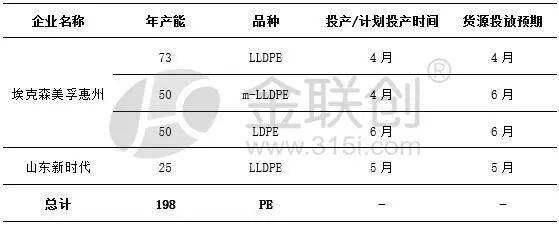
Core Insights - The Chinese polyethylene (PE) market is set to experience a peak in capacity release in Q2 2025, driven by large-scale production from leading companies like ExxonMobil [1][3] - Domestic PE production is expected to reach approximately 8.4037 million tons in Q2 2025, reflecting a quarter-on-quarter increase of 4.42% and a year-on-year increase of 28.14% [3] - The surge in supply will exert pressure on regional supply-demand dynamics and pricing in the short term, while long-term structural contradictions within the industry are becoming increasingly pronounced [3] Industry Trends - Over the past five years, the Chinese polyethylene market has seen significant capacity expansion, entering a new phase of growth since 2020 due to the concentration of large refining and light hydrocarbon facilities [6] - The compound annual growth rate (CAGR) for PE capacity from 2020 to 2024 is approximately 8.46%, while the CAGR for production is about 6.86% [6] - The market is expected to reach a new peak in capacity expansion between 2025 and 2026, primarily driven by coal chemical and coastal refining sectors [6] Competitive Landscape - Increased capacity release will intensify market competition, necessitating companies to optimize costs and differentiate their high-end polyethylene offerings [6] - The northwest region will see heightened competition due to expansions from companies like Baofeng and Taha Refining, leading to increased external shipments and price competition [6] - Shandong is emerging as a key production base for PE, with local supply surplus likely to exacerbate price competition [6] Strategic Considerations - Companies in the northwest (coal chemical) need to focus on optimizing logistics costs, while those in Shandong and South China (refining) should concentrate on high-end product development [6] - Exploring overseas markets is crucial for absorbing excess capacity and optimizing industry structure [6]