聚乙烯(PE)

Search documents
煤炭行业周报(3月第4周):原油价格继续上涨,油煤传导可期-20260329
ZHESHANG SECURITIES· 2026-03-29 10:07
Investment Rating - The industry rating is "Positive" [1] Core Views - The report highlights that the recent surge in crude oil prices, driven by ongoing conflicts in the Middle East, is expected to positively impact coal prices. The demand from domestic power plants and chemical industries remains strong, with expectations for coal prices to rise [6][29] - The coal sector has shown resilience, outperforming the CSI 300 index, with a slight decline of 1.25% compared to a 1.41% drop in the index [2] - Key coal production and sales data indicate a steady increase in average daily coal sales and production, with significant year-on-year growth [2][27] Summary by Sections Coal Market Performance - As of March 27, 2026, the average daily coal sales from monitored enterprises reached 7.72 million tons, a week-on-week increase of 2.4% and a year-on-year increase of 7.5%. The average daily production was 7.77 million tons, up 4.1% week-on-week and 8.4% year-on-year [2] - The total coal inventory stood at 24.88 million tons, reflecting a week-on-week increase of 1.4% but a year-on-year decrease of 29.9% [2][27] Price Trends - The price of thermal coal (Q5500K) in the Bohai Rim reached 688 RMB/ton, a week-on-week increase of 0.15%. The import price index for thermal coal was 969 RMB/ton, up 4.76% week-on-week [3] - Coking coal prices also saw increases, with main coking coal prices at 1,720 RMB/ton, reflecting a week-on-week rise of 7.5% [4] Investment Recommendations - The report suggests focusing on high-dividend thermal coal companies, coal chemical companies, and flexible coking coal companies. Notable companies include China Shenhua, Shaanxi Coal and Energy, and Yanzhou Coal Mining [6][29] - The report emphasizes the potential for coal prices to rise due to strong downstream demand and the need for inventory replenishment in the coking and thermal coal sectors [6][29]
能源化工周报:塑料-20260327
Dong Ya Qi Huo· 2026-03-27 13:25
1. Report Industry Investment Rating - Not provided in the content 2. Core View of the Report - This week, the supply - demand gap remains positive, exerting a negative impact on market sentiment and being transmitted to the price. In the next period, the supply - demand balance gap stays positive with a reduced absolute value. The overall supply - demand data has strengthened compared to the previous period, expected to enhance price support. However, inventory pressure is still high, and price increases may be relatively limited [6] 3. Summary According to the Directory Supply - PE production enterprise operating rate is 76.24%, a month - on - month decrease of 4.79%; PE weekly output is 63.22 tons, a month - on - month decrease of 4.78% [9] Demand - The weighted operating rate of PE downstream has rebounded, with the downstream weighted operating rate at 39.75%, a month - on - month increase of 2.16% [9] Inventory - This week, PE enterprise inventory is 58.79 tons, a month - on - month increase of 3.45%; social inventory is 60.71 tons, a month - on - month decrease of 1.97% [9] Upstream and Cost - Not provided in the content Price and Profit - This week, the PE spot price increased by 0.55% month - on - month to 8837 yuan/ton, and the PE futures price increased by 4.38% month - on - month to 8868 yuan/ton [9] Basis and Spread - The basis is - 30; the (5 - 9) spread is 129 [9]
国际地缘因素冲击,塑料价格波动加剧
Bao Cheng Qi Huo· 2026-03-26 05:25
1. Report Industry Investment Rating - No relevant content provided 2. Core View of the Report - The domestic plastic futures market is in a complex situation with strong cost support, weak demand, and differentiated inventory. In the short - term, due to the uncertainty of the Middle - East geopolitical situation, the oil price is likely to rise and support the plastic price. With the ongoing domestic device maintenance, the supply is tightening, and the plastic futures price will maintain a strong - side shock. In the long - term, if the geopolitical conflict eases, the cost premium will fade, and the slow recovery of downstream demand and high social inventory will limit the price increase [12]. 3. Summary by Related Catalogs Supply Side - In Q1 2026, the domestic plastic supply showed features of slower capacity expansion, more device maintenance, and a structural decline in the operating rate. The capacity expansion speed slowed down significantly, and there were only a small amount of new production capacity in early January. The industry entered the stage of digesting existing capacity, and the new supply pressure was significantly relieved [3]. - In March, the spring maintenance of domestic petrochemical enterprises led to a contraction in supply. By mid - March, the operating rate of the polyethylene (PE) industry dropped to 82.39%, 4.5 percentage points lower than in February. The weekly output decreased by 37500 tons, and the output affected by device maintenance reached 91000 tons. The profit of coal - based PE was over 1900 yuan/ton, while the oil - based PE was in continuous loss, with a loss of over 2000 yuan/ton, which forced high - cost oil - based capacity to reduce production and conduct maintenance, further intensifying the supply contraction [4]. Demand Side - After the Spring Festival, the downstream plastic product enterprises gradually resumed work, but the resumption rhythm was slower than in previous years. By mid - to late March, the operating rate of the PE downstream agricultural film industry rose to 35.44%, and that of packaging film and pipe industries rose to about 50%. The PP downstream industries had different operating rates, and the overall downstream mainly had rigid demand for procurement. There were two main factors restricting demand: weak terminal consumption and slow export orders, and the high plastic price squeezing downstream profits. However, with the implementation of domestic policies, the demand for some plastic products is expected to improve [6][8][9]. Impact of Geopolitical Situation - The continuous escalation of the Middle - East conflict has become a core external variable affecting oil prices and plastic futures. The shipping volume of the Strait of Hormuz dropped by 92% in March, causing concerns about oil supply disruptions. The oil price rose sharply, and the cost of oil - based plastic increased, driving up the plastic price. But the impact of geopolitics on oil prices is short - term and uncertain [11].
中东局势仍动荡,聚烯烃延续走高
Hua Tai Qi Huo· 2026-03-24 06:27
Report Industry Investment Rating No relevant content provided. Core Viewpoints of the Report - The ongoing turmoil in the Middle East, especially the tense situation in Iran, continues to drive up the prices of energy and chemical products. The market anticipates that the conflict in Iran will escalate and may spread to neighboring countries, leading to concerns about energy supply disruptions [3]. - For PE, upstream maintenance plans are increasing, and the expected decline in the operating rate, combined with weak import resource arrivals, is tightening the market supply. Although the overall downstream operating rate has rebounded, the high - price acceptance of downstream is low, resulting in a significant decline in the L basis. However, the supply side still provides strong support, and the PE market trend remains strong [3]. - For PP, the intensification of the Iran conflict has increased concerns about raw material supply. The supply support for PP remains strong as the maintenance losses of upstream enterprises continue to rise. The high price of PP has squeezed downstream profits, leading to cautious procurement by downstream. However, the opening of the PP export window has boosted export demand. In the short term, the reduction in PP supply and the strong support from the cost side of propane will continue to drive prices up as long as the Strait of Hormuz remains closed [4]. Summary by Directory 1. Polyolefin Basis and Inter - period Structure - The closing price of the L main contract is 9,523 yuan/ton (+705), and the closing price of the PP main contract is 9,793 yuan/ton (+774). The LL North China spot price is 8,800 yuan/ton (+500), the LL East China spot price is 9,100 yuan/ton (+650), and the PP East China spot price is 9,300 yuan/ton (+550). The LL North China basis is - 723 yuan/ton (-205), the LL East China basis is - 423 yuan/ton (-55), and the PP East China basis is - 493 yuan/ton (-224) [1]. 2. Production Profit and Operating Rate - The PE operating rate is 80.1% (-2.3%), and the PP operating rate is 70.5% (+0.4%). The PE oil - based production profit is - 1,617.9 yuan/ton (-412.0), the PP oil - based production profit is - 1,557.9 yuan/ton (-412.0), and the PDH - based PP production profit is - 3,142.4 yuan/ton (-1,202.8) [1]. 3. Polyolefin Non - standard Price Difference No specific data or analysis provided in the given content. 4. Polyolefin Import and Export Profits - The LL import profit is - 962.5 yuan/ton (-150.0), the PP import profit is - 1,409.9 yuan/ton (-200.0), and the PP export profit is 179.1 US dollars/ton (+25.7) [1]. 5. Polyolefin Downstream Operating Rate and Downstream Profits - The PE downstream agricultural film operating rate is 35.4% (+8.6%), the PE downstream packaging film operating rate is 45.6% (+2.2%), the PP downstream plastic weaving operating rate is 40.3% (-0.3%), and the PP downstream BOPP film operating rate is 62.0% (+0.6%) [2]. 6. Polyolefin Inventory No specific data or analysis provided in the given content. Strategies - Unilateral: Cautiously go long on LLDPE and PP for hedging. - Inter - period: No strategy provided. - Cross - variety: Cautiously go short on the spread between LL05 and PP05 [5].
煤炭行业周报(3月第3周):焦煤期货大涨,板块有望共振-20260322
ZHESHANG SECURITIES· 2026-03-22 06:05
Investment Rating - The industry investment rating is "Positive" [1] Core Viewpoints - The coal sector has shown resilience, outperforming the CSI 300 index by 0.14 percentage points despite a weekly decline of 2.05% [2] - Key coal mines reported a slight decrease in average daily sales but a year-on-year increase, indicating stable demand [2] - The recent surge in coking coal futures is driven by downstream restocking expectations and geopolitical tensions, suggesting a potential price rebound [6][28] Summary by Sections Supply Side - Average daily coal sales from monitored enterprises were 7.54 million tons, a week-on-week decrease of 0.5% but a year-on-year increase of 5.1% [2] - The total coal inventory (including port stocks) was 24.53 million tons, down 2% week-on-week and down 31.1% year-on-year [2][7] Demand Side - Power and chemical industries have seen cumulative coal consumption increase by 1% and 9.3% year-on-year, respectively [2] - The average daily coal consumption in the chemical sector was reported at 8.29 million tons, reflecting a year-on-year increase of 9.3% [26] Price Side - The price of thermal coal (Q5500K) was reported at 687 RMB/ton, a week-on-week decrease of 0.29% [3] - Coking coal prices at major ports have shown mixed trends, with some ports experiencing price increases [4] - The futures settlement price for coking coal was 1,162 RMB/ton, down 1.4% week-on-week [4] Sentiment Side - The sentiment in the coal market remains optimistic due to expected price increases driven by supply constraints and rising demand from the steel sector [6][28] - The overall market sentiment is supported by high steel prices and the suspension of coal exports from Russia [28]



煤炭行业周报(3月第2周):能源缺口约10亿吨原煤,煤炭有望量价齐升
ZHESHANG SECURITIES· 2026-03-15 12:24
Investment Rating - The industry rating is "Positive" [1] Core Insights - The coal sector has shown a significant increase, outperforming the CSI 300 index by 5.23 percentage points, with a weekly increase of 5.42% as of March 13, 2026 [2] - The report indicates a coal energy gap of approximately 1 billion tons of raw coal, suggesting potential for both volume and price increases in the coal market [1][6] - Key coal mining enterprises reported an average daily coal sales of 7.58 million tons, a week-on-week increase of 4.2%, while the total coal inventory reached 25.02 million tons, reflecting a 2% increase week-on-week but a 30.6% decrease year-on-year [2][7] Supply Side Summary - Daily coal production from monitored enterprises was 7.65 million tons, up 3.4% week-on-week and 1.2% year-on-year [2] - The total coal inventory (including port storage) was 25.02 million tons, with a week-on-week increase of 2% and a year-on-year decrease of 30.6% [2][7] - The report highlights that the cumulative coal sales for the year reached 50.253 million tons, a 5.6% increase year-on-year [2][30] Demand Side Summary - The report notes that coal consumption in the power and chemical industries has increased by 1.1% and 9% year-on-year, respectively [2][30] - The iron and steel production has also seen a slight increase of 0.4% year-on-year [2] Price Summary - The price of thermal coal (Q5500K) remained stable at 689 CNY/ton, while the price of imported thermal coal was 977 CNY/ton [3] - The report indicates fluctuations in coal prices at various ports, with some showing increases while others decreased [3][4] - Coking coal prices at major ports remained stable, with slight variations in specific regions [4] Investment Recommendations - The report suggests focusing on high-dividend thermal coal companies, coal chemical companies, and flexible coking coal companies, with specific companies highlighted for investment [6][32] - Companies to watch include China Shenhua, Shaanxi Coal and Chemical Industry, and Yanzhou Coal Mining Company among others [6][32]
情绪企稳后的二次拉升:能化板块的品种分化与关注重点
An Liang Qi Huo· 2026-03-13 03:01
Report Investment Rating - No investment rating information provided in the report Core View - The initial price increase of some chemicals was driven by the premium effect of geopolitical tensions, but as the market evolved, the strength of the fundamentals of each variety has become the decisive factor for the price increase. The market shows obvious differentiation characteristics. The price increase of the varieties with tight supply - demand patterns is relatively smooth, while the increase of those with weak supply - demand patterns is weak. At present, a defensive strategy should be adopted, and it is necessary to focus on the performance of varieties with tight and loose supply - demand patterns in the future [23][24][25] Summary by Directory 1. Changes in the Price Transmission Path of Chemical Products (1) Geopolitical Premium Driving Chemical Prices Up in the Early Stage - Last week, the market rise was mainly driven by the geopolitical event of the US - Iran conflict, which strengthened the market's expectation of a contraction in crude oil supply. This week, the price quickly corrected due to the cooling of market sentiment, profit - taking by some long - positions, and the exchange's increase in margin requirements [4] - The impact of price fluctuations shows obvious echelon differentiation. The first echelon includes crude oil, methanol, and LPG; the second echelon includes ethylene, propylene, polyethylene, and polypropylene; the third echelon includes PX, pure benzene, styrene, and ethylene glycol; the fourth echelon has relatively weak price linkage [5] (2) Later Gradually Turning to the Promotion of the Own Fundamental - The market driving logic is extending from simple cost transmission to supply - chain transmission, and the weight of fundamentals is gradually increasing. The first - echelon varieties are directly affected by supply shocks; the second - echelon ones are driven by both cost and supply; the third - echelon ones are demand - driven [11] 2. Analysis of Some Chemical Products (1) PX/PTA - The core logic of PX price increase has changed from cost increase to "real supply shock". The PX supply shock has become a reality, and the market's pricing of near - term supply tightness has been strengthened. PTA shows a game between "cost - driven" and "weak fundamentals". PX is the strongest link in the industrial chain, while PTA's rise depends more on cost promotion [14][15] (2) Pure Benzene/Styrene - Short - term geopolitical events have reconstructed the cost bottom line of the pure - benzene and styrene industrial chains. Styrene performs relatively strongly due to its better inventory structure. The supply of pure benzene in the Asian market is expected to be tight, and its future trend will be mainly affected by external factors. Styrene has strong future demand expectations, but there are also risks [17][18] (3) Methanol - The driving factor of methanol comes from the Middle East geopolitical situation, which directly affects supply expectations. The inventory has decreased, but in the long - term, the supply is expected to be loose once the geopolitical risk eases [19] (4) Plastics (PP, PE, PVC) - The three plastics show a differentiated market. PP is a cost - driven increase but has a "market without transactions" risk. PE is in a dilemma between cost and supply - demand. PVC is the weakest, and its price center may move down [20] 3. Overall Strategy for the Chemical Sector - At present, a defensive strategy should be adopted, and it is advisable to wait and see. In the next observation period, focus on the follow - up performance of varieties with tight and loose supply - demand patterns [25]
东莞出现了15年未见的塑胶抢货潮
投中网· 2026-03-12 02:00
Core Viewpoint - The ongoing conflict in the Middle East, particularly between the U.S. and Iran, has led to significant fluctuations in oil prices, which in turn is impacting the supply chain and causing panic buying in the plastic market in China [4][5][6]. Group 1: Market Dynamics - The price of WTI crude oil reached a peak of $119.48 per barrel, representing a 78% increase compared to pre-conflict levels [5][12]. - In the chemical market, polypropylene (PP) and polyethylene (PE) futures saw significant price increases, with PP rising to 8034 yuan/ton and PE to 7944 yuan/ton, marking daily increases of 454 yuan/ton and 449 yuan/ton respectively [5][14]. - The Dongguan market, a major hub for plastic trading, has experienced severe congestion due to panic buying, with trucks waiting for hours to unload [6][9][21]. Group 2: Supply Chain Implications - The conflict has created a ripple effect throughout the supply chain, with rising oil prices affecting the entire petrochemical industry, leading to increased costs for downstream products [13][26]. - Local suppliers in Dongguan have reported frequent price adjustments and speculative buying behavior, indicating a market driven by fear rather than actual demand [24][26]. - The local plastic industry is facing a dual challenge of rising prices from upstream suppliers and stagnant demand from downstream manufacturers, leading to a precarious market situation [26][27]. Group 3: Future Outlook - The Dongguan Plastic Industry Association has indicated that while short-term price fluctuations are expected, the core supply channels remain stable, and the overall supply-demand balance is manageable [25]. - However, there are concerns about the accumulation of risks in the market, particularly with high-priced inventory and potential cash flow issues for traders [27]. - The ongoing geopolitical tensions may keep oil prices elevated, which could have long-term implications for the manufacturing sector reliant on plastic as a key raw material [27].


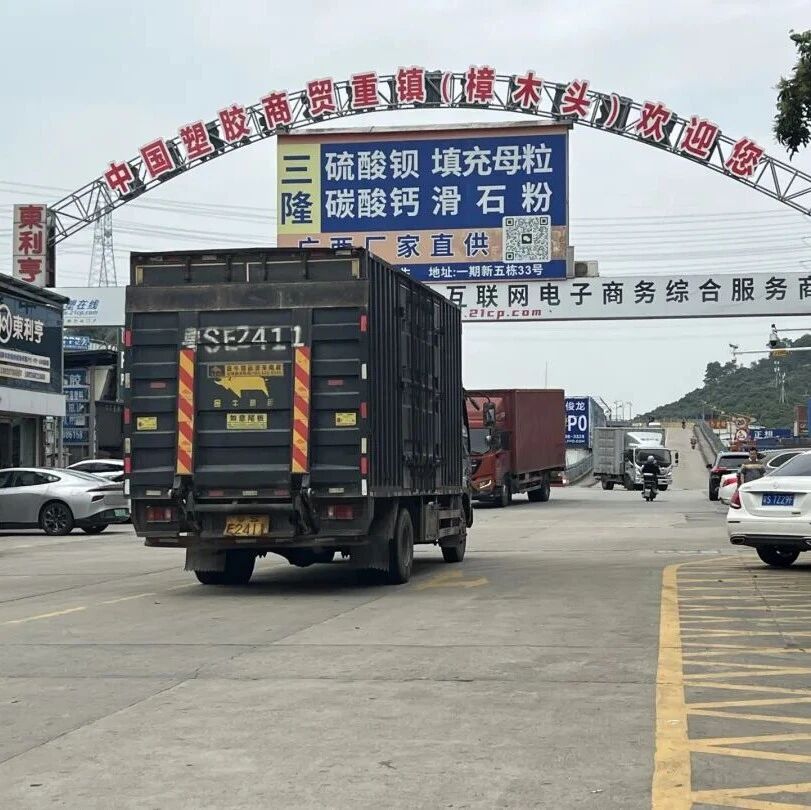
“见过抢米抢面,没见过抢塑料”,中东开战,东莞一个小镇大堵车
凤凰网财经· 2026-03-10 13:53
Core Viewpoint - The article discusses the recent surge in plastic raw material prices in Dongguan's Zhangmutou, driven by geopolitical tensions in the Middle East, leading to a phenomenon termed the "plastic rush" [2][4][6]. Group 1: The "Plastic Rush" - The "plastic rush" in Zhangmutou has resulted in significant traffic congestion and a dramatic increase in plastic product prices, with some prices rising by 40% to 60% in just a week [4][6]. - Despite the apparent frenzy, industry insiders suggest that the price hikes are largely speculative and do not reflect actual demand from end-users, as the downstream market operates on thin margins [4][11]. - The congestion was exacerbated by the concentration of warehouses and logistics centers in the area, which, combined with increased demand for plastic materials, led to significant delays in transportation [9][10]. Group 2: Market Dynamics and Speculation - The article highlights a shift in market behavior, where traders, accustomed to low demand, are now scrambling to stock up on materials due to fears of supply shortages caused by the Middle East conflict [11][12]. - Traders are engaging in speculative pricing, with some quotes not reflecting actual transactions, leading to a cycle of price increases driven by perceived scarcity rather than real demand [13][14]. - The current market situation is characterized as a "virtual prosperity," where goods are merely transferred within warehouses without reaching end-users, raising concerns about potential financial risks for traders [17][18]. Group 3: Price Increases and Industry Response - The article notes that upstream raw materials related to plastics, such as styrene and acrylonitrile, have also seen price increases, which are expected to impact downstream manufacturing costs [18][19]. - Major chemical companies have begun issuing price increase notices, with some products seeing price hikes of 5% to 20%, indicating a broader trend of rising costs across the industry [19][20]. - Companies like Kingfa Technology are attempting to manage these cost pressures through transparent pricing strategies and commitments to maintain supply for key customers [22][23]. Group 4: Industry Evolution in Zhangmutou - Zhangmutou is undergoing a transformation from a trading hub to a center for high-end manufacturing and technology development, with significant investments in new materials and production capabilities [24][25]. - The local industry is adapting to changing market conditions, with a focus on developing specialized materials that meet high-end manufacturing needs, reflecting a shift in the competitive landscape [27][28]. - The establishment of new projects aimed at high-end plastic production indicates a long-term strategy to enhance the region's industrial capabilities and market position [27].
煤炭行业周报(3月第1周):油煤价差强势走扩,煤化工行业显著受益
ZHESHANG SECURITIES· 2026-03-08 12:24
Investment Rating - The industry rating is "Positive" [1] Core Views - The coal sector has shown strong performance, with a 3.5% increase in the CITIC coal industry index, outperforming the CSI 300 index by 4.57 percentage points [2] - The widening oil-coal price gap indicates strong potential for coal chemical alternatives to oil, leading to increased operating rates and investment in coal chemical industries [6] - Current coal prices are expected to rise due to the influence of oil prices, despite a slight decline in coal prices during the off-season [6] Supply and Demand Summary - Average daily coal sales from monitored enterprises increased by 12.6% week-on-week and 11.2% year-on-year, reaching 7.27 million tons [2] - The average daily coal production was 7.39 million tons, up 10.5% week-on-week and 9.3% year-on-year [2] - Total coal inventory (including port storage) was 24.54 million tons, a 3.5% increase week-on-week but a 33.2% decrease year-on-year [2] - Cumulative coal sales for the year reached 44.95 million tons, a 6.3% increase year-on-year [24] Price Summary - The price of thermal coal (Q5500K) was 689 CNY/ton, up 0.58% week-on-week [3] - The price of coking coal at Jing Tang Port was 1610 CNY/ton, down 5.3% week-on-week [4] - The price of methanol in East China rose to 2502.5 CNY/ton, an increase of 333.64 CNY/ton week-on-week [5] Investment Recommendations - The report suggests focusing on high-dividend thermal coal companies, coal chemical companies, and flexible coking coal companies [6] - Specific companies to watch include China Shenhua, Shaanxi Coal and Chemical Industry, and others with coal chemical production capacity [6]