
绿色储粮

Search documents
“粮食安全看山东”之临沂:地方储备粮油管理贴上“绿色”标签
Zhong Guo Fa Zhan Wang· 2025-12-02 07:11
Core Insights - The company has invested 17.2 million yuan to enhance grain storage management through a "five-dimensional integrated" green storage technology system, transitioning from "safe storage and loss reduction" to "quality preservation and green storage" [1] Group 1: Green Storage Technology - The company utilizes smart grain storage management information technology to automatically collect grain condition data, optimizing ventilation and fumigation processes to maintain grain temperatures below 25°C and an average of 20°C [2] - All storage facilities have achieved the "four no" standards, with average temperatures significantly reduced by 23% compared to pre-renovation levels, aiding in grain quality preservation [2] Group 2: Technological Empowerment - The company has applied for patents for innovative grain quality monitoring methods and systems, employing physical and biological technologies for pest control, ensuring safety and environmental friendliness [3] - The introduction of automated unloading and inspection systems has increased daily storage capacity by 47.5% while reducing energy consumption by approximately 38% [3] Group 3: Management and Standards - The company has established five green storage enterprise standards and published them on a national platform, providing a regulatory framework for standardized green storage management [4] - A dynamic regulatory platform has been developed for real-time monitoring, enhancing oversight and management capabilities across various grain storage facilities [4] Group 4: Commitment to Quality and Safety - The company aims to implement national grain circulation management policies, focusing on ensuring the safety of stored grains and striving to create a first-class grain reserve [5]
“粮食安全看山东”之临沂:绿色仓储铸牢“粮安”根基
Zhong Guo Fa Zhan Wang· 2025-11-27 06:31
Core Viewpoint - Food security is a top priority for national and public welfare, and the company is actively exploring new paths for grain storage while ensuring both quantity and quality [1][2] Group 1: Grain Storage Techniques - The company has made significant progress in promoting and applying advanced green, ecological, and environmentally friendly grain storage technologies [1] - Inert powder pest control technology is utilized by spreading food-grade inert powder at the grain warehouse entrance, effectively creating a barrier to prevent pest entry and cross-infection [1] - The installation of sealed doors and windows in grain warehouses enhances airtightness, improves insulation, and effectively suppresses the growth of mold and pests, ensuring the quality of stored wheat [1] Group 2: Information and Intelligent Management - The company employs a multi-parameter grain condition detection and early warning system that integrates temperature and humidity monitoring to optimize grain storage management and reduce losses [2] - This system is suitable for long-term storage of bulk grains like wheat, rice, and corn, allowing real-time monitoring and precise ventilation strategies to minimize moisture loss and energy consumption [2] - The company aims to promote a comprehensive green grain storage approach, supported by policies, technology, standards, and talent, to achieve the strategic goals of scientific, green, and intelligent grain storage [2]
农民种粮实现优粮优价 “科技助力+精细化服务”为售粮托底
Yang Shi Wang· 2025-11-03 05:41
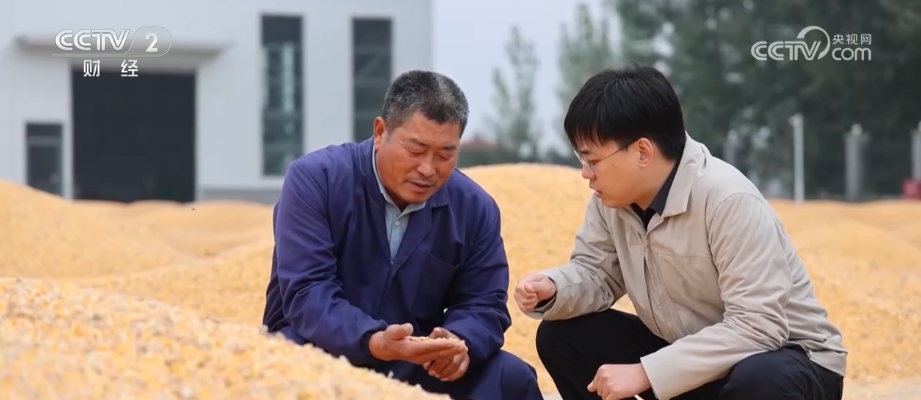
Core Insights - The article discusses measures taken in Shandong province to support farmers in grain production and sales, particularly in light of adverse weather conditions affecting the 2025 autumn harvest [1][5]. Group 1: Grain Production and Sales Support - The "14th Five-Year Plan" emphasizes protecting and motivating farmers to engage in grain production, ensuring stable income, and enhancing grain purchasing and storage management [1]. - In response to continuous rainfall during the 2025 autumn harvest, Shandong implemented various strategies to assist farmers in selling their grain, including the initiation of minimum purchase price policies [1][12]. - The establishment of 16 grain post-harvest service centers in Qihe County has improved grain drying and storage capabilities, with a daily drying capacity of 10,800 tons and a storage capacity of 190,000 tons [2]. Group 2: Technological Innovations in Grain Processing - A corn processing company in Shandong has adopted innovative drying technology, which includes a "corn hammer pre-drying + threshing + secondary drying" process, allowing for the purchase of approximately 3,000 tons of corn daily [2]. - The article highlights the efficiency of modern processing facilities, where a small workforce can produce high-value products from corn, thereby increasing farmers' income [4]. Group 3: Market Dynamics and Price Trends - Since the beginning of the 2025 autumn grain purchase, Shandong has seen an increase in corn purchases, with 38,900 tons collected, representing a rise of 2,400 tons compared to the previous year [5]. - Wheat processing companies are also adjusting their strategies to enhance product value by purchasing high-quality wheat at prices 0.1 to 0.3 yuan higher per pound than regular wheat [7]. Group 4: Broader Grain Purchase Initiatives - The China Grain Reserves Corporation has begun purchasing rice in major grain-producing provinces, including Henan and Hunan, to ensure farmers can sell their crops effectively [12][13].

杭州将办一场“饭碗”盛会
Hang Zhou Ri Bao· 2025-10-29 03:06
Core Insights - The 21st China International Grain and Oil Expo will be held in Hangzhou from October 30 to November 1, focusing on the development of new productivity in the grain industry and creating a professional platform for communication and sales across the entire industry chain [1] Group 1: Event Overview - The expo will cover an exhibition area of approximately 40,000 square meters, featuring six major exhibition zones including grain and oil products, brand enterprises, grain machinery, technology information, themed sections, and international exhibits [1] - Nearly 700 enterprises are expected to participate, with an anticipated attendance of over 30,000 visitors, including key distributors and buyers [1] Group 2: Participating Regions and Companies - The expo will showcase resources from 22 provinces, including Zhejiang, Heilongjiang, Jilin, Liaoning, Hubei, Shandong, Sichuan, and Guangdong, with a special focus on local specialties in the 400 square meter Zhejiang and Hangzhou exhibition area [2] - Leading companies such as COFCO Group, Xiangyu Group, and Wudeli Flour Group will present well-known regional brands like "Qilu Grain and Oil" and "Shanxi Millet" [2] Group 3: Innovations and Highlights - The expo emphasizes three main innovations: multi-dimensional display of the entire industry chain, showcasing new productivity through advanced technologies like unmanned storage and AI-assisted planting, and promoting collaboration to drive industry ecosystem development [2] - Activities will include on-site signing, business matching, brand promotion, and specialized meetings for rice and miscellaneous grains [2] Group 4: Hangzhou's Role and Initiatives - Hangzhou, known for its commitment to food security, will highlight its advanced experiences in "future grain storage," "digital procurement," and "green storage" [3][4] - The city is developing the world's largest dual-use underground temperature-controlled grain storage and a highly automated grain reserve facility, ensuring food security for its large population [3] - Hangzhou is also establishing a comprehensive online and offline market system with an annual trading volume exceeding 4 million tons to secure regional grain supply [3]
粮食住上了“好房子”
Zhong Guo Xin Wen Wang· 2025-10-21 12:30
Core Viewpoint - The introduction of the new grain storage technology, the gas membrane warehouse, represents a significant advancement in grain storage solutions, emphasizing energy efficiency and sustainability in response to evolving storage needs [1][2]. Group 1: New Grain Storage Technology - The gas membrane warehouse is recognized as the fourth generation of grain storage facilities and has been awarded for its innovative contributions to carbon neutrality [1]. - This new storage type integrates advanced technologies such as storage information control systems, intelligent ventilation, and grain condition monitoring, making it a representative of green storage solutions [2]. Group 2: Advantages of Gas Membrane Warehouse - Compared to traditional shallow round warehouses, the gas membrane warehouse shows less temperature fluctuation due to external conditions, and it has demonstrated better gas concentration maintenance during nitrogen and carbon dioxide tests [2]. - Energy consumption for cooling, air conditioning, and winter ventilation in the gas membrane warehouse is approximately 10% lower than that of average traditional warehouses [2]. Group 3: Structural Features - The gas membrane warehouse features a unique three-layer structure: an outer layer made of high molecular membrane material for weather resistance, a middle layer of high-density polyurethane for insulation, and an inner layer of reinforced concrete for structural integrity [2]. Group 4: Strategic Importance and Future Plans - The development of the gas membrane warehouse addresses the growing demands for improved thermal insulation, airtightness, and energy efficiency in grain storage, which traditional warehouses can no longer meet [5]. - The gas membrane warehouse is currently operational in Chengdu and nearing completion in Changsha, with plans for further construction in Jilin, Anhui, and Jiangsu due to its significant green energy advantages [5]. - Nationally, the capacity of standard grain storage facilities exceeds 730 million tons, with high-standard warehouses increasing annually, and low-temperature storage capacity reaching 220 million tons [5].
人多地少为何还能年净调出40亿斤粮?
Xin Hua Ri Bao· 2025-10-16 00:09
Core Insights - Jiangsu province ranks 8th in total grain production in China, contributing approximately 4 billion jin annually to national food security [1] - The province faces challenges in balancing its large population and limited land resources while ensuring food supply [1] Grain Purchase and Sales - Jiangsu maintains a stable grain purchase and sales system, with annual grain acquisition around 55 billion jin over the past three years [2] - The province's wheat and rice purchase volumes rank 4th and 2nd nationally, respectively, benefiting local farmers [2] - Policies such as the grain joint guarantee fund and the role of state-owned enterprises enhance market stability and farmer income [2][3] Storage and Emergency Response - The province's grain storage capacity is robust, with over 90% of finished grain oil reserves maintained [3] - A comprehensive emergency supply network has been established, including 3,288 emergency guarantee enterprises and 2,738 supply points [3] - The number of local storage facilities has been streamlined from 424 to 204, improving management and safety [3] Modern Storage and Logistics - Jiangsu has invested significantly in modern grain storage facilities, achieving a storage capacity of 49 million tons and a drying capacity of 15.8 tons per day [4][5] - The province's logistics capabilities are enhanced by a network of dedicated grain terminals and rail lines, facilitating efficient grain distribution [6] Technological Advancements and Branding - Innovative storage technologies, such as the "six-sided active temperature control" system, are being implemented to improve grain preservation [7] - The "Water Rhythm Su Rice" brand has gained recognition, with significant increases in high-quality rice production and sales [8][10] - Jiangsu has established a provincial-level grain technology innovation research institute, leading in national grain technology advancements [9]
天府粮仓里走出节粮减损“绿色标杆”
Ren Min Ri Bao· 2025-10-15 22:22
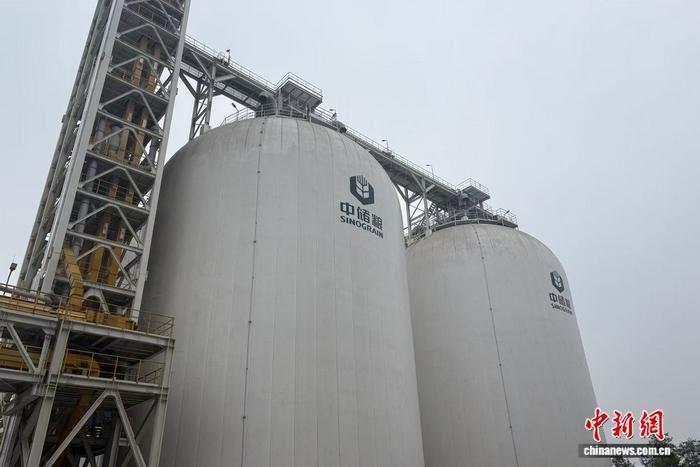
Core Insights - The Sichuan Xinjin Direct Grain Storage Warehouse, a subsidiary of the China National Grain Reserves Corporation, has successfully implemented modern grain storage technologies, emphasizing green and low-carbon practices since its establishment in 2009 [1][2] - The warehouse features the world's first elevated membrane grain storage facility, which has been recognized as one of the "Top Ten Super Projects" by state-owned enterprises in 2022 [1] - The facility's innovative design significantly enhances grain preservation capabilities, aligning with the national food security strategy of "storing grain in technology" [1][2] Technological Advancements - The membrane warehouse has shown remarkable performance in key metrics such as temperature control, moisture retention, and airtightness, with a thermal conductivity coefficient reduced by approximately 70% compared to traditional shallow circular warehouses [2] - The empty warehouse's half-life test period meets the high standards for grain storage construction, achieving six times the required benchmark [2] - Energy consumption has been reduced by over 30%, and the average energy consumption for temperature control, grain cooling, and winter ventilation operations is lowered by 10% [2] Environmental Impact - The storage facility has successfully decreased grain storage losses from 0.37% in 2022 to 0.12% by 2025, demonstrating effective grain loss reduction strategies [2] - Each membrane warehouse is estimated to reduce carbon dioxide emissions by approximately 3 tons annually [2] - The warehouse management is committed to integrating intelligent and green practices to enhance storage efficiency and sustainability [2]
“粮食安全看山东”之宁津:创新构建绿色安全智慧粮仓体系
Zhong Guo Fa Zhan Wang· 2025-09-23 13:53
Core Insights - The company is implementing a comprehensive green storage enhancement initiative to modernize grain storage management through digital technology [1][2][4] Infrastructure Development - The company has invested over 40 million yuan to construct 10 standardized warehouses with a total storage capacity of 65,000 tons, covering an area of 80 acres [2] - The warehouses are equipped with airtight doors, moisture-proof floors, and intelligent ventilation systems, adhering to low-temperature storage standards [2] - The company has successfully secured 4.7 million yuan in government funding to upgrade green storage facilities, including specialized air conditioning and optimized grain monitoring systems [2] Green Technology Application - The company promotes eco-friendly grain storage technologies, achieving a 27% energy savings and reducing annual electricity consumption by approximately 50,000 kWh [3] - The internal temperature of the warehouses has been reduced from over 35°C to around 25°C, and humidity levels have been controlled below 40% [3] - The use of chemical agents has decreased by 30%, effectively controlling grain contamination risks [3] Digital Management and Smart Systems - The company is advancing the "smart grain depot" initiative, integrating a management information system for intelligent control of grain conditions, ventilation, and energy consumption [4] - A comprehensive monitoring network has been established with 83 high-definition cameras, ensuring 100% coverage for dynamic grain supervision [4] - The smart grain storage control system enhances regulatory efficiency, achieving 100% monitoring coverage and improving management efficiency by 50% [4] Data-Driven Management - The management information system generates daily analysis reports, guiding operations such as ventilation and cooling, leading to standardized grain management [5] - The company aims to reduce labor costs by approximately 800,000 yuan annually through technological advancements [5] - The company is committed to enhancing the efficiency of grain storage management and ensuring regional food security [5]
粮食产后环节迈向智能化、数字化、自动化 粮仓里的新科技(经济聚焦)
Ren Min Ri Bao· 2025-09-07 22:09
Core Insights - The article emphasizes the importance of not only producing grain but also effectively storing and managing it, highlighting advancements in technology that enhance the efficiency and safety of grain storage and processing [1]. Group 1: Grain Storage Innovations - The introduction of an intelligent sampling system at China National Grain Reserves Corporation significantly improves the efficiency of grain inspection, reducing the time taken from 40 minutes to under 20 minutes [2]. - Smart monitoring systems allow for remote temperature monitoring of grain storage facilities, enabling quicker inspections and automatic alerts for temperature anomalies, thus enhancing grain safety [3]. - The use of nitrogen separation technology helps in reducing oxygen levels in grain storage, which prevents spoilage and pest infestations, leading to a reduction in labor costs by 40% and grain loss rates below 1% [3]. Group 2: Automation in Grain Handling - The deployment of robotic systems for leveling grain piles has reduced the time required for this task from 3-5 days to just half a day, improving operational efficiency [4]. - The automated systems are designed to work collaboratively, allowing for the potential automation of various tasks such as inspection and sampling in the future [4]. Group 3: Advanced Processing Techniques - The introduction of a smart production line at a rice processing facility allows for real-time monitoring and efficient processing, achieving a selection rate of over 99% for impurities [5]. - The use of advanced optical sorting technology enables the identification and removal of even the smallest impurities, enhancing the quality of the final product [5]. Group 4: Food Preservation Technologies - Innovative freezing techniques, such as the use of nanocrystal technology, are employed to maintain the quality and flavor of frozen food products, ensuring that they retain their taste and nutritional value [6]. Group 5: Agricultural Waste Utilization - The promotion of a "straw-fungus-fertilizer" utilization model transforms agricultural waste into valuable organic fertilizer, demonstrating a sustainable approach to waste management in agriculture [7].
“绿色优储”守好“齐鲁粮仓” 山东省粮食和物资储备局举办政府开放日活动
Zhong Guo Fa Zhan Wang· 2025-08-18 14:19
Group 1 - The event held by Shandong Provincial Grain and Material Reserve Bureau focused on enhancing green grain storage and establishing higher standards for "Qilu Granary" [1] - Over 50 participants from various sectors, including citizens, students, lawyers, and media, engaged in discussions and tours to understand advancements in green storage, technology, and smart granaries [1][2] - The core inbound and outbound system was upgraded with an investment of over 3 million yuan, increasing storage capacity from 400 tons to 800 tons and improving efficiency by 50% [2] Group 2 - The grain storage facility implemented a low-temperature modification using a composite temperature control technology, significantly reducing grain pile temperatures while minimizing energy consumption [2] - The storage capacity of the granary is designed to meet emergency supply needs for three months in the region, showcasing the facility's technological innovations [3] - The event included discussions on the "Grain Security Guarantee Law" and the recent "Shandong Province Grain Security Guarantee Regulations," emphasizing the importance of legal frameworks in ensuring food security [3][4] Group 3 - The Shandong Provincial Grain and Material Reserve Bureau is committed to enhancing transparency and public engagement through initiatives like the government open day [4] - The bureau's leadership highlighted the importance of technology in promoting green storage and the need for legal support to improve grain management capabilities [4] - There is a call for widespread awareness and support for grain security, emphasizing the collective responsibility of society in reducing grain loss and fostering a culture of grain conservation [4]