美国经济困境

Search documents
鲍威尔一句话引爆全球市场!美联储的三重谎言与崩塌的美国梦!
Sou Hu Cai Jing· 2025-09-18 08:44
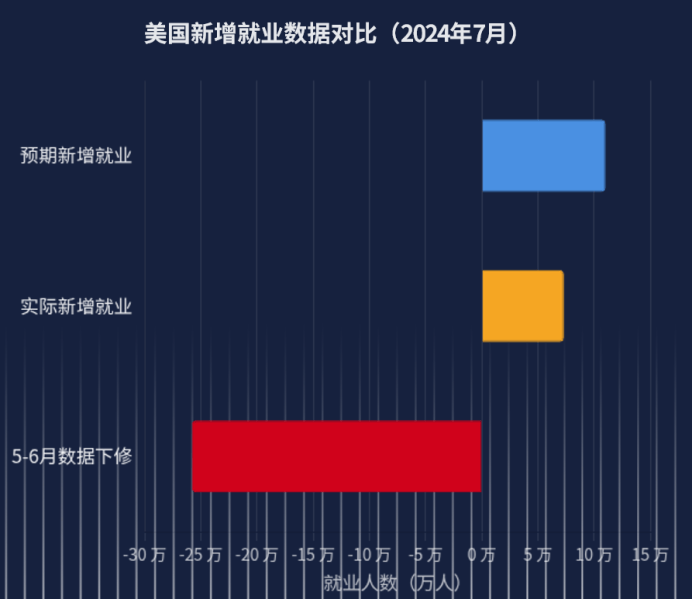
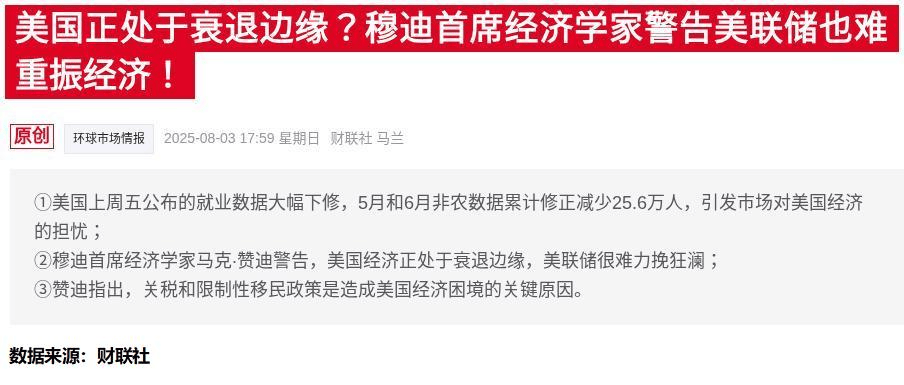
Core Viewpoint - The statement by Federal Reserve Chairman Jerome Powell regarding a potential adjustment in policy has led to a surge in market expectations for interest rate cuts, escalating from 75% to 90%, resulting in a market reaction worth trillions of dollars. This situation reveals underlying issues within the U.S. economy and the Federal Reserve's narrative [1]. Group 1: Employment Data - The U.S. unemployment rate appears low at 4.2%, but the actual job creation is only 73,000, significantly below the expected 110,000, with prior months' data revised down by 258,000 [2]. - The suggestion to change monthly employment reports to quarterly reflects a desire to avoid frequent negative surprises in the data [2]. Group 2: Inflation Concerns - Powell's assertion that tariffs have a one-time effect on prices contrasts with the reality of inflation rising from 2% to 9%. The Federal Reserve's historical lessons from the 1970s emphasize caution in rate cuts to avoid economic stagnation and rising prices [5]. - The current dilemma involves a potential GDP growth decline from 2.5% to 1.2% if rates are not cut, while cutting rates risks repeating the stagflation scenario [5]. Group 3: Federal Reserve Independence - Despite Powell's authoritative stance, there is significant internal division within the Federal Reserve regarding interest rate cuts, compounded by political pressure from the Trump administration, threatening the Fed's independence [9]. - Powell's ambiguous statements reflect a balancing act between appeasing the market, managing internal dissent, and responding to external political pressures [9]. Group 4: Market Dynamics - The market's reaction is driven by expectations rather than facts, with Powell's vague comments interpreted as a certainty of rate cuts, leading to a temporary market rally [11]. - Economic indicators reveal a stark contrast between GDP growth (up 252%) and wage growth (up 53%) from 1970 to 2024, alongside significant increases in stock market values and housing prices, indicating a deeper economic malaise [11]. Conclusion - While the Federal Reserve's interest rate cut expectations may create short-term market euphoria, the underlying economic challenges will not disappear due to manipulated data. The potential for a crisis looms as the market becomes overly reliant on anticipated rate cuts [13].

阅兵击溃特朗普最后防线,美国挂牌战争部,白宫召集巨头商量对策
Sou Hu Cai Jing· 2025-09-17 05:40
Group 1 - The strong military display by China during the September 3 military parade has caused significant concern in the U.S., prompting the Trump administration to take aggressive measures [1] - The U.S. Department of Defense has been renamed to a more offensive-sounding "Department of War," signaling a potential shift towards a more aggressive U.S. foreign policy [1] - A high-level meeting was convened with major tech leaders from Silicon Valley, including Facebook's CEO Mark Zuckerberg and Microsoft's founder Bill Gates, to discuss national development strategies [1] Group 2 - Trump's administration has shown a pattern of erratic policy decisions, lacking coherent strategic thinking, which reflects a short-term operational mindset rather than long-term planning [3] - The U.S. is facing a dilemma with the latest non-farm employment data falling short of expectations, compounded by a scandal involving data manipulation, leading to a tightening federal budget [5] - Trump's actions, such as renaming federal agencies through executive orders, raise concerns about the erosion of the political system's foundations in the U.S., reminiscent of historical shifts from republic to empire [5]
拖到最后一晚才签字,特朗普关税战输给中国后,心里还是不服气
Sou Hu Cai Jing· 2025-08-14 01:35
Group 1 - The core point of the article is the delay in the signing of a joint statement following the third round of Sino-U.S. economic and trade talks, attributed to political considerations by President Trump [1][4][18] - The trade "ceasefire" agreement reached in Geneva in May included a mutual reduction of tariffs by 115%, with 24% of tariffs postponed for 90 days, originally set to expire on August 12 [2][5] - Trump's decision to extend the 24% tariff for another 90 days came only late on August 11, indicating a lack of immediate action despite the completion of talks [2][4] Group 2 - Trump's public statements suggest he is pleased with the outcomes of the talks, yet he is cautious about appearing to compromise on China [4][7] - The U.S. economy is showing signs of strain, with rising tariffs leading to increased consumer prices and potential impacts on household spending, estimated to rise by approximately $2,400 annually due to new tariffs [9][11] - The inflation expectations in the U.S. have risen from 2.6% in June to 2.9% in July, complicating the Federal Reserve's monetary policy decisions [14] Group 3 - Economic experts warn that the pressures on the U.S. economy are intensifying, with the unemployment rate slightly increasing from 4.1% to 4.2% in July, raising concerns about the accuracy of employment data [15] - The financial outlook remains pessimistic, with predictions of potential declines in the S&P 500 index by up to 14% by the end of the year due to the uncertainties surrounding tariff policies [16] - The current "ceasefire" in trade negotiations may only be a temporary measure, as Trump could reignite the trade war once the immediate challenges are resolved [19]

美国经济亮红灯,A股机构正悄悄行动
Sou Hu Cai Jing· 2025-08-04 11:24
Group 1 - The core viewpoint of the article emphasizes the importance of understanding underlying market dynamics rather than just reacting to news, as significant data revisions often indicate deeper economic issues [1][3] - The article discusses the "time-lag trap" in the market, illustrating how market reactions can differ from the actual news, as seen in the 2025 liquor sector downturn [3][5] - It highlights the "dual personality" of data, where the same news can lead to different market outcomes based on the background of the funds involved, exemplified by the case of Novartis in July 2025 [7][9] Group 2 - The article presents a quantitative perspective on market behavior, suggesting that trading actions reveal the true state of the market, contrasting with often distorted news and data [9][11] - It connects U.S. economic data to the A-share market, indicating that abnormal fund flows can signal impending market changes, akin to weather forecasting [11][12] - The article concludes with advice for investors to develop a robust information processing framework, emphasizing the importance of distinguishing between noise and signals in the market [12][13]
突发!美国法院裁决反转,特朗普失策,奥巴马恐面临监停
Sou Hu Cai Jing· 2025-07-30 04:52
Group 1 - The political landscape in the U.S. is experiencing unprecedented turmoil, primarily driven by the intense rivalry between former Presidents Trump and Obama, alongside the challenges faced by the Trump administration in both domestic and foreign policies [1] - Obama is facing explosive allegations of treason related to the 2016 election, with claims that he fabricated the "Russia Gate" accusations, which has led to a significant political backlash and potential involvement of key Democratic figures [1] - Trump's political maneuvering aims to leverage Obama's situation to divert attention from his administration's struggles with immigration policy, trade tariffs, and economic conditions [1] Group 2 - The Trump administration's immigration policy has faced significant setbacks, with the Ninth Circuit Court ruling against the administration's order to restrict birthright citizenship, marking a major blow to Trump's immigration reform efforts [4] - Economic pressures are mounting on the Trump administration, with the adverse effects of protectionist trade policies leading to inflation and rising commodity prices, alongside stalled negotiations with major trade partners [4] - Trump's unprecedented intervention in the Federal Reserve's operations, including a public dispute over a $3.1 billion renovation project, highlights his anxiety over the economic situation and the need for monetary policy support amid impending trade conflicts [6]
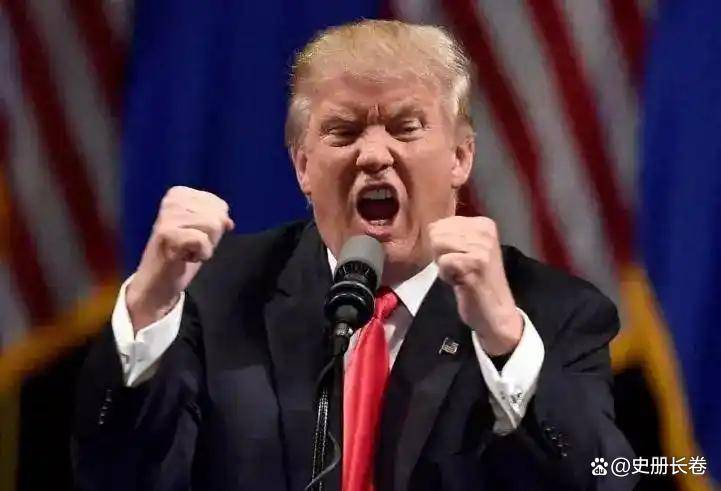
中美元首深夜通话,中方挂断电话前,给了特朗普最想要的东西
Sou Hu Cai Jing· 2025-06-09 05:09
Group 1 - The core point of the article is the significance of the recent phone call between Chinese leaders and U.S. President Trump, highlighting the delicate state of U.S.-China relations and the conditions for Trump's potential visit to China [1][3][5] - The phone call occurred at a critical moment, with ongoing tensions between the two nations, including U.S. pressure tactics such as AI chip supply restrictions and technology blockades [3][5] - The initiative for the call appeared to be with China, showcasing their diplomatic strategy and control over the negotiation process [3][5][7] Group 2 - The call signals a potential agenda for Trump's visit to China, contingent upon fulfilling certain agreements made between the two countries [5][9] - Trump's domestic challenges, including a declining manufacturing PMI index, have created pressure for him to seek dialogue with China as a means to alleviate economic concerns [5][7] - The future of U.S.-China relations may hinge on continued dialogue and cooperation, with the possibility of Trump needing to retract some of his confrontational policies to facilitate his visit [7][9]