
脑科学与脑机接口

Search documents
新华财经晚报:10月份各线城市二手住宅销售价格环比下降
Xin Hua Cai Jing· 2025-11-14 09:50
Domestic News - In October, the second-hand residential sales prices in first-tier cities decreased by 0.9% month-on-month, with declines in Beijing, Shanghai, Guangzhou, and Shenzhen at 1.1%, 0.9%, 0.9%, and 0.9% respectively [1] - The second-hand residential sales prices in second-tier cities fell by 0.6%, while third-tier cities saw a decrease of 0.7% [1] - From January to October, the national industrial added value above designated size grew by 6.1% year-on-year, with October's growth at 4.9% [1] - Fixed asset investment (excluding rural households) totaled 4089.14 billion yuan from January to October, down 1.7% year-on-year [1] Retail and Consumption - In October, the total retail sales of consumer goods reached 4629.1 billion yuan, a year-on-year increase of 2.9%, with retail sales excluding automobiles growing by 4.0% [2] - From January to October, the total retail sales of consumer goods amounted to 4121.69 billion yuan, increasing by 4.3% year-on-year [2] Energy Production - In October, the industrial power generation increased by 7.9% year-on-year, with a total of 800.2 billion kWh produced [2] - The average daily power generation was 25.81 billion kWh, with a total of 8062.5 billion kWh generated from January to October, marking a 2.3% year-on-year growth [2] Policy and Initiatives - The fourth high-level financial dialogue between China and Germany is scheduled for November 17 in Beijing, co-hosted by Chinese and German officials [2] - The People's Bank of China announced a 800 billion yuan reverse repurchase operation to maintain liquidity in the banking system [2] Local Development - Hebei Province reported that the Xiong'an New Area has maintained an annual investment scale of 200 billion yuan, with cumulative investments exceeding 1 trillion yuan [3] - Beijing's Changping District is soliciting opinions on measures to support the development of brain science and brain-computer interface industries [3] - Shanghai's Education Committee issued guidelines for the bidding process of school canteen services, emphasizing food safety and quality [3]

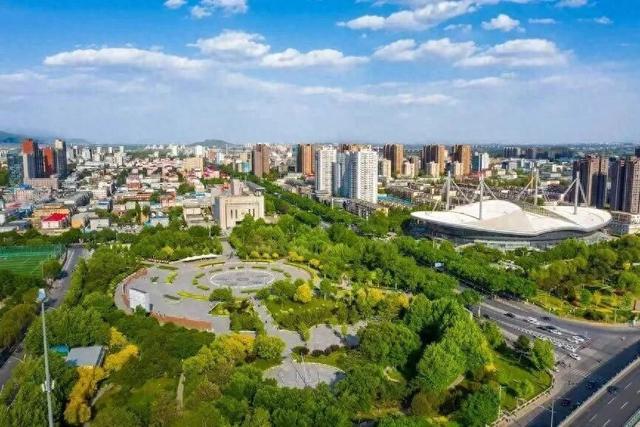
同比增长7.1%!昌平以产兴城擘画高质量发展新图景
Bei Jing Ri Bao Ke Hu Duan· 2025-11-08 04:38
Core Viewpoint - The Changping District has achieved a GDP growth of 7.1% in the first three quarters, surpassing national and city averages, driven by robust industrial output and strategic initiatives in modern industrial system construction [1][3]. Industrial Development - The district's industrial output value reached 118.68 billion yuan, with a year-on-year growth of 13.4%, indicating a significant acceleration in industrial performance [1]. - Key industries such as advanced manufacturing, energy, and healthcare have shown strong growth, with advanced manufacturing achieving an output of 107.39 billion yuan (up 14.3%), advanced energy at 53.58 billion yuan (up 18%), and healthcare at 30.33 billion yuan (up 1.9%) [3][6]. - Notable innovations in the healthcare sector include the clinical application of innovative drugs and advancements in AI-assisted medical technologies [4][6]. Future Industry Layout - Changping is proactively positioning itself in future industries like synthetic biology, brain science, robotics, and 6G, with a focus on creating new economic growth points [8][13]. - The synthetic biology sector has established 131 related enterprises, forming a comprehensive industrial ecosystem [9]. - The district has initiated the first industrial cluster for brain science and brain-machine interfaces, enhancing technological innovation and application [9][11]. Innovation and Collaboration - The district emphasizes collaboration between industry and academia, fostering innovation through partnerships with local universities [17]. - The establishment of various innovation parks and research centers is aimed at accelerating technology transfer and commercialization [16][17]. Urban Integration and Quality of Life - Changping is committed to integrating industrial development with urban functionality and public welfare, enhancing living conditions for residents and attracting talent [21][22]. - Initiatives include the construction of affordable housing and the development of educational and healthcare facilities to support the workforce [24][25]. - The district has improved transportation infrastructure, significantly reducing commute times and enhancing accessibility for residents and workers [25]. Economic Performance - The district's per capita disposable income increased by 5.6% in the first three quarters, reflecting the positive impact of industrial growth and urban development on residents' livelihoods [25].
广州构建“6+X”赛道体系 加强未来产业上市培育
Shang Hai Zheng Quan Bao· 2025-10-21 18:22
Core Viewpoint - Guangzhou aims to accelerate the development of future industries by establishing a comprehensive framework and action plan to enhance innovation and market application in key sectors [1][2]. Group 1: Future Industry Development Plans - The city plans to build 10 high-energy innovation platforms, 50 concept verification centers, and 100 first-use application scenarios [1][2]. - Guangzhou will focus on six major directions: intelligent unmanned systems, embodied intelligence, cell and gene technology, future networks and quantum technology, advanced new materials, and deep-sea and deep-space technologies [1][2]. Group 2: Current Industry Landscape - Over 2,000 related enterprises and more than 180 research institutions are currently gathered in Guangzhou, with over 40 national-level innovation platforms [2]. - The city has 24 global unicorn companies, ranking fourth in the country, and the number of high-tech enterprises has surpassed 7,000, reflecting a 7.3% increase from the previous year [2]. Group 3: Financial and Support Mechanisms - Guangzhou will optimize and integrate its technology innovation fund to support early-stage, small, long-term, and hard technology investments [3]. - A multi-level, comprehensive technology financial service system is being established to guide financial resources towards future industry development [3].
北京昌平发力脑科学与脑机接口产业
Zheng Quan Shi Bao· 2025-09-29 18:14
Core Insights - The establishment of the Zhongguancun (Changping) Brain Science and Brain-Computer Interface Industrial Cluster marks a significant step in developing a new industrial landscape in Changping District, Beijing [1] Group 1: Industrial Development Strategy - The "One Core, One City" strategy aims to leverage the Zhongguancun Life Science Park's core role to accelerate enterprise incubation and result transformation, forming an industrial cluster [2] - The plan includes the construction of an International Medical Device City to facilitate industrialization and establish a high-end manufacturing base [2] - The Changping Brain Science and Brain-Computer Interface Innovation Partnership Program will enhance foundational research, technological breakthroughs, and integrated innovation [2] Group 2: Policy and Financial Support - Chang Development Group and Daoyuan Capital have launched a strategic fund to inject financial resources into the brain science and brain-computer interface industry [2] - The district has introduced the first action plan for the development of the brain science and brain-computer interface industry, along with supporting policy measures [3] Group 3: Advantages and Growth Potential - Beijing's policy framework, innovation research, and talent aggregation provide a strong foundation for the brain science and brain-computer interface industry [3] - By 2027, the industrial cluster is expected to reach a certain scale, with a goal of forming a new billion-level future industry cluster by 2030 [4] Group 4: Industry Ecosystem and Collaboration - The region has attracted key enterprises and established a comprehensive ecosystem involving research institutions and clinical practices [5][6] - Notable achievements include the successful transformation of "Beijing Brain No. 1" and the filling of a gap in high-performance invasive brain-computer interfaces with "Beijing Brain No. 2" [6]
北京市首个脑科学与脑机接口产业集聚区挂牌
Zhong Guo Xin Wen Wang· 2025-09-29 11:20
Core Insights - Beijing has established its first brain science and brain-computer interface (BCI) industrial cluster in Changping, marking a significant step in the development of this emerging industry [1][3] - The Changping Life Valley International Precision Medicine Industrial Park will serve as a key location for the BCI industry, with plans to utilize 240,000 square meters of space to accelerate industry growth [3][4] Policy and Development Plans - In August 2025, a joint implementation plan was released by seven departments to promote innovation in the BCI industry, with a focus on policy layout, innovation research and development, and talent aggregation [3][4] - The action plan aims for the industrial cluster to reach a certain scale by 2027, with the goal of becoming a leading international hub for BCI innovation by 2030, targeting the formation of a new billion-level future industry cluster [4] Industry Growth and Achievements - Currently, 22 key BCI companies, including Chip Intelligence and Walnut Medical, have settled in the Changping area, demonstrating the growing industrial cluster effect [4] - Changping has been recognized for its significant technological achievements in the BCI field, with two major technological results selected at the 2025 Zhongguancun Forum [4]

北京昌平提速脑科学与脑机接口产业 瞄准百亿级产业集群
Zhong Guo Qing Nian Bao· 2025-09-29 04:23
Core Insights - Beijing has officially launched its first Zhongguancun (Changping) Brain Science and Brain-Computer Interface Industrial Cluster and Park, along with a development action plan and supporting policies for the brain science and brain-computer interface industry [1][2] Group 1: Policy and Development Plans - The action plan aims to establish a scale for the industrial cluster by 2027, promoting the application of new technologies, products, and models across various scenarios [1] - By 2030, the industrial cluster is expected to be fully established, with innovation capabilities and comprehensive strength reaching international first-class levels, targeting the formation of a new hundred-billion-level future industry cluster [1][2] Group 2: Support Measures - Changping District has proposed policy measures focusing on supporting technological innovation breakthroughs, enterprise cluster development, and industrial ecosystem construction [2] - A comprehensive service system combining "park + investment + incubation + clinical" will be established to create a conducive environment for enterprises, facilitating the rapid landing and development of key enterprises, platforms, and talents [2] Group 3: Strategic Importance - Brain-computer interface technology is highlighted as a cutting-edge technology at the intersection of biological and information sciences, representing future industries and new productive forces, becoming a focal point in global technological competition [2] - Changping is positioned as a key area for Beijing's international innovation center and pharmaceutical health industry development, with unique advantages in developing the brain science and brain-computer interface industry, including the presence of national-level research institutions and leading scientific teams [2]
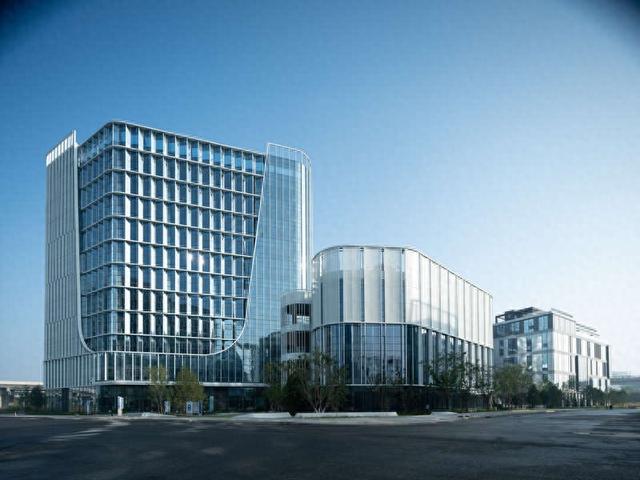
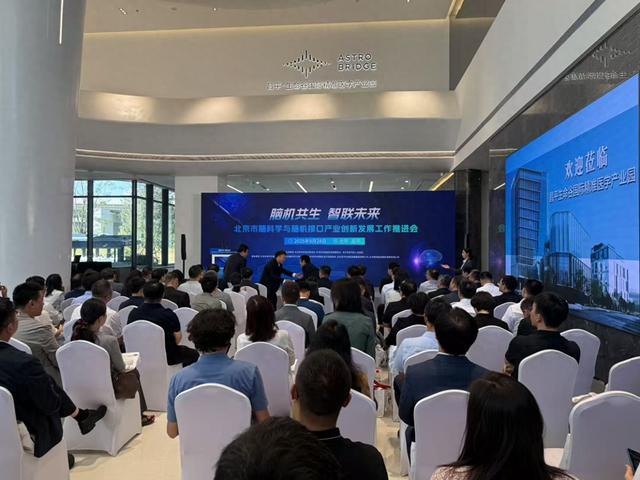
中关村(昌平)脑科学与脑机接口产业园揭牌启用
Bei Jing Ri Bao Ke Hu Duan· 2025-09-28 07:20
Core Viewpoint - The rapid development of brain science and brain-machine interface technology is becoming a significant direction for future industrial transformation, with Beijing's Changping District seizing this opportunity through the establishment of dedicated industrial zones and initiatives [1][4]. Group 1: Industrial Development Initiatives - The first brain science and brain-machine interface industrial cluster in Beijing, located in Changping, was officially launched, aiming to create a "one core, one city" industrial structure [3]. - The Changping District is leveraging the Changping Life Science Park's innovative resources to accelerate enterprise incubation and result transformation, fostering a rapid formation of industrial clusters [3]. - A strategic partnership has been formed between Chang Development Group and Daoyuan Capital to establish a fund for the development of the brain science and brain-machine interface industry, injecting financial resources into the sector [3][4]. Group 2: Future Goals and Plans - By 2027, the industrial cluster is expected to take shape, promoting the application of new technologies, products, and models across various scenarios [4]. - The goal is to fully establish the industrial cluster by 2030, enhancing innovation capabilities and overall strength to reach an international first-class level, aiming to form a new billion-level future industry cluster [4]. Group 3: Current Industry Landscape - Currently, 22 key enterprises in the brain-machine interface sector, including Xinzhida, Weiming Brain, and Walnut Medical, have settled in Changping, demonstrating increasing industrial clustering effects [6]. - Changping has been recognized for its significant contributions to the field, with two major technological achievements in brain-machine interfaces selected at the 2025 Zhongguancun Forum [6].

宏观观察2025年第32期(总第604期):我国脑科学与脑机接口行业发展现状及建议
Zhong Guo Yin Hang· 2025-09-12 06:45
Industry Overview - The brain science and brain-computer interface (BCI) industry in China is rapidly developing, with a market size projected to reach 5.58 billion yuan by 2027, growing at a compound annual growth rate (CAGR) of 26%[20] - The global BCI market is expected to grow from 1.98 billion USD in 2023 to over 6 billion USD by 2028, with a CAGR of 25%[20] Technological Development - BCI technology is categorized into three types: invasive, semi-invasive, and non-invasive, with non-invasive methods leading in application[6] - The industry is characterized by high dependence on advanced technology, requiring significant investment in research and development, with an average R&D expense ratio of 18%[37] Policy Support - The Chinese government has prioritized brain science and BCI research as a national strategic technology, with plans to establish a comprehensive technology and industry system by 2030[12] - Major cities like Beijing and Shanghai are leading in policy support and establishing research institutions to foster BCI development[14] Financial Landscape - Investment in the BCI sector has surged, with over 1,500 financing events globally, totaling nearly 10 billion USD, and China accounting for approximately 20 billion USD of that[47] - In 2024, the domestic BCI industry secured over 1.5 billion yuan in financing, with 80% directed towards invasive technology[47] Market Challenges - The industry faces challenges such as reliance on imported core components, low efficiency in technology transfer, and ethical concerns regarding safety and privacy[5] - The average gross profit margin for listed companies in the BCI sector is 33.89%, but net profit margins for downstream companies are below 10% due to market expansion pressures[37] Future Trends - The BCI industry is expected to see multi-modal integration, combining various signal acquisition methods to enhance accuracy and stability[41] - Applications in healthcare are expanding beyond existing treatments for Parkinson's and epilepsy to include conditions like Alzheimer's and ALS[42]