行刑衔接

Search documents
从“恶意退保”到“买断人伤” 公安部案例揭露保险黑灰产运作
2 1 Shi Ji Jing Ji Bao Dao· 2025-12-29 11:22
Core Insights - The financial sector has seen significant progress in combating organized crime, with over 1,500 cases reported and nearly 30 billion yuan involved in the last six months [1] - The crackdown has revealed a highly organized and professional nature of insurance fraud, particularly in malicious policy cancellations and collusion with assessment agencies [1][3] Group 1: Financial Crime Statistics - From June to November, nearly 60 operations were conducted, resulting in the dismantling of over 200 criminal gangs [1] - The National Financial Regulatory Administration has transferred over 4,500 leads to law enforcement, involving amounts exceeding 21 billion yuan [4] Group 2: Nature of Insurance Fraud - Insurance black and gray industries have evolved into a complete industrial chain, including false advertising, providing counter-tutorials, and negotiating on behalf of clients [3] - Malicious policy cancellations have been identified as a form of contract fraud, exploiting commission structures to generate profits [6][8] Group 3: Regulatory Response - The regulatory approach has shifted from fragmented efforts to a more coordinated strategy involving both regulatory and law enforcement agencies [5][11] - New regulations, such as the Insurance Sales Behavior Management Measures, aim to curb illegal activities related to policy cancellations [7] Group 4: Case Studies - The case of "Shi and others suspected of contract fraud" illustrates how criminal groups exploit commission systems to create a façade of legitimate insurance transactions [6] - The "personal injury yellow cow" scheme demonstrates the direct erosion of legal integrity in claims processes, with criminals manipulating injury assessments for financial gain [9][10] Group 5: Future Directions - The National Financial Regulatory Administration plans to intensify efforts against illegal loan intermediaries and unauthorized claims agents, maintaining a high-pressure enforcement environment [12] - Financial institutions are urged to strengthen internal controls and risk management to prevent exploitation by black and gray industries [11]

金融“黑灰产”集群打击取得积极成效 金融监管总局表示将持续加大对重点领域打击力度
Zhong Guo Zheng Quan Bao· 2025-12-25 23:43
Core Viewpoint - The Ministry of Public Security and the National Financial Regulatory Administration have launched a joint initiative to combat illegal financial activities, achieving significant results in curbing financial crime and protecting consumer rights [1][2]. Group 1: Financial Crime Combat Efforts - Since June, nearly 60 operations have been conducted, resulting in over 1,500 cases of financial crime being investigated and more than 200 organized crime groups dismantled, with a total amount involved nearing 300 billion [2]. - The initiative has effectively purified the financial market ecosystem and maintained national financial order and stability [2]. - Ten typical cases were disclosed, covering various financial sectors, including loan fraud, insurance fraud, and illegal agency rights protection, which severely harm consumer rights and disrupt financial market order [2]. Group 2: Regulatory Measures and Future Plans - The financial regulatory authority plans to intensify efforts against illegal loan intermediaries and unauthorized rights protection agencies, with a focus on enhancing the quality and effectiveness of regulatory measures by 2026 [5][6]. - By the end of November, over 4,500 leads were transferred to law enforcement, involving amounts exceeding 210 billion, and more than 1,700 reports were guided, involving over 170 billion [4]. - The regulatory body aims to strengthen inter-departmental collaboration and improve the legal framework surrounding financial crimes, including developing evidence transfer standards for criminal activities [6].
“退市不免责”成常态 资本市场退出机制更规范
Jing Ji Ri Bao· 2025-12-25 07:31
Core Viewpoint - The implementation of stricter delisting regulations in China's capital market has led to a significant increase in both mandatory and voluntary delistings, reflecting a more mature and regulated market environment [1][2][3] Group 1: Delisting Mechanisms - The current delisting methods in the capital market include mandatory delisting and voluntary delisting, with a notable increase in voluntary delisting cases this year [2] - As of December 17, 30 companies have had their stocks delisted, with five companies, including Haitong Securities and China Heavy Industry, opting for voluntary delisting due to strategic mergers or significant operational uncertainties [2] - The rise in voluntary delistings indicates an optimization of delisting policies, encouraging market-driven exits to clear risks more smoothly [2][3] Group 2: Regulatory Environment - The phrase "delisting does not exempt from responsibility" has become a key highlight in the enforcement of delisting regulations, emphasizing the regulatory body's zero-tolerance stance towards illegal activities by delisted companies [4][5] - The China Securities Regulatory Commission (CSRC) has taken action against over 70 delisted companies for illegal activities, with a focus on expediting investigations and penalties [5][6] - A comprehensive accountability system has been established, ensuring that major stakeholders are held responsible for violations, thereby enhancing market fairness and legal standards [6] Group 3: Investor Protection - The regulatory framework has shifted from merely facilitating delisting to ensuring investor protection, with measures such as advance compensation and special representative lawsuits being implemented [7][8] - Companies that voluntarily delist are generally required to offer cash options to protect small investors, with examples showing premiums over pre-suspension prices [8] - The introduction of special representative lawsuits allows investors to participate in collective legal actions without upfront costs, streamlining the process for seeking redress [8]
国家金融监管总局:持续加大对非法贷款中介、非法代理维权等重点领域打击力度
Zheng Quan Ri Bao Wang· 2025-12-25 06:54
Core Viewpoint - The Ministry of Public Security and the National Financial Regulatory Administration have jointly launched a crackdown on illegal financial activities, focusing on "black and gray industries" in the financial sector, with significant results reported in a recent press conference [1][2]. Group 1: Crackdown Measures and Achievements - From June to November, a six-month operation was conducted across 17 key provinces and cities to combat illegal financial activities, with a focus on enhancing regulatory effectiveness and market order [2]. - The regulatory authorities have shifted from a fragmented approach to a coordinated effort, resulting in the transfer of over 4,500 leads to law enforcement, involving amounts exceeding 21 billion yuan [3]. - The crackdown has led to the identification and reporting of over 1,700 cases by financial institutions, with amounts exceeding 17 billion yuan, showcasing the effectiveness of the "regulatory + police" collaboration [3]. Group 2: Strategic Shifts in Enforcement - The approach has evolved from "passive response" to "proactive measures," with financial institutions being urged to manage partnerships more effectively and to issue public statements to guide public perception [5]. - The regulatory framework has been enhanced to include the establishment of evidence transfer standards for criminal activities, aiming to improve the efficiency of law enforcement collaboration [2][4]. - The focus has also shifted from "end-of-line disposal" to "source governance," with extensive educational campaigns and the publication of typical cases to raise awareness and improve compliance [6]. Group 3: Recommendations for Financial Institutions - Financial institutions are encouraged to adopt the "three iron" internal control management principles to strengthen risk management and compliance [7]. - There is a call for increased investment in technology, utilizing big data and artificial intelligence to enhance the identification of risks associated with "black and gray industries" [7]. - Institutions are advised to refine their operational philosophies, ensuring that core services are not outsourced and that they maintain direct control over customer acquisition channels [8].
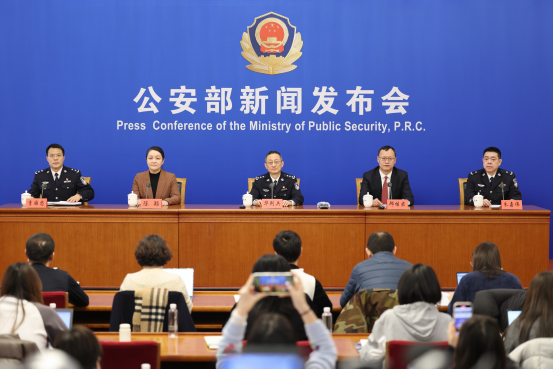
通报公安部和国家金融监管总局联合部署开展金融领域“黑灰产”违法犯罪集群打击 工作举措成效情况
Jin Rong Jie· 2025-12-25 04:18
Core Viewpoint - The Ministry of Public Security and the National Financial Regulatory Administration have launched a joint initiative to combat illegal activities in the financial sector, particularly focusing on the "black and gray industry" that harms consumer rights and disrupts market order [1][2]. Group 1: Overview of Actions Taken - From June to November, a six-month crackdown on illegal financial activities was conducted across 17 key provinces and cities, resulting in over 1,500 cases being investigated and more than 200 criminal gangs dismantled, with a total amount involved nearing 300 billion yuan [2][3]. - The operation included nearly 60 organized actions by public security economic investigation departments, effectively purifying the financial market ecosystem and protecting consumer rights [2][3]. Group 2: Strategies Employed - The initiative emphasized targeted cleaning and precise analysis, focusing on illegal loan intermediaries, insurance fraud, and improper credit card collection practices [2][3]. - A comprehensive approach was adopted, involving cross-institutional and cross-regional investigations to uncover the entire chain of illegal activities, including financial information, funding, technology, and personnel [3][4]. - Enhanced collaboration between law enforcement and financial regulatory bodies was established, integrating regulatory, industry, and police data to improve the efficiency of crime detection and prosecution [3][4]. Group 3: Long-term Measures and Public Awareness - The initiative has led to the issuance of 39 recommendations to address systemic vulnerabilities and improve risk management within financial institutions [4]. - Public awareness campaigns were intensified, resulting in a noticeable decrease in financial dispute complaints and an increase in public satisfaction [4][5]. - The financial regulatory authority has published over 1,100 risk warnings and public statements to guide consumers in recognizing and avoiding illegal financial practices [6][7]. Group 4: Challenges and Future Directions - The characteristics of financial "black and gray" activities include industrialized operation models, professionalized personnel, and increasingly covert methods, making detection and prosecution challenging [9][10]. - The regulatory bodies recognize the need for ongoing efforts to combat these activities, as the methods employed by criminals continue to evolve and become more sophisticated [13][14]. - Future strategies will focus on enhancing inter-departmental collaboration, improving regulatory frameworks, and maintaining a high-pressure enforcement environment against illegal financial intermediaries [13][14].
公安部通报金融领域“黑灰产”违法犯罪集群打击工作举措成效情况
Yang Shi Wang· 2025-12-25 02:36
Core Viewpoint - The Ministry of Public Security and the National Financial Regulatory Administration have launched a six-month crackdown on illegal activities in the financial sector, resulting in significant achievements in combating "black and gray" industries that harm consumer rights and disrupt market order [1][3]. Group 1: Key Achievements - Over 1,500 cases of financial "black and gray" crimes have been investigated, with more than 200 organized crime groups dismantled, involving a total of nearly 30 billion yuan [1][3]. - The collaboration between law enforcement and financial regulatory bodies has led to the transfer of over 4,500 case leads to the police, involving amounts exceeding 21 billion yuan [3][4]. - The crackdown has resulted in a noticeable decrease in financial dispute complaints and an increase in public satisfaction and participation [3][6]. Group 2: Strategies Employed - The approach has shifted from "scattered operations" to "joint management," enhancing the mechanism for law enforcement collaboration [3][4]. - A focus on targeted enforcement has been established, utilizing data analysis to identify and investigate illegal activities in the financial sector [4][5]. - The integration of law enforcement and regulatory data has improved the efficiency of identifying and addressing illegal financial activities [2][3]. Group 3: Challenges and Responses - The complexity of identifying and prosecuting "black and gray" financial activities has been highlighted, with challenges including the obscurity of operations and the evolving nature of criminal methods [7][8]. - Measures have been implemented to enhance the identification standards for illegal intermediaries and to develop a risk warning mechanism to prevent illegal activities [8][11]. - Financial institutions are urged to strengthen their internal controls and risk management systems to mitigate exposure to illegal activities [11][12].
证监会剑指财务造假,发行人+中介机构被同步追责
Zheng Quan Shi Bao Wang· 2025-11-28 09:19
Core Viewpoint - The China Securities Regulatory Commission (CSRC) has issued administrative penalties and pre-notification of market bans against Lifan Shuke Co., Ltd. for falsifying financial data in periodic reports, marking a significant step in the crackdown on financial fraud in the capital market [1][2]. Summary by Sections Company Actions - Lifan Shuke has inflated its revenue and costs for three consecutive years, violating securities laws. The total inflated revenue amounts to 638 million yuan and inflated costs to 628 million yuan from 2021 to 2023 [2]. - The breakdown of inflated figures includes 280 million yuan in revenue and 277 million yuan in costs for 2021, 312 million yuan in revenue and 305 million yuan in costs for 2022, and 46 million yuan in revenue and 45 million yuan in costs for 2023 [2]. Regulatory Response - The CSRC plans to impose a fine of 10 million yuan on Lifan Shuke and a total of 30 million yuan in fines on 10 responsible individuals [1][2]. - The Shenzhen Stock Exchange will initiate delisting procedures for Lifan Shuke due to serious violations [1][2]. - The CSRC is also investigating Zhongxing Caiguanghua Accounting Firm for failing to perform due diligence, which may lead to severe penalties [1][2][3]. Broader Implications - Lifan Shuke is the 14th company this year to face potential mandatory delisting due to financial fraud, reflecting a record high in such cases [5]. - The regulatory environment has shifted towards a "zero tolerance" approach to financial fraud, with a comprehensive system for punishing both the perpetrators and the accomplices [5][6]. - The collaboration between the CSRC and the Supreme People's Procuratorate emphasizes a full-chain approach to punishment, enhancing the deterrent effect against financial misconduct [6]. Industry Insights - Experts highlight the importance of intermediary institutions, such as accounting firms and law firms, in maintaining market order and the need to hold them accountable for their roles in financial fraud [4][7]. - Recommendations for improving the financial fraud prevention mechanism include enhancing the deterrent effect of administrative penalties and establishing a more efficient investor compensation mechanism [7].
【e公司观察】退市不是终点,追责从未停歇,勿存“借退市逃责”幻想
Zheng Quan Shi Bao Wang· 2025-10-25 05:44
Core Viewpoint - The regulatory authority is intensifying its crackdown on companies that have been delisted, emphasizing that delisting does not exempt them from accountability for past violations [1][2][3] Group 1: Regulatory Actions - Changjiang Health received an administrative penalty notice after being delisted for a year, with a total fine of 53.3 million yuan proposed against the company and its responsible personnel [1] - The penalties include maximum fines for direct responsible individuals, highlighting a "zero tolerance" regulatory attitude [1] - Since 2025, over 70 delisted companies have faced investigations for violations, with 33 cases referred for suspected criminal information disclosure [1] Group 2: Legal Framework and Enforcement - The core breakthrough in the accountability system is the strengthening of "criminal-administrative connection," allowing for precise targeting of actual controllers and key positions behind delisted companies [2] - The implementation of the "Basic Rules for Administrative Penalty Discretion" in March 2025 allows for heavier penalties for those with significant subjective faults [2] - Recent cases, such as the imprisonment of key individuals for fraud and market manipulation, demonstrate the clear direction of punishing the "principal offenders" [2] Group 3: Comprehensive Accountability System - The collaborative efforts between administrative and criminal authorities have led to a significant increase in the number of cases referred for criminal investigation, with a 51% year-on-year growth in 2024 [3] - The establishment of a comprehensive accountability system aims to ensure accurate and complete information disclosure, which is vital for the capital market [3] - The enforcement of the "punish the principal offenders and their accomplices" principle is expected to raise the cost of violations, promoting legal compliance and integrity in market operations [3]

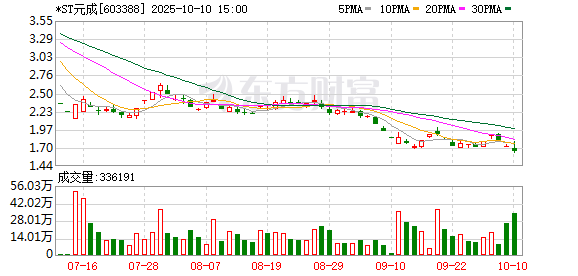
严肃查处!证监会处罚*ST元成严重财务造假案
Zhong Guo Jing Ying Bao· 2025-10-11 10:30
Core Viewpoint - The China Securities Regulatory Commission (CSRC) has announced administrative penalties against *ST Yuancheng for financial fraud, including fines and a 10-year market ban for the actual controller [1][3][4]. Group 1: Administrative Penalties - *ST Yuancheng is facing a fine of 37.45 million yuan for inflating revenue and profits over three consecutive years [1][3]. - Five responsible individuals will collectively face fines totaling 42 million yuan [1][3]. - The actual controller of *ST Yuancheng will be banned from the securities market for 10 years [1][3]. Group 2: Legal Proceedings - The Shanghai Stock Exchange will initiate delisting procedures due to serious violations [2][4]. - The CSRC will transfer any criminal evidence related to the case to law enforcement agencies, adhering to strict legal standards [2][4][6]. Group 3: Financial Misconduct Details - From 2020 to 2022, *ST Yuancheng inflated its revenue by 209 million yuan and total profits by 50 million yuan through fraudulent accounting practices [4]. - The company failed to adjust its financial records based on verified project settlement documents, leading to an inflated revenue of 14 million yuan and total profits of 13 million yuan in its 2022 annual report [4]. Group 4: Regulatory Environment - The CSRC has emphasized a comprehensive approach to tackling financial fraud, including administrative, civil, and criminal penalties [6][7][8]. - In 2024, the CSRC referred 178 cases to law enforcement, marking a 51% increase from the previous year [7].

行刑衔接高压震慑再增一例!证监会严肃查处*ST元成严重财务造假案
Zhong Guo Jing Ying Bao· 2025-10-11 02:08
Core Viewpoint - The China Securities Regulatory Commission (CSRC) has announced administrative penalties against *ST Yuancheng for financial fraud, including fines and potential delisting procedures due to significant violations of securities laws [2][3][4]. Group 1: Administrative Penalties - *ST Yuancheng is facing a proposed fine of 37.45 million yuan for the company and a total of 42 million yuan for five responsible individuals [3][4]. - The actual controller of *ST Yuancheng will be banned from the securities market for 10 years [2][3]. Group 2: Financial Misconduct Details - The company has been found to have inflated revenue and profits for three consecutive years, with a total inflated revenue of 209 million yuan and inflated profit of 50 million yuan [4]. - Specific projects, such as the Yuelongshan International Tourism Resort, were used to manipulate financial data, leading to discrepancies in reported earnings [4][5]. Group 3: Legal and Regulatory Actions - The CSRC will transfer any criminal evidence related to the case to law enforcement agencies, adhering to strict legal protocols [4][6][7]. - In 2024, the CSRC reported a 51% increase in the number of cases sent to police for criminal investigation, indicating a tougher stance on financial misconduct [8]. Group 4: Industry Implications - The regulatory environment is becoming increasingly stringent, with a focus on comprehensive accountability that includes administrative, civil, and criminal penalties for financial fraud [8]. - Legal experts emphasize the importance of a multi-faceted approach to deter financial misconduct and protect investors in the capital market [8].