金融法治

Search documents
非银金融行业:加强稳市机制建设,关注板块左侧机遇
GF SECURITIES· 2026-03-23 01:00
Investment Rating - The report provides a "Buy" rating for the non-bank financial sector, indicating an expected performance that will exceed the market by more than 10% over the next 12 months [36]. Core Insights - The report emphasizes the importance of strengthening market stability mechanisms and suggests focusing on left-side opportunities within the sector. It highlights that external risk events may fluctuate, but the market's resilience remains strong, with a trend of incremental capital inflow expected to continue [5]. - The introduction of the Financial Law draft is seen as a significant step towards enhancing regulatory frameworks and promoting high-quality development in the financial sector. This law aims to strengthen supervision, prevent risks, and support long-term growth [16][17]. - The insurance sector is advised to be actively monitored, as it continues to increase its equity investment ratio despite market downturns. The report notes that the solvency ratio of life insurance companies remains robust, providing a buffer against potential market pressures [13][5]. Summary by Sections 1. Market Performance - As of March 21, 2026, the Shanghai Composite Index fell by 3.38%, while the Shenzhen Component Index decreased by 2.90%. The CSI 300 Index dropped by 2.19%, and the ChiNext Index rose by 1.26% [10]. 2. Industry Dynamics and Weekly Commentary (a) Insurance - The report indicates that the insurance sector is guided by the two sessions to pursue high-quality development. The solvency ratio of life insurance companies is at 115%, significantly above the regulatory threshold of 50%, allowing for continued investment in equities [13]. - The proportion of insurance funds allocated to stocks and funds has increased to 14.8%, up by 2.1 percentage points from the previous year. The report suggests that the current valuation of the insurance sector presents a good cost-performance ratio [13]. (b) Securities - The Financial Law draft aims to enhance financial regulation and promote high-quality development. It establishes a comprehensive legal framework for financial activities, emphasizing risk prevention and regulatory clarity [16][17]. - The report notes that the Hong Kong Securities and Futures Commission has reported a significant increase in the virtual asset market, with a daily trading volume increase of 89.5% year-on-year, indicating a growing market and regulatory framework [21][23]. 3. Key Company Valuations and Financial Analysis - The report includes detailed valuations for key companies in the sector, with several companies rated as "Buy," including China Ping An, China Life, and Huatai Securities, among others. The expected earnings per share (EPS) and price-to-earnings (PE) ratios for these companies indicate strong growth potential [6].



加强稳市机制建设,关注板块左侧机遇
GF SECURITIES· 2026-03-22 05:15
Core Insights - The report emphasizes the importance of strengthening market stability mechanisms and highlights potential left-side opportunities in the non-bank financial sector [1][7]. Group 1: Market Performance - As of March 21, 2026, the Shanghai Composite Index was at 3957.05 points, down 3.38%, while the Shenzhen Component Index fell 2.90% to 13866.20 points. The CSI 300 Index decreased by 2.19% to 4567.02 points, and the ChiNext Index rose by 1.26% to 3352.10 points [12]. Group 2: Industry Dynamics and Weekly Commentary Insurance Sector - The report indicates that the insurance sector is guided by the two sessions to develop a high-quality growth blueprint. As of March 20, 2026, the 10-year government bond yield was 1.83%, up 2 basis points from the previous week. The insurance sector is advised to be actively monitored due to its improving fundamentals and increasing equity investment ratio, which reached 14.8% by the end of 2025, up 2.1 percentage points from 2024 [15][18]. - The solvency ratio for life insurance companies was 115%, significantly above the regulatory threshold of 50%, indicating a strong capacity to maintain equity investments despite market fluctuations [15][18]. Securities Sector - The report discusses the introduction of the first financial law draft aimed at enhancing financial governance and promoting high-quality development. This draft, released on March 20, 2026, focuses on strengthening regulation, risk prevention, and facilitating high-quality growth in the financial sector [18][19]. - The draft aims to establish a comprehensive regulatory framework, clarifying responsibilities and enhancing risk management capabilities across financial institutions [19][21]. Group 3: Investment Recommendations - The report suggests focusing on specific stocks within the insurance sector, including China Ping An (A/H), China Life (A/H), and China Pacific Insurance (A/H), due to their favorable valuation and growth potential [15][18]. - In the securities sector, recommended stocks include Guotai Junan (A/H), China Merchants Securities (A/H), and CITIC Securities (A/H), which are expected to benefit from the ongoing market reforms and stability mechanisms [7][15].


央行:2026年要聚焦建设高水平法治央行
Xin Lang Cai Jing· 2026-02-07 04:17
Core Viewpoint - The People's Bank of China (PBOC) emphasizes the importance of legal frameworks in enhancing financial stability and regulatory effectiveness for 2026, building on the progress made in 2025 [1] Group 1: Achievements in 2025 - Significant progress was made in financial legislation, with multiple laws such as the Central Bank Law and Financial Stability Law advancing [1] - Administrative enforcement and regulatory quality improved, with effective handling of administrative review and litigation cases [1] - Legal advisory services, legal research, and public legal education were actively promoted to support the central bank's functions [1] Group 2: Goals for 2026 - The focus for 2026 will be on establishing a high-level legal framework for the central bank, enhancing financial services for the real economy, and mitigating financial risks [1] - New breakthroughs are expected in financial legislation and administrative enforcement, with an emphasis on developing a comprehensive legal and regulatory system [1] - There will be a strengthened emphasis on legal service support, financial legal research, and public legal education, alongside the development of legal talent to improve operational capabilities [1]
人民银行:建设高水平法治央行
Bei Jing Shang Bao· 2026-02-06 12:29
Core Viewpoint - The People's Bank of China emphasizes the importance of legal frameworks in enhancing financial stability and development, with significant progress in financial legislation and administrative law enforcement noted for 2025 [1] Group 1: Financial Legislation Progress - In 2025, substantial advancements were made in financial legislation, including the development of laws related to the central bank and financial stability [1] - Continuous efforts in the clearance of regulations and normative documents were highlighted, indicating a systematic approach to legal frameworks [1] Group 2: Administrative Law Enforcement - The meeting noted improvements in the quality and effectiveness of administrative law enforcement, with standardized practices in inspections and penalties [1] - Efficient handling of administrative review and litigation cases was emphasized, showcasing a commitment to legal service and research [1] Group 3: Goals for 2026 - For 2026, the focus will be on building a high-level legal framework for the central bank, enhancing financial services to the real economy, and mitigating financial risks [1] - The meeting called for breakthroughs in financial legislation and administrative enforcement, aiming to establish a comprehensive legal system [1] - There will be an emphasis on improving the administrative review process and strengthening legal service support and public legal education [1] - Development of legal talent and capabilities within the organization will be prioritized to ensure effective governance [1]
金融审判要有新突破
Xin Lang Cai Jing· 2026-01-03 22:20
Group 1 - The core viewpoint emphasizes the importance of financial judicial reforms and the need for innovative measures to enhance the legal framework surrounding financial markets [1][2] - The Beijing Financial Court, under the leadership of Judge Ding Yuxiang, has made significant strides in addressing complex financial cases, including the landmark Blue Stone Asset case involving a false statement in the interbank bond market with a total amount of 500 million [1] - The court has introduced new mechanisms such as the "dual-track dual-platform" dispute resolution system and the "multi-factor migration synchronous comparison method" for loss calculation, reflecting the collective efforts of the court and the China Securities Association [2] Group 2 - Judge Ding Yuxiang plans to focus on breakthroughs in the area of financial institution bankruptcy in 2026, aiming to align judicial practices with the revised corporate bankruptcy law [3] - The judge emphasizes the importance of mentoring younger legal assistants in the courtroom, fostering both professional skills and party discipline through practical case handling [3] - The daily routine of Judge Ding includes early morning hours dedicated to writing judgments and reviewing cases, highlighting a commitment to both work and personal health through regular physical exercise [4]
金融“黑灰产”集群打击取得积极成效 金融监管总局表示将持续加大对重点领域打击力度
Zhong Guo Zheng Quan Bao· 2025-12-25 23:43
Core Viewpoint - The Ministry of Public Security and the National Financial Regulatory Administration have launched a joint initiative to combat illegal financial activities, achieving significant results in curbing financial crime and protecting consumer rights [1][2]. Group 1: Financial Crime Combat Efforts - Since June, nearly 60 operations have been conducted, resulting in over 1,500 cases of financial crime being investigated and more than 200 organized crime groups dismantled, with a total amount involved nearing 300 billion [2]. - The initiative has effectively purified the financial market ecosystem and maintained national financial order and stability [2]. - Ten typical cases were disclosed, covering various financial sectors, including loan fraud, insurance fraud, and illegal agency rights protection, which severely harm consumer rights and disrupt financial market order [2]. Group 2: Regulatory Measures and Future Plans - The financial regulatory authority plans to intensify efforts against illegal loan intermediaries and unauthorized rights protection agencies, with a focus on enhancing the quality and effectiveness of regulatory measures by 2026 [5][6]. - By the end of November, over 4,500 leads were transferred to law enforcement, involving amounts exceeding 210 billion, and more than 1,700 reports were guided, involving over 170 billion [4]. - The regulatory body aims to strengthen inter-departmental collaboration and improve the legal framework surrounding financial crimes, including developing evidence transfer standards for criminal activities [6].
公安部通报金融领域“黑灰产”违法犯罪集群打击工作举措成效情况
Yang Shi Wang· 2025-12-25 02:36
Core Viewpoint - The Ministry of Public Security and the National Financial Regulatory Administration have launched a six-month crackdown on illegal activities in the financial sector, resulting in significant achievements in combating "black and gray" industries that harm consumer rights and disrupt market order [1][3]. Group 1: Key Achievements - Over 1,500 cases of financial "black and gray" crimes have been investigated, with more than 200 organized crime groups dismantled, involving a total of nearly 30 billion yuan [1][3]. - The collaboration between law enforcement and financial regulatory bodies has led to the transfer of over 4,500 case leads to the police, involving amounts exceeding 21 billion yuan [3][4]. - The crackdown has resulted in a noticeable decrease in financial dispute complaints and an increase in public satisfaction and participation [3][6]. Group 2: Strategies Employed - The approach has shifted from "scattered operations" to "joint management," enhancing the mechanism for law enforcement collaboration [3][4]. - A focus on targeted enforcement has been established, utilizing data analysis to identify and investigate illegal activities in the financial sector [4][5]. - The integration of law enforcement and regulatory data has improved the efficiency of identifying and addressing illegal financial activities [2][3]. Group 3: Challenges and Responses - The complexity of identifying and prosecuting "black and gray" financial activities has been highlighted, with challenges including the obscurity of operations and the evolving nature of criminal methods [7][8]. - Measures have been implemented to enhance the identification standards for illegal intermediaries and to develop a risk warning mechanism to prevent illegal activities [8][11]. - Financial institutions are urged to strengthen their internal controls and risk management systems to mitigate exposure to illegal activities [11][12].
金融法治协同持续增强
Jing Ji Ri Bao· 2025-11-03 22:35
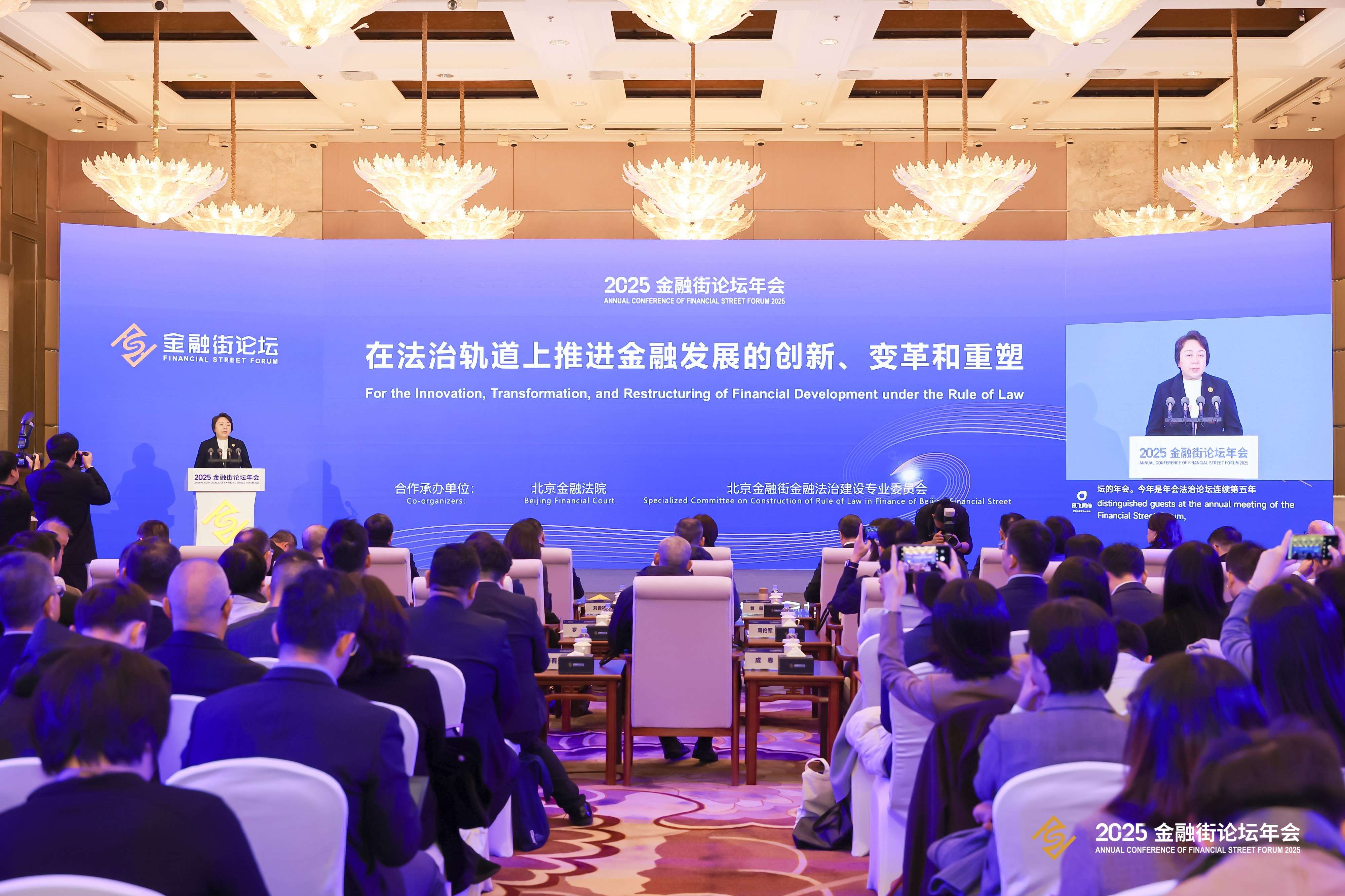
Core Viewpoint - The 2025 Financial Street Forum emphasizes the importance of advancing financial development through legal frameworks, highlighting the need for a robust financial legal system to support the construction of a financial powerhouse [1]. Group 1: Financial Legal System Development - The National People's Congress (NPC) is prioritizing financial legislation, including the formulation of a Financial Stability Law and amendments to the Banking Supervision Law [1]. - There is a call for enhanced research on foreign-related legal issues in finance to safeguard national financial security and promote high-level opening-up [1]. Group 2: Securities Dispute Resolution - The Beijing Financial Court has accepted 10,942 securities commercial cases from March 2021 to August 2025, with securities disputes accounting for 44.47% of its civil and commercial case filings [2]. - The court has handled 1,080 foreign-related cases involving 38 countries and regions, with securities misrepresentation and financial contract disputes being the most common types [2]. Group 3: Investor Protection and Fund Management - The rapid evolution of the private equity fund industry has led to challenges in governance and liquidation, prompting the China Securities Investment Fund Industry Association and the Beijing Financial Court to issue guidelines to protect investor rights [2]. - The court has introduced a dual-track dispute resolution mechanism to lower investor protection costs, including representative litigation and demonstration judgment mechanisms [3]. Group 4: Judicial Support for Capital Markets - Recent court rulings have clarified the legitimacy of investor representation in litigation when fund managers are unresponsive, addressing the "no one to perform duties" dilemma [3]. - The Beijing Financial Court has implemented innovative methods for loss calculation and has released guidelines to combat securities violations, clarifying responsibilities and regulating trading behaviors [3].
以推动高质量发展为主题奋力开创中国式现代化建设新局面——多部门负责人在《〈中共中央关于制定国民经济和社会发展第十五个五年规划的建议〉辅导读本》发表署名文章
Shang Hai Zheng Quan Bao· 2025-10-31 18:21
Group 1: Economic and Financial Strategy - The 20th Central Committee's Fourth Plenary Session approved the "Suggestions on Formulating the 15th Five-Year Plan for National Economic and Social Development," outlining systematic planning and strategic deployment for economic and social development during the 15th Five-Year period [1] - The article emphasizes the integration of technological and industrial innovation, enhancing the inclusiveness and adaptability of capital market systems, and expanding high-level opening-up [1][2] Group 2: Financial System Improvement - The article by Wang Jiang highlights seven key tasks for building a strong financial nation, including improving the central bank system and promoting healthy capital market development [2][3] - It stresses the need for financial institutions to focus on their main businesses and enhance governance, while also supporting state-owned financial institutions in serving the real economy [3][4] Group 3: Monetary Policy and Macro-Prudential Management - The People's Bank of China aims to construct a scientific and robust monetary policy system and a comprehensive macro-prudential management framework to support high-quality financial development [6][7] - The article outlines the importance of adjusting monetary policy to match economic growth and price stability, emphasizing the need for a balanced approach to short-term and long-term economic goals [7][8] Group 4: International Financial Center Development - The article discusses the continuous development of various financial markets in Shanghai to enhance its global competitiveness and influence [4][5] - It calls for strengthening the cross-border payment and clearing system for the Renminbi and expanding institutional openness in the financial sector [4] Group 5: Trade and Investment Expansion - The article by Wang Wentao emphasizes the significance of expanding high-level opening-up, including promoting trade innovation and enhancing the quality of foreign trade [10][11] - It outlines tasks such as increasing market access in service sectors and optimizing the free trade zone strategy to boost innovation and development [11][12] Group 6: Real Estate Market Development - The article by Ni Hong focuses on promoting sustainable and healthy development in the real estate market through reforms in development, financing, and sales systems [14][15] - It highlights the need for a multi-level housing security system and emphasizes the importance of local governments in adjusting real estate policies based on specific city conditions [15][16]
金融街论坛热议跨境金融法治应对 两项金融法治协同成果落地
Bei Ke Cai Jing· 2025-10-31 15:25
Core Viewpoint - The financial law forum emphasizes the importance of legal frameworks in promoting financial development, innovation, and transformation, highlighting the need for a robust financial legal system to support the construction of a financial power and modern governance capabilities [1][4]. Group 1: Financial Legal System Development - The establishment of a sound financial legal system is crucial for building a financial power and modernizing financial governance [4]. - Legislative tasks in the financial sector are significant, with goals set by the 20th National Congress to formulate financial laws, including the Financial Stability Law and amendments to existing banking laws [4][5]. Group 2: Risk Prevention and Legal Framework - Preventing and mitigating financial risks, particularly avoiding systemic financial risks, is a core function of financial law [6]. - The Supreme People's Court has been guiding lower courts in major risk management, providing legal frameworks to address risks in areas like internet finance and real estate [6][7]. Group 3: Cross-Border Financial Challenges - The forum discussed the legal challenges and responses in cross-border finance, with a focus on the increasing complexity of international capital flows [11][14]. - The Beijing Financial Court highlighted the prevalence of securities fraud and disputes related to financial loans and investment contracts, reflecting the diverse legal needs arising from international cooperation [14]. Group 4: Regulatory Developments in Hong Kong - Hong Kong is adapting its regulatory framework to address new challenges, such as the implementation of a licensing system for virtual asset trading platforms to protect investors [8]. Group 5: Collaborative Outcomes - The Beijing Financial Court and industry associations released two reports focusing on judicial support for the high-quality development of the capital market and investor protection practices [18][19]. - These reports aim to address industry challenges, particularly concerning the management of private investment funds and the legal implications of fund manager failures [19].