
软硬一体化

Search documents
专访江磊:人形机器人“三步走”,商用压缩至5—10年
21世纪经济报道· 2025-08-14 14:46
Core Viewpoints - The development of humanoid robots should follow a "three-step" approach: first focusing on entertainment and cultural services, then industrial applications, and finally household scenarios. The goal is to compress the typical 25-year development cycle of similar industries into 5 to 10 years [4][6]. Group 1: Industry Trends - A significant change observed at the 2025 World Robot Conference is the broader selection of humanoid robot products available, with many manufacturers showcasing tangible products rather than just prototypes [7]. - The compatibility of products with AI large models is improving, which could lead to a network effect similar to that of the Android system, allowing hardware manufacturers to focus on hardware while AI companies concentrate on software [7]. - There is a growing interest in scalable markets such as dining and entertainment, with expectations that humanoid robots will soon be present in various public venues [7]. Group 2: Challenges for Enterprises - Current challenges for small and medium-sized tech enterprises include survival issues, particularly for traditional manufacturing companies looking to enter the humanoid robot sector. These companies need to establish operating systems and cloud infrastructure before transitioning [9]. - AI companies with soft power are also facing difficulties, as many markets are becoming saturated. It is recommended that these companies venture into hardware development to integrate their large models into tangible products [9]. Group 3: Innovation Center's Role - The National and Local Joint Innovation Center for Humanoid Robots aims to observe and address the challenges faced by innovative enterprises, focusing on resource integration and open-source collaboration to accelerate development [5][6]. - The center will also work on establishing standards for data, hardware, and conceptual definitions to facilitate industry growth and collaboration [11].


专访国地中心江磊:人形机器人“三步走”,商用压缩至5-10年
2 1 Shi Ji Jing Ji Bao Dao· 2025-08-14 06:33
Group 1 - The core viewpoint of the article emphasizes the evolving trends in humanoid robots, highlighting a three-step industrialization process: starting with entertainment, moving to industrial applications, and finally entering household scenarios [5][10] - The humanoid robot industry aims to compress the typical 25-year development cycle of similar technologies into a 5 to 10-year timeframe, leveraging open-source collaboration and resource integration [5][6] - A significant change observed at the 2025 World Robot Conference is the increased availability of humanoid robot products, with many manufacturers showcasing tangible products rather than just prototypes [7] Group 2 - The article discusses the challenges faced by small and medium-sized tech enterprises in the humanoid robot sector, particularly the need for traditional manufacturing companies to establish digital infrastructure before transitioning into this field [3][8] - Companies with strong AI capabilities are encouraged to venture into hardware development, indicating a trend towards integrating software and hardware solutions [8] - The market is beginning to recognize the potential of humanoid robots in sectors like dining and entertainment, suggesting a growing acceptance and demand for these technologies [7][10] Group 3 - The article notes that while there are still doubts about the practical value of humanoid robots, the number of supporters is gradually increasing, indicating a shift in market perception [10] - The current "order surge" in humanoid robot companies is seen as a temporary trend rather than a definitive sign of large-scale commercialization, reflecting the unique characteristics of the Chinese market [10] - The article highlights the need for collaboration and standardization within the humanoid robot industry to address rapid development and ensure a healthy competitive environment [11]

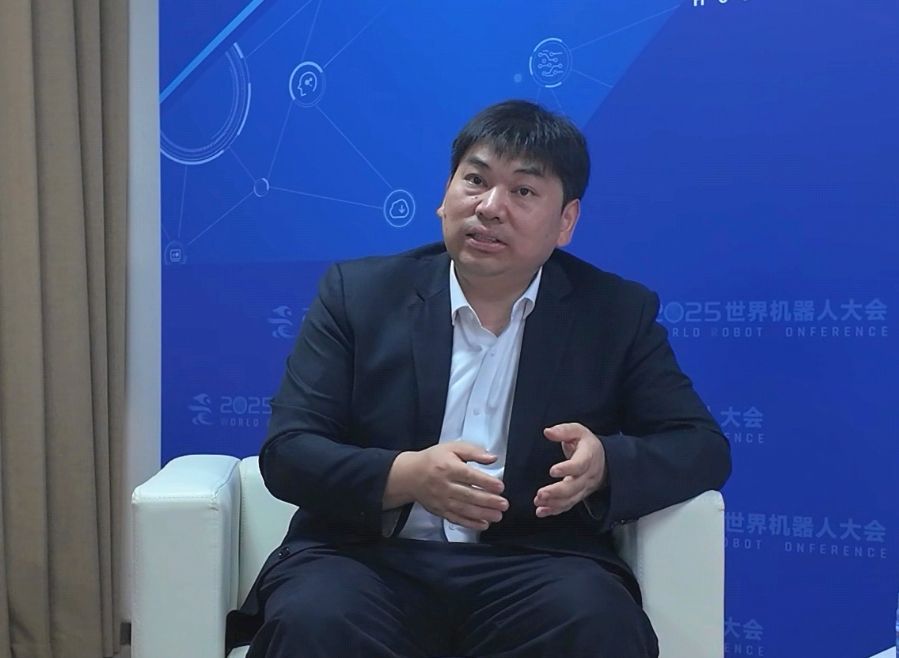
国地中心江磊答21:软硬一体化应是未来企业重要落足点
2 1 Shi Ji Jing Ji Bao Dao· 2025-08-12 08:48
Core Viewpoint - The 2025 World Robot Conference held in Beijing emphasizes the importance of integrating software and hardware in the robotics industry, as highlighted by Jiang Lei, the chief scientist of the National Local Co-construction Humanoid Robot Innovation Center [2] Group 1 - The conference took place from August 8 to 12, 2025, showcasing advancements in robotics [2] - Jiang Lei advocates for companies with strong software capabilities to develop hardware that can effectively present large models, indicating a trend towards "soft-hard integration" as a crucial focus for future enterprises [2]
杭州机器人展会调研汇报
2025-06-23 02:09
Summary of the Robot Industry Conference Call Industry Overview - The focus of robot manufacturers is shifting from hardware to the "brain," which includes data and algorithms. Leading companies like Tesla and Figur are increasing their investment in algorithms and seeking downstream application scenarios, indicating a trend towards integrated hardware and software solutions [1][4] Key Points and Arguments - **Collaborations and Partnerships**: Major domestic and international robot manufacturers are collaborating on software and hardware integration. Companies like Apollo Robotics are partnering with Google DeepMind, while others like U Disk and Huawei Cloud are also forming alliances to enhance robot performance [1][5] - **Application Areas**: Humanoid robots are primarily being applied in manufacturing and service industries, including automotive factories, warehousing logistics, hotels, and retail. The urgent need for iteration in the early stages of industrialization requires more data, algorithms, and deployment of robots [1][6] - **Core Component Development**: The technology in the execution segment is converging, while competition in the perception segment remains intense. The focus is on increasing degrees of freedom and adding sensors, with domestic manufacturers exploring alternatives to reduce costs [1][7] - **Tactile Sensor Technology**: By 2025, most robot manufacturers are expected to install tactile sensors at the fingertips to address interaction feedback issues. The main tactile sensing solutions are resistive and capacitive, with capacitive solutions being more precise but also more expensive [1][8][9] Additional Important Insights - **Market Trends**: The domestic robot market is expected to approach 2 million units, with growth dependent on the expansion of downstream applications and supportive national subsidy policies. For instance, the Longgang District in Shenzhen plans to promote the deployment of over 1,000 robots from 2025 to 2027 [1][13] - **Cost Reduction Efforts**: The reducer market is seeking new processes to lower costs, with major players actively expanding production. For example, a new project in Lin'an, Hangzhou, is expected to expand production capacity to 1 million units by 2025 [1][10] - **Sensor Market Dynamics**: The six-dimensional force sensor market is seeing increased participation, with leading companies maintaining dominance. The price is currently between 10,000 to 20,000 yuan, but mass production could lead to price reductions [1][11] - **Lightweighting Challenges**: The weight of full-size humanoid robots typically ranges from 50 to 70 kg. Efforts to achieve lightweight designs are ongoing, with some manufacturers exploring the use of titanium to replace traditional materials, although these technologies are not yet fully mature [1][12] Investment Recommendations - Potential investment opportunities include companies like Hengli Hydraulic, Landai Technology, and Better, as well as servo motor-related stocks such as Hanwei Technology and Fulai New Materials [1][13]

移动芯片暗战 ,终端生态竞争激烈升级
2 1 Shi Ji Jing Ji Bao Dao· 2025-05-22 13:24
Core Insights - Xiaomi's self-developed flagship chip "Xuanjie O1" has been unveiled, marking a significant step in the global smartphone chip market [2][4] - The chip is produced using TSMC's 3nm process technology and is primarily aimed at technical validation, with initial production volumes conservatively estimated in the hundreds of thousands [2][4] - Xiaomi will continue to collaborate with leading chip suppliers Qualcomm and MediaTek despite launching its own chip [2][5] Market Dynamics - In 2024, Xiaomi is expected to ship 19.5 million smartphones with Qualcomm's Snapdragon 8 series and 3.7 million with MediaTek's Dimensity 9000 series [2] - The global smartphone AP/SoC chip market is seeing a shift, with MediaTek, Apple, Qualcomm, and others holding significant market shares [2][6] - The competitive landscape is evolving, with Xiaomi joining the ranks of companies like Apple, Huawei, and Samsung that have developed their own chips [3][7] Strategic Positioning - Xiaomi's entry into the SoC chip market is part of a broader strategy to enhance its control over hardware and software integration [4][10] - The company is adopting a multi-supplier strategy, relying heavily on third-party suppliers for its SoC chips, with MediaTek holding a 63% share and Qualcomm 35% [5][6] - The self-developed chip is seen as a stepping stone for Xiaomi to ascend to the high-end market, although its current production scale is limited [5][6] Competitive Landscape - The smartphone chip market is increasingly characterized by a focus on ecosystem integration, with companies striving for vertical integration from hardware to software [7][10] - The competition is not just about chips but also about creating a cohesive ecosystem that enhances user experience and brand loyalty [7][11] - As the market matures, the differentiation among smartphone brands is becoming more pronounced, with self-developed chips playing a crucial role in this strategy [9][10]

净利润持续承压,慧博云通推“蛇吞象”重组,中小股东联盟背后暗藏玄机
Zheng Quan Zhi Xing· 2025-05-22 08:03
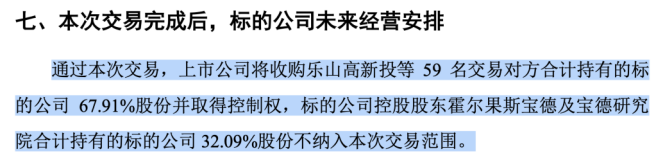
Core Viewpoint - The company Huibo Yuntong (301316.SZ) is pursuing a "snake swallowing elephant" acquisition strategy to gain control of Baode Computer, aiming to address declining gross margins and net profits through restructuring [1][2]. Group 1: Acquisition Details - Huibo Yuntong plans to acquire 67.91% of Baode Computer's shares from 59 minority shareholders, bypassing the controlling shareholder [2][3]. - The acquisition is intended to build a "soft and hard integration" product and technology capability, enhancing industry chain collaboration [2]. - Baode Computer's financial metrics significantly outperform those of Huibo Yuntong, with projected 2024 revenue of 10 billion yuan, 5.74 times that of Huibo Yuntong [2]. Group 2: Shareholder Dynamics - The acquisition has been characterized as a "minority shareholder coercive acquisition" due to the decision to exclude the controlling shareholder from the transaction [3]. - The ongoing gambling agreement related to Baode Computer is a critical factor driving minority shareholders to sell their stakes [5]. Group 3: Financial Performance - Huibo Yuntong has faced a decline in net profit despite revenue growth, with 2024 revenue at 1.743 billion yuan, up 28.3%, but net profit down 20.45% to 66 million yuan [7][10]. - The company has seen a significant increase in operating expenses, with sales, management, and R&D costs rising by double digits in 2024 [7][9]. - The gross margin for software services has decreased by 1.25 percentage points to 22.99%, while overall sales gross margin fell by 0.46 percentage points to 23.81% [10]. Group 4: Cash Flow and Receivables - The company's accounts receivable have increased significantly, with 2024 and Q1 2025 figures at 716 million yuan and 790 million yuan, respectively, indicating rising collection pressure [11]. - The net cash flow from operating activities has declined sharply, with 2024 and Q1 2025 figures at 67 million yuan and -95 million yuan, respectively [11].
慧博云通拟收购宝德计算机 推动“软硬一体”布局
Xin Lang Zheng Quan· 2025-05-09 08:24
Core Insights - Huibo Yuntong (301316.SZ) announced a suspension of trading on May 5, 2025, to plan the acquisition of control over Baode Computer System Co., Ltd. through a combination of share issuance and cash payment, along with raising supporting funds. This transaction aims to facilitate Huibo Yuntong's deep transformation from IT services to the hardware computing power sector [1] - Huibo Yuntong, established in March 2009 and listed on the ChiNext board in October 2022, reported a 28.30% year-on-year revenue growth in 2024, but a 20.45% decline in net profit, indicating a "revenue growth without profit" dilemma [1] - Baode Computer, founded in 2003 with a registered capital of 668 million yuan, specializes in the R&D, production, and sales of servers and PCs, and offers comprehensive solutions. The company is a leader in the ARM server market in China and ranks among the top three in the AI server sector [1] - The market perceives Huibo Yuntong as having significant advantages in software technology services, while Baode Computer is a leader in the server field. The merger is expected to promote a software-hardware integration strategy, enhancing full-stack service capabilities and generating positive strategic synergies [1] Company and Industry Summary - Huibo Yuntong's transition towards hardware computing power represents a strategic shift in its business model, aiming to leverage its software service strengths alongside Baode Computer's hardware capabilities [1] - Baode Computer's strong position in the server market, particularly in AI and ARM servers, complements Huibo Yuntong's existing offerings, potentially leading to enhanced market competitiveness [1] - The acquisition is still in the planning stage, with uncertainties regarding the finalization of the transaction and the parties involved, highlighting the need for careful monitoring of the deal's progress [2]