
过罚相当原则

Search documents
条款最多,生态环境法典污染防治编提请全国人大常委会二审
Xin Jing Bao· 2025-10-23 05:49
Core Points - The National People's Congress (NPC) Standing Committee is reviewing the second draft of the Ecological Environment Code, focusing on pollution prevention and legal responsibilities [1][2][3] Group 1: Pollution Prevention Measures - The second draft of the pollution prevention section aims to enhance overall requirements for pollution control, improve ecological environment quality, and safeguard public health [2] - Increased funding for agricultural and rural pollution prevention is emphasized, along with stronger measures against heavy metal pollution and volatile organic compounds [2] - The draft includes provisions for monitoring underground water conditions and regulating emissions from ships and heavy-duty vehicles [2] Group 2: Legal Responsibilities - The second draft proposes significant modifications to the legal responsibilities section, ensuring a balance in penalties for similar violations and enhancing accountability for ecological protection and low-carbon development [3][5] - Specific legal responsibilities are being refined for issues like groundwater protection and oil smoke pollution, with a new structure for the legal responsibilities chapter [3] - The draft aims to prevent disproportionate penalties in the pollution prevention sector, ensuring that fines are commensurate with the severity of violations [5][6] Group 3: Systematic Framework - The pollution prevention section is structured into nine subdivisions, addressing traditional pollution types and emerging environmental issues [4] - It integrates existing laws related to air, water, soil, solid waste, noise, radioactive pollution, chemical substances, and electromagnetic radiation, creating a comprehensive regulatory framework [4] - The goal is to provide systematic support for ongoing pollution prevention efforts, emphasizing scientific and precise pollution control [4]
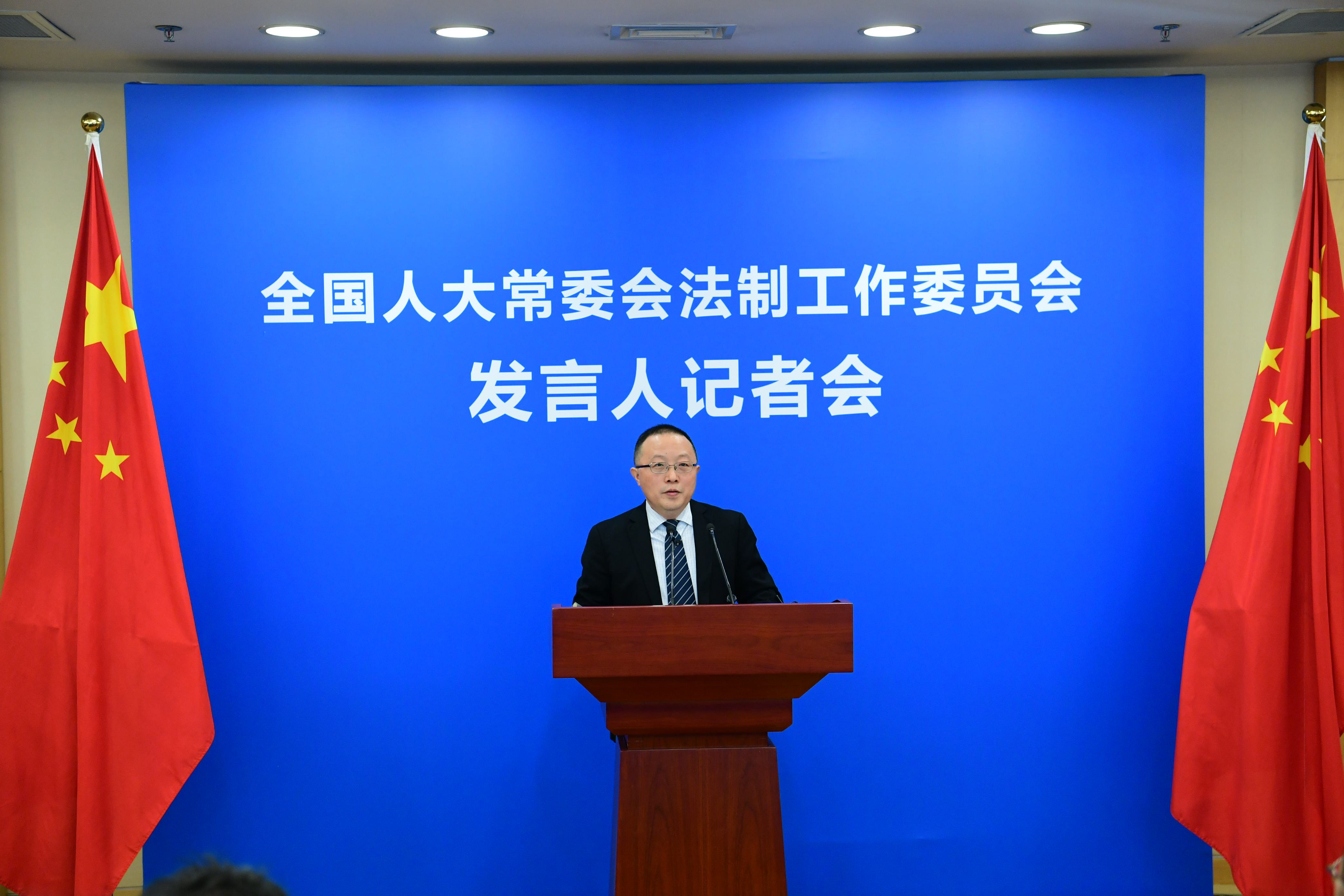
全国人大常委会法工委答一财:生态环境法典要落实过罚相当
Di Yi Cai Jing· 2025-10-23 03:33
Core Viewpoint - The compilation of the Ecological Environment Code is progressing, aiming to implement the principle of proportionality in penalties to avoid "heavy penalties for minor offenses" and "light penalties for major offenses" [1][4]. Summary by Sections Legislative Progress - The 18th meeting of the 14th National People's Congress Standing Committee will be held from October 24 to 28 in Beijing, where the draft of the Ecological Environment Code will undergo a second review [1]. - The initial review of the Ecological Environment Code draft took place in April 2025, with modifications based on feedback from various stakeholders [1]. Key Modifications Proposed - The draft will further implement the principle of proportionality in penalties [1][4]. - There will be a balance in legal responsibilities among similar violations [1][4]. - Dynamic adjustments will be made based on changes in the general and pollution prevention sections [1]. - Legal responsibilities related to ecological protection and green low-carbon development will be enhanced [1]. - Specific issues such as groundwater protection, oil fume pollution, and light pollution will have improved legal responsibilities [1]. Structural Changes - The first chapter will be renamed "General Principles of Legal Responsibility," and the second chapter will be renamed "Specific Legal Responsibilities" [1]. - The first section of the second chapter will be divided into three sections: "Ecological Environment Impact Assessment and Monitoring," "Pollutant Discharge Permits and Outlets," and "Other Provisions" [1]. Enforcement Considerations - General provisions for heavier penalties, lighter penalties, and non-penalties will be added [5]. - The five-year accountability period for administrative penalties will be clarified for violations causing environmental pollution and ecological damage [5]. - Adjustments will be made to penalty standards based on different violators and circumstances [5]. - Legal responsibilities related to pollutant discharge outlets, ecological environment impact reports, and ecological accidents will be unified [5]. - Responsibilities for monitoring by waste management units will be balanced [5]. - Penalty amounts for radioactive pollution prevention will be adjusted based on those for hazardous waste violations [5].

每年超800万人被治安处罚,违法记录或束缚一生?
Feng Huang Wang· 2025-10-14 11:26
Core Points - The article discusses the long-term consequences of minor legal violations under the Public Security Administration Punishment Law, emphasizing how such infractions can significantly impact an individual's life and career opportunities [2][3][4] - It highlights the psychological and social burdens faced by individuals with administrative violation records, illustrating the stigma and discrimination they encounter in various aspects of life, including employment and education [4][10][13] - The recent amendments to the Public Security Administration Punishment Law, effective from January 1, 2026, introduce a record sealing system aimed at mitigating the lifelong repercussions of minor infractions [5][29][31] Group 1 - The article outlines that over 8 million people are subjected to administrative penalties annually, indicating the widespread nature of minor legal violations in daily life [3][10] - It provides examples of individuals who faced severe consequences for seemingly trivial actions, such as taking someone else's food delivery or misappropriating items, leading to administrative detention and job loss [5][6][10] - The narrative includes testimonies from individuals who have experienced significant life disruptions due to their violation records, emphasizing the emotional toll and societal stigma associated with such labels [10][13][20] Group 2 - The article discusses the advocacy for the sealing of administrative violation records, led by legal experts like Zhao Hong, who argue that the current system imposes excessive penalties that exceed the severity of the original infractions [4][5][28] - It mentions the public's mixed reactions to the proposed changes, with some expressing sympathy for those with violation records while others believe that such individuals should face lifelong consequences [5][15][20] - The article concludes with a call for a more understanding and flexible legal framework that allows for the reintegration of individuals with past infractions into society, highlighting the need for legal education and public awareness [36][37]

一财社论:以法治建设攻坚市场监管深水区
Di Yi Cai Jing· 2025-07-29 12:23
Core Viewpoint - The article emphasizes the ongoing efforts to strengthen the rule of law in market regulation, highlighting the importance of legal, credit, and intelligent supervision to address deep-seated contradictions and issues in the market [1] Group 1: Market Regulation Focus Areas - Key areas for enhancing market regulation include supporting the construction of a unified national market, addressing local protectionism, and tackling "involution" competition through effective legal governance [2] - There is a need for proactive responses to public concerns regarding food safety, drug safety, and industrial product quality [2] Group 2: Legal Framework Improvement - The draft amendment to the Price Law, the first since its implementation in 1998, aims to provide legal grounds for addressing "involution" competition by defining low-cost dumping practices [3] - The amendment seeks to establish a long-term governance mechanism to prevent irrational market competition driven by capital excess [3] Group 3: Regulatory Adaptation to New Business Models - The market regulatory authority is working to fill regulatory gaps for new business models, such as live e-commerce, and is enhancing the regulatory framework for platform algorithms [4] - This reflects the continuous improvement and dynamic updating of the market regulatory legal system [4] Group 4: Enforcement and Social Impact - The effectiveness of enforcement is crucial, as arbitrary enforcement and excessive penalties can undermine public trust in regulatory bodies [5] - The case of the "frog soup" incident illustrates issues of improper enforcement and abuse of power, highlighting the need for a balanced approach to regulation [5] - The regulatory authority plans to implement a list of first-time non-penalties and minor exemptions, aiming for a fair and humane enforcement approach [6]
株连制度,为什么仍牢固地存在着?
Hu Xiu· 2025-07-29 12:09
Core Viewpoint - The article discusses the systemic discrimination and lifelong consequences faced by individuals with administrative violations, emphasizing the need for legal reforms to address these issues and promote fairness in the justice system [4][16][84]. Group 1: Impact of Administrative Violations - Individuals with administrative violations experience significant emotional distress, including depression and regret, due to the stigma attached to their records [3][21]. - A case study illustrates how a minor traffic violation can lead to severe repercussions, such as being denied school admission due to a child's administrative record [9][11]. - The article highlights that administrative violations can have lifelong impacts, affecting employment opportunities and social standing, akin to a modern form of branding [13][16][62]. Group 2: Legal and Social Implications - The article critiques the principle of proportionality in punishment, arguing that the penalties for minor infractions often exceed the severity of the offense, leading to unjust lifelong consequences [17][50]. - It points out that the legal system often fails to differentiate between minor infractions and serious crimes, resulting in disproportionate penalties for individuals with administrative violations [11][51]. - The author calls for the removal of administrative records from public access and the establishment of a system to seal such records, particularly for minor offenses [64][76]. Group 3: Public Awareness and Legal Reforms - The article notes a growing public awareness and advocacy for reforming laws related to administrative violations, as evidenced by the significant public feedback during the revision of the Public Security Administration Punishment Law [81][83]. - The recent legal amendments indicate a shift towards protecting the rights of individuals with administrative violations, including provisions for sealing records [76][78]. - The author emphasizes the importance of continued public engagement and advocacy to ensure that legal reforms are implemented effectively and that the dignity of all individuals, including those with violations, is upheld [84][86].

封存轻微犯罪记录 打破制度性歧视
Jing Ji Guan Cha Bao· 2025-07-19 06:57
Core Viewpoint - The establishment of a sealing system for minor criminal records is a key reform goal aimed at enhancing human rights judicial protection in China, as outlined in the recent document by the Central Committee [1][2]. Group 1: Legal Framework - The newly revised Public Security Administration Punishment Law formally establishes the sealing system for unlawful records, ensuring that such records are not disclosed to any individual or organization, except for specific state agencies for case handling [1]. - The connection between administrative violations and minor criminal offenses is highlighted, with the Public Security Administration Punishment Law often referred to as "small criminal law," indicating a close relationship between the two legal frameworks [2]. Group 2: Social Implications - The sealing system for minor criminal records is essential to prevent lifelong societal stigma for individuals with minor offenses, which can lead to significant social and economic disadvantages for them and their families [3][4]. - The implementation of this sealing system is expected to promote a more rational public perception of minor crimes, reducing systemic discrimination and fostering a more inclusive and harmonious society [4].