预制菜国家标准

Search documents
预制菜“国标”征求意见:中央厨房市场渗透率已超八成
第一财经· 2026-02-06 14:33
Core Viewpoint - The national standard for prepared dishes has entered the public consultation phase, defining prepared dishes and excluding those produced in central kitchens from this category [3][5]. Group 1: Definition and Standards - Prepared dishes are defined as pre-packaged dishes made from one or more food agricultural products and their derivatives, which may or may not include seasonings, and are pre-processed industrially without preservatives [3]. - The definition excludes staple foods, cleaned vegetables, ready-to-eat foods, and dishes made in central kitchens [3]. Group 2: Central Kitchen Model - The rise of central kitchens addresses the challenges of traditional restaurant kitchens, which are often decentralized and difficult to regulate, thus increasing safety risks [3]. - Central kitchens enable standardized production and quality control, significantly reducing risks such as microbial contamination and inconsistent raw material quality [3]. - The central kitchen model is seen as a key method to enhance food safety, especially for large-scale catering needs like school meals [3]. Group 3: Regulatory Clarifications - The penetration rate of central kitchens was approximately 81.2% in 2021, with a market size of 16 billion yuan [5]. - Recent regulations clarify that central kitchens are limited to supplying chain restaurants and do not include prepared dishes [5]. - Food service providers must accurately inform consumers if they use prepared dishes, central kitchen products, or pre-packaged foods [5].


六问六答!预制菜国家标准征求意见稿,一文了解→
证券时报· 2026-02-06 13:38
Core Viewpoint - The article discusses the recent public consultation on national standards for pre-prepared dishes in China, emphasizing the importance of food safety, consumer rights, and the need for clear definitions and regulations in the industry [2][11]. Group 1: Definition and Classification of Pre-prepared Dishes - Pre-prepared dishes are defined as products made from one or more edible agricultural products, processed through industrial pre-preparation methods, and packaged for consumption after heating or cooking [3]. - The classification of pre-prepared dishes includes categories based on raw materials (e.g., meat, seafood), preparation methods (e.g., grilling, frying), storage methods (e.g., frozen, refrigerated), packaging types (e.g., single or combination packaging), and consumption methods (e.g., ready-to-cook or ready-to-heat) [4]. Group 2: Safety and Quality Standards - The draft standards prohibit the use of preservatives in pre-prepared dishes, promoting the use of physical methods like freezing and high-temperature sterilization to ensure food safety [5]. - The maximum shelf life for pre-prepared dishes is set at 12 months, balancing public expectations and the operational needs of businesses [6]. Group 3: Nutritional Considerations - The standards emphasize the importance of retaining nutritional value during production and reheating, encouraging the use of advanced technologies to minimize nutrient loss [7]. - There is a focus on reducing the use of cooking oil, salt, and sugar in pre-prepared dishes to meet consumer demands for healthier options [7]. Group 4: Raw Material Safety - The safety of raw materials is crucial, with strict requirements to ensure that ingredients meet safety standards and are free from contaminants [9]. - The traceability of raw materials is emphasized, ensuring that consumers can verify the safety and quality of the ingredients used in pre-prepared dishes [9]. Group 5: Packaging and Labeling Requirements - The draft standards outline specific requirements for packaging materials to ensure they are safe for heating and do not compromise food quality [10]. - Clear labeling is mandated to inform consumers about the preparation methods and safety instructions for pre-prepared dishes [10]. Group 6: Consumer Rights and Transparency - The article highlights the importance of consumer rights, particularly the right to know about the preparation methods of dishes served in restaurants [11]. - Encouraging transparency in the food service industry is seen as a way to enhance consumer trust and satisfaction [12].
新华视点|预制菜国家标准等征求意见稿六问六答
Xin Hua She· 2026-02-06 11:55
Core Viewpoint - The Chinese government is seeking public opinion on national standards for pre-prepared dishes, addressing safety, consumer rights, and industry development [1] Group 1: Definition and Classification of Pre-prepared Dishes - Pre-prepared dishes are defined as products made from one or more edible agricultural products, processed industrially, and packaged for consumption after heating or cooking [2] - The classification of pre-prepared dishes includes categories based on raw materials (meat, seafood, eggs, etc.), processing methods (grilling, frying, etc.), storage methods (frozen, refrigerated, etc.), packaging types (single or combination), and consumption methods (ready-to-cook or ready-to-heat) [3] Group 2: Safety and Quality Standards - The draft standard prohibits the use of preservatives in pre-prepared dishes, emphasizing the use of physical methods for food safety [4] - The maximum shelf life for pre-prepared dishes is set at 12 months, balancing public expectations and production realities [5] Group 3: Nutritional Considerations - The draft emphasizes retaining nutritional value during production and reheating, encouraging the use of advanced technologies to minimize nutrient loss [6] - It promotes the "three reductions" principle, advocating for reduced oil, salt, and sugar in pre-prepared dishes [6] Group 4: Raw Material Safety - The safety of raw materials is crucial, requiring compliance with food safety standards and traceability of sources [7] - The draft mandates that all raw materials must not be spoiled and must meet specific limits for pesticide and veterinary drug residues [7] Group 5: Packaging and Labeling Requirements - Packaging materials must be heat-resistant and safe for use, with clear labeling on preparation methods and consumption instructions [8][9] - Labels must indicate whether the product requires heating or cooking before consumption, ensuring consumer awareness [9] Group 6: Consumer Rights and Transparency - The draft encourages food service providers to voluntarily disclose the use of pre-prepared dishes, enhancing consumer rights to know and choose [10] - Transparency in food sourcing and preparation methods is seen as beneficial for consumer trust and business reputation [11]
预制菜国家标准等征求意见稿六问六答
券商中国· 2026-02-06 11:49
Core Viewpoint - The article discusses the recent public consultation on national standards for pre-prepared dishes in China, emphasizing the importance of food safety, consumer rights, and the need for clear definitions and regulations in the industry [1]. Group 1: Definition and Classification of Pre-prepared Dishes - Pre-prepared dishes are defined as products made from one or more edible agricultural products, processed industrially without preservatives, and packaged for consumption after heating [2]. - The classification of pre-prepared dishes includes categories based on raw materials (meat, seafood, eggs, etc.), processing methods (grilling, frying, etc.), storage methods (frozen, refrigerated, etc.), packaging types (single or combination), and consumption methods (ready-to-cook or ready-to-heat) [3][4]. Group 2: Safety Regulations and Standards - The draft standards prohibit the use of preservatives in pre-prepared dishes, promoting the use of physical methods for food safety [5]. - The maximum shelf life for pre-prepared dishes is set at 12 months, balancing public expectations and production realities [6]. Group 3: Nutritional Quality and Preservation - The standards emphasize the importance of retaining nutritional value during production and reheating, encouraging advanced technologies to minimize nutrient loss [7]. - The guidelines advocate for reducing the use of cooking oil, salt, and sugar to meet public health demands [7]. Group 4: Raw Material Safety - The safety of raw materials is crucial, requiring compliance with food safety standards and traceability to ensure quality [9]. Group 5: Packaging and Labeling Requirements - Packaging must be heat-resistant and safe, with clear labeling on preparation methods and consumption instructions to inform consumers [10]. Group 6: Consumer Rights and Transparency - The draft encourages transparency in food preparation methods, allowing consumers to make informed choices about pre-prepared dishes [11][12]. - The approach aims to balance consumer rights with the practical realities of the food service industry, promoting voluntary disclosure of preparation methods [12].

人民锐评 | 吃得放心,是预制菜的“金标准”
Bei Jing Ri Bao Ke Hu Duan· 2026-02-06 10:25
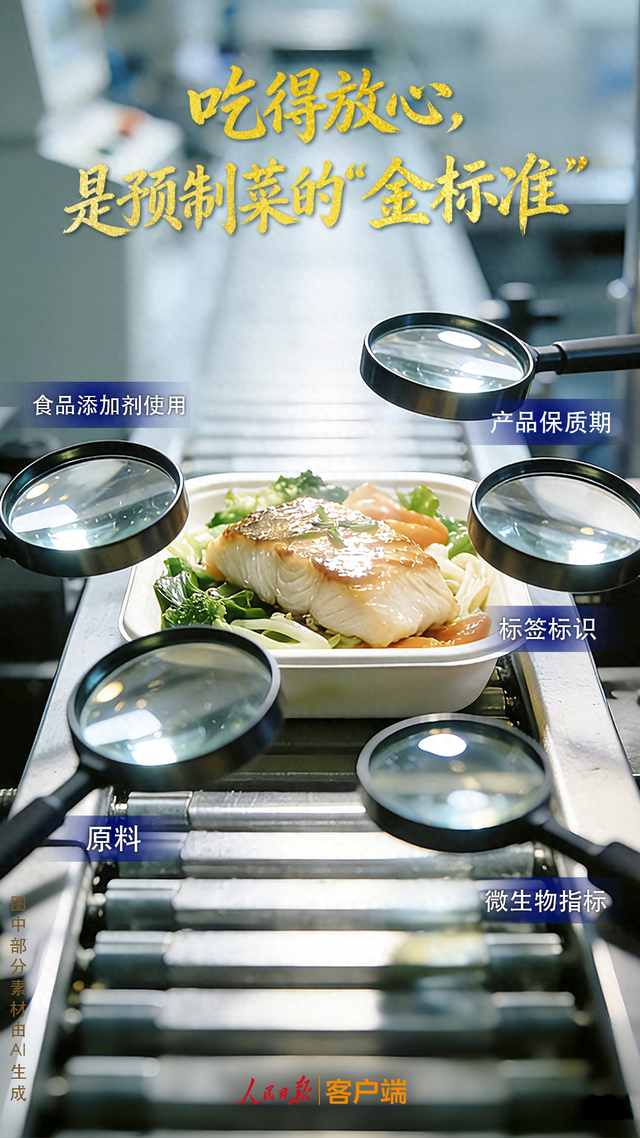
Core Viewpoint - The recent release of the draft national standards for prepared dishes and related announcements aims to enhance food safety, provide consumer rights, and promote the sustainable development of the catering industry [1][4][7]. Group 1: Food Safety Standards - The draft standards define prepared dishes, outline classification, raw material requirements, microbiological indicators, food additives usage, labeling, and shelf life, emphasizing the importance of safe and traceable raw material sources [4][11]. - The "Food Safety National Standard for Prepared Dishes" is a mandatory standard that sets clear boundaries for production companies, ensuring a solid foundation for food safety and providing regulatory authorities with a basis for enforcement [4][11]. Group 2: Consumer Rights - The draft encourages catering service providers to transparently disclose the processing methods of dishes, allowing consumers to make informed choices about the use of prepared dishes, central kitchen products, or pre-packaged foods [4][11]. - This initiative addresses consumer concerns about transparency and empowers them to judge the value and safety of the food they consume [4][11]. Group 3: Industry Development - The promotion of transparency in the catering sector is expected to enhance consumer trust, which can lead to a more efficient market mechanism and contribute to the sustainable development of the catering industry [5][12]. - Prepared dishes are recognized as a product of modern fast-paced lifestyles, and the establishment of standardized processes is anticipated to improve safety and quality, thereby building consumer confidence in prepared dishes [6][13]. Group 4: Ongoing Consultation - The standards and announcements are currently in the consultation phase, inviting feedback from consumers, catering businesses, prepared dish manufacturers, and commercial platforms to collaboratively explore effective solutions [6][13].
预制菜国家标准等征求意见稿六问六答
Bei Jing Ri Bao Ke Hu Duan· 2026-02-06 10:19
Core Viewpoint - The Chinese government is seeking public opinion on national standards for pre-prepared dishes, focusing on food safety, consumer rights, and the definition and classification of pre-prepared dishes [1][12]. Group 1: Definition and Classification of Pre-prepared Dishes - Pre-prepared dishes are defined as packaged meals made from one or more edible agricultural products, processed industrially without preservatives, and requiring heating or cooking before consumption [2][14]. - The classification of pre-prepared dishes includes categories based on raw materials (meat, seafood, eggs, etc.), preparation methods (grilling, frying, stir-frying, etc.), storage methods (frozen, refrigerated, room temperature), packaging types (single or combination), and consumption methods (ready-to-cook or ready-to-heat) [3][15]. Group 2: Use of Preservatives and Additives - The draft standard prohibits the use of preservatives in pre-prepared dishes, emphasizing the use of physical methods for food safety [4][16]. - The types of food additives allowed are strictly controlled, ensuring they do not compromise nutritional value or mask quality defects [5][16]. Group 3: Nutritional Quality and Safety - The draft emphasizes retaining nutritional value during production and reheating, encouraging the use of advanced technologies to minimize nutrient loss [6][19]. - It promotes the "three reductions" principle, urging companies to limit the use of cooking oil, salt, and sugar to meet public health demands [6][19]. Group 4: Raw Material Safety - The safety of raw materials is crucial, requiring compliance with food safety standards and ensuring traceability of ingredients [7][20]. - The draft mandates that all raw materials must be free from spoilage and meet specific limits for pesticide and veterinary drug residues [7][20]. Group 5: Packaging and Labeling Requirements - Packaging for pre-prepared dishes must be heat-resistant and safe for use, with encouragement for environmentally friendly materials [8][21]. - Labels must clearly indicate the method of consumption, including instructions for heating or cooking, to ensure consumer awareness [8][21]. Group 6: Consumer Rights and Transparency - The draft encourages food service providers to voluntarily disclose the processing methods of dishes to enhance consumer knowledge and choice [10][23]. - There is a growing trend among some restaurant chains to adopt transparent practices, such as disclosing ingredient sources, which has been positively received by consumers [11][24].
预制菜“国标”推动行业规范发展
Xin Hua Wang· 2026-02-06 09:46
Core Viewpoint - The recent focus on the prepared food industry reflects consumer demands for improved product and service quality, transparency, and the urgent need for regulatory development in the sector [1] Group 1: Regulatory Developments - The State Council's Food Safety Office has opened public consultations on national standards for prepared foods, addressing key issues such as raw material risk management, food additives, and nutritional quality [1][2] - The aim of these consultations is to eliminate discrepancies, build consensus, and promote compliance and transparency in the prepared food industry, ultimately protecting consumer rights [1][3] Group 2: Industry Standards - Establishing unified national standards is crucial for delineating boundaries for enterprises, providing a framework for healthy and sustainable industry development [2] - Safety is emphasized as a non-negotiable baseline, with regulations prohibiting the addition of preservatives and ensuring traceability of raw materials [2] Group 3: Consumer Trust and Transparency - Transparency is essential for building consumer trust, with surveys indicating that consumers want restaurants to disclose whether they use prepared foods [2] - The government encourages restaurants to voluntarily indicate the preparation methods of their dishes, respecting consumer rights and fostering a fair competitive environment [2] Group 4: Scientific Decision-Making - The development of national standards is based on thorough research and public input, highlighting the importance of respecting consumer demands for sustainable industry growth [3] - Effective interaction among consumers, industry players, and government entities is necessary to address evolving market demands and ensure safe, healthy food options [3]
新华鲜报|预制菜将迎首个国标,吃得省心更安心!
Xin Hua She· 2026-02-06 09:38
Core Viewpoint - The introduction of national standards for pre-prepared dishes aims to enhance food safety, respond to consumer expectations, and promote high-quality industry development [2][10]. Group 1: Definition and Scope - The draft provides a clear definition of pre-prepared dishes, which are made from one or more food products and undergo industrial pre-processing without the addition of preservatives [4]. - The standards do not apply to staple foods, washed vegetables, or ready-to-eat foods, ensuring precise regulation and clarity for consumers [4]. Group 2: Safety and Quality Control - Raw material safety is emphasized, requiring compliance with food standards and regulations, and encouraging stable supply channels for traceability [5]. - The draft explicitly prohibits the addition of preservatives during production, and food additives should be minimized and not used to mask quality defects [6][7]. Group 3: Nutritional Standards and Shelf Life - Advanced technologies should be employed to retain nutritional value, with a maximum shelf life of 12 months for pre-prepared dishes [9]. - The standards encourage the use of preservation techniques that maintain nutritional and flavor stability, while also considering consumer health needs [9]. Group 4: Consumer Transparency - The standards aim to ensure that consumers can easily understand and trust the food they consume, which is essential for sustainable industry development [10].
划重点:预制菜国家标准征求意见稿发布
仪器信息网· 2026-02-06 09:28
Group 1 - The article discusses the systematic regulation of government investment funds at the national level, aiming to direct substantial investments into sectors where market resource allocation is ineffective, particularly highlighting the high-end scientific instruments industry as a representative of "hard technology" [2] Group 2 - The definition of pre-prepared dishes is clarified, stating that they are made from one or more food agricultural products and must undergo industrial pre-processing without the addition of preservatives, and must be packaged for heating or cooking before consumption [4][8] - The draft standard excludes staple foods, cleaned vegetables, ready-to-eat foods, and dishes made in central kitchens from the definition of pre-prepared dishes, emphasizing that these categories have their own food safety standards [9] - The draft emphasizes the management of food contaminants and additives, setting control requirements for key risk factors such as lead, chromium, and pathogenic microorganisms, while also limiting the use of food additives [6][11] - The standard requires that the cooking process for pre-prepared dishes should avoid overcooking to preserve nutritional quality, and encourages the reduction of cooking oil, salt, and sugar during processing [6] - Consumer guidance is provided, requiring clear labeling on the consumption methods for pre-prepared dishes to prevent foodborne illnesses and to maintain nutritional quality [7][12]

预制菜将迎首个国标,吃得省心更安心!
新华网财经· 2026-02-06 09:09
Core Viewpoint - The article discusses the introduction of national standards for pre-prepared dishes (pre-cooked meals) in China, emphasizing the importance of food safety, nutritional quality, and consumer transparency in this rapidly growing industry [2][11]. Group 1: Definition and Regulation - The national standard provides a clear definition of pre-prepared dishes, which are made from one or more food products and require further cooking before consumption, excluding items like frozen dumplings and ready-to-eat foods [4][6]. - The regulation aims to enhance food safety management across all stages of production, including raw materials, processing, storage, and labeling [2][4]. Group 2: Safety and Additives - The standard prohibits the use of preservatives in the production of pre-prepared dishes, addressing public concerns about food safety [7][8]. - Food additives are to be minimized, with a focus on using them only when necessary and not to mask quality defects [7][8]. Group 3: Nutritional Standards and Shelf Life - The article highlights that the nutritional quality of pre-prepared dishes must be preserved through advanced technologies, and the maximum shelf life should not exceed 12 months [10][11]. - Companies are encouraged to consider various factors, including nutritional quality and production methods, when determining product shelf life [10]. Group 4: Consumer Transparency - The regulation encourages food service providers to clearly indicate the processing methods of their dishes, promoting consumer understanding and trust [11].