
240小时过境免签政策

Search documents
2025年昆明机场口岸出入境客流突破369万人次
Zhong Guo Xin Wen Wang· 2025-12-31 13:38
Core Insights - In 2025, Kunming Changshui International Airport recorded over 3.69 million inbound and outbound passengers, marking a year-on-year increase of approximately 24.3% and setting a new annual high since 2020 [1][3] - The implementation of the 240-hour visa-free transit policy has significantly boosted foreign tourist arrivals, with around 1.2 million foreign travelers recorded, including over 434,000 visa-free entries, reflecting a year-on-year growth of over 48.9% [3][5] Passenger Flow - The Kunming Border Inspection Station reported that the number of inbound and outbound flights reached over 29,000, a year-on-year increase of about 26% [1] - The average daily passenger flow is approximately 10,000, with over 1,490 travel groups from South Asia and Southeast Asia entering [3] Transit Policies - The transition process for domestic to international transfers was extended from 5 hours to 13 hours, allowing eligible international transfer passengers to complete boarding procedures without going through border inspection, increasing the proportion of transfer passengers from 10% to 35% [3] - The station has established various dedicated channels, including those for the Belt and Road Initiative and the 240-hour visa-free transit, to enhance the efficiency of passenger processing, achieving an average processing time of under 15 seconds [3] Cargo Operations - In 2025, international cargo operations at Kunming Changshui Airport saw a steady growth, with over 3,100 international cargo flights, a year-on-year increase of 46.9% [5] - The airport has established a "green channel" collaboration mechanism with customs and other units to facilitate the rapid inspection and release of time-sensitive goods, including fresh produce and cross-border e-commerce items [5] - The airport has become a key hub for air cargo connecting South Asia and Southeast Asia, with Indian Ocean blue crabs accounting for approximately 90% of the national market share [5]

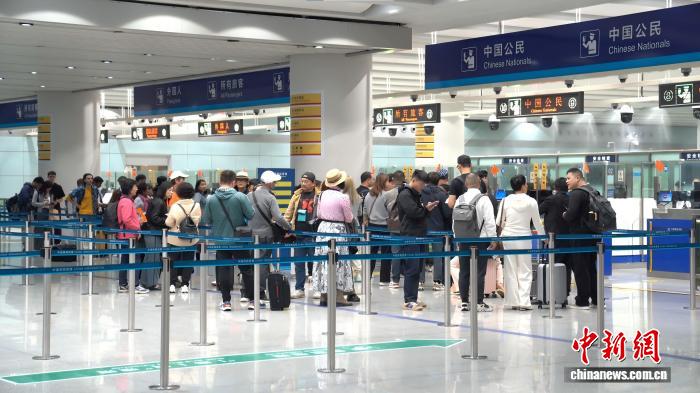
240小时过境免签一周年,无锡入境外国人同比增长21%
Yang Zi Wan Bao Wang· 2025-12-20 05:28
Core Insights - The National Immigration Administration of China has fully relaxed and optimized the transit visa exemption policy, extending the stay duration for foreign travelers to 240 hours, marking one year since its implementation [1] Group 1: Policy Impact - Since the policy's implementation, 257 foreign travelers have utilized the temporary transit visa exemption at Wuxi Shuofang Airport, with 49.4% of these travelers benefiting from the 240-hour exemption [3] - The policy has significantly boosted the number of foreign travelers choosing to enter China via Wuxi, enhancing the convenience for foreigners visiting Wuxi and surrounding cities, and positively impacting cultural tourism consumption, foreign trade, and investment attraction [3] Group 2: Traveler Experience - A Canadian traveler, MAN LESLIE, expressed satisfaction with the policy, noting it saved time and costs associated with visa applications, and praised the friendly and efficient service provided by immigration staff [5] Group 3: Growth Metrics - From December 17, 2024, Wuxi Airport has seen 53,000 foreign entries, a 21.49% increase compared to the same period in 2024, with 22% of entries for tourism and 39.8% for business activities, reflecting a 12.7% and 41% increase respectively [7] - Wuxi Airport has established international passenger routes to eight countries/regions, with an average of 18 international flights per day and a passenger flow of 2,300 people [7] Group 4: Operational Enhancements - Measures have been implemented to facilitate transit visa travelers, including designated processing areas, policy consultation service desks, and foreign language service teams to ensure smooth and secure customs clearance [7]
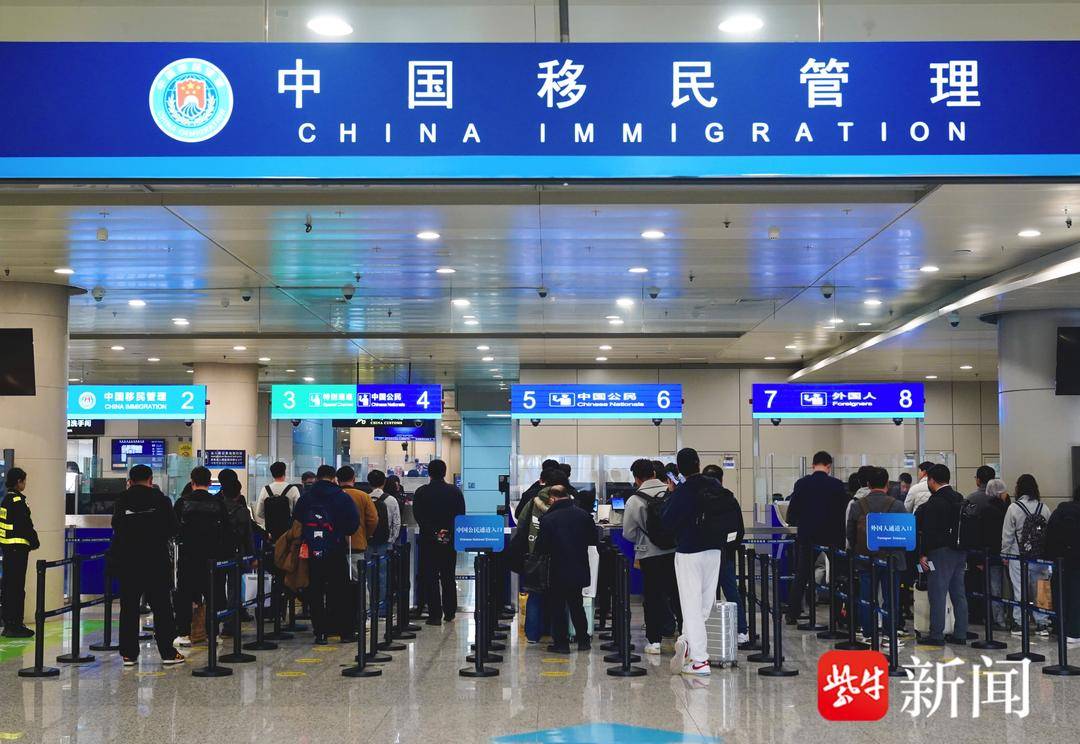
240小时过境免签实施一周年 福建口岸免签入境外籍旅客同比增长超3倍
Zhong Guo Xin Wen Wang· 2025-12-18 13:18
Core Insights - The 240-hour visa-free transit policy in Fujian has led to a significant increase in foreign travelers, with nearly 670,000 entries recorded in the past year, marking a year-on-year growth of approximately 16.6% [1] - The number of foreign travelers utilizing the 240-hour visa-free policy reached over 4,600, which is more than three times the number compared to the previous year under the 144-hour policy, surpassing the total entries from the previous nine years combined [1] - Xiamen has emerged as a popular destination for foreign travelers, accounting for over 70% of the entries under the 240-hour visa-free policy, benefiting from its cultural and tourism resources [1] Group 1 - The implementation of the 240-hour visa-free policy has enabled travelers to enjoy "240 hours + cross-regional linkage" convenience, allowing them to experience coastal sightseeing and cultural heritage in Xiamen, as well as travel to nearby cities like Fuzhou and Quanzhou [1] - Nearly 40% of travelers using the 240-hour visa-free policy exited to other provinces after entry, with over 60% of cruise port visitors taking advantage of this convenience [1] Group 2 - Xiamen's border inspection station has introduced a "one-stop" service model and a "pre-declaration + immediate processing" dual process to facilitate foreign travelers, significantly reducing approval times [2] - The annual number of travelers entering and exiting through Xiamen port exceeded 5.8 million, with the airport port surpassing 4 million for the first time, reflecting a year-on-year growth of 12% and setting a historical record [2] - Fuzhou airport's border inspection station has upgraded its services to include online filling of foreign entry cards and established dedicated counters for "one-stop" processing [2]
“免签+免税”黄金组合将流量变增量 “中国游”“中国购”呈现新亮点、新变化
Yang Shi Wang· 2025-12-18 01:59
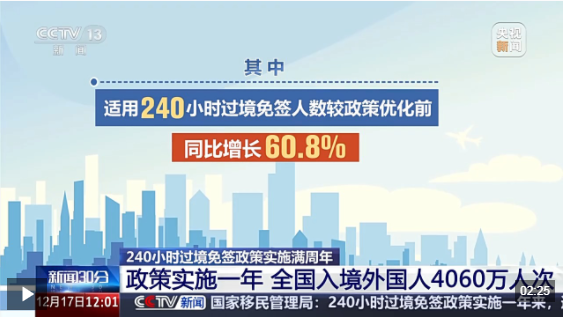
Core Viewpoint - The implementation of the 240-hour visa-free transit policy in China has significantly increased foreign traveler inflow and transformed tourism consumption patterns, marking a new era for inbound tourism in the country [1][3]. Group 1: Policy Impact - The 240-hour visa-free transit policy, effective from December 17, 2024, covers 55 countries and 65 open ports across 24 provinces, facilitating easier entry for foreign travelers [1]. - In the first year of implementation, the number of foreign entrants reached 40.6 million, a year-on-year increase of 27.2%, with those utilizing the 240-hour visa-free transit increasing by 60.8% compared to the period before the policy optimization [3][5]. Group 2: Regional Performance - Major entry hubs like Beijing, Shanghai, and Guangzhou have seen substantial growth in foreign traveler numbers, with Beijing receiving over 3.4 million foreign visitors, 55% of whom benefited from the visa-free policy [5]. - Other ports have experienced explosive growth, with Xiamen seeing a threefold increase in foreign entrants, and Liaoning witnessing a 5.7-fold increase [5]. Group 3: Tourism Consumption Trends - The extended stay period of 240 hours has shifted foreign travelers' focus from mere transit to deeper exploration, with 60% opting for cross-province travel [8]. - New tourism patterns such as "transit + deep travel" and "multi-stop journeys" have emerged, enhancing the overall travel experience [6][10]. Group 4: Economic Impact - Inbound tourism spending has surged, with Beijing's foreign visitor spending reaching 41.7 billion RMB, a 48% increase year-on-year [12]. - The combination of the visa-free policy and optimized tax refund services has effectively converted inbound traveler flows into economic growth, with a notable increase in second-time spending [13][15]. Group 5: Collaborative Opportunities - Regions like Guizhou are transforming from "geographical hinterlands" to "open gateways," leveraging the policy to attract foreign business and tourism [12]. - The synergy between visa-free entry and tax-free shopping has led to increased consumer spending, particularly in duty-free zones like Sanya, where average spending per visitor exceeds 8,000 RMB [16].
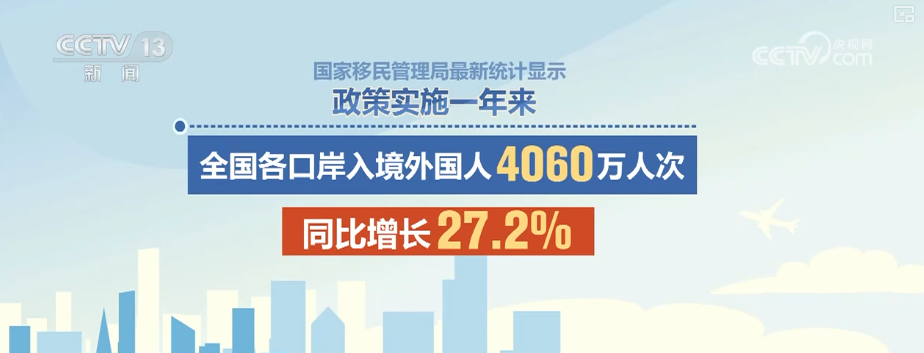
畅游240小时 外国游客深度解锁“宝藏中国”
Yang Shi Xin Wen Ke Hu Duan· 2025-12-18 01:50
Core Viewpoint - The implementation of the 240-hour visa-free transit policy has significantly enhanced the entry of foreign travelers into China, marking a successful year since its launch, and has created new opportunities for tourism and economic growth [1][2]. Group 1: Policy Impact - The 240-hour visa-free transit policy has led to a 60.8% year-on-year increase in the number of foreign travelers eligible for the policy, contributing to a total of 40.6 million foreign entries across the country, which is a 27.2% increase compared to the previous year [2][4]. - Major entry points such as Beijing, Shanghai, and Guangzhou have seen substantial growth in foreign traveler numbers, with over 340 million, 534.6 million, and 320 million entries respectively, and a significant proportion of these travelers benefiting from the visa-free policy [4][6]. Group 2: Regional Growth - Secondary ports have experienced explosive growth, with Xiamen seeing a threefold increase in foreign entries under the visa-free policy, and Liaoning experiencing a 5.7-fold increase [4][6]. - The policy has facilitated cross-regional travel, with 60% of foreign travelers opting for multi-province tours, indicating a shift from mere transit to deeper exploration of China [9][11]. Group 3: Economic and Cultural Benefits - The policy has stimulated new tourism patterns, such as "transit plus deep travel" and "multi-stop journeys," enhancing cultural and economic exchanges across various regions [7][13]. - In 2025, Beijing's inbound tourist spending reached 41.7 billion RMB, a 48% increase, while Xiamen reported over 154.62 million inbound overnight tourists, with tourism consumption exceeding $1.33 billion, both showing growth rates above 49% [15][16]. Group 4: Service Enhancements - Major entry points have implemented dedicated channels and streamlined processes, such as online reporting and multilingual services, to improve the experience for inbound travelers [6][18]. - The introduction of a "one-click tax refund" service has further enhanced the convenience for foreign tourists, with a 229.8% increase in tax refund claims in the first three quarters of the year [18][21]. Group 5: Future Prospects - The policy is expected to continue driving growth in various sectors, including duty-free shopping and hospitality, with cultural consumption in Hangzhou rising to 45% and hotel occupancy rates increasing by 8% [23]. - With 21 new entry points added to the policy, the potential for inbound consumption growth remains significant, contributing to high-quality economic development [23].
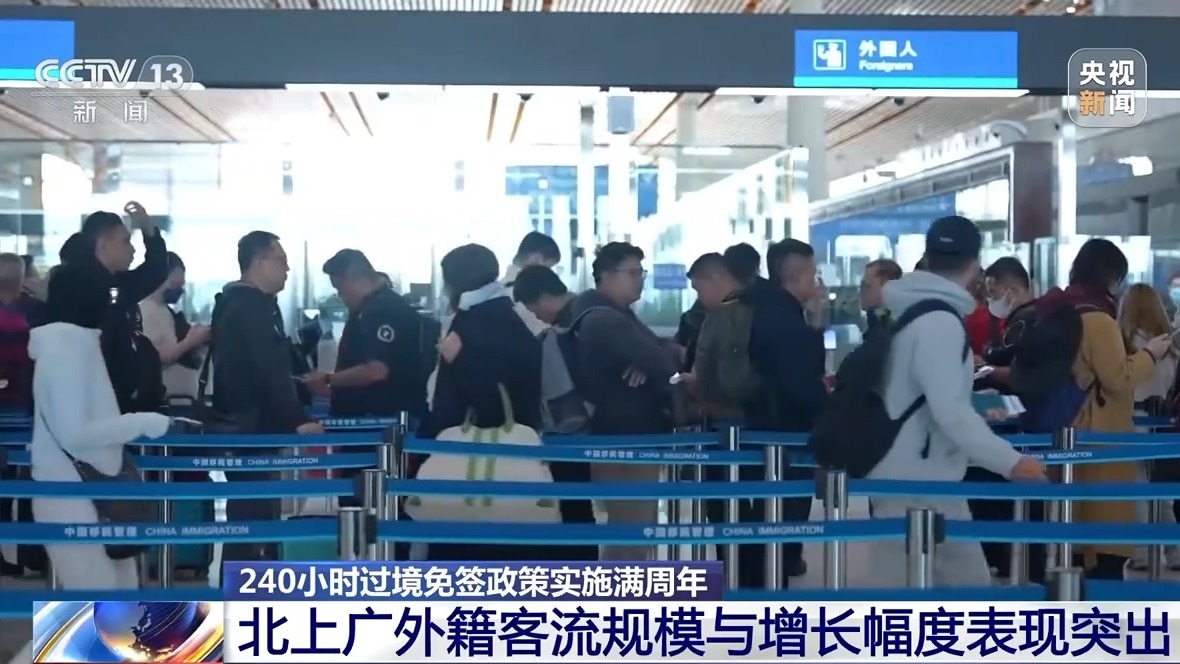
视频丨畅游240小时 外国游客深度解锁“宝藏中国”
Yang Shi Xin Wen Ke Hu Duan· 2025-12-18 01:43
Core Insights - The implementation of the 240-hour visa-free transit policy has significantly enhanced the entry of foreign travelers into China, marking a year since its launch with a 60.8% increase in eligible travelers compared to the previous policy [1][3]. Group 1: Policy Impact - The policy has led to a total of 40.6 million foreign entries across various ports in China, reflecting a year-on-year growth of 27.2% [3]. - Major entry hubs like Beijing, Shanghai, and Guangzhou have seen substantial benefits, with over 340 million, 534.6 million, and 320 million foreign entries respectively, where 55% to 57% of these travelers utilized the visa-free option [5]. - Secondary ports have experienced explosive growth, with Xiamen seeing a threefold increase and Liaoning witnessing a 5.7-fold increase in foreign entries [5]. Group 2: Travel Experience Enhancements - Key ports have introduced dedicated channels and streamlined processes, such as "one-stop services" and online forms, to improve the travel experience for foreign visitors [7]. - The extended stay period has shifted traveler behavior from mere transit to deeper exploration, with 60% of travelers opting for interprovincial travel [10]. Group 3: Economic and Cultural Benefits - The policy has fostered new travel patterns, combining transit with in-depth tourism experiences, thus boosting inbound tourism consumption [8]. - Economic indicators show a significant increase in tourism spending, with Beijing's inbound tourist spending reaching 41.7 billion RMB, a 48% increase year-on-year [16]. - The synergy between the visa-free policy and tax refund services has effectively converted inbound traffic into economic growth, enhancing consumer spending and regional collaboration [17]. Group 4: Innovations in Tax Refund Services - The introduction of a streamlined tax refund process has led to a 229.8% increase in refund claims, with over 60% of refunds being reinvested into secondary purchases [21]. - Various regions have reported significant growth in tourism and retail sectors, with Hainan's duty-free shopping seeing an average spend of over 8,000 RMB per person among visa-free travelers [21]. Group 5: Future Prospects - The inclusion of 21 new ports under the visa-free policy is expected to further unlock inbound consumption potential, contributing to sustained economic growth [23].
240小时过境免签一年 4000余人次在湖南口岸享受便利
Zhong Guo Xin Wen Wang· 2025-12-17 14:22
中新网长沙12月17日电 (邓霞 王颖 余洋)12月17日,中国240小时过境免签政策实施满一周年。湖南边检 总站透露,截至12月17日零时,已有4000余人次在湖南口岸享受到240小时过境免签政策的便利。 其中,从长沙口岸入、出境的外国人有3800余人次,其中入境近1700人次,出境近2200人次,涉及22个 国家,主要搭乘长沙往返伦敦、吉隆坡、曼谷等方向航班,人数最多的来自英国、美国和印度尼西亚; 从张家界口岸入出境的150余人次,来自8个国家,99%乘坐香港方向和韩国首尔方向航班,排名前三位 的来自美国、英国、俄罗斯,在华平均停留时长为7天左右。 湖南边检总站在12367服务平台受理有关240小时过境免签政策的咨询超200通,涉及美国、加拿大、英 国、俄罗斯、印度尼西亚等14个国家。长沙、张家界边检站加强与航空公司沟通,建立信息通报机制, 对符合条件的外籍旅客进行点对点政策精准推送,提前做好临时入境许可签发准备,实现受理签发"一 次办结",确保旅客顺畅通关。(完) ...
240小时过境免签实施已满一年!广州边检所辖口岸旅客增长
Nan Fang Du Shi Bao· 2025-12-17 13:14
12月17日,我国240小时过境免签政策实施满一周年。南都N视频记者从广州边检总站获悉,截至17日0 时,该总站下辖口岸已有约2.4万名符合条件的外国人享受该政策便利,较去年同期72/144小时过境免 签人数增长136.15%。免签旅客中,俄罗斯、美国、英国等国家人员占比较高,以旅游为目的的旅客占 比近一半,3月、4月、10月、11月等商务旅游旺季申请量尤为集中,充分彰显政策的强劲吸引力和对广 州文旅、经贸的促进作用。 一年来,政策持续深化让广州口岸成为外籍人士来华经贸、旅游的"强磁场"。第137、138届广交会期 间,广州边检总站所辖口岸累计保障52.1万人次外商入境参展,较前两届增长33.6%,创历史新高。 据悉,不少采购商借助240小时免签的时间优势,实现"参展+大湾区文旅"双重体验,有效带动地方消费 活力。广州市文化广电旅游局数据显示,2025年前三季度,广州入境"过夜"游客达399.83万人次,同比 增长13.02%;入境文旅消费28.7亿美元,同比增长15.35%,政策对消费的拉动作用显著。 随着11月5日广州边检总站所辖南沙客运港、广州琶洲港澳客运港口岸新增纳入政策适用范围,粤港澳 大湾区人员往 ...
厦门口岸免签外籍旅客人次同比增长超3倍
Zhong Guo Xin Wen Wang· 2025-12-17 08:43
厦门口岸免签外籍旅客人次同比增长超3倍 来源:中国新闻网 编辑:张澍楠 广告等商务合作,请点击这里 在厦门口岸享受该政策的外籍旅客以美国、印度尼西亚、俄罗斯、加拿大、英国等国家人员为主,以旅 游、商务出行为主要目的。厦门凭借独特的闽南文化底蕴、优美的滨海城市风貌及丰富的文旅资源,成 为众多外籍旅客来华入境游的热门目的地。 作为知名侨乡,厦门有丰富密集的东南亚航线网络。目前,厦门高崎国际机场已开通国际客运航线27 条,通达20个国家和地区。自2025年6月12日印度尼西亚加入240小时过境免签适用国家范围后,凭借口 岸密集的航线网络和深厚的贸易合作基础,其迅速成为厦门半年来申办240小时临时入境许可量最多的 国家,申办数量超850人次。 高崎边检站边防检查处处长沈文娟介绍,为便利外籍旅客在口岸现场申请办理240小时临时入境许可, 该站还推出"一站式"服务模式和航司提前网上申报、旅客即到即办、缩短审批时效等服务举措,确保该 政策高效落地。(完) 本文为转载内容,授权事宜请联系原著作权人 中新社厦门12月17日电 (吴冠标)12月17日,中国240小时过境免签政策实施满一周年。厦门边检总站高 崎边检站当天披露,一年 ...
广州口岸免签外国人同比增长超136% 拉动入境文旅消费增长
Xin Hua Wang· 2025-12-17 07:48
白云边检站边防检查处处长姜明哲说,在240小时过境免签等便利化政策刺激下,一年来广州白云 机场口岸入境外国人超320万人次,同比增长37.4%,占口岸入境总人数比例超38.8%,该占比居全国大 型空港口岸首位。今年11月5日起,广东新增南沙客运港、广州琶洲港澳客运港等5个口岸新增纳入政策 适用范围。 政策持续深化让广州口岸成为外籍人士来华经贸、旅游的"强磁场"。第137、138届广交会期间,广 州边检总站所辖口岸累计保障52.1万人次外商入境参展,较前两届增长33.6%,创历史新高。不少采购 商借助240小时免签的时间优势,实现"参展+大湾区文旅"双重体验,有效带动地方消费活力。广州市文 化广电旅游局数据显示,2025年前三季度,广州入境"过夜"游客达399.83万人次,同比增长13.02%;入 境文旅消费28.7亿美元,同比增长15.35%,政策对消费的拉动作用显著。 【纠错】 【责任编辑:张樵苏】 新华社广州12月17日电(记者毛鑫)12月17日,我国240小时过境免签政策实施满一周年。记者从 广州边检总站获悉,截至12月17日0时,该总站下辖口岸自这一政策实施以来,已有约2.4万名符合条件 的外国人免签 ...