
公募基金高质量发展

Search documents
积极响应高质量发展!京东肯特瑞上线投教专区 助力投资者教育服务升级
Xin Lang Ji Jin· 2025-09-11 06:58
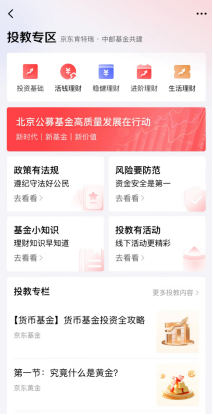
Group 1 - The launch of the JD Kentrui Fund Investor Education Zone focuses on providing systematic financial knowledge services to investors, covering four main areas: active money management, stable investment, advanced investment, and lifestyle finance [1] - The initiative aligns with the call for "high-quality development of public funds in Beijing," emphasizing the theme of "New Era, New Fund, New Value" [1] - The education zone includes sections on compliance awareness, risk prevention, and basic fund knowledge, aiming to enhance investors' understanding of financial safety and investment strategies [1] Group 2 - The content of the education zone features practical topics such as money market fund investment strategies and an introduction to gold investment, presented in an accessible manner to help investors grasp fundamental financial concepts [1] - Future plans include continuous optimization of the content and the establishment of an integrated online and offline investor education service system to provide more professional and convenient financial knowledge services [1]

中金基金:积极拥抱变革,推动高质量发展
Xin Lang Ji Jin· 2025-09-11 06:48
Core Viewpoint - The China Securities Regulatory Commission has launched an action plan to promote the high-quality development of public funds, encouraging fund companies to enhance the scale and proportion of equity funds while aligning with investor interests [1][2]. Group 1: Industry Development - The action plan aims to improve the public fund industry by emphasizing the importance of performance benchmarks in product design and portfolio management [1]. - The asset management industry in China is evolving towards professional specialization, with a focus on clear positioning of public fund products such as passive indices and actively managed equity funds [1][2]. - Fund managers are encouraged to create a product system that offers long-term value and research-added value, catering to the wealth management needs of the public [1][3]. Group 2: Product Strategy - Fund managers should optimize product layouts in response to regulatory guidance, launching a series of active equity and quantitative index fund products that align with national development strategies [2]. - The industry is expected to see a shift towards products that are benchmarked, stable in style, and capable of generating excess returns, which will require new demands on research and risk management [2]. - Emphasizing long-term and value investing, fund managers are urged to conduct market research to better understand customer needs and contribute to the high-quality development of the public fund industry [3].
盛谈公募行业高质量发展
Xin Lang Ji Jin· 2025-09-11 02:02
Core Viewpoint - The core issue in the public fund industry is the disparity between fund profitability and investor returns, necessitating a focus on enhancing investor experience and service [1] Group 1: Industry Trends - The China Securities Regulatory Commission (CSRC) has emphasized the need for the public fund industry to shift from a focus on scale to prioritizing investor returns, moving from "selling products" to "providing services" [1][2] - The innovation in investor service and companionship models is essential for the high-quality development of the industry, highlighting the transition from one-way communication to two-way interaction [1][2] Group 2: Traditional vs. Innovative Models - Traditional investor service models include information disclosure, customer service hotlines, and offline activities, which are often standardized and lack personalization and interactivity [2] - Innovative companionship models focus on interaction, personalization, and emotional connection, utilizing platforms like Douyin and video channels to provide market insights in a more engaging manner [3][4] Group 3: Key Innovations - Content innovation includes transitioning from text and images to video and live streaming, allowing for a more intuitive market interpretation [3] - Data-driven innovations involve generating personalized asset analysis reports based on individual investor data, moving from generic content to tailored insights [3][5] - Emotional support during market volatility is a critical aspect of the new companionship model, aiming to alleviate investor anxiety and enhance emotional connections [3][4] Group 4: Future Directions - Future innovations in investor companionship will focus on value resonance, building trust, and aligning with investors' values, moving beyond mere information sharing [4][6] - Deep personalization through AI will enable the creation of unique companionship content for each investor [5] - Comprehensive support throughout the investment lifecycle, particularly during the holding period, is essential for enhancing investor experience and outcomes [6][7] Group 5: Company Initiatives - The company is committed to developing a robust investor education and companionship system, utilizing new media platforms for effective communication and interaction [7] - The introduction of digital personas aims to facilitate better information dissemination and engagement with investors [7] - The essence of the companionship model is trust-building, shifting from a supply-driven approach to a demand-driven one, ultimately enhancing investor satisfaction and wealth growth [7]
走进服贸会,北京公募基金高质量发展在行动
Xin Lang Ji Jin· 2025-09-11 00:46
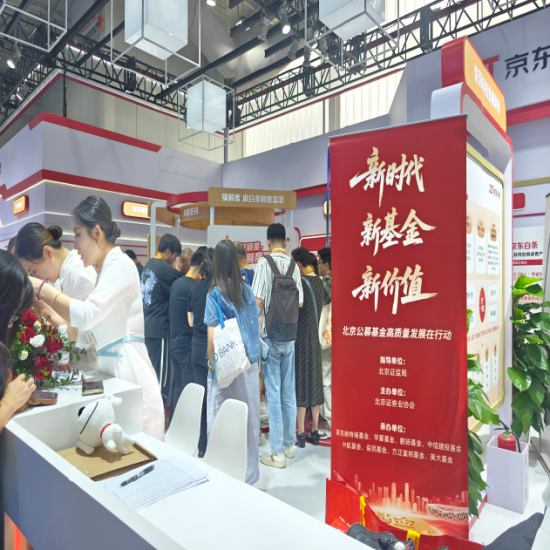
专题:北京公募基金高质量发展系列活动启动 新时代、新基金、新价值 9月8日,在北京证监局指导下,北京证券业协会携手北京公募基金管理人、基金销售机构、基金评价机 构及多家主流媒体,共同启动"北京公募基金高质量发展系列活动"。 活动以"新时代·新基金·新价值——北京公募基金高质量发展在行动"为主题,旨在贯彻落实《推动公募 基金高质量发展行动方案》,进一步提升北京作为国家金融管理中心的引领作用,打造北京金融高质量 发展新名片。未来一个多月,系列活动将开展多层次、多形式宣传与互动,推动公募基金行业转型升 级,提升服务实体经济能力,强化投资者教育与保护。 作为系列互动的一部分,京东肯特瑞基金联合华夏基金、鹏扬基金、中信建投基金、中航基金、益民基 金、方正富邦基金、英大基金,走进在北京市首钢园区举办的2025年中国国际服务贸易交易会(9月10 日-9月14日),播撒金融知识的种子,培育市民群众的财商意识,守护百姓的钱袋子。 在服贸会金融服务专题展的现场,京东肯特瑞基金精心搭建了互动投教展区,同时,制作了系列通俗易 懂、设计新颖的投教物料与展板,如"指数基金投教类型""基金投资避坑指南"等内容,还有互动游戏, 将复杂的金融 ...
嘉实基金:以投资者为本 用心书写公募高质量发展新答卷
Zheng Quan Ri Bao Wang· 2025-09-10 07:45
Core Viewpoint - The company emphasizes the importance of high-quality development in public funds, focusing on creating sustainable investment returns for investors and supporting key sectors of the national economy [1][2]. Group 1: Investment Strategy - As of June 30, 2025, the company's stock allocation in manufacturing, information transmission/software, and scientific research and technology services exceeds 230 billion yuan, targeting core areas such as technology + manufacturing, new energy, national defense, smart vehicles, and robotics [2]. - The company has launched innovative "new funds" with a floating fee structure, aiming to align product offerings with investor needs and encourage long-term investment while managing liquidity [2]. Group 2: Investor Engagement - The company has developed a comprehensive investor support platform, integrating various media forms to provide continuous investment guidance throughout the investment lifecycle, promoting long-term and value investment concepts [3]. - The public fund industry has surpassed 35 trillion yuan, entering a new phase focused on high-quality development, with the company committed to enhancing investor communication and support through thematic activities [3].
北京公募基金高质量发展系列活动正式启动
Zhong Guo Zheng Quan Bao· 2025-09-07 20:51
Core Viewpoint - The event series aims to promote high-quality development in the public fund industry in Beijing, aligning with national policies and enhancing the sector's ability to serve the real economy and protect investors [1][3]. Group 1: Event Overview - The series of activities is themed "New Era, New Fund, New Value" and will last for over a month, focusing on promoting inclusive finance and transforming the public fund industry [1]. - Over 40 institutions, including major fund management companies, are participating in the initiative [1]. Group 2: Activity Design - The activities include a "CEO Dialogue" series in authoritative media, a video program for direct interaction between fund managers and investors, and community outreach programs to enhance financial literacy [2]. - Various engaging formats such as investment markets, interactive experiences, and knowledge quizzes will be utilized to foster financial awareness among the public [2]. Group 3: Development Framework - The initiative aims to establish a "five-in-one" development framework involving regulatory guidance, association hosting, institutional participation, media support, and public benefit [2]. - The activities will help transform policy requirements into actionable strategies for fund companies, encouraging the growth of long-term capital and enhancing service capabilities [2]. Group 4: Future Outlook - The public fund industry in Beijing is expected to leverage this initiative to continue improving in areas such as research, investor services, product innovation, and digital transformation [3]. - The event serves as a catalyst for the industry to strengthen communication with investors, innovate educational services, and enhance investor protection mechanisms [3].
中国结算,大动作!这些机构可提交申请
券商中国· 2025-09-06 08:55
Core Viewpoint - The introduction of the "FISP Operation Management Measures" by China Securities Depository and Clearing Corporation aims to standardize the operation of the public fund industry’s institutional investor direct sales service platform, supporting the high-quality development of the public fund industry. The measures will take effect on September 5, 2025 [1]. Group 1 - The FISP platform allows securities firms, fund management companies, and other financial institutions to apply for participation, with the China Securities Regulatory Commission approving its official launch on September 5 [3]. - A transition period from September 5, 2025, to September 4, 2026, is established for existing participants to gradually reduce their business scale if they do not meet the new qualification requirements [4]. - The FISP platform is designed to provide electronic information flow and management services for public fund business participants, including fund managers and asset custodians [4]. Group 2 - The FISP platform categorizes participants into four main roles: fund managers, fund sales institutions, investment managers, and asset custodians, each with specific business permissions [5]. - Fund managers can apply for the fund manager role, while sales subsidiaries can only handle business related to their parent company's managed public funds through the FISP platform [5]. - Institutions wishing to invest in public funds using their own or entrusted assets can apply for the investment manager role, while qualified custodians can apply for the asset custodian role [5]. Group 3 - Participants must ensure that the information related to their created investment portfolios is legal, accurate, and updated as necessary [6]. - The FISP platform does not participate in fund sales and does not alter the legal relationships of participants in fund sales, nor does it bear responsibility for disputes arising from related business [6]. Group 4 - The measures were publicly solicited for opinions in March 2022, clarifying the platform's construction basis, service targets, role settings, and electronic information flow requirements [8]. - The China Securities Regulatory Commission's action plan released on May 7 emphasizes accelerating the launch of the institutional investor direct sales service platform to facilitate various institutional investors' participation in fund investments [8].

刷屏!工行、农行、招行、腾讯、蚂蚁等,最新发声
中国基金报· 2025-09-06 06:35
Core Viewpoint - The recent reform of public fund sales fee rates by the China Securities Regulatory Commission aims to lower costs for investors and reshape the public fund sales ecosystem, emphasizing investor interests and promoting industry transformation [1][3][4]. Summary by Sections Fee Rate Adjustments - The maximum subscription fee rates for equity funds, mixed funds, and bond funds have been reduced to 0.8%, 0.5%, and 0.3% respectively, encouraging sales institutions to further discount fees while covering costs [3][4]. - The reform is seen as a key measure to enhance investor satisfaction and shift the industry focus from "seller sales" to "buyer services" [3][4]. Institutional Responses - Major financial institutions like Industrial and Commercial Bank of China and China Merchants Bank are committed to implementing the reforms, focusing on long-term investor interests and improving service quality [3][4]. - Teng'an Fund has already implemented significant fee discounts and aims to provide comprehensive advisory services, having generated over 100 billion yuan in returns for users since its inception [5][6]. Encouragement of Equity Fund Development - The reform encourages the development of equity funds by maintaining a cap on client maintenance fees at 30% of management fees, promoting better service capabilities among sales institutions [7][8]. - The reduction in fees is expected to enhance the growth of equity funds and improve long-term profitability for investors [7][8]. Long-term Industry Impact - The reform is anticipated to shift the public fund industry from a scale-driven profit model to a performance-driven value model, fostering a healthier industry development [8][9]. - It will also lower passive investment costs for investors, enhance investor protection, and improve overall investment experiences [9].




农业银行孙宁:公募基金高质量发展再迈一步 降低投资者成本共建行业新生态
Zhong Zheng Wang· 2025-09-06 05:05
Group 1 - The core viewpoint of the articles is that the China Securities Regulatory Commission (CSRC) is seeking public opinion on the draft regulations for managing sales expenses of publicly offered securities investment funds, which is seen as a crucial step in promoting the reform of fund fees and enhancing investor benefits [1][2] - Agricultural Bank of China (ABC) emphasizes its commitment to "finance for the people" and actively responds to policies aimed at boosting the capital market, focusing on developing public fund businesses and promoting equity and mixed funds to meet the asset allocation needs of its 888 million individual customers [1][3] - The CSRC's action plan aims to shift the public fund industry from a focus on scale to prioritizing investor returns, with a key measure being the establishment of a floating management fee mechanism linked to fund performance, which is expected to enhance investor satisfaction and promote a win-win situation among investors, fund managers, and sales channels [2] Group 2 - ABC plans to enrich its product offerings by introducing more fund products that align with national strategies and development directions, guiding capital flow to key areas that support the real economy and social development [3] - The bank aims to leverage technology, such as big data and artificial intelligence, to enhance customer profiling, product recommendations, and professional service, thereby continuously optimizing the investment experience [3] - ABC seeks to build deep partnerships with excellent fund managers to create shared value and improve the actual return experience for investors, while also integrating investment education into its services to cultivate long-term, value-oriented, and rational investment habits among investors [3]
利好来袭!证监会鼓励长期持有基金,持有超过一年不再计提销售服务费
Hua Xia Shi Bao· 2025-09-05 13:59
Core Points - The China Securities Regulatory Commission (CSRC) announced measures to encourage long-term holding of funds, including waiving sales service fees for investors holding equity, mixed, and bond funds for over one year [1] - The CSRC aims to lower investor costs by rationally reducing public fund subscription fees, purchase fees, and sales service fee rates, while optimizing redemption arrangements [1] - The CSRC released the "Regulations on the Management of Sales Fees for Publicly Raised Securities Investment Funds," seeking public feedback to promote high-quality development of the public fund industry [1] Group 1 - The CSRC emphasizes the development of equity funds and sets differentiated upper limits on trailing commission payment ratios [1] - The regulations aim to standardize fund sales fees and address issues such as interest allocation from fund sales settlement funds and dual charging in fund advisory services [1] - A direct sales service platform for institutional investors in the fund industry, known as the FISP platform, has been officially launched to facilitate efficient and secure direct sales by fund managers [1] Group 2 - The CSRC will supervise China Securities Depository and Clearing Corporation to continuously improve the FISP platform's operation and functionality [2] - The focus will be on enhancing service quality to provide institutional investors with more standardized, efficient, convenient, and high-quality services [2]